Fanny's
Our verdict
Fanny's sits inside LACMA West on Wilshire Boulevard, occupying one of the more architecturally loaded dining rooms in Los Angeles. The restaurant draws on the museum's mid-century surroundings, placing it in a category of institution-linked dining that rewards visitors who treat the meal as part of a longer cultural afternoon. For context on how it compares to other serious Los Angeles tables, see our full city guide.

Pearl is the En Primeur Club membership app — saves, bookings, and concierge access live there. Same editors, same standards.
- Address
- LACMA West, 6067 Wilshire Blvd, Los Angeles, CA 90036
- Phone
- (323) 930-3080
- Hours
- Mon 10 AM–7:30 PMTue ClosedWed–Sun 10 AM–7:30 PM
- Website
- fannysla.com
- Directions
- Get directions
- Booking
- Book on OpenTable
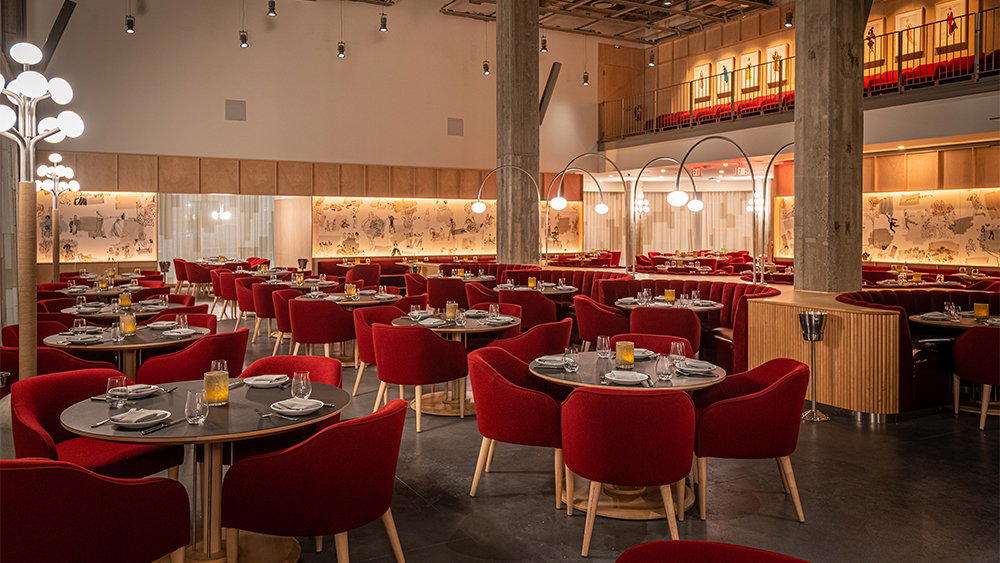
A Dining Room Shaped by Its Institution
Museum restaurants in America tend to fall into one of two categories: the self-service café that exists purely for caloric convenience, or the ambitious sit-down room that uses its institutional address as a serious credential. Los Angeles has both, and Fanny's, positioned within LACMA West at 6067 Wilshire Blvd, belongs firmly to the second tier. The Wilshire Corridor already carries considerable cultural weight — LACMA is the largest art museum in the western United States — and the dining room that operates within it inherits that architectural seriousness whether it courts the association or not.
That inheritance matters more in Los Angeles than it might elsewhere. Unlike New York, where a museum restaurant can draw from a dense surrounding dining ecosystem regardless of the institution's footprint, LA dining has long been decentralised, with serious tables scattered across neighbourhoods that function as self-contained culinary pockets. Miracle Mile and the mid-Wilshire stretch are not naturally associated with the kind of concentrated fine-dining density you find in Beverly Hills or downtown. A restaurant at LACMA doesn't have a rich competitive cluster immediately around it; it operates more as a destination in itself, which places a different kind of pressure on the physical space to justify the trip.
The Logic of Institution-Linked Dining
Across American cities, the most credible museum-adjacent dining has followed a similar pattern over the past two decades: purpose-built or carefully renovated spaces that treat the architectural context as a feature rather than a footnote. The approach taken at institutions like the Modern at MoMA in New York set a template that others have measured themselves against, a room that could hold its own as a standalone restaurant, not merely as a cultural amenity. That standard is relevant here because it shapes expectations for what a serious museum-linked table in a major American city now needs to deliver.
For comparison, consider how Los Angeles's own serious dining tiers break down. At the leading end, restaurants like Providence on Melrose anchor the city's fine-dining identity through decades of sustained seafood precision, while Kato has repositioned New Taiwanese cuisine into a format that draws national attention. Somni occupies its own lane in progressive tasting-menu territory, and Hayato has become a reference point for Japanese kappo in the city. Fanny's operates in a different register from all of these, its LACMA address makes the comparison set more about experience-driven dining than pure culinary competition, but the city's overall trajectory toward seriousness at every tier is the context any new or repositioned table enters.
The Physical Container as Editorial Statement
The LACMA West building, part of a campus that has been subject to ongoing architectural reconsideration for years, gives Fanny's a setting that few Los Angeles restaurants can claim. Museum interiors impose a particular spatial grammar: high ceilings, considered lighting, circulation paths designed for contemplation rather than efficiency. These conditions, when a kitchen and service team take them seriously, produce a dining environment that reads differently from the standard Los Angeles room. Natural light management, the relationship between interior gallery space and a restaurant's own visual identity, and the proximity to significant artworks are all variables that other Los Angeles dining rooms simply don't have access to.
This is worth noting for anyone comparing Fanny's to peers in the broader American museum-dining conversation. At Le Bernardin in New York City, the architectural calm of the room is part of the restaurant's identity and has been for decades. At Blue Hill at Stone Barns in Tarrytown, the agricultural estate functions as the physical container that makes the menu legible. At The French Laundry in Napa, a historic stone building does substantial narrative work. In each case, the space is not decorative, it is argumentative. It makes a claim about what kind of experience the kitchen is attempting. A museum address on Wilshire Boulevard makes a claim too, and the pressure on Fanny's is to inhabit that claim with enough intelligence that the room itself becomes part of what diners are paying for.
Where Fanny's Sits in the Los Angeles Dining Picture
The mid-Wilshire location places Fanny's in a part of the city that visitors often pass through on the way to somewhere else. Wilshire Boulevard functions more as a corridor than a destination for dining, which gives any serious table along its length an argument to make about why the journey ends here. The LACMA campus addresses this partly by volume: the museum draws significant foot traffic from cultural tourists, local members, and event attendees, particularly around evening programming and temporary exhibitions. A restaurant that can capture that audience and convert occasional museum visitors into repeat diners operates on a different commercial logic from a standalone table that relies on advance booking and word-of-mouth alone.
That model has worked for other American tables positioned adjacent to cultural institutions. Smyth in Chicago and Addison in San Diego have both built reputations that extend beyond their immediate neighbourhoods; Frasca Food & Wine in Boulder and The Inn at Little Washington show that destination-dining logic can operate successfully outside major urban cores. The shared thread is that rooms with strong physical identity tend to generate their own gravitational pull. For Fanny's, the LACMA address is the starting point of that identity.
For those building a serious Los Angeles dining itinerary, Osteria Mozza on Melrose remains the reference for Italian dining in the city, while Atomix in New York City, Lazy Bear in San Francisco, and Single Thread Farm in Healdsburg illustrate how the West Coast's serious dining conversation extends well beyond Los Angeles's own city limits. Our full Los Angeles restaurants guide maps the city's dining by neighbourhood and tier for anyone planning multiple meals.
Planning Your Visit
Fanny's sits on the LACMA West campus at 6067 Wilshire Blvd, Los Angeles, CA 90036. Given its museum setting, timing a meal around a LACMA visit, particularly an evening exhibition or special programming, makes the most practical sense, as it consolidates travel across what is a geographically spread-out city. Mid-week visits to the museum campus typically involve fewer crowds than weekend afternoons, which affects both the dining room atmosphere and the ease of movement between galleries and the restaurant itself.
For context on comparable occasion-driven dining in the United States, Emeril's in New Orleans and Atelier Moessmer Norbert Niederkofler in Brunico both demonstrate how a strong physical setting shapes the entire dining proposition. The principle applies at Fanny's: the room is the first argument, and the experience follows from it.
Quick reference: LACMA West, 6067 Wilshire Blvd, Los Angeles, CA 90036. Museum campus dining; contact LACMA directly for current hours and reservations.
Frequently asked questions
What should I eat at Fanny's?
What the LACMA setting signals, alongside the broader Los Angeles dining scene, which includes serious seafood-forward tables like Providence and precision-led cuisine at Kato, is that museum-adjacent dining in the city has generally moved toward menus with some local sourcing logic and seasonal structure. Checking directly with the restaurant before your visit will give you the most accurate picture of current offerings and any chef-led focus areas.
Can I walk in to Fanny's?
Museum-linked restaurants in major American cities vary widely on walk-in availability: some operate primarily on reservation during peak dining hours but maintain bar or counter seating for walk-ins. In Los Angeles, where dining is almost universally reservation-driven at any table above the casual tier, as seen at Hayato, which books weeks in advance, and at busier LACMA programming periods, walk-in availability at Fanny's is likely more feasible during off-peak museum hours than on weekend evenings or during high-traffic exhibitions. Contacting LACMA directly before visiting is the practical approach.
Is Fanny's a good choice for dining before or after a LACMA evening event?
Museum restaurants positioned within a cultural campus tend to calibrate their service rhythm around institutional programming schedules, which typically makes them more attuned to pre- and post-event dining than standalone restaurants nearby. At LACMA, evening programming draws audiences who are already on-site, reducing the friction of a separate restaurant trip across a spread-out city like Los Angeles. Fanny's physical location within LACMA West makes it a practical anchor for an evening that combines dining with gallery access, a combination that distinguishes it from peer tables like Somni or Osteria Mozza, which require separate travel and planning.
Cost Snapshot
A small set of peers for context, based on recorded venue fields.
| Venue | Cuisine | Price | Awards | Notes |
|---|---|---|---|---|
| Fanny'sThis venue — the venue you are viewing | Contemporary Californian Fusion | $30–50 | Not listed | Not listed |
| Kato | Modern Taiwanese Fine Dining | $300–500 | 2 Michelin Stars · World's 50 Best #49 | New Taiwanese, Asian |
| Hayato | Traditional Japanese Kaiseki | $300–500 | 2 Michelin Stars · La Liste Top Restaurants | Japanese |
| Vespertine | Avant-Garde Tasting Menu | $200–300 | 2 Michelin Stars · La Liste Top Restaurants | Progressive, Contemporary |
| Holbox | Modern Mexican Seafood | $30–50 | 1 Michelin Star · World's 50 Best #26 | Mexican Seafood, Mexican |
| Sushi Kaneyoshi | Edomae Omakase | $300–500 | 1 Michelin Star · LA Times 101 Best Restaurants #24 | Sushi, Japanese |
Continue exploring
More in Los Angeles
Restaurants in Los Angeles
Browse all →
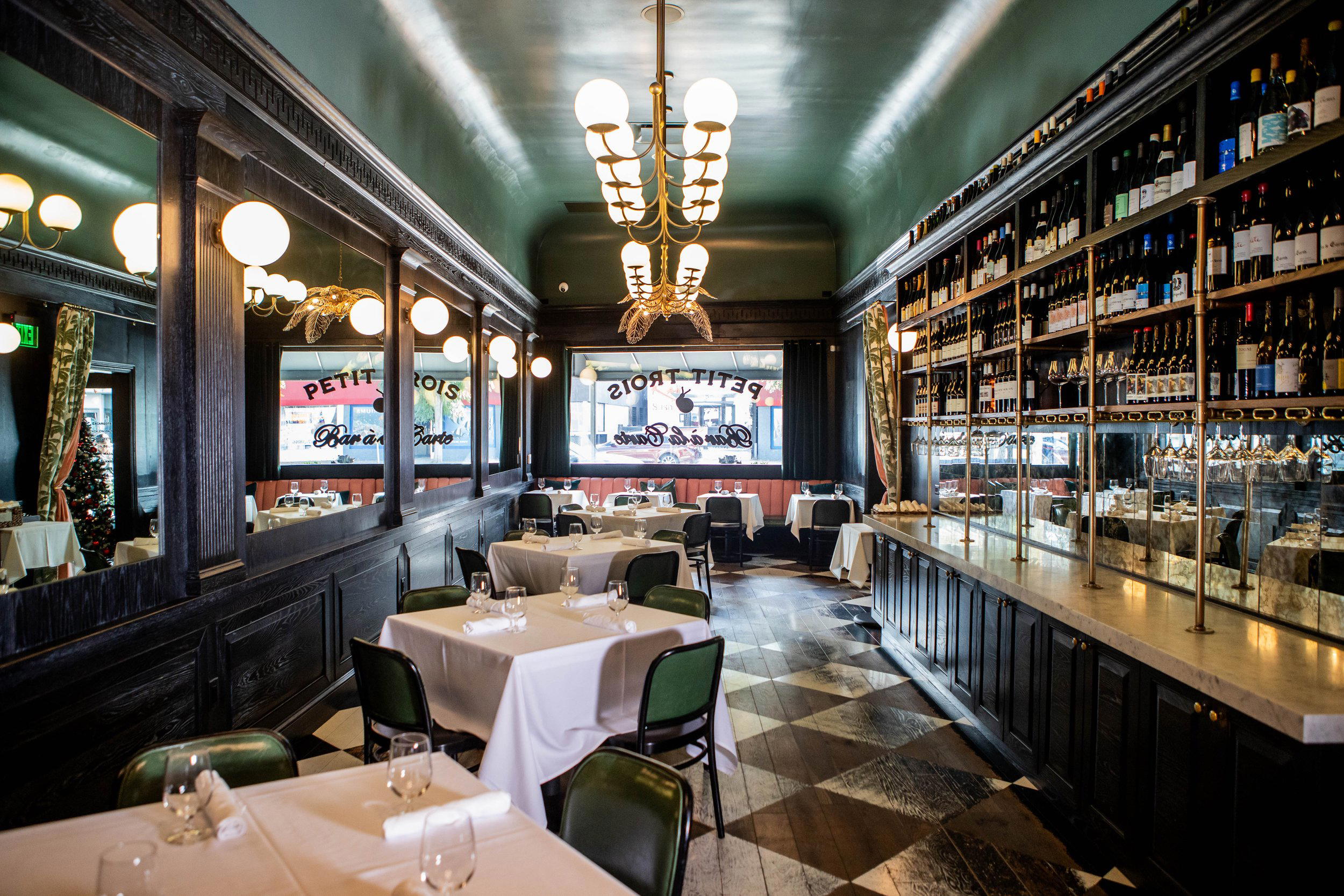
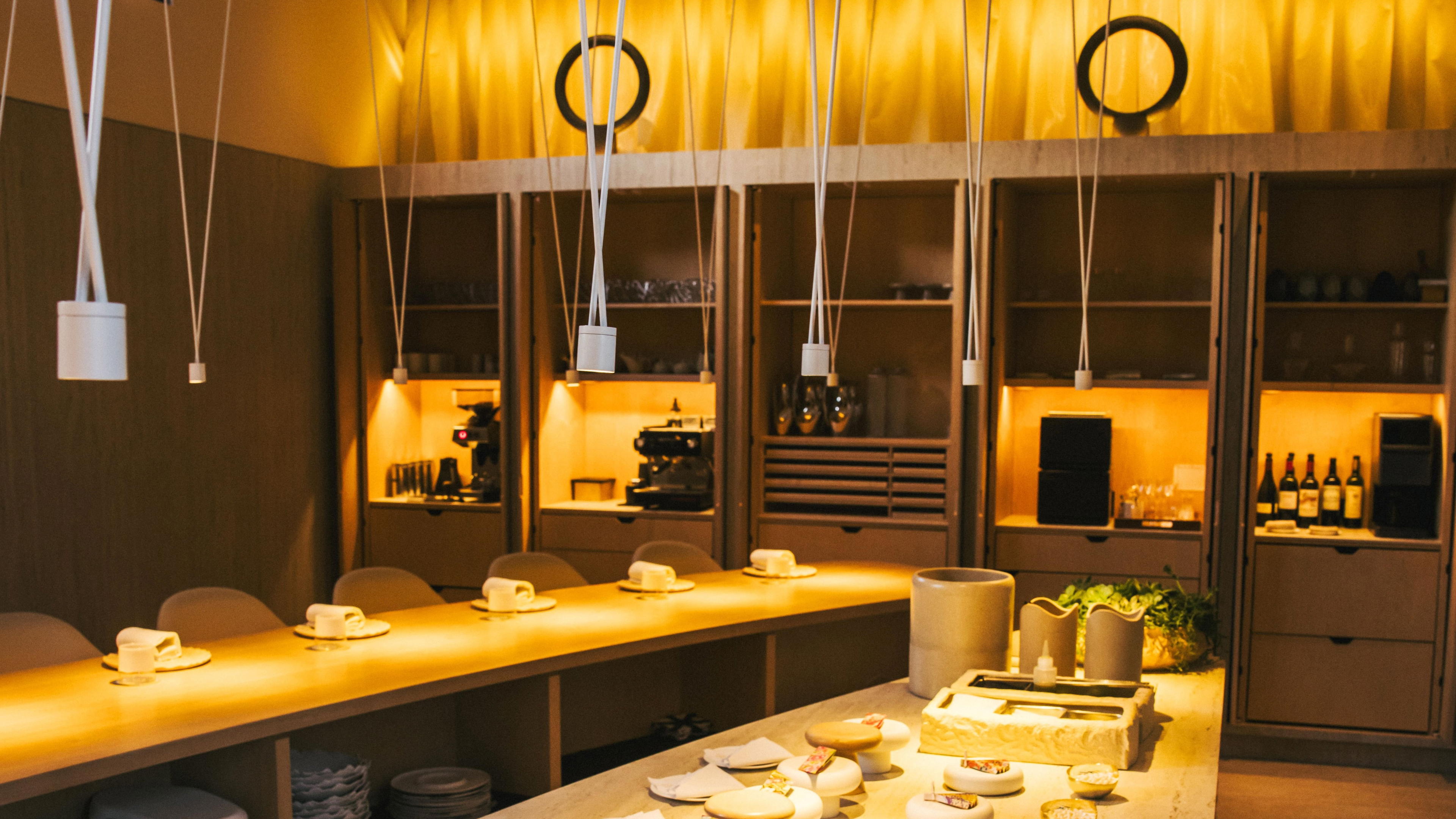
Bars in Los Angeles
Browse all →
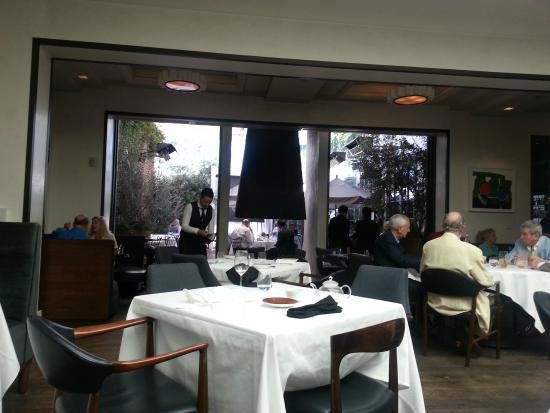
Hotels in Los Angeles
Browse all →
Wineries in Los Angeles
Browse all →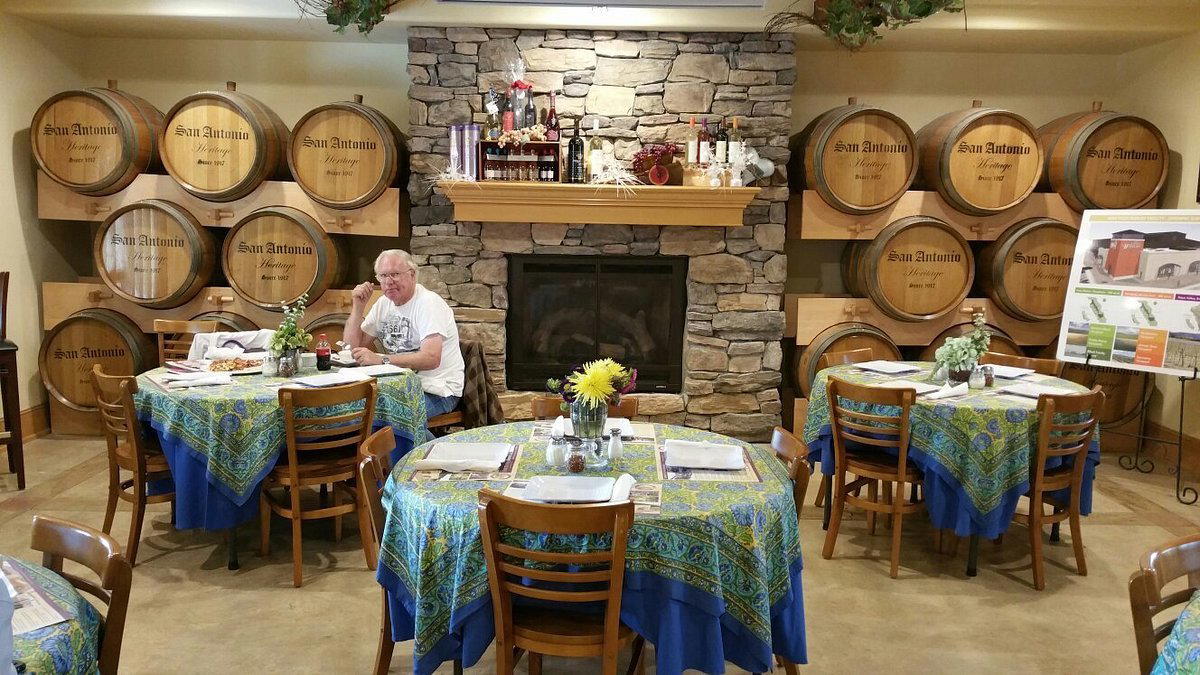
Details
- Elegant
- Classic
- Trendy
- Sophisticated
- Date Night
- Special Occasion
- Brunch
- Open Kitchen
- Live Music
- Craft Cocktails
- A La Carte
- Craft Cocktails
Current opening hours
- Monday
- 10 AM–7:30 PM
- Tuesday
- Closed
- Wednesday
- 10 AM–7:30 PM
- Thursday
- 10 AM–7:30 PM
- Friday
- 10 AM–7:30 PM
- Saturday
- 10 AM–7:30 PM
- Sunday
- 10 AM–7:30 PM
Hours can change for holidays and private events. Last verified .
By day, bright and casual cafe atmosphere; by night, darker, sexier lighting with elegant red booths, live music, and old-school Hollywood vibe.