Erbils Vegan occupies a quietly committed corner of Munich's plant-based dining scene, operating out of Breisacher Strasse 13 in the Haidhausen district. Where much of the city's fine-dining energy runs toward classical French technique or Japanese-German fusion, Erbils positions itself around a different set of priorities, one where the absence of animal products shapes the architecture of the meal from first course to last.
Pearl is the En Primeur Club membership app — saves, bookings, and concierge access live there. Same editors, same standards.
- Address
- Breisacher Str. 13, 81667 München, Germany
- Phone
- +498932747807
- Website
- erbils-vegan.de
- Directions
- Get directions
 Saves & bookings on Pearl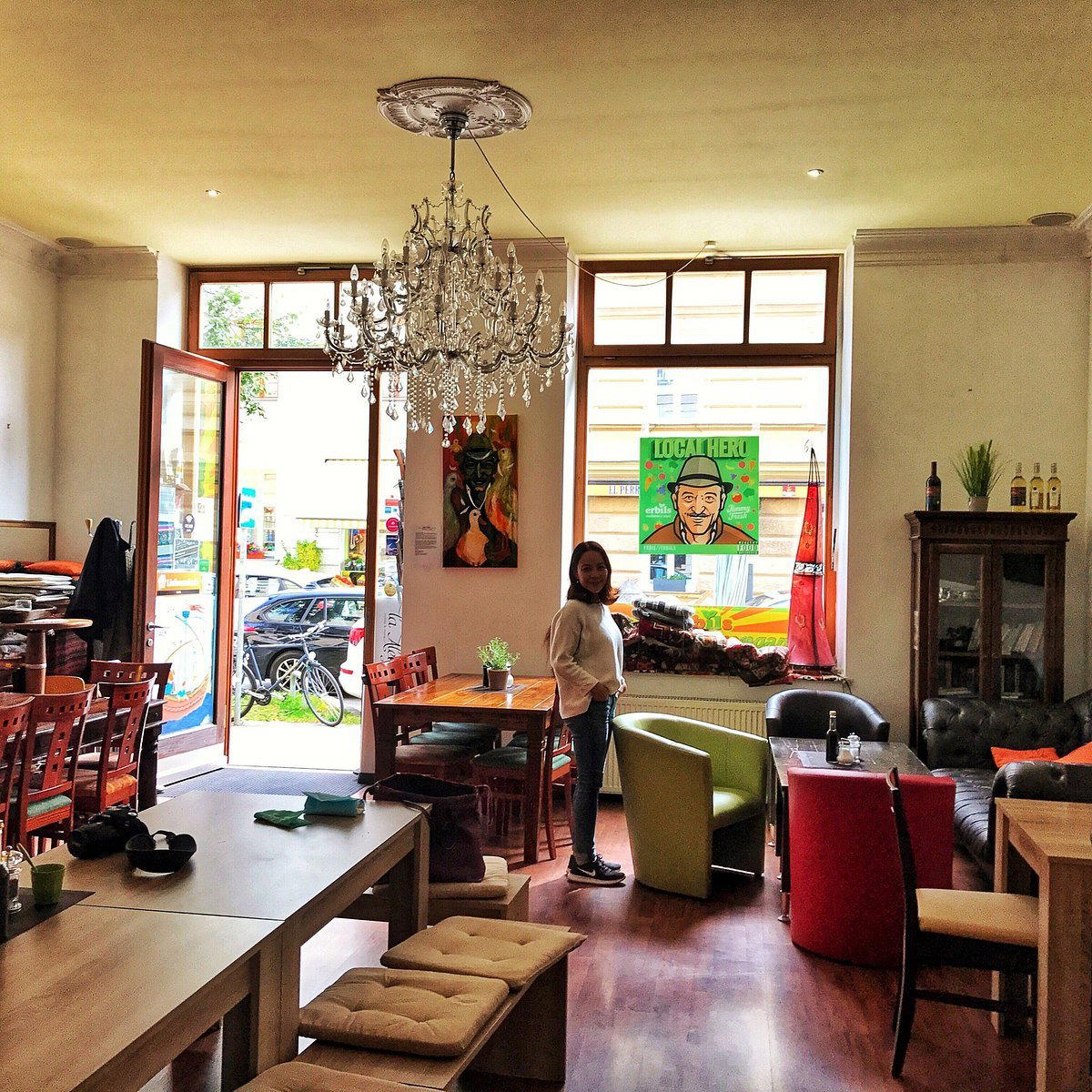
Where Munich's Plant-Based Dining Has Arrived
Haidhausen has long functioned as the less formally dressed counterpart to Munich's grander dining districts. The neighbourhood runs on a mixture of neighbourhood restaurants, independent cafes, and the occasional serious kitchen operating without the fanfare that follows addresses closer to the Altstadt. It is in this context that Erbils Vegan, at Breisacher Strasse 13, makes its case, not as a reaction against the city's broader restaurant culture, but as a distinct expression of where plant-forward cooking has been heading across German cities for the better part of a decade.
Germany's vegan dining tier has matured considerably. What began as a health-coded category, heavy on raw preparations and grain bowls, has shifted toward something closer to serious cookery, kitchens applying technique, seasoning discipline, and sequencing logic to menus built without meat, fish, or dairy. CODA Dessert Dining in Berlin made the case that a single-focus format, rigorously executed, could sit alongside Germany's most decorated tables. Erbils Vegan operates in a different register and at a different scale, but it inhabits the same broader shift: the idea that constraint, when applied with care, produces cooking with a defined point of view rather than a diminished one.
The Architecture of a Plant-Based Meal
The editorial angle most useful for understanding what distinguishes a kitchen like this is sequencing. In conventional tasting formats, the progression from lighter to richer, from delicate to assertive, relies heavily on animal-derived ingredients to provide fat, umami, and textural contrast at each stage. The more interesting question for a plant-based kitchen is how it constructs that same arc without the conventional tools.
Across the plant-based dining category, the solutions have tended to cluster around a few approaches: fermentation to build depth, long cooking to develop savour in root vegetables and legumes, and a more aggressive use of spice and acid to create the contrast that fat would otherwise supply. Kitchens that do this well produce meals with a clear narrative shape, a beginning that orients the palate, a middle that builds complexity, and a finish that resolves rather than simply stops. Kitchens that do it poorly produce meals that feel tonally flat, as though every course arrived at the same volume. The distinction matters as much here as it does at the classical French end of Munich's dining spectrum, where Atelier and Alois - Dallmayr Fine Dining have spent years refining exactly that kind of arc within their own formats.
What the plant-based format demands, then, is not a lesser version of conventional menu architecture but a recalibrated one, where the cook's decisions about temperature, texture, and intensity across courses carry more of the weight that ingredients might otherwise bear.
Munich's Fine-Dining Context and Where Erbils Sits
Munich's fine-dining tier is densely populated at the classical end. JAN, Tohru in der Schreiberei, and the city's other Michelin-recognised addresses operate within formats that foreground technique, sourcing credentials, and the kind of booking logistics that signal a table in demand. Plant-based dining in Munich occupies a different position in that hierarchy, closer to the neighbourhood restaurant tier in terms of format and approachability, further from it in terms of the cooking ambitions it can carry.
The broader German fine-dining scene offers useful reference points. Addresses like Schwarzwaldstube in Baiersbronn, Aqua in Wolfsburg, and Vendôme in Bergisch Gladbach represent the upper tier of the country's tasting-menu culture, formats where multi-course sequencing is central to the identity of the evening. Schanz in Piesport, Waldhotel Sonnora in Dreis, and Restaurant Haerlin in Hamburg extend that comparable set across the country's regions. None of these operate in the plant-based space, but they define the standard of intention and craft against which any serious kitchen, regardless of its ingredient parameters, is ultimately measured.
Erbils Vegan is not competing directly with that tier. What it is doing is applying a comparable seriousness of purpose to a category that has, in most cities, been underserved by exactly that quality of attention. The address at Breisacher Strasse 13 is not a destination in the way that a three-Michelin-star room is a destination, but it belongs to the same conversation about what committed cooking looks like in a city with a deep restaurant culture.
The Seasonal Dimension
Plant-based cooking lives and dies by seasonal produce in a way that is more exposed than in kitchens that can rely on protein to anchor a dish year-round. In spring and summer, the range of available vegetables, herbs, and fruits gives a plant-based kitchen the raw material for lighter, more varied progressions. In the colder months, and Munich winters are substantial, the challenge is to build interest and warmth from a narrower pantry of roots, brassicas, dried pulses, and preserved ingredients without the meal feeling repetitive or heavy.
This seasonal pressure is, in practice, a useful forcing mechanism. Kitchens that handle it well develop a cleaner understanding of ingredient logic than those that can always reach for a piece of protein to solve a compositional problem. Internationally, plant-forward tasting formats at addresses like Lazy Bear in San Francisco and Le Bernardin in New York City have demonstrated how seasonal constraint, taken seriously, sharpens a menu's identity rather than limiting it. The same principle applies at every scale of the category.
What to Know Before Visiting
Know Before You Go
- Address: Breisacher Str. 13, 81667 München, Germany
- District: Haidhausen, Munich
- Phone: Not listed, contact via visit or local search
- Website: Not currently listed; verify current hours and availability through Google or direct visit
- Booking: Walk-in availability not confirmed; arrive early or check ahead
- Price range: Not published, budget accordingly for a dedicated plant-based kitchen in Munich
- Dietary scope: Fully vegan format; allergy requirements should be raised directly with the kitchen ahead of arrival
Peers Worth Knowing
Comparable venues nearby, for context on price, style, and recognition.
| Venue | Cuisine | Price | Notes |
|---|---|---|---|
| Erbils VeganThis venue — the venue you are viewing | Vegan Turkish Döner | $$ | Not listed |
| Tahdig | Authentic Persian | $$ | Lehel |
| Das Maria | Levantine Cafe with Oriental Influences | $$ | Isarvorstadt |
| Pivasta | Authentic Afghan | $$ | Isarvorstadt |
| Roshan Restaurant | Authentic Afghan | $$ | Milbertshofen |
| Schmock | Israeli-Arabic Mezze | $$ | Theresienwiese |
At a Glance
- Cozy
- Trendy
- Casual Hangout
- Standalone
Current opening hours
- Monday
- 10:30 AM–8 PM
- Tuesday
- 10:30 AM–8 PM
- Wednesday
- 10:30 AM–8 PM
- Thursday
- 10:30 AM–8 PM
- Friday
- 10:30 AM–8 PM
- Saturday
- 10:30 AM–8 PM
- Sunday
- 10:30 AM–8 PM
Hours can change for holidays and private events. Last verified .
Cozy and casual atmosphere in a small vegan imbiss with a focus on flavorful, innovative plant-based dishes.