Google: 3.9 · 7,117 reviews
Em Sherif Café
.png)
Em Sherif Café brings the well-established Lebanese dining tradition of its family-owned group to Riyadh's Al Mohammadiyyah district, with bright interiors, generously portioned mezze and mains, and a menu that rewards those who linger long enough to reach dessert. The riz bi halib alone justifies the return visit. Open early until late, it sits in a price tier that makes sharing across the whole menu a realistic proposition.
 Discover on Pearl
Pearl is the En Primeur Club membership app — saves, bookings, and concierge access live there. Same editors, same standards.
How Lebanese Hospitality Translates to the Saudi Table
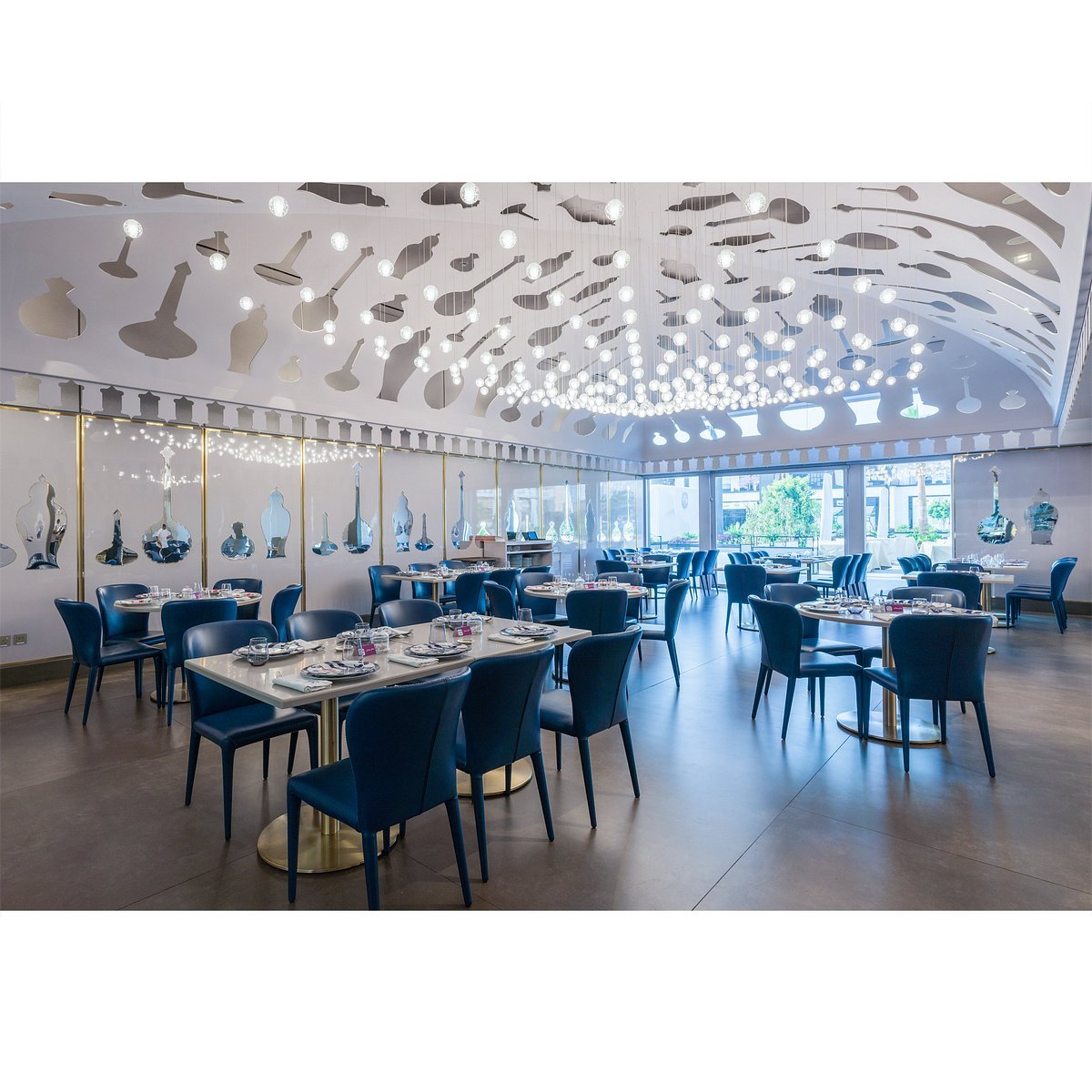
There is a particular rhythm to Lebanese dining that resists abbreviation. You arrive, the table fills with small plates before anyone has made a decision, bread appears without being requested, and the meal expands organically through refills and additions until the question of dessert becomes almost ceremonial. This is the tradition that Em Sherif Café carries into Riyadh's Al Mohammadiyyah district, operating from The Zone at 7236 Al Takhassousi. The room is bright and light in its décor, the kind of space designed for extended afternoon meals and long dinners rather than quick turnarounds, and the pace of service reflects that intent.
Lebanese restaurant culture has long mapped across the Gulf, with Beiruti-rooted groups establishing footholds in Dubai, Riyadh, and Doha throughout the past two decades. The category broadly divides between formal dining rooms that position Lebanese food at a premium price point and more accessible, family-orientated cafés where the logic is generosity over ceremony. Em Sherif Café, as the café-format arm of a family-owned group operating across the Middle East, operates firmly in the second register, and in Riyadh it fills a gap that the city's more ambitious Lebanese offering does not always address.
The Architecture of the Meal
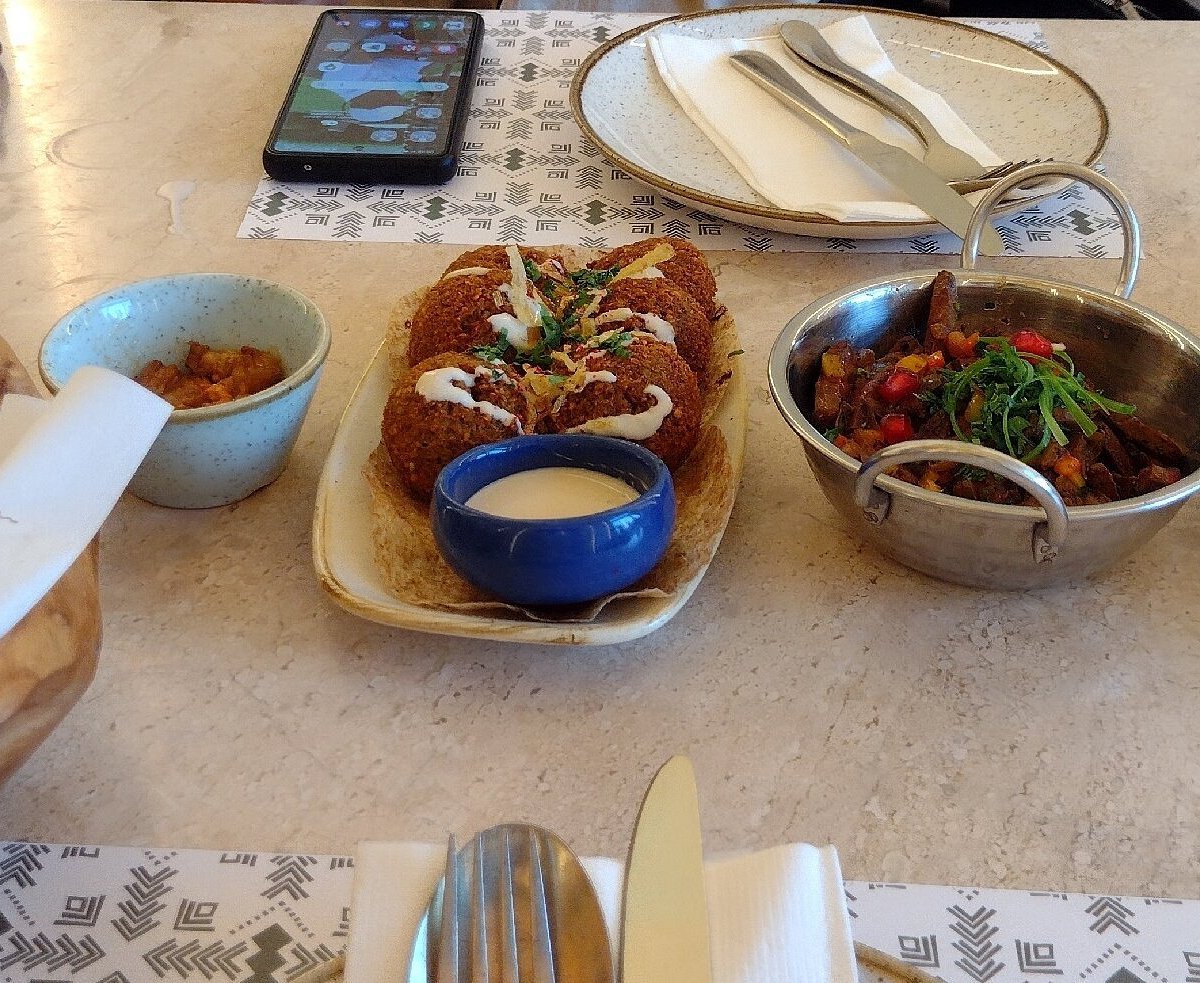
The menu at Em Sherif Café is organised across multiple sections, and the temptation to overorder is structural rather than accidental. Lebanese menus written this way are designed for the table to graze collectively, with dishes arriving in waves rather than strict courses, and portion sizes calibrated for sharing rather than individual consumption. This is the correct approach: the mathematics of the meal shift when four people split six dishes across two rounds rather than ordering singly, and the kitchen at Em Sherif Café appears to understand this social contract. Portions are described as generous enough to share without reservation.
The section logic of a Lebanese menu typically progresses through cold mezze, hot mezze, grills, and then a separate dessert chapter that most tables underestimate. The rhythm is slow enough that hunger has often peaked and passed by the time dessert arrives, which is precisely when restraint becomes harder to justify. At Em Sherif Café, the riz bi halib sits within that final chapter, and it is the dish most consistently flagged as the one to carry through regardless of what precedes it. Rice pudding in this tradition is a slow-cooked, lightly scented preparation, typically with rose water, and done properly it carries a texture that sits between creamy and firm without resolving fully into either. That it is noted as not to be missed positions it as a deliberate signature rather than a default offering.
Price Tier and What It Signals
Riyadh's dining market has expanded and differentiated sharply across the past five years, with high-concept international imports operating at significant price points alongside a growing number of more accessible neighbourhood-level venues. At the premium end, restaurants like Myazu and Benoit serve menus priced to compete with their international peers. Em Sherif Café occupies a different position: its menu is described as well-priced, and generosity in both flavour and portion is explicitly part of its operating identity. This is a meaningful distinction in a city where mid-range dining with genuine quality and regional specificity is not always easy to locate.
Compared to Marble or Aseeb, which each occupy distinct niches in Riyadh's broader restaurant picture, Em Sherif Café's appeal is rooted in consistency of tradition rather than novelty of format. It is not positioning itself as a destination for the architecturally composed plate. The credibility here comes from the group's track record across the Middle East and from the kind of cooking that accumulates trust slowly, through repetition and reliability rather than through the mechanisms of a single exceptional dish or a high-profile kitchen name.
For a sense of how Riyadh's restaurant scene is developing beyond individual venues, our full Riyadh restaurants guide maps the city's current options across cuisines and price tiers. Those planning broader trips might also reference our full Riyadh hotels guide, our full Riyadh bars guide, our full Riyadh experiences guide, and our full Riyadh wineries guide.
Where Em Sherif Café Sits in the Saudi Dining Picture
Lebanese food carries a different cultural weight in Saudi Arabia than it does in, say, New York or London. It is not an imported novelty requiring explanation. Across the Gulf, Lebanese dining has been part of the restaurant infrastructure for generations, and diners approach it with the same expectation of familiarity they might bring to a long-running neighbourhood institution. The question is not whether the food is Lebanese but whether this particular kitchen executes within the tradition with enough consistency to be worth returning to.
Saudi Arabia's own regional cuisines are gaining sharper restaurant representation, as seen in venues like Aseeb, which addresses the local culinary tradition directly. Elsewhere in the Kingdom, Kuuru in Jeddah and Harrat in AlUla reflect the growing confidence in presenting Saudi food at a serious restaurant level. Em Sherif Café does not compete with that movement; it operates in a parallel lane, reinforcing the Lebanese dining tradition that has long coexisted alongside local cuisine across the region.
For those more curious about the formal fine dining tier internationally, venues like Le Bernardin in New York City, Alain Ducasse at Louis XV in Monte Carlo, 8½ Otto e Mezzo Bombana in Hong Kong, Lazy Bear in San Francisco, Alinea in Chicago, and Emeril's in New Orleans occupy a very different register. The Lunch Room in Dubai offers another useful point of comparison for accessible, quality-conscious dining in the Gulf context.
Planning Your Visit
Em Sherif Café opens early and closes late, which makes it one of the more flexible options in Al Mohammadiyyah for those arriving off an extended afternoon or looking for a late-evening dinner without the constraint of an early kitchen. The format is accessible: the menu's breadth and the shareable portion sizes make it practical for groups of different sizes, and the team is noted for attentive hospitality rather than the kind of formal distance that sometimes accompanies more ambitious dining rooms. It is the sort of place where extending the meal feels natural rather than like an imposition on the kitchen's preferred pace.
Online booking details and contact information are not publicly listed at this time; visiting directly or checking current platforms for reservation availability is advisable, particularly for larger groups on weekend evenings when Lebanese cafés in Riyadh's dining districts tend to fill steadily through the night.
Cuisine Lens
A compact peer snapshot based on similar venues we track.
| Venue | Cuisine | Awards | Notes |
|---|---|---|---|
| Em Sherif Café | A family-owned group of restaurants across the Middle East, it’s now the turn of… | This venue | |
| تكية - TAKYA | Saudi Arabian | Saudi Arabian | |
| Lunch Room | World's 50 Best | ||
| Aseeb | World's 50 Best | ||
| Marble | World's 50 Best | ||
| Myazu | World's 50 Best |
Continue exploring
More in Riyadh
Restaurants in Riyadh
Browse all →
At a Glance
- Elegant
- Modern
- Family
- Brunch
- Casual Hangout
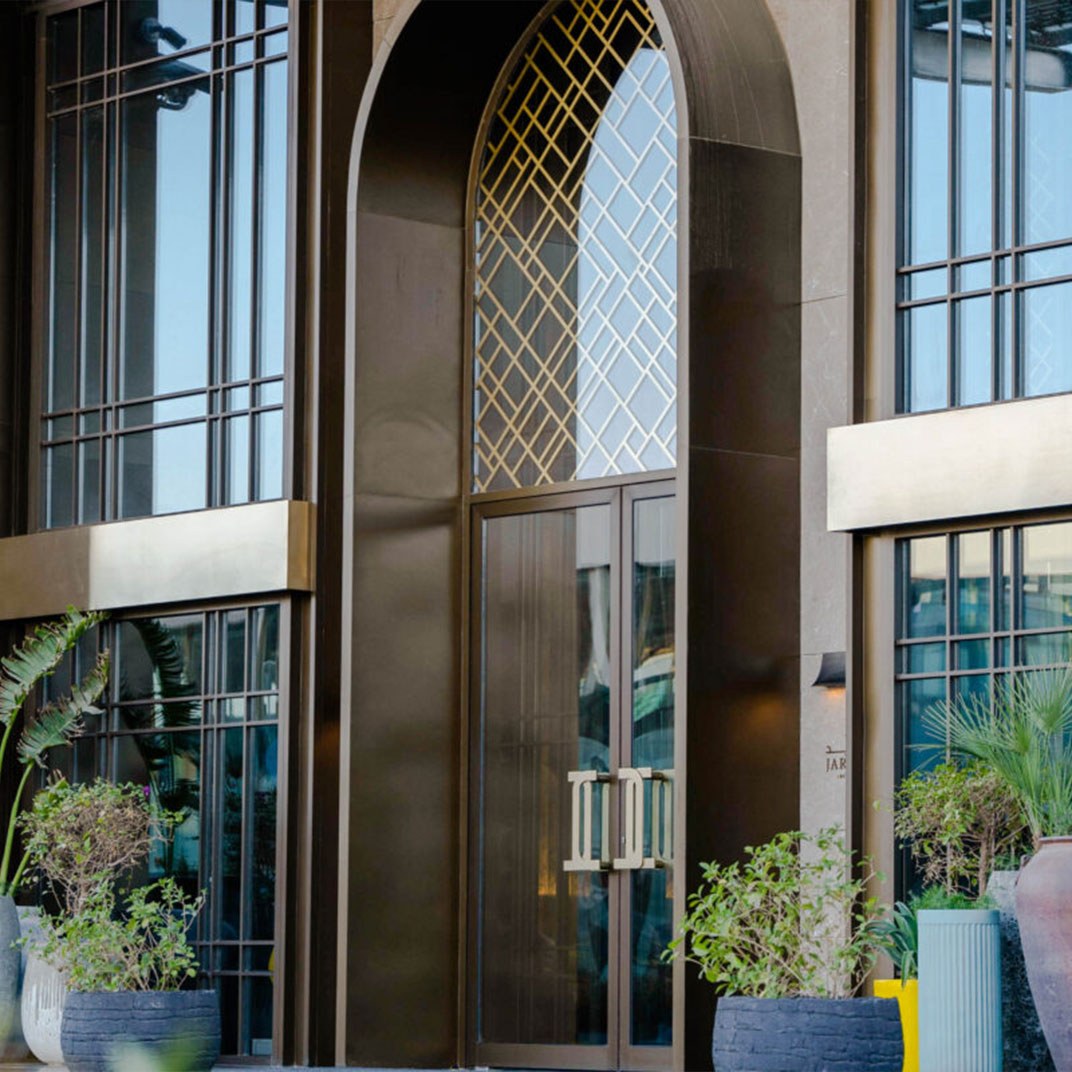
Bright, light décor with a relaxed café atmosphere.