Eliza Hot Metal Bistro
Our verdict
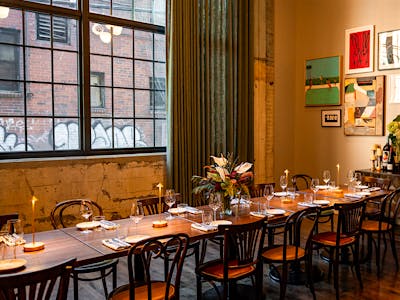
Eliza Hot Metal Bistro at Hotel Indigo in Pittsburgh serves contemporary American bistro fare with Pittsburgh flavors, craft cocktails, rooftop skyline views, and a conversational dining room.

Pearl is the En Primeur Club membership app — saves, bookings, and concierge access live there. Same editors, same standards.
- Address
- 331 Technology Dr, Pittsburgh, PA 15219
- Phone
- (412) 621-1551
- Website
- elizahotelindigo.com
- Directions
- Get directions
- Booking
- Book on OpenTable
The menu
What to order
- Fried chicken sandwich
- Crispy Brussels sprouts
Where Steel History Meets the Pittsburgh Table
The South Side Slopes neighborhood still carries the industrial grammar of Pittsburgh's steel era in its bones: brick mill buildings, repurposed manufacturing floors, streets that run at angles the grid never quite explained. It is in this context that Eliza Hot Metal Bistro takes its name from the hot metal bridge that once carried molten steel across the Monongahela. That etymology is not incidental. Pittsburgh's dining scene has, over the past decade, developed a pattern of anchoring itself in the city's industrial identity rather than apologizing for it, and Eliza sits squarely inside that tradition.
Dining rooms in converted industrial spaces tend to split between two registers: raw authenticity that privileges history over comfort, and polished reinvention that erases almost everything in favor of the contemporary. Eliza's address at 331 Technology Dr, Pittsburgh, PA 15219 places it in the mixed-use zone near the former LTV Steel site, a geography that already signals a layered relationship between the city's manufacturing past and its emergent knowledge-economy present. That tension, between what Pittsburgh was and what it is becoming, shapes much of the city's better dining.
Pittsburgh's Bistro Register: What the Category Means Here
The word bistro carries different freight depending on the city. In New York or San Francisco, it often signals a French-inflected casualness at a price point just below the formal dining tier. In Pittsburgh, the bistro format has developed something closer to its European original: a neighborhood anchor that takes its food seriously without requiring the full apparatus of tasting menus and sommelier theater. Venues in this register tend to draw from regional producers, maintain wine lists with genuine editorial intent, and run rooms that are full on Tuesday as often as Friday.
This is a different competitive set from Pittsburgh's more destination-oriented tables, which have increasingly positioned themselves against national peers. Restaurants like Altius operate in a register that courts out-of-town visitors and expense-account dinners. The bistro tier, by contrast, builds its authority through repeat local custom rather than one-off tourism. Both models are functioning in the city, which is itself evidence of how Pittsburgh's dining market has broadened.
For a useful comparison outside Pittsburgh, the bistro-as-serious-restaurant tradition has been executed at a high level at places like Smyth in Chicago, where ingredient-driven cooking operates without the full formality of a destination tasting menu. The category rewards consistency and kitchen discipline over spectacle, and those are harder qualities to sustain than they appear.
The Cultural Context of Industrial Pittsburgh Cuisine
Steel-era Pittsburgh was a city of immigrant labor: Slovak, Polish, Hungarian, Ukrainian, Italian, and Croatian communities established the food traditions that still run through the city's eating culture. The pierogies, the kolbász, the church-hall soups and the Eastern European fermentation traditions did not disappear when the mills closed; they became the substrate on which newer Pittsburgh cooking either consciously builds or unconsciously inherits. Apteka, operating as a plant-based Central European kitchen, has made this lineage explicit in a way that has drawn national attention.
The bistro format, when it works in this city, tends to draw on that substrate without turning it into theme or costume. Regional ingredients from western Pennsylvania, the dairy and pork traditions of the surrounding counties, and the garden-state produce of summer all feed into a kitchen vocabulary that is specific to place without being parochial. That locatedness is increasingly what separates the Pittsburgh dining scene from generic American restaurant culture, which can feel placeless in any given city.
On the national register, kitchens like Blue Hill at Stone Barns in Tarrytown have built entire identities around the relationship between a specific agricultural region and a dining room. Pittsburgh's version of that ambition is less capital-intensive and more diffuse, spread across a number of smaller operations that collectively signal the same commitment to sourcing specificity.
How Eliza Fits the South Side Ecosystem
South Side Pittsburgh has historically been the city's bar-and-late-night district, with East Carson Street running a density of nightlife that long made it difficult for serious restaurants to establish themselves. The zone around the Technology Drive address is adjacent to but distinct from that strip, sitting closer to the mixed-use development that has drawn tech employers and a younger professional demographic with different dining expectations. That demographic shift matters: it tends to support restaurants that can sustain a lunch-and-dinner model with a working-week crowd, which is structurally different from weekend-only destination dining.
The broader Pittsburgh scene is well documented in our full Pittsburgh restaurants guide, which maps the city's neighborhoods against their dining character. For context on how a city's mid-range serious dining compares to nationally recognized fine dining, it is worth considering what venues like Le Bernardin in New York City or The French Laundry in Napa represent at the apex: the bistro register operates several tiers below that level of investment and ambition, but serves a different and often more frequently visited function for its community. Other Pittsburgh tables in the neighborhood-serious category include Alfabeto and 1930 by Atria's, each anchoring their respective blocks in ways that build cumulative dining identity for the city.
Restaurants operating in culturally freighted industrial spaces elsewhere in the country, like Lazy Bear in San Francisco or Providence in Los Angeles, have shown that a venue's physical and historical context can either amplify or undermine its cooking depending on how consciously the kitchen engages with that context. In Pittsburgh, where the steel narrative is both genuine and inescapable, the bistro format offers a more honest vehicle for that engagement than a formal tasting menu might.
Planning Your Visit
Eliza Hot Metal Bistro is located at 331 Technology Dr in Pittsburgh's South Side. Given the venue's position in a mixed-use development corridor rather than a high-foot-traffic restaurant row, arriving by car or rideshare is practical; street parking along the surrounding blocks is generally available outside peak evening hours. For the most current information on hours, reservations, and current menu availability, contacting the venue directly is advisable, as the restaurant's booking policy and seasonal schedule are best confirmed in real time. The South Side's dining options extend to Bakersfield Penn Ave for those looking to extend an evening across the neighborhood.
Frequently asked questions
What's Eliza Hot Metal Bistro's location?
Eliza Hot Metal Bistro is located at 331 Technology Dr, Pittsburgh, PA 15219, Pittsburgh.
What is the significance of the 'Hot Metal' name at Eliza Hot Metal Bistro?
The Hot Metal name references the Hot Metal Bridge spanning the Monongahela River near Pittsburgh's South Side, itself named for the rail line that once transported molten steel between the Jones & Laughlin mills on either bank. Eliza Hot Metal Bistro at 331 Technology Dr sits within that same industrial geography, grounding the restaurant's identity in one of Pittsburgh's most documented steel-production corridors. It's a naming choice that signals local specificity rather than generic Pittsburgh nostalgia.
What do regulars order at Eliza Hot Metal Bistro?
Given its position in Pittsburgh's South Side corridor at 331 Technology Dr, the bistro format typically anchors around shareable plates and a focused rotating menu tied to the neighborhood's working-class culinary roots. check the venue's official channels for current offerings.
Is Eliza Hot Metal Bistro reservation-only?
The 331 Technology Dr address places it in a mixed-use development stretch rather than East Carson Street's walk-in nightlife strip, which typically means a more structured seating approach. Reaching out ahead of your visit is advisable.
What do critics highlight about Eliza Hot Metal Bistro?
No named critical reviews or award citations are currently documented for Eliza Hot Metal Bistro. Pittsburgh's bistro category has drawn increasing editorial attention as the South Side dining scene broadens beyond its bar-district identity, and venues in the Technology Drive corridor occupy an interesting transitional position in that conversation.
Can Eliza Hot Metal Bistro handle vegetarian requests?
Pittsburgh's broader bistro scene has moved steadily toward accommodating plant-forward requests alongside its meat-heavy steel-era food traditions. Confirming directly with the restaurant at 331 Technology Dr before visiting is the most reliable approach.
Is eating at Eliza Hot Metal Bistro worth the cost?
Pittsburgh's bistro tier generally runs more accessible than comparable formats in New York or Chicago, and the South Side neighborhood context tends to keep value expectations grounded. The Technology Drive location, away from the premium-rent East Carson corridor, can factor into that equation favorably.
Comparison Snapshot
Comparable venues nearby, for context on price, style, and recognition.
| Venue | Cuisine | Price | Notes |
|---|---|---|---|
| Eliza Hot Metal BistroThis venue — the venue you are viewing | Contemporary American Bistro with Pittsburgh Flavors | Not listed | Not listed |
| Square Cafe | Modern American Brunch Cafe | $10–20 | East Liberty |
| The Café at the Frick | Seasonal American Cafe with Afternoon Tea | $20–30 | North Point Breeze |
| Wise County Biscuits & Cafe | Southern-Style Biscuits & Cafe | $10–20 | Allegheny West |
| Walnut Grill - Robinson | Contemporary American Grill | $20–30 | Robinson Township |
| Franktuary (Lawrenceville) | Gourmet Hot Dogs with Regional Toppings | Not listed | Lower Lawrenceville |