De Fer Coffee & Tea
De Fer Coffee & Tea occupies a Smallman Street address in Pittsburgh's Strip District, a neighbourhood that has become the city's most concentrated corridor for specialty food and drink. The shop sits within a scene where sourcing precision and service knowledge carry more weight than scale, placing it firmly in Pittsburgh's serious coffee tier rather than its casual café category.

Pearl is the En Primeur Club membership app — saves, bookings, and concierge access live there. Same editors, same standards.
- Address
- 2002 Smallman St, Pittsburgh, PA 15222
- Phone
- (412) 209-2226
- Hours
- Mon–Fri 7 AM–5 PMSat–Sun 8 AM–5 PM
- Website
- defer.coffee
- Directions
- Get directions
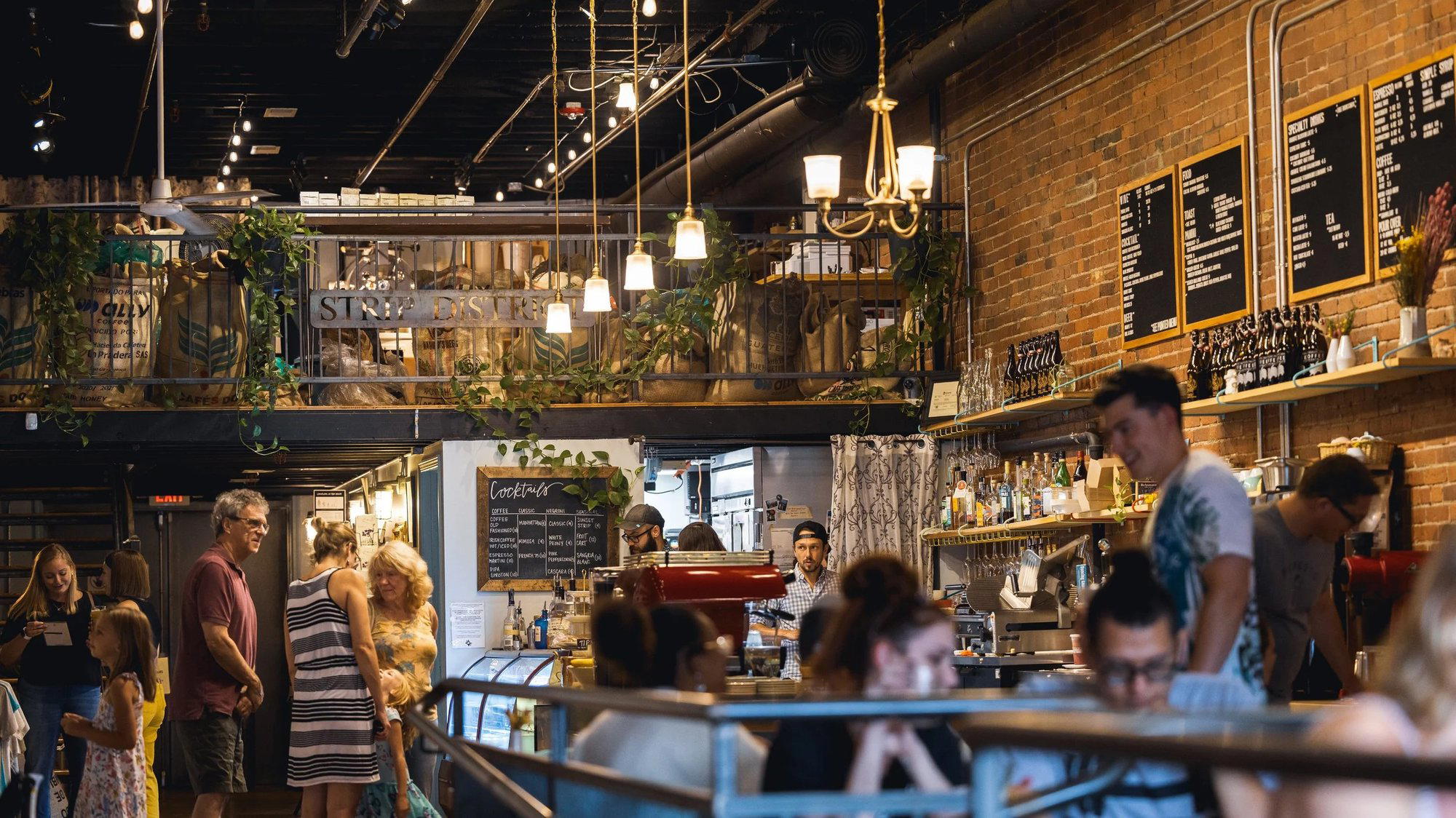
Smallman Street and the Strip District's Specialty Drink Scene
Pittsburgh's Strip District has gone through several identities in recent decades, moving from wholesale produce and meat markets toward a denser mix of specialty food retail, restaurants, and drink-forward cafés. Smallman Street, which runs through the heart of that corridor, now hosts some of the city's most deliberate hospitality operations, where the emphasis falls on product knowledge and service depth rather than volume or throughput. De Fer Coffee & Tea at 2002 Smallman St sits squarely in that context, positioned as a serious coffee and tea destination in a neighbourhood that has come to expect both from its operators.
The Strip District model, as it has developed over the past decade, tends to reward businesses that can speak to provenance and process. Customers walking Smallman Street on a Saturday morning are often the same people who shop for artisan cheese a block away or pick up single-origin chocolate from a specialty importer nearby. That accumulated consumer attention means a coffee and tea specialist in this location faces a more informed audience than it would elsewhere in the city, and the service dynamic adjusts accordingly. Staff who can articulate why a particular tea harvest matters, or how a specific brewing method shifts a coffee's profile, are not a luxury here — they are the expected standard.
Coffee and Tea as a Collaborative Service Format
The specialty coffee and tea category in American cities has gradually separated into two distinct operating modes. The first is the production-focused model, where sourcing, roasting, and extraction technique are the primary story and the counter is essentially a showcase. The second is the service-led model, where the relationship between the person behind the bar and the person in front of it becomes as important as the product itself. The leading operations blend both, and Pittsburgh has seen a steady movement in that direction across its specialty drink venues over the past several years.
De Fer fits into that blended approach. Coffee and tea, more than most drink categories, rewards collaborative service because the product range is wide enough that a knowledgeable guide genuinely changes what a guest experiences. A customer who arrives asking for something bright and acidic will leave with a different cup than one who wants body and length, and the barista who reads that conversation correctly and matches it to the right origin or preparation is performing a version of the same work a good sommelier does. That parallel is worth taking seriously: the tea side of an operation like this adds further complexity, since the variables around terroir, processing, and steeping are arguably even more layered than those in coffee.
Across American specialty drink bars that have built reputations for this kind of service depth, from Kumiko in Chicago to Bar Leather Apron in Honolulu, the through-line is a staff that treats the counter as a space for genuine exchange rather than transaction. Jewel of the South in New Orleans, Julep in Houston, and ABV in San Francisco each demonstrate that a commitment to product knowledge at the front of house creates a different category of experience than simple technical execution alone. De Fer occupies an analogous position within Pittsburgh's drink culture.
Where De Fer Sits in Pittsburgh's Drink Culture
Pittsburgh's specialty drink scene has expanded significantly without losing its neighborhood-first character. Operations like Allegheny Wine Mixer represent the city's appetite for serious, knowledgeable service in categories that go beyond the mainstream. The Strip District location gives De Fer access to both the weekend foot traffic that defines Smallman Street's daytime energy and the weekday professional crowd that increasingly treats the area as a working hub rather than a destination-only visit.
That dual audience shapes the service format coffee and tea shops in similar positions tend to adopt. The weekend crowd tends toward longer visits, more questions, and greater willingness to explore an unfamiliar origin or preparation. The weekday crowd tends toward efficiency, but expects that efficiency to be delivered with the same product standard. Managing both without collapsing into a generic fast-service model is one of the more demanding balancing acts in specialty coffee and tea hospitality, and the Strip District location puts that challenge front and center.
Pittsburgh's broader food and drink ecosystem offers useful points of comparison for understanding where De Fer positions itself. Alla Famiglia and Allegheny Elks Lodge #339 represent very different expressions of Pittsburgh hospitality, but both reflect the city's tendency to reward operations with a clear identity and genuine service conviction over those that attempt to be everything to everyone. Aiello's Pizza Squirrel Hill demonstrates a similar principle in a food context. De Fer's coffee and tea focus, without the dilution of a full food menu or cocktail program, reads as a deliberate positioning choice rather than a limitation.
Internationally, the most respected coffee and tea specialists operate on a similar philosophy of disciplined focus. The Parlour in Frankfurt on the Main and Superbueno in New York City both demonstrate that a narrow, well-executed product focus, supported by genuine service intelligence, can anchor a venue's reputation more effectively than a broad offering spread too thin.
Planning a Visit
De Fer Coffee & Tea is located at 2002 Smallman St in Pittsburgh's Strip District, accessible by foot from Downtown Pittsburgh and well within the walking range of the Saturday market crowd that treats Smallman Street as a primary destination. The Strip District's concentration of specialty food retailers means it functions naturally as a morning or midday stop within a longer neighborhood visit rather than a standalone destination requiring dedicated transit planning. For visitors approaching from other parts of the city, the Strip District sits just east of Downtown along the Allegheny River, making it a natural extension of a broader Pittsburgh itinerary. For a fuller view of what the city offers across food and drink categories, the EP Club Pittsburgh guide covers the city's key venues and neighborhoods in detail.
Cost Snapshot
| Venue | Price |
|---|---|
| De Fer Coffee & TeaThis venue — the venue you are viewing | $10–20 |
| Allegheny Wine Mixer | $20–30 |
| Dive Bar & Grille (South Side) | $20–30 |
| Bar Marco | $50–100 |
| Wigle Whiskey Distillery | $30–50 |
Continue exploring
More in Pittsburgh
Bars in Pittsburgh
Browse all →
Restaurants in Pittsburgh
Browse all →

Details
- Cozy
- Industrial
- Modern
- Casual Hangout
- After Work
- Live Music
- Lounge Seating
- Craft Cocktails
- Street Scene
Current opening hours
- Monday
- 7 AM–5 PM
- Tuesday
- 7 AM–5 PM
- Wednesday
- 7 AM–5 PM
- Thursday
- 7 AM–5 PM
- Friday
- 7 AM–5 PM
- Saturday
- 8 AM–5 PM
- Sunday
- 8 AM–5 PM
Hours can change for holidays and private events. Last verified .
Cozy and inviting with industrial design, calming music, large windows, local art, and a warm European-style atmosphere.