Electric Bull
Electric Bull plants an Argentinian grill and butcher concept in Virginia, occupying a niche that few operators in the region have committed to seriously. The format pairs open-fire cooking with butcher-counter access, positioning it closer to Buenos Aires parrilla tradition than to the domestic chophouse template. For Vienna, Virginia diners accustomed to steakhouse conventions, it represents a genuinely different point of reference.
Pearl is the En Primeur Club membership app — saves, bookings, and concierge access live there. Same editors, same standards.
- Address
- Vienna, United States
- Directions
- Get directions
 Saves & bookings on Pearl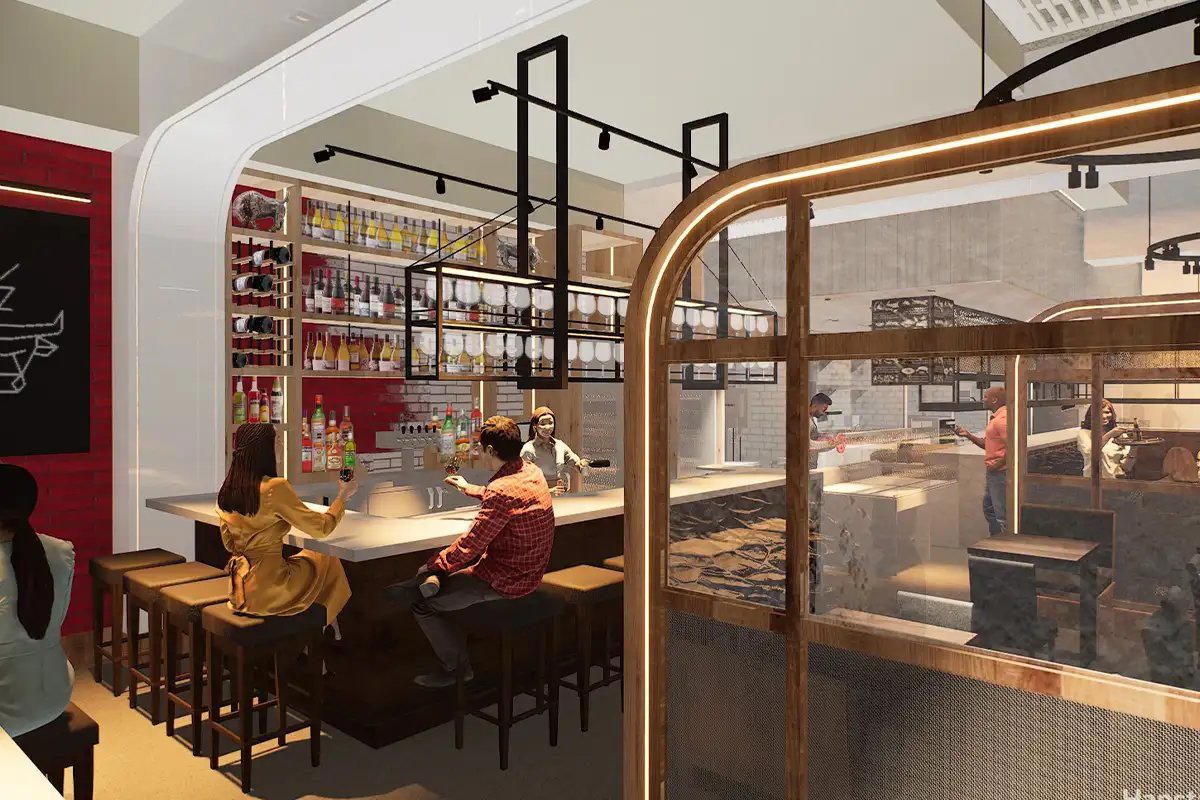
Fire, Smoke, and the Parrilla Tradition in Northern Virginia
Open-fire cooking carries a different set of rules than the gas-assisted kitchen. In the Argentinian parrilla tradition, the grill is both tool and philosophy: hardwood or quebracho charcoal, slow radiant heat, fat rendered over coals rather than caught in a pan. The cook watches the fire more than the protein. That approach, transplanted from Buenos Aires to Northern Virginia, is what Electric Bull has committed to, a combination Argentinian grill, steakhouse, and butcher operation that places itself in a category with almost no direct local competition.
Parrilla restaurants outside South America tend to cluster in major coastal cities: New York, Miami, Los Angeles. The format demands specific sourcing infrastructure, grill expertise, and a customer base willing to accept cooking times and presentation that don't match the domestic chophouse template. Bringing it to Vienna, Virginia is a considered positioning decision, not an accident of geography. The butcher component adds a dimension that most restaurants in this tier don't attempt, it implies volume, supply chain control, and a relationship with producers that goes beyond weekly ordering.
What the Room Signals Before the Food Arrives
In well-executed parrilla spaces, the dining room is arranged around the fire rather than despite it. The grill is typically visible, sometimes central, and the smell of woodsmoke reaches the table before the menu does. The sensory sequence is intentional: the crackle of coals, the rendered-fat perfume in the air, and the visual of open flame communicate what kind of meal is coming. Cuts arrive with grill marks that record the actual cooking process rather than a cosmetic sear, and the plating is spare, in Buenos Aires tradition, the beef is the event, and sauce (chimichurri, salsa criolla) is an accompaniment, not a feature.
That restraint distinguishes the parrilla format from the dressed-up American steakhouse, where compound butters, tower presentations, and elaborate side architecture often compete with the protein for attention. Electric Bull's dual identity as grill and butcher also shapes the physical environment in ways a pure restaurant doesn't: display cases, counter space, retail cuts alongside dining tables. The overlap between retail and hospitality is a format seen more frequently in European butcher-restaurant hybrids and in a handful of ambitious American operations, but it remains rare in Northern Virginia's dining scene.
Where Electric Bull Sits in the Vienna, Virginia Dining Picture
Vienna's restaurant scene draws from a suburban Northern Virginia base that skews toward family dining, fast casual, and the occasional upscale American or international option. The Argentinian grill-and-butcher format occupies a separate tier from the €€€€ creative tasting-menu restaurants that define Vienna's Austrian namesake city, places like Steirereck im Stadtpark, Amador, Konstantin Filippou, Mraz & Sohn, and Doubek operate in a high-formality, tasting-menu register. The restaurant's format is entirely different: protein-forward, fire-driven, accessible in sequence and structure even when the sourcing is serious.
The comparable reference points in American dining are restaurants like Lazy Bear in San Francisco, where the cooking process itself becomes part of the atmosphere, or the integrated sourcing model that operations like Single Thread Farm in Healdsburg have made central to their identity. In terms of fire-focused cooking philosophy, the parrilla tradition shares DNA with the ember-and-wood approach that defines a portion of contemporary American fine dining, even if the presentation register is more direct.
The Butcher Component: Why It Matters
Adding a butcher operation to a restaurant is not a marketing gesture when executed seriously. It requires cold-chain management, skilled breakdown of whole or primal cuts, and a customer base that will purchase retail alongside dining. The reward is supply chain transparency that most restaurants can only gesture toward: you can see the cuts before they reach the kitchen, understand the grades and origins, and buy the same product to cook at home. In the American steakhouse market, that kind of access is usually reserved for high-end meat purveyors like Pat LaFrieda or Allen Brothers, operations that supply restaurants but don't typically operate dining rooms alongside their counters.
The hybrid model the restaurant represents has stronger precedent in Argentina itself, where many parrillas began as carnicerías (butcher shops) that added grills and tables to serve their existing customers. The integration is logical: the leading cuts go to the grill; the trim and secondary cuts go to the retail case; nothing requires the margin engineering that conventional restaurant purchasing demands. The format signals an ambition that goes beyond standard steakhouse positioning.
Planning a Visit
The restaurant is a restaurant in Vienna, Virginia serving a modern steakhouse with South American cuts at price tier 3, with a smart casual dress code and a recommended reservation policy. Given the format, visits are worth timing around the grill's operating rhythm, parrilla cooking is not a quick-fire operation, and arriving at peak service allows the kitchen to work at full temperature. For those whose interest in fire-focused cooking extends to international reference points, the range runs from Le Bernardin in New York City and Alinea in Chicago at the contemporary fine dining end to the classical European register of Alain Ducasse at Louis XV in Monte Carlo and 8½ Otto e Mezzo Bombana in Hong Kong. Closer to home, Emeril's in New Orleans and The French Laundry in Napa represent the American fine dining pole against which regional ambition is typically measured.
A Lean Comparison
Comparable venues nearby, for context on price, style, and recognition.
| Venue | Cuisine | Price | Notes |
|---|---|---|---|
| Electric BullThis venue — the venue you are viewing | Not listed | $$$ | Not listed |
| Roberto's | Not listed | $$$ | downtown Vienna, Authentic Italian Fine Dining |
| Natta Thai | Glyndon Plaza, Authentic Thai | $$ | Not listed |
| Maple Ave Restaurant | Vienna, Modern European Bistro | $$$ | Not listed |
| Plaka Grill | Vienna, Authentic Greek Grill | $$ | Not listed |
| Inca Social | Vienna, Modern Peruvian | $$ | Not listed |
Continue exploring
More in Vienna
Restaurants in Vienna
Browse all →
Bars in Vienna
Browse all →
Hotels in Vienna
Browse all →


At a Glance
- Lively
- Modern
- Energetic
- Group Dining
- Special Occasion
- Open Kitchen
High-energy atmosphere centered around a butcher counter with live-fire cooking excitement.