
Our verdict
A quietly regarded address on Carrer d'en Ventallols in Tarragona's old quarter, El Cup Vell sits within the city's compact but earnest dining scene, where Catalan culinary tradition shapes most menus. The surrounding area rewards those who look past the Costa Daurada resort strip toward the Roman-walled city above.

Pearl is the En Primeur Club membership app, where members save venues, book tables and use the concierge.
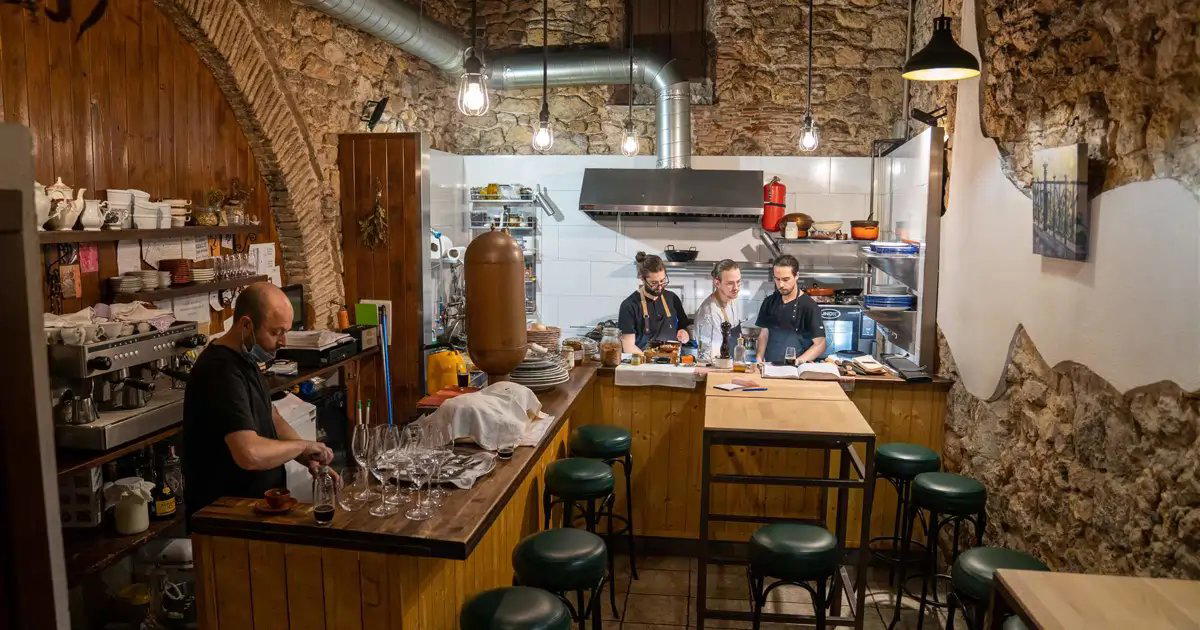
Tarragona's Old Quarter and the Case for Staying Inside the Walls
The approach to Carrer d'en Ventallols tells you something about Tarragona's relationship with its own history. The medieval street grid inside the Roman walls, one of the best-preserved in the western Mediterranean, has never quite surrendered to the resort economy that dominates the coast below. Restaurants here tend to draw locals and returning visitors rather than transient beach traffic, and the clientele shapes the offer: direct Catalan cooking at prices calibrated to a city that still has a functioning everyday life rather than a purely tourist economy.
El Cup Vell occupies this civic rather than tourist register. The address at number 8 on Carrer d'en Ventallols places it inside the historic Part Alta, where the density of Roman archaeology, the amphitheatre, the forum, the circus, gives the neighbourhood a weight that most Spanish coastal towns simply do not have. That context matters when reading any meal eaten nearby. Tarragona has been a seat of culture, trade, and administration for more than two millennia, and the culinary traditions that developed here carry that layering: rice, salt cod, slow-cooked legumes, and the coastal abundance of the Camp de Tarragona and the Ebre delta all feeding a table culture that predates most of what the wider world thinks of as Spanish food.
The Catalan Table in a Roman City
Catalan cuisine is one of the older continuous cooking traditions in Europe, with codified recipe collections dating to the medieval period. What distinguishes the Tarragona expression from, say, Barcelona's more internationally inflected dining scene is a closer attachment to the immediate hinterland: the Garraf and Priorat wine zones to the north and west, the rice paddies of the Ebre delta an hour south, the fishing boats working out of El Serrallo below the cliff. The city's markets reflect this geography with uncommon directness.
In the broader Spanish dining conversation, the names that dominate tend to cluster in the Basque Country and Catalonia's larger cities. El Celler de Can Roca in Girona, Arzak in San Sebastián, and Azurmendi in Larrabetzu operate at an altitude that requires advance planning and significant expenditure. DiverXO in Madrid and Martin Berasategui in Lasarte-Oria occupy their own stratospheres of ambition and price. Tarragona's restaurants, including Barquet Tarragona with its regional focus, and La Xarxa with its dedication to rice dishes, belong to a different register entirely: the mid-market civic tier where the food serves the city rather than vice versa. El Terrat pitches slightly higher with a modern cuisine format at €€€, suggesting that the city's better restaurants are beginning to differentiate more deliberately by tier and ambition.
For comparison, the kind of technique-driven coastal cooking that draws international attention in Spain, Aponiente in El Puerto de Santa María and Quique Dacosta in Dénia being the clearest Mediterranean analogues, relies on marine ingredient sourcing and technical infrastructure that only make financial sense at a certain price point and with the right critical audience. Tarragona's proximity to similar marine resources has not yet produced that kind of flagship, but the underlying larder is there.
What El Cup Vell Represents in the Local Scene
Within Tarragona's Part Alta, an address like El Cup Vell signals something specific: a neighbourhood-anchored restaurant in a city where the distinction between tourist and resident dining still holds. The street name itself suggests antiquity, Catalan for "old vat" or "old vessel", which in a wine-producing region carries associations with cellar culture and the agrarian economy that shaped coastal Catalonia for centuries.
The Part Alta's restaurant mix tends toward the informal end of the formality spectrum. This is not Barcelona's Eixample, where tableside theatrics and architectural dining rooms have become part of the offer. Tarragona's old town restaurants generally operate with less ceremony and more focus on the plate, a characteristic that suits the city's self-image as a working Roman town that happens to be beautiful rather than a beauty that has been made to work for tourism.
Visitors moving between Barcelona and the Costa Daurada or the Priorat wine region pass through Tarragona with some regularity, though fewer stop to eat in the Part Alta than the quality of the neighbourhood would justify. The high-speed rail connection from Barcelona Santa Estació brings the city within 35 minutes of the Catalan capital, making it viable as a standalone lunch destination rather than just an overnight stop. For those already spending time in Tarragona, the compact geography of the old town means that most addresses worth eating at are within a short walk of each other and of the major Roman sites.
Tarragona's more documented dining options give useful points of reference. Barquet Tarragona holds the regional cuisine flag at the €€ tier, with a track record that locals cite reliably. La Xarxa at the same price point narrows its focus to rice dishes, which in Ebre delta country is a reasonable editorial decision. El Terrat moves the ambition dial and the price accordingly. El Cup Vell sits somewhere in this local conversation, at an address that places it clearly within the residential fabric of the Part Alta rather than on the tourist-facing perimeter.
For context on how technique and produce interact at the highest levels of Spanish coastal cooking, the contrast with something like Cocina Hermanos Torres in Barcelona is instructive: a city of six million supports a different kind of ambition than a provincial capital of 130,000, even one with Tarragona's extraordinary historical depth. That same logic applies internationally; the precision and conceptual density of a restaurant like Atomix in New York City or the technical mastery at Le Bernardin are products of very different urban scales and dining economies.
Planning a Visit
The Part Alta is compact enough that orientation takes a matter of minutes. Arriving by train to Tarragona station and making the uphill walk to the walled city takes roughly 15 to 20 minutes on foot, or a short taxi ride. The neighbourhood is pedestrianised in its core, which means the approach to Carrer d'en Ventallols is on foot regardless of how you arrive in the city. As with most small restaurants in Catalan old towns, booking ahead by phone or in person is advisable for dinner service, particularly on weekends when local families tend to fill the better tables early. Lunch on a weekday carries less friction. For a fuller picture of where El Cup Vell sits in the city's wider hospitality offer, the full Tarragona restaurants guide covers the current scene in detail, while the Tarragona hotels guide, bars guide, wineries guide, and experiences guide provide the surrounding infrastructure for anyone spending more than a single meal in the city.
Frequently asked questions
Is El Cup Vell good for families?
El Cup Vell's location on Carrer d'en Ventallols, 8 in Tarragona's Part Alta puts it within a compact, walkable medieval quarter that suits mixed-age groups well. The neighbourhood setting, rather than a formal tasting-menu format, typically signals a more relaxed pace suited to families.
What should I expect atmosphere-wise at El Cup Vell?
The address inside Tarragona's Roman walled quarter sets the tone before you arrive: stone streets, medieval building stock, and a local residential character rather than a tourist-facing strip. El Cup Vell sits within that context on Carrer d'en Ventallols, suggesting a neighbourhood-anchored room where the surroundings do as much work as the interior. Expect a grounded, Part Alta atmosphere rather than a polished hotel-dining room.
Is El Cup Vell inside Tarragona's Roman walled city, and does that affect access?
Yes, the address at Carrer d'en Ventallols, 8 places El Cup Vell within Tarragona's Part Alta, the historic core enclosed by Roman walls that are now a UNESCO World Heritage component. The street grid is medieval and narrow, meaning vehicle access is limited and most visitors arrive on foot. From Tarragona train station, the uphill walk to the walled quarter takes roughly 15 to 20 minutes, or a short taxi ride to the quarter's edge.
What do people recommend at El Cup Vell?
For a useful reference point, Tarragona's Catalan cooking tradition draws on ingredients from both the Camp de Tarragona hinterland and the coast, so expect that regional logic to inform the menu. Checking recent visitor reviews or calling ahead will give the most current picture of what the kitchen is running.
Where is El Cup Vell located?
El Cup Vell is located at Carrer d'en Ventallols, 8, 43003 Tarragona, Spain, Tarragona.
What's the best way to book El Cup Vell?
Visiting in person during opening hours or searching for an updated contact through Google Maps or a Spanish dining directory such as ElTenedor is the most reliable route. For popular periods around Tarragona's summer season, securing a table in advance is worth the extra effort.
Pricing, Compared
Comparable venues nearby, for context on price, style, and recognition.
| Venue | Cuisine | Price | Awards | Notes |
|---|---|---|---|---|
| El Cup VellThis venue (the venue you are viewing) | Contemporary Mediterranean Tasting | $50–100 | Not listed | Not listed |
| AQ | Contemporary Catalan Fine Dining with Asian Fusion | $50–100 | Macarfi 7.6 Food Rating · Guía Repsol 1 Sol | Old Town (near Cathedral), Contemporary Catalan Fine Dining with Asian Fusion |
| El Terrat | Modern Spanish with Mediterranean and Moroccan Influences | $100–150 | Michelin Plate · Guía Repsol 1 Sol | Casc Antic, Modern Spanish with Mediterranean and Moroccan Influences |
| Barquet Tarragona | Traditional Catalan Seafood & Rice Dishes | $30–50 | Michelin Plate · Macarfi 7 Food Rating | Centre, Traditional Catalan Seafood & Rice Dishes |
| Aromatic | Flexiteriana Mediterranean | Not listed | We're Smart World 2 Radishes | Altafulla, Flexiteriana Mediterranean |
| Vergel Veggie | 100% Vegan Mediterranean | $20–30 | We're Smart World 3 Radishes | old town, 100% Vegan Mediterranean |
Recognition history
Dated appearances from independent guides and award organizations, with the underlying list record or original source where available.
Opinionated About Dining Newly Added European Restaurants
Opinionated About Dining
Full recognition history (2 entries)
Opinionated About Dining Casual in Europe Highly Recommended
Opinionated About Dining
Continue exploring
More in Tarragona
Restaurants in Tarragona
All restaurants in Tarragona →
Hotels in Tarragona
All hotels in Tarragona →

Details
- Cozy
- Intimate
- Rustic
- Date Night
- Special Occasion
- Open Kitchen
- Natural Wine
- Local Sourcing
- Tasting Menu
- Small Plates
- Natural Wine
- Vegetarian Friendly
Current opening hours
- Monday
- Closed
- Tuesday
- Closed
- Wednesday
- 1:45–3 PM, 8:45–10 PM
- Thursday
- 1:45–3 PM, 8:45–10 PM
- Friday
- 1:45–3 PM, 8:45–10 PM
- Saturday
- 1:45–3 PM, 8:45–10 PM
- Sunday
- 1:45–3 PM
Hours can change for holidays and private events. Hours as of .
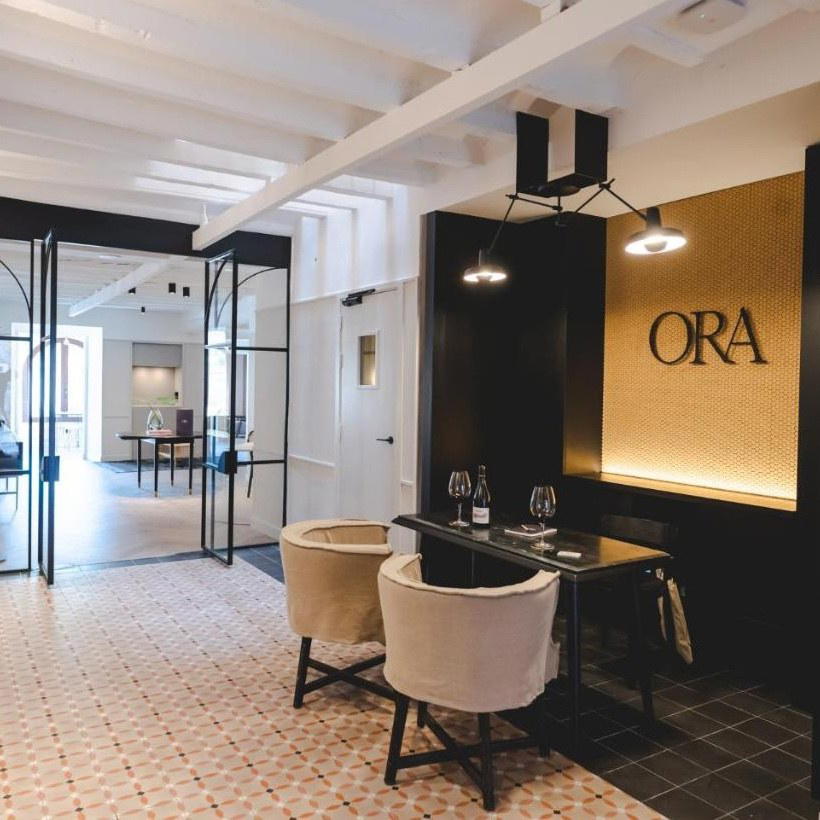
Calm, comfortable atmosphere with clean lines, warm materials, few tables for intimate conversation, relaxed yet refined, and an open kitchen view.