

Michelin Plate · Macarfi 7.1 Food Rating
Our verdict
El Cenador del Azul holds consecutive Michelin Plate recognition (2024 and 2025), placing it among the more reliable tables in Asturias for traditional regional cooking with contemporary inflection. The à la carte leans on ingredients native to the region, including the prized pitu de caleya free-range chicken, while a set lunch menu extends access at the mid-range price point.

Pearl is the En Primeur Club membership app, where members save venues, book tables and use the concierge.
The menu
What to order
- Solomillo con foie
- Merluza con almejas
- Cheesecake
Where Asturian Ingredients Drive the Argument
Mieres sits in the Caudal valley, a stretch of inland Asturias where mining-era industrial infrastructure gives way, unexpectedly, to a quiet food culture shaped more by what grows and grazes in the surrounding hills than by any proximity to the coast. In many Spanish regions, the restaurant conversation defaults to the sea. Here, it defaults to the land: the free-range chickens that scratch through mountain pastures, the slow-grown vegetables of rural smallholdings, the cider-house traditions that still define how people eat on a Tuesday afternoon. El Cenador del Azul, on Calle Aller in the centre of Mieres, reads as a product of that context rather than an exception to it.
The address itself is telling. Calle Aller is a residential commercial street, not a destination boulevard. The approach involves no fanfare, no design gesture aimed at the camera. What the Michelin Plate assessors, who awarded the recognition in both 2024 and 2025, noted was the service, described as an art form in its own right, and a kitchen that holds traditional Asturian cooking in genuine respect while allowing contemporary technique to enter without displacing what matters.
The Pitu de Caleya and the Case for Regional Provenance
Asturian cooking occupies a specific position in Spain's regional food map. It lacks the international profile of the Basque Country, where three-Michelin-star operations like Arzak in San Sebastián and Azurmendi in Larrabetzu have built global reputations on creative cuisine at the highest price tier. It lacks the headline restaurants of Catalonia, where El Celler de Can Roca in Girona and Cocina Hermanos Torres in Barcelona operate at €€€€ and have become international reference points. What Asturias has instead is an unusually intact larder: green pastures fed by Atlantic rainfall, a fishing coastline that supplies the coast-facing restaurants, and an interior tradition built on products that resist industrialisation by geography and habit.
The pitu de caleya is the clearest emblem of this. A free-range chicken raised in the Asturian countryside on a slow-growth cycle, it produces meat with a texture and flavour depth that factory-farmed equivalents cannot approach. It appears on the El Cenador del Azul menu as a mainstay, not a seasonal gesture, because in the logic of Asturian cooking it is a foundational ingredient rather than a novelty. The decision to anchor a contemporary menu to a bird like this is itself an editorial stance: the kitchen is arguing that the region's traditional produce is the starting point, not a reference to be politely acknowledged and then sidestepped. That argument is more coherent at a €€ price point than it would be dressed up at four times the cost, because it keeps the dish inside the culture it belongs to rather than extracting it for a different audience.
For a broader cross-section of Asturian coastal cooking at the same regional register, Auga in Gijón represents the parallel tradition, fish and seafood rather than land-driven produce, and the two together sketch what the region's table actually looks like. Comparable commitment to local sourcing at the highest level can be found further afield at Aponiente in El Puerto de Santa María and Quique Dacosta in Dénia, though both operate at entirely different price tiers and with different creative ambitions.
Format: À la Carte, Set Lunch, and the Logic of Access
The menu structure at El Cenador del Azul follows a pattern common among well-regarded provincial Spanish restaurants: an à la carte with full depth and a set lunch menu that opens access to the kitchen's range without requiring the full investment of an evening visit. Both run on a traditional feel with contemporary touches, the description of fusion entering starters and mains is not a claim to creative cuisine in the manner of DiverXO in Madrid or Mugaritz in Errenteria, but rather an acknowledgement that the kitchen is not operating as a museum piece. The traditional base is the point; the contemporary inflection is the tool.
The set lunch is the more efficient entry point for first visits, particularly during weekday service when the rhythm of the room is more local than tourist. The Michelin Plate recognition (consecutive, 2024 and 2025) signals a kitchen working at a consistent level without the theatrical pressure of starred service, which at the €€ bracket is the correct calibration. The service philosophy, framed in the Michelin notes as something the restaurant considers an art form, suggests attention without formality, which is the mode most appropriate to the food on the plate.
Planning a Visit
El Cenador del Azul sits at C. Aller, 51, 33600 Mieres, Asturias. Mieres is accessible from Oviedo by regional road in under 30 minutes, making it a practical lunch destination from the regional capital. The €€ price range positions it as a mid-range table where the investment is in the cooking and ingredients rather than the room or the production. Booking ahead is advisable; a 4.7 rating over 700-plus reviews at this price point in a town of this size indicates consistent demand. For visitors spending time in the region, our full Mieres restaurants guide covers the broader dining picture, while the Mieres hotels guide, bars guide, wineries guide, and experiences guide map the full stay. Those with a wider appetite for Spain's regional cooking tradition will find useful comparisons at Martin Berasategui in Lasarte-Oria, Ricard Camarena in València, Atrio in Cáceres, and Auberge Grand'Maison in Mûr-de-Bretagne, each operating in a different regional register but with the same underlying commitment to place-specific ingredients as the foundation of the menu.
Frequently asked questions
Is El Cenador del Azul a family-friendly restaurant?
The €€ price range and traditional Asturian cooking base make it compatible with family dining. The set lunch format in particular offers an accessible entry point at lower commitment than the full à la carte. The address at C. Aller, 51 in central Mieres also means no remote rural logistics to manage.
How would you describe the vibe at El Cenador del Azul?
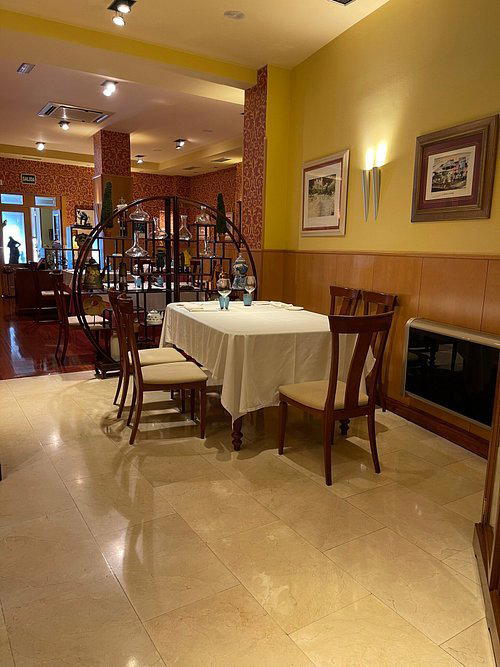
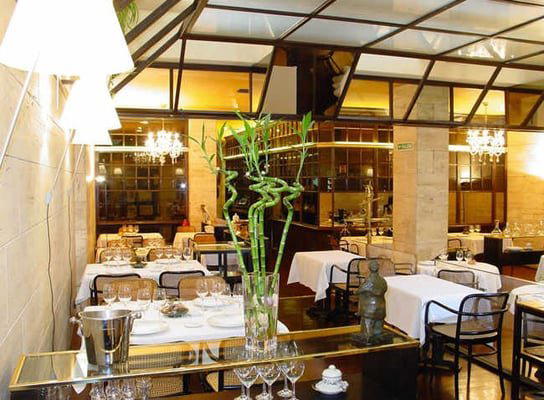
The room sits at the unassuming end of the €€ bracket in a working inland Asturian town, so expect a local, low-key atmosphere rather than a destination-restaurant setting. Michelin's own assessment singles out the service as attentive without being formal, describing it as something the kitchen treats as an art form. Think provincial dining room where the cooking does the talking.
Is El Cenador del Azul Michelin-listed?
El Cenador del Azul has received recognition including: A restaurant that is both classic and contemporary in style where attention to detail is key in every aspect of its unassuming but superb service, which it considers an art form. The à la carte, which is impressively complemented by a set m….
What should I eat at El Cenador del Azul?
The pitu de caleya, a free-range chicken variety specific to Asturian farming tradition, is the dish most directly tied to the kitchen's identity. Michelin's reviewers note it as a mainstay of the à la carte, which layers contemporary and light fusion touches onto a traditional Asturian base. Start there, then use the starters to read how the kitchen handles regional ingredients with a more modern hand.
Comparable Spots, Quickly
| Venue | Cuisine | Price | Awards | Notes |
|---|---|---|---|---|
| El Cenador del AzulThis venue (the venue you are viewing) | Classic Spanish Fine Dining | $50–100 | Michelin Plate · Macarfi 7.1 Food Rating | Not listed |
| Aponiente | Avant-Garde Marine Seafood | $200–300 | 3 Michelin Stars · World's 50 Best #84 | Progressive - Seafood, Creative |
| Arzak | Contemporary Basque Fine Dining | $300–500 | 3 Michelin Stars · World's 50 Best #31 | Modern Basque, Creative |
| DiverXO | Avant-Garde Spanish Tasting Menu | $300–500 | 3 Michelin Stars · World's 50 Best #4 | Progressive - Asian, Creative |
| El Celler de Can Roca | Creative Catalan Fine Dining | $300–500 | 3 Michelin Stars · World's 50 Best #2 | Progressive Spanish, Creative |
| Quique Dacosta | Avant-Garde Spanish Fine Dining | $300–500 | 3 Michelin Stars · World's 50 Best #65 | Creative |
Recognition history
Dated appearances from independent guides and award organizations, with the underlying list record or original source where available.
Michelin Plate
Michelin
Macarfi 7.1 Food Rating
Macarfi
Full recognition history (4 entries)
Michelin Plate
Michelin
Michelin Plate
Michelin
Continue exploring
More in Mieres
Restaurants in Mieres
All restaurants in Mieres →
Details
- Elegant
- Classic
- Intimate
- Sophisticated
- Date Night
- Business Dinner
- Special Occasion
- Celebration
- Private Dining
- Standalone
- Extensive Wine List
- Local Sourcing
- A La Carte
- Set Menu
- Wine
- Cider
- Vegetarian Friendly
- Gluten Free Options
Current opening hours
- Monday
- Closed
- Tuesday
- 1–4 PM
- Wednesday
- 1–4 PM
- Thursday
- 1–4 PM
- Friday
- 1–4 PM, 9–11 PM
- Saturday
- 1–4 PM, 9–11 PM
- Sunday
- Closed
Hours can change for holidays and private events. Hours as of .
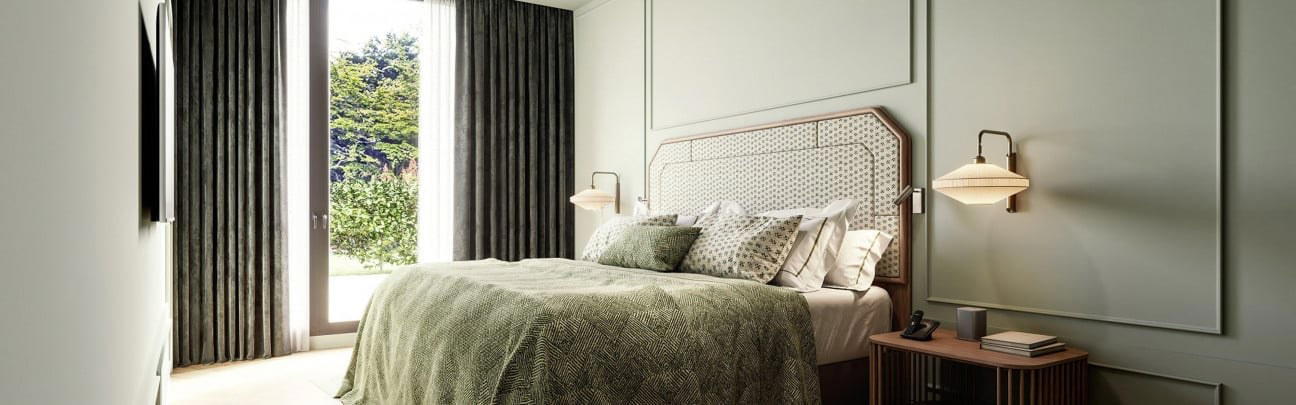
Elegant and old-fashioned interior with warm, relaxed atmosphere; quiet and welcoming environment ideal for unhurried dining.