
On a quiet stretch of Carrer de Lleida in Sants-Montjuïc, El Camarote de Tomás occupies the kind of Barcelona address that rewards neighbourhood knowledge over tourist maps. The kitchen draws on a sourcing-led approach rooted in the rhythms of Catalan markets and coastal supply, placing it in the informal, ingredient-driven tier of the city's dining scene rather than the tasting-menu circuit.
Pearl is the En Primeur Club membership app — saves, bookings, and concierge access live there. Same editors, same standards.
- Address
- Carrer de Lleida, 3, Sants-Montjuïc, 08004 Barcelona, Spain
- Phone
- +34934266736
- Website
- camarotedetomas.com
- Directions
- Get directions
 Saves & bookings on Pearl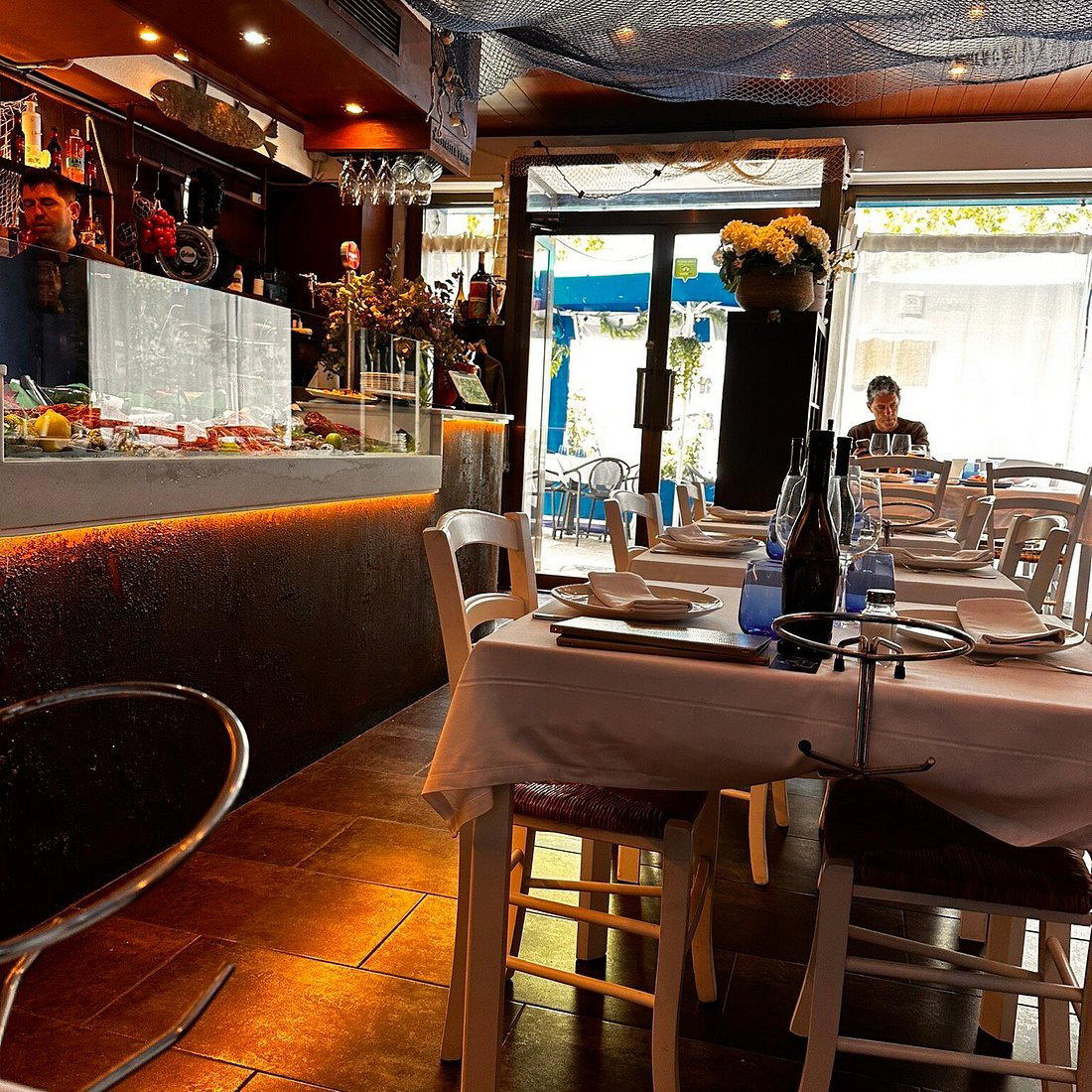
Where Sants-Montjuïc Eats When It Isn't Performing
Barcelona's dining conversation tends to collapse around two poles: the Eixample tasting-menu circuit, where Cocina Hermanos Torres and Disfrutar operate at the summit of Spain's creative register, and the tourist-facing rambla strip, which is being ignored entirely. Between those extremes sits a more useful category: the neighbourhood restaurant that functions as a daily institution for the people who actually live around it. El Camarote de Tomás, on Carrer de Lleida in the Sants-Montjuïc district, belongs to that middle ground. The address is not on the gallery-hopping circuit, nor near the main hotel clusters of the Gràcia or Sant Pere neighbourhoods. That is precisely the point.
Sants-Montjuïc is a working district in the older sense: it climbs from the logistics hub of Sants station toward the slopes of Montjuïc hill, mixing residential blocks with quieter commercial streets. A restaurant operating here builds its audience through repetition and word of mouth rather than foot traffic from design hotels. That structural reality shapes the kind of cooking that survives in the area. Elaborate tasting menus are a poor fit for a neighbourhood where the audience eats out frequently and on weekday schedules. What works is a kitchen anchored to product quality, with a format that reads differently on a Tuesday than it does on a Saturday.
The Sourcing Logic Behind Catalan Neighbourhood Cooking
In Catalonia, the relationship between restaurant cooking and market supply is not a marketing position, it is an operating condition. The Boqueria and the city's lesser-known mercats de barri (neighbourhood markets) still move genuinely seasonal produce, and the coastal supply chain from ports like Palamós and Blanes delivers crustaceans and fish on timelines that shape what appears on menus that week rather than that quarter. Restaurants in this sourcing culture do not publish fixed menus in the same way that a tasting-menu operation might: the kitchen adapts to what arrived that morning, which means a dish that appeared last Thursday may not exist next Tuesday.
This is the operating logic that defines El Camarote de Tomás's position in the neighbourhood. Ingredient-driven kitchens in this tier, informal room, market supply, no elaborate architectural plating, are making an implicit argument about what Catalan cooking actually is when stripped of the modernist interpretation that defines venues like ABaC or Enigma. That argument is worth taking seriously. Spain's highest-regarded creative kitchens, from El Celler de Can Roca in Girona to Quique Dacosta in Dénia, all trace their authority back to an underlying commitment to sourcing. The neighbourhood restaurant does the same work without the theatrical frame around it.
Across Spain's dining geography, the sourcing-led approach carries weight at every price point. Aponiente in El Puerto de Santa María has built a three-Michelin-star program around marine byproducts that mainstream kitchens discard. Ricard Camarena in València treats seasonal calendars as structural rather than decorative. At the neighbourhood level, the same principle operates without the conceptual infrastructure, it just looks like a kitchen that runs out of certain things and adjusts accordingly.
The Physical Environment and What It Signals
The approach to El Camarote de Tomás on Carrer de Lleida gives you the spatial register immediately. The street runs parallel to the rail infrastructure behind Sants station, a practical rather than picturesque setting. The room itself is in keeping with that context: this is a space built for eating rather than for photography, where the ambient noise comes from actual conversation rather than a curated playlist at controlled volume. In Barcelona's current dining scene, that distinction matters. The tasting-menu operations in the €€€€ bracket, Lasarte, Disfrutar, Cocina Hermanos Torres, operate in rooms calibrated for a different kind of attention. The restaurant operates in a register closer to the traditional tasca or the updated bodega: the room is instrumental, not aspirational.
That informality is not a concession. In the broader context of how Spain's serious food culture actually functions, the local institution with no English-language press profile and a loyal neighbourhood clientele is often the more instructive meal. The comparison set for the restaurant is not Mugaritz in Errenteria or Martin Berasategui in Lasarte-Oria, those are a different kind of project entirely. It is closer in spirit to the mid-tier neighbourhood cooking that sustains daily life in a city where eating out is not an occasion but a habit.
Planning Your Visit: Practical Context
The practical details for the restaurant are direct: reservations are recommended, the dress code is casual, and the venue sits at Carrer de Lleida, 3, Sants-Montjuïc, 08004 Barcelona, Spain.
| Factor | The restaurant | Barcelona Tasting-Menu Tier | Barcelona Mid-Market Peer |
|---|---|---|---|
| Price Range | Not confirmed, contact directly | €€€€ (Disfrutar, Lasarte, ABaC) | €€–€€€ typical |
| Booking Lead Time | Unconfirmed, advise calling ahead | 2 to 6 months for prime slots | Days to 2 weeks typical |
| Format | Neighbourhood dining, Sants-Montjuïc | Fixed tasting menu, long format | À la carte or short fixed menu |
| Location Character | Residential, Carrer de Lleida | Eixample, Sarrià-Sant Gervasi | Varies by neighbourhood |
- Pulpo a la Gallega
- Zamburiñas
- Mariscada
- Esqueixada de Bacallà
- Razor Clams
- Red Prawns
Same-City Peers
Comparable venues nearby, for context on price, style, and recognition.
| Venue | Cuisine | Price | Notes |
|---|---|---|---|
| El Camarote de TomásThis venue — the venue you are viewing | Traditional Catalan Seafood & Marisqueria | $$$ | Not listed |
| Carballeira | Galician Seafood | $$$ | Sant Pere, Santa Caterina i la Ribera |
| Can Maño | Traditional Catalan Seafood | $$ | la Barceloneta |
| Suquet De L'Almirall | Traditional Catalan Seafood & Paella | $$ | la Barceloneta |
| Lascar 74 | Peruvian-Inspired Cevicheria with Fusion | $$ | el Poble Sec |
| Gurí | Uruguayan-Mediterranean Fusion | $$$ | Hostafrancs |
Recognition history
Dated appearances from independent guides and award organizations, with the underlying list record or original source where available.
Macarfi 7.7 Food Rating
Macarfi
Continue exploring
More in Barcelona
Restaurants in Barcelona
Browse all →
Bars in Barcelona
Browse all →
Hotels in Barcelona
Browse all →
At a Glance
- Classic
- Intimate
- Rustic
- Cozy
- Casual Hangout
- Group Dining
- Special Occasion
- Terrace
- Open Kitchen
- Standalone
- Local Sourcing
- Sustainable Seafood
Current opening hours
- Monday
- Closed
- Tuesday
- 1–5 PM, 8–10:30 PM
- Wednesday
- 1–5 PM, 8–10:30 PM
- Thursday
- 1–5 PM, 8–10:30 PM
- Friday
- 1–5 PM, 8–11:30 PM
- Saturday
- 1–5 PM, 8–11:30 PM
- Sunday
- 1–5 PM
Hours can change for holidays and private events. Last verified .