Eeuwen

Inside the Rosewood Amsterdam on Prinsengracht, Eeuwen occupies a former courthouse whose restored grandeur sets an immediate benchmark. The kitchen works Dutch seasonal produce through a French contemporary framework, with results ranging from barbecued langoustines with herb oil and langoustine bisque to crunchy peas and samphire. Lunch and dinner service run daily, making it one of the canal belt's more accessible addresses at this price point.
Pearl is the En Primeur Club membership app — saves, bookings, and concierge access live there. Same editors, same standards.
- Address
- Prinsengracht 432-436, 1017 KE Amsterdam, Netherlands
- Phone
- +31 20 722 3300
- Website
- rosewoodhotels.com
- Directions
- Get directions
 Saves & bookings on Pearl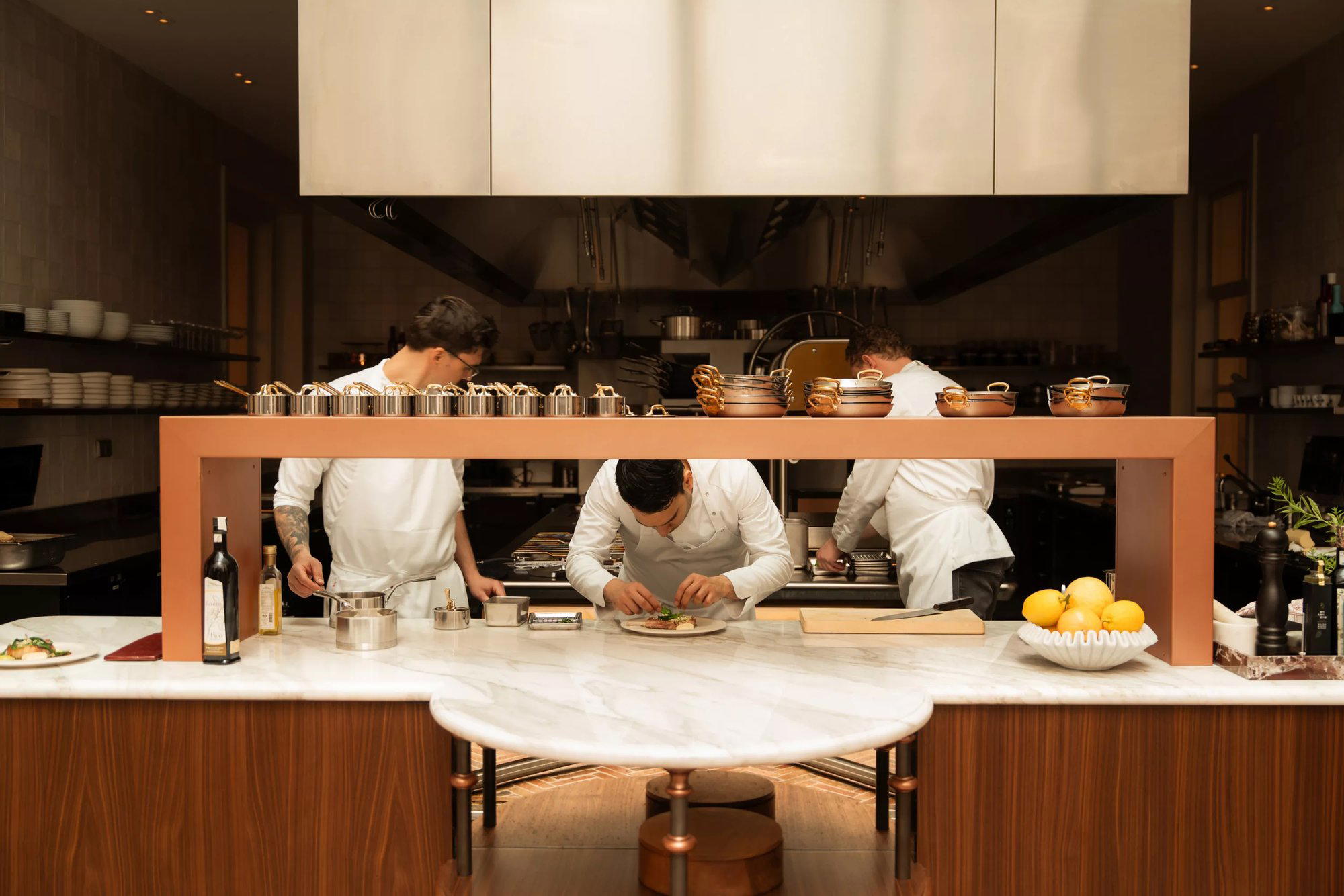
A Courthouse Turned Dining Room on the Prinsengracht
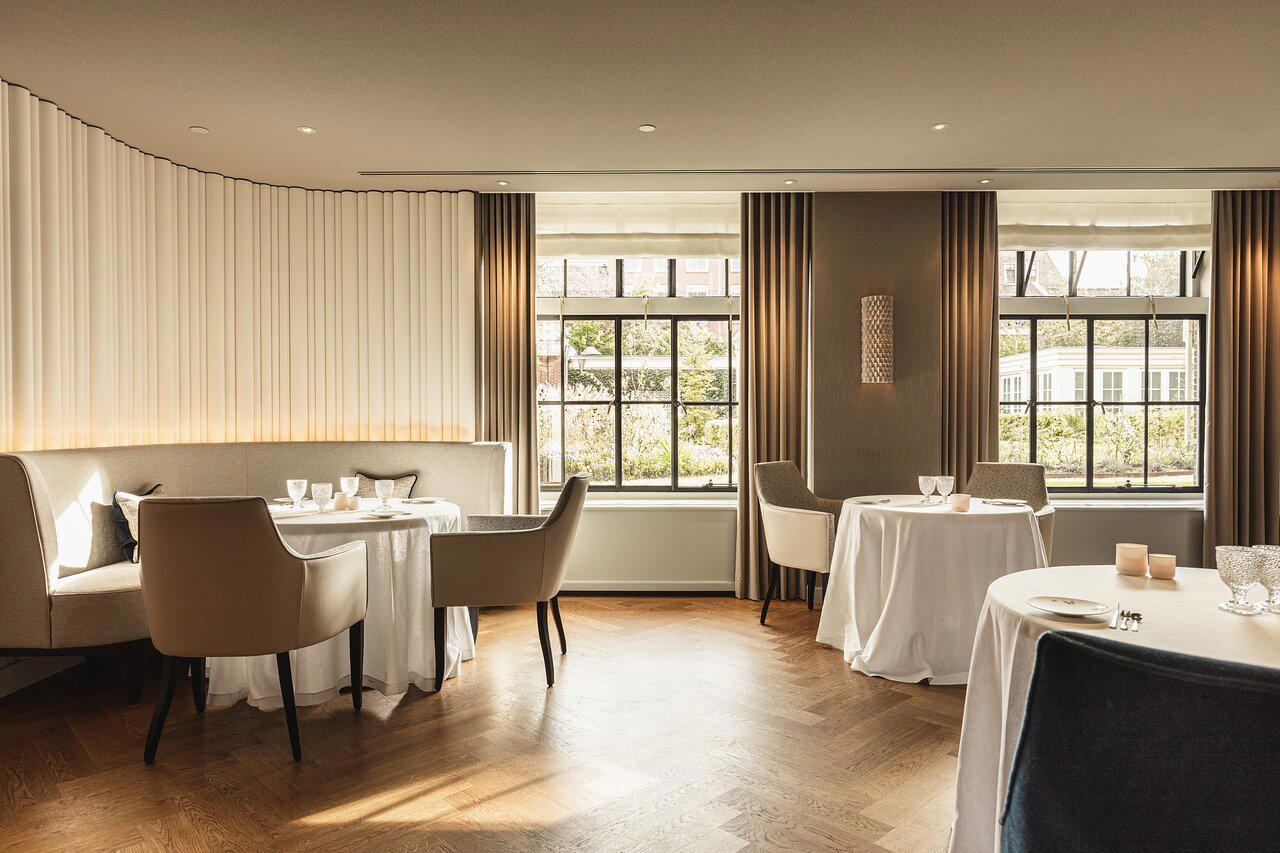
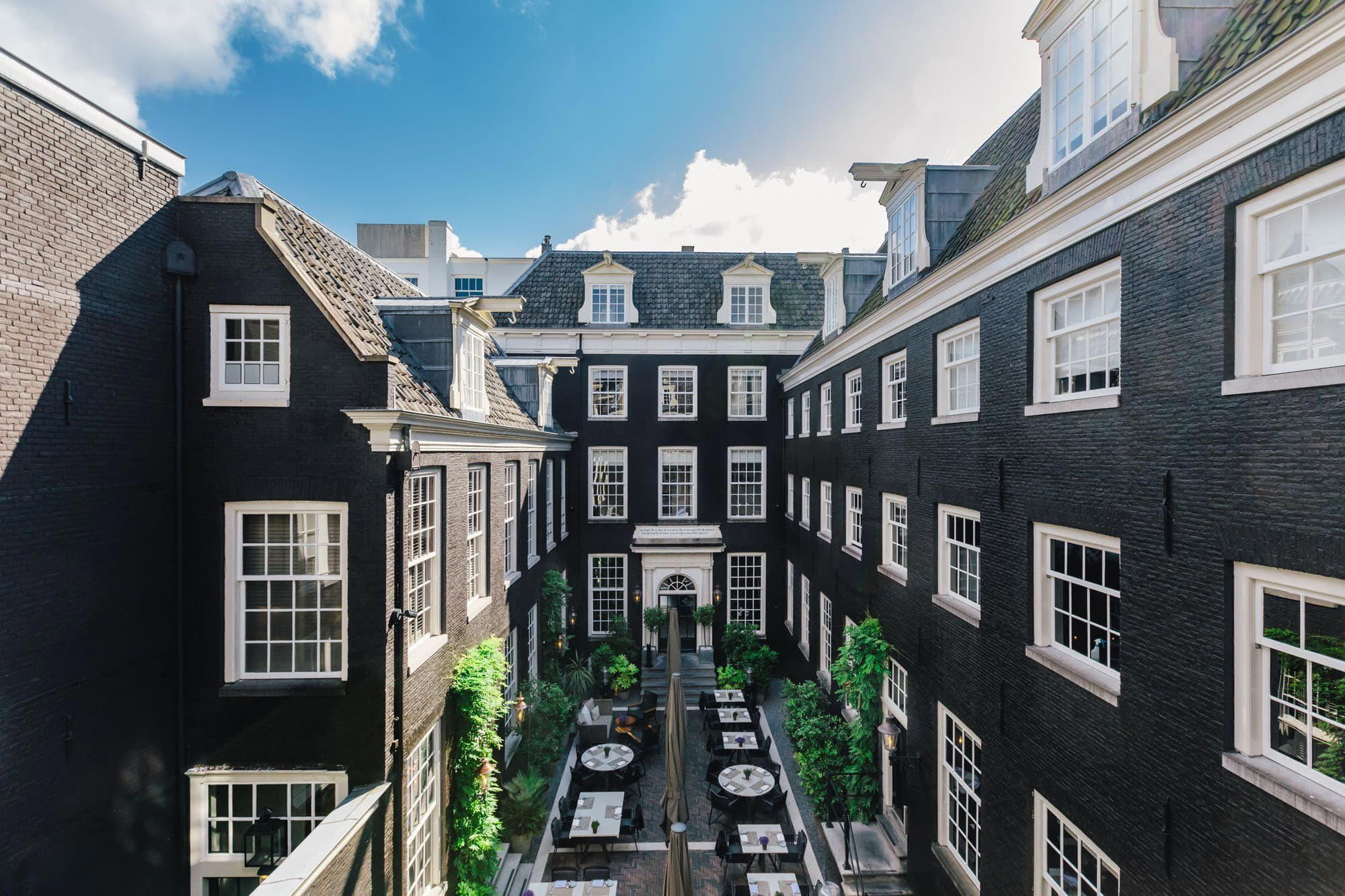
There is a particular kind of weight that comes with dining inside a building that once dispensed justice. The former courthouse on Prinsengracht 432-436 carries that weight in its proportions: the stately façade, the high ceilings, the courtyard that opens up where you might expect nothing but stone. The Rosewood Amsterdam occupies the building in its entirety, and Eeuwen, its principal restaurant, inherits the architecture without being crushed by it. Dutch artworks line the walls at intervals that feel considered rather than decorative, and the courtyard terrace functions as a genuine destination within the restaurant, the kind of outdoor space that Amsterdam's canal-side addresses rarely manage at this quality of enclosure.
At the €€€€ price point, Eeuwen sits in a tier below Amsterdam's leading Michelin-starred tables. Ciel Bleu (€€€€ · Creative) and Spectrum (€€€€ · Creative) occupy the floor above, each carrying two and one Michelin stars respectively and priced accordingly. Vinkeles (€€€€ · Creative) and Flore (€€€€ · Contemporary) complete that upper bracket. Eeuwen's French contemporary positioning at triple-euro pricing means it competes on a different axis: considered cooking in a formal historic setting, without the tasting-menu rigidity that the €€€€ tier typically demands.
Dutch Produce Through a French Contemporary Lens
The more interesting restaurants working in this register across the Netherlands treat French classical technique not as an end in itself but as a grammar through which local ingredients can be articulated with precision. De Librije in Zwolle built its three-star reputation on exactly this kind of synthesis. Aan de Poel in Amstelveen, operating just outside Amsterdam's city limits with two Michelin stars, applies comparable discipline to regional produce. The pattern is consistent enough to constitute a Dutch fine-dining idiom: classical European structure applied to ingredients that the North Sea coast, the polders, and the market gardens actually produce.
Eeuwen works within that tradition. The kitchen's treatment of Dutch ingredients involves sourcing produce whose character is already defined by the local environment, then applying technique to concentrate or contrast those qualities rather than transform them entirely. The langoustine preparation documented for the restaurant illustrates the approach: barbecuing introduces char and smoke, a delicate herb oil subtly infused with garlic adds aromatic depth without overwhelming the crustacean's sweetness, and an intense langoustine bisque provides the concentrated shellfish backbone that pulls the dish together. Crunchy peas and briny samphire supply textural contrast and a salinity that reads as coastal rather than applied.
This intersection of imported method and indigenous product is where French contemporary cooking has found its most persuasive local expression across the Netherlands. It also distinguishes Eeuwen from Amsterdam restaurants that apply similar price-tier positioning but draw from a broader, less geographically specific pantry. Comparing this to the farm-to-table approach at BAK or the organic sourcing framework of De Kas, both operating at the €€€ level in Amsterdam, shows how differently kitchens at the same price point can approach the question of where their ingredients come from and what technique is asked to do with them.
The comparable set Beyond Amsterdam
France-trained technique applied to Dutch produce is not exclusively a canal-city phenomenon. 't Nonnetje in Harderwijk holds two Michelin stars and applies similar rigour to Zuiderzee coastal ingredients. De Bokkedoorns in Overveen has held Michelin recognition for decades while working North Holland produce through classical European frameworks. At a different scale and register, Brut172 in Reijmerstok and De Groene Lantaarn in Staphorst demonstrate how widely this combination of French structure and Dutch sourcing has spread across the country's serious restaurant tier.
Within Amsterdam's canal belt, Vermeer occupies an adjacent space, and the broader question the city's dining scene keeps returning to is how much formal grandeur should accompany cooking at this level. Eeuwen answers it by letting the building carry the formality while the kitchen maintains enough accessibility in format and pricing that the setting does not become the point of the evening.
For French contemporary cooking positioned similarly outside the Randstad, Damianz in Roermond and Kasteel TerWorm in Heerlen offer useful comparisons, both operate at the €€€ level in historic architectural settings, with French contemporary menus that draw on regional Dutch and Belgian produce.
Planning a Visit
Eeuwen is located at Prinsengracht 432-436, within the Rosewood Amsterdam, on one of the principal stretches of the canal belt between Leidsestraat and Vijzelstraat. Tram lines along Prinsengracht and Keizersgracht provide direct access from Amsterdam Centraal and the museum quarter. The restaurant runs service daily for both lunch and dinner, which is notable at this price point in Amsterdam, most comparable addresses either close at lunch entirely or operate on reduced weekly schedules. That daily availability, including lunch, makes Eeuwen the more practical option for visitors whose Amsterdam itineraries do not flex easily around limited service windows.
A Credentials Check
Comparable venues nearby, for context on price, style, and recognition.
| Venue | Cuisine | Price | Awards | Notes |
|---|---|---|---|---|
| EeuwenThis venue — the venue you are viewing | Seasonal Modern Dutch | $$$$ | Michelin Plate | Not listed |
| De Mark | Modern Dutch Wood-Fired Cuisine | $$$ | Michelin Plate | Durgerdam |
| Het Bosch | Modern French Waterfront Brasserie | $$$$ | Michelin Plate | Amsterdamse Bos |
| TWENTYSIX | Modern European Fine Dining with Vegetarian Focus | $$$$ | Michelin Plate | Vivaldi |
| Mont Blanc | Modern Savoyard French | $$$$ | Michelin Plate | Sarphatiparkbuurt |
| Oud-Zuid | French Bistro | $$$ | Michelin Plate | Cornelis Schuytbuurt |
Recognition history
Dated appearances from independent guides and award organizations, with the underlying list record or original source where available.
Michelin Plate
Michelin
Continue exploring
More in Amsterdam
Restaurants in Amsterdam
Browse all →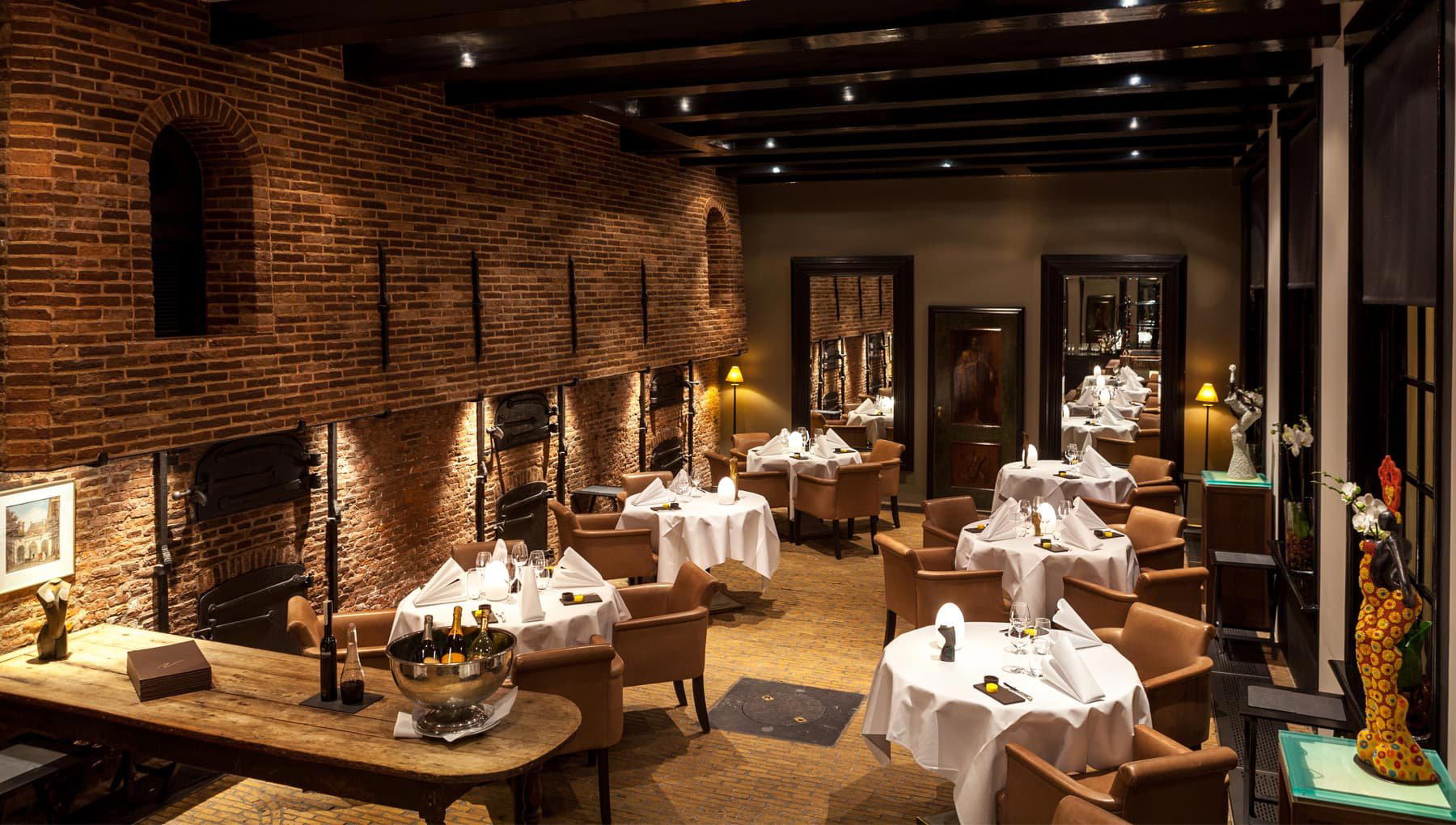
Bars in Amsterdam
Browse all →
Hotels in Amsterdam
Browse all →
Wineries in Amsterdam
Browse all →
At a Glance
- Elegant
- Sophisticated
- Cozy
- Intimate
- Date Night
- Special Occasion
- Business Dinner
- Garden
- Hotel Restaurant
- Open Kitchen
- Extensive Wine List
- Local Sourcing
- Garden
Current opening hours
- Monday
- 7 AM–10 PM
- Tuesday
- 7 AM–10 PM
- Wednesday
- 7 AM–10 PM
- Thursday
- 7 AM–10 PM
- Friday
- 7 AM–10 PM
- Saturday
- 7 AM–10 PM
- Sunday
- 7 AM–10 PM
Hours can change for holidays and private events. Last verified .
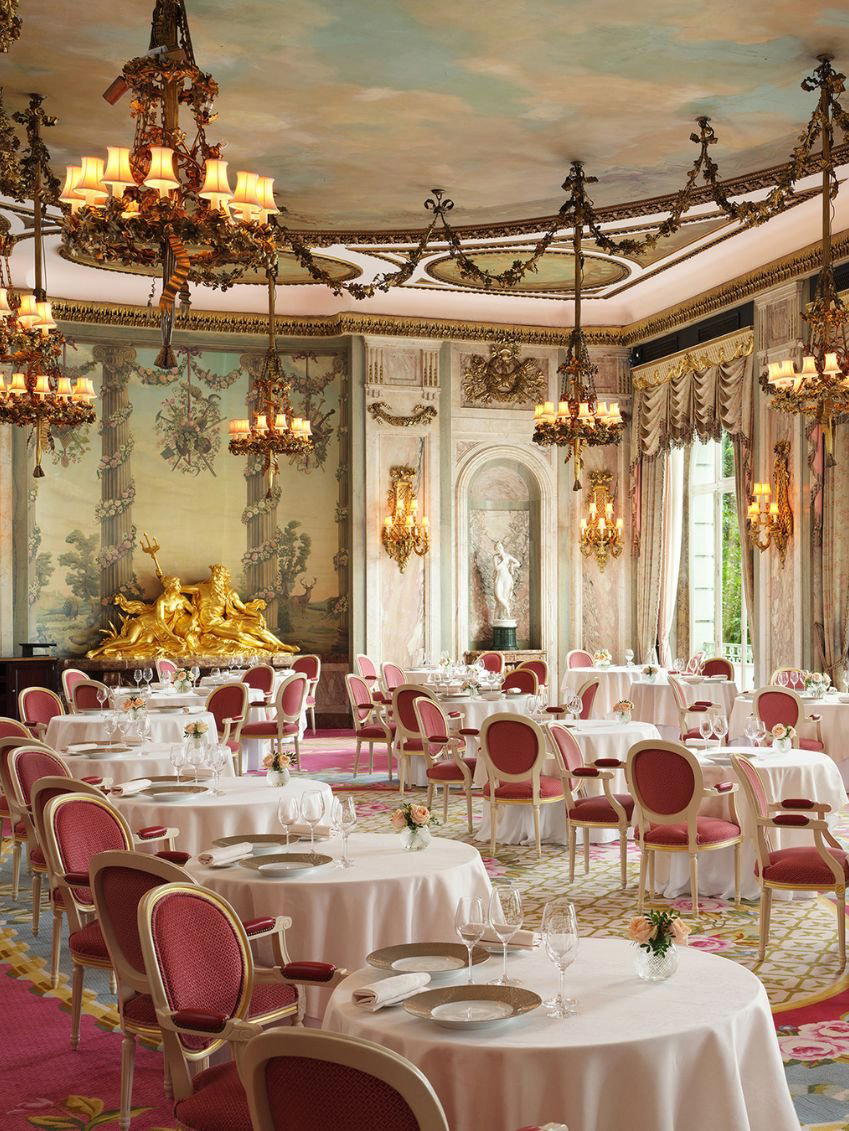
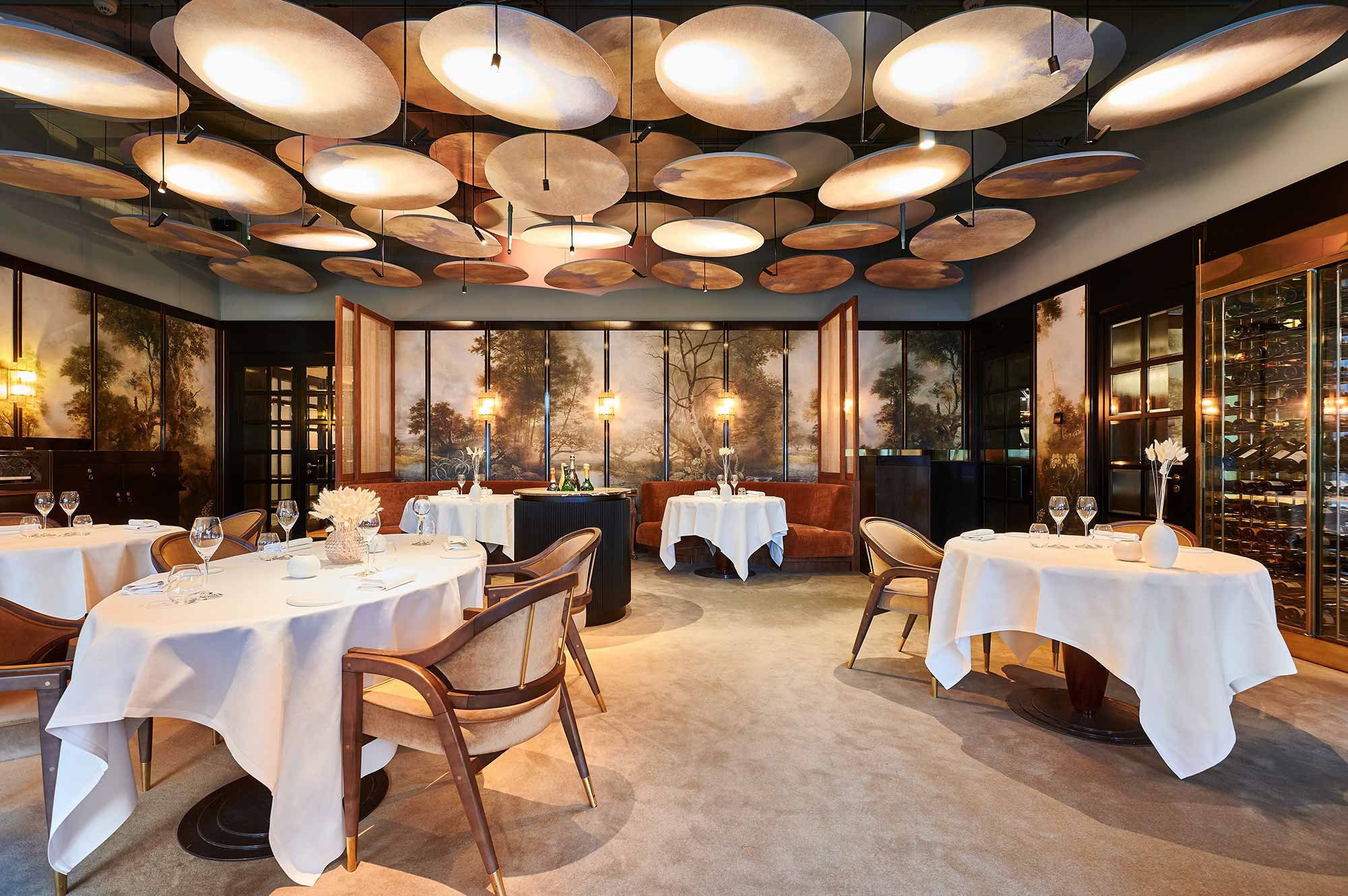
Elegant and ornate with stylish design, serene mood accentuated by Dutch artworks, sophisticated and inviting atmosphere.