Our verdict
Ebusus Café occupies a prime position on Passeig de Vara de Rey, Ibiza Town's central promenade and the social backbone of the old quarter. Where much of the island's dining scene orbits the beach club and the resort, this address roots itself firmly in the everyday rhythm of the city. It is the kind of place that makes sense of Ibiza beyond the summer spectacle.

Pearl is the En Primeur Club membership app, where members save venues, book tables and use the concierge.
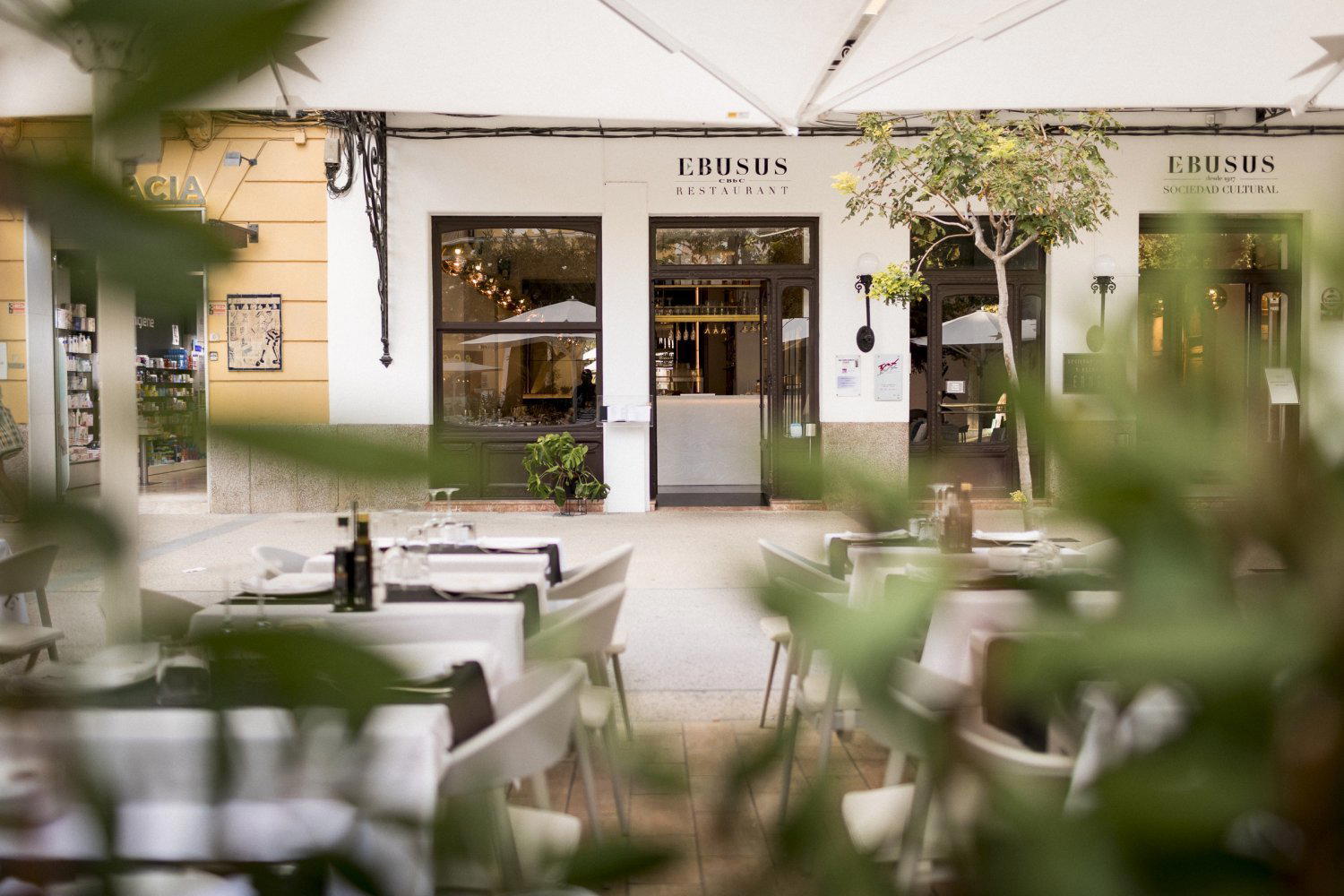
The Promenade as Context
Passeig de Vara de Rey is Ibiza Town's main boulevard, a tree-lined strip of 19th-century architecture that predates the island's club economy by a century. It is where locals take their evening paseo, where the city's administrative and commercial life converges, and where the visitor who looks past the marina finds a different version of Ibiza entirely. Ebusus Café sits at number 20 on this stretch, which places it at the centre of that civic tradition rather than on its edges. The address is a statement of intent: this is not a beach club annexe or a seasonal pop-up designed around a DJ booth. It belongs to the promenade in the way that a neighbourhood café belongs to its street.
That distinction matters more on Ibiza than it might elsewhere. The island's dining scene has bifurcated sharply over the past two decades. On one side sits the high-volume, high-spectacle tier: immersive formats like 1742, Japanese precision counters like Omakase by Walt, and the theatrical end of the spectrum. On the other side are the places that operate on a quieter register, closer to the island's own identity. Ebusus Café occupies the latter category, and Vara de Rey is the right address for it.
What the Location Demands
A café on a civic promenade in a Spanish city operates under specific social expectations. The paseo culture of the Balearics means that the street itself is part of the experience: the terrace is not a luxury add-on but a functional extension of public life. Mornings bring espresso and pastry; afternoons shift to something cooler; evenings invite a longer sitting. The rhythm is dictated by the street as much as the kitchen. Venues that understand this tend to attract a more mixed crowd than the island's resort-facing operations, drawing residents alongside the visitors who have the instinct to walk away from the port.
For context, Ibiza Town's food scene within Dalt Vila and its immediate surroundings has always sat at a different altitude from the beach-club strip. Can Font represents the regional cuisine end of that spectrum, while Chambao By the Beach and Cipriani signal the international brand presence that has grown across the island. The café format sits apart from all of these, operating on a smaller commercial logic and a shorter supply chain between kitchen and table.
Ibiza's Café Tradition in Broader Spanish Context
Spain's café culture is one of the most consistent expressions of social life in Europe, and the Balearics maintain their own version of it. The term café in Spanish hospitality covers a wider range than the Anglo-American usage: it encompasses the bar, the light dining room, the meeting point, and the neighbourhood institution simultaneously. On the mainland, places like Ricard Camarena in València and the broader trajectory of Spanish fine dining represented by El Celler de Can Roca in Girona or Quique Dacosta in Dénia have defined the upper register of what Spanish kitchens can achieve. The café format operates far below that ceiling, but it serves a different function: it is the daily infrastructure of eating rather than the occasional event.
That infrastructure is easy to undervalue when reviewing Ibiza specifically, because the island's media profile skews relentlessly toward the spectacular. Operations like Azurmendi in Larrabetzu or Mugaritz in Errenteria represent what Spanish kitchens look like at their most technically ambitious. DiverXO in Madrid and Martin Berasategui in Lasarte-Oria occupy a similarly rarefied space. A café on a provincial promenade is not competing with those addresses, nor should it be read against them.
Reading the Address as a Visitor
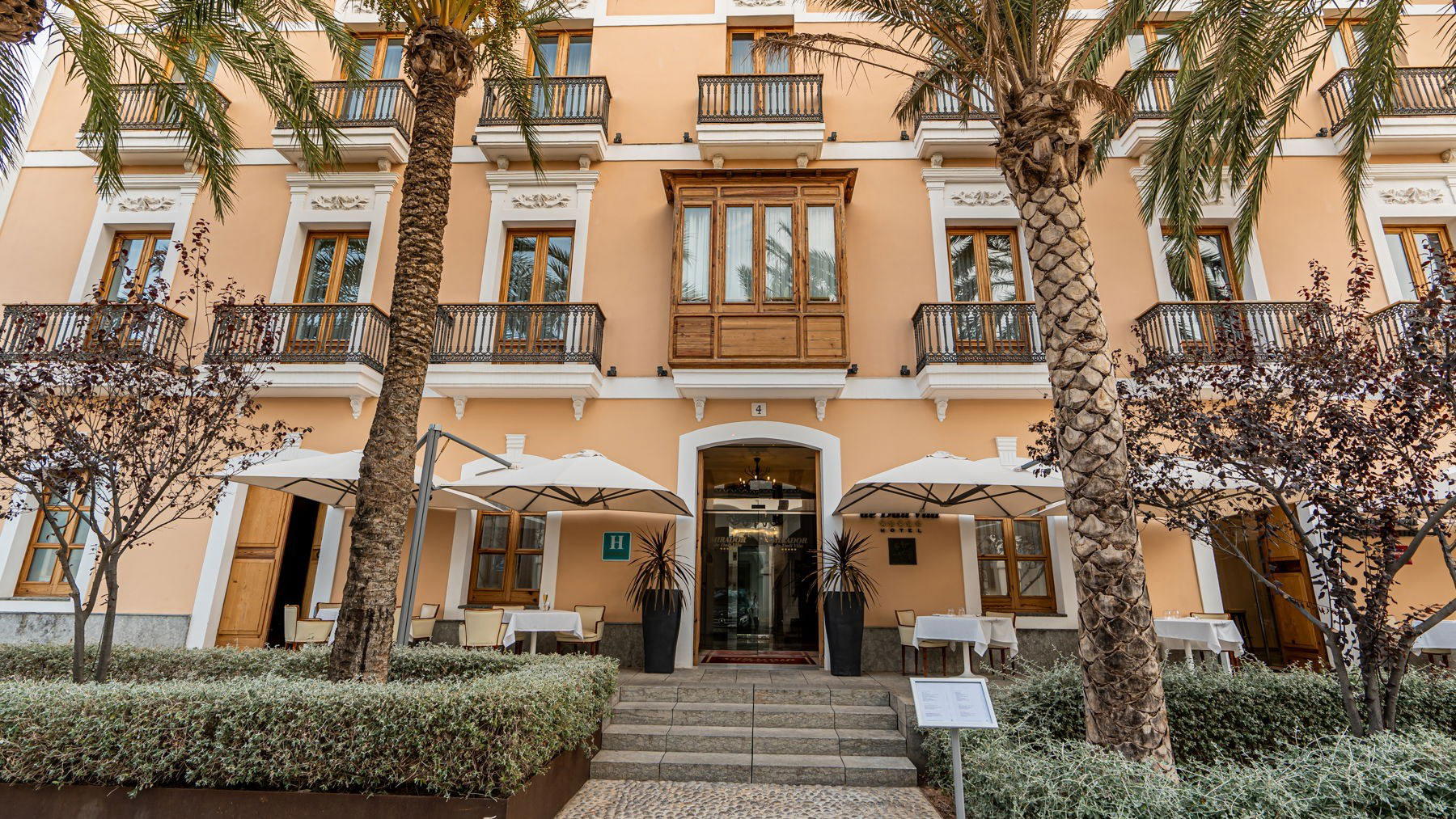
For a visitor approaching Passeig de Vara de Rey for the first time, the boulevard offers a reliable orienting experience. The architecture is consistent with late 19th-century Spanish civic design: wide pavements, shade trees, buildings that were designed to project municipal confidence. Number 20 sits within that frame. Arriving from the port on foot takes roughly ten minutes; the walk passes through the commercial centre of Ibiza Town and offers a reasonably accurate cross-section of who actually lives and works here year-round.
The seasonal rhythm of the island means that the character of Vara de Rey shifts considerably between July and October on one hand, and November through May on the other. In high summer the promenade fills with the international crowd that the island's reputation draws. Outside that window, the terrace returns to a more local register. Visitors who arrive in shoulder season will find a quieter version of the street that is, in most respects, more representative of Ibizan daily life than the peak-summer iteration.
For broader context on what the island offers across price points and formats, the full Ibiza restaurants guide maps the scene from casual seafood to high-concept tasting menus. Internationally, the café-as-civic-anchor model has equivalents in cities where the neighbourhood dining room carries as much cultural weight as the destination restaurant: Le Bernardin in New York City and Lazy Bear in San Francisco represent what happens when the American restaurant format reaches for a different register entirely, though the comparison only clarifies how distinct the Spanish café tradition remains on its own terms.
Two other Spanish references are worth placing in frame for the reader interested in how coastal cuisine develops in this country: Aponiente in El Puerto de Santa María and Cocina Hermanos Torres in Barcelona represent the progressive end of Spanish seafood and urban dining respectively, while Arzak in San Sebastián remains the benchmark for what Basque creative cooking looks like across generations. None of these are the kind of place Ebusus Café is, but knowing that spectrum makes it easier to locate any given venue within it accurately.
Planning Your Visit
Vara de Rey 20 is a walkable address from most accommodation in Ibiza Town and the port area. Shoulder season visits in April, May, or October offer the most relaxed version of the promenade experience, with the terrace accessible without the peak-summer density. High summer evenings on Vara de Rey are animated by the paseo crowd, which makes the street itself worth the walk regardless of where you sit.
Frequently asked questions
What's Ebusus Café's location?
Ebusus Café is located at Passeig de Vara de Rey, 20, 07800 Eivissa, Illes Balears, Spain, Ibiza.
Is Ebusus Café on the main street in Ibiza Town?
Yes. The café sits at number 20 on Passeig de Vara de Rey, which is Ibiza Town's principal boulevard and the spine of its civic centre. The address is walkable from the port and most accommodation within Eivissa, making it a practical stop whether you're orienting yourself on arrival or spending time in the old town.
What's the must-try dish at Ebusus Café?
Its address at Passeig de Vara de Rey 20 places it firmly in Ibiza Town's civic corridor rather than the resort strip, which typically signals a kitchen oriented toward local regulars, coffee, midday plates, and seasonal Balearic staples, rather than tourist-facing menus. Confirm current offerings directly when you arrive.
How far ahead should I plan for Ebusus Café?
Ibiza's high season runs from late June through September, when the island operates near full tourist capacity. A terrace address on Passeig de Vara de Rey, the main boulevard of Ibiza Town, will see consistent foot traffic during those months.
What makes Ebusus Café worth seeking out?
The address at Passeig de Vara de Rey 20 places Ebusus Café within the civic fabric of Ibiza Town, on a 19th-century boulevard that predates the island's club economy. That distinction matters: this is a promenade built for the paseo tradition, not for resort tourism, which gives it a different rhythm from cafés closer to the port or beach areas. For visitors who want to read the island at street level rather than from a hotel terrace, Vara de Rey is a reasonable place to start.
Can Ebusus Café adjust for dietary needs?
The most practical approach is to visit in person and ask, Spanish café kitchens on civic promenades typically run short, flexible menus where substitutions are handled directly at the table rather than through a formal pre-booking process.
A Tight Comparison
| Venue | Cuisine | Price | Awards | Notes |
|---|---|---|---|---|
| Ebusus CaféThis venue (the venue you are viewing) | Modern Mediterranean | $20–30 | Not listed | Not listed |
| La Gaia | Modern Mediterranean Fine Dining | Not listed | 1 Michelin Star · Falstaff Restaurant - 96 Falstaff Points | Fusion |
| Omakase by Walt | Modern Japanese Omakase | $200–300 | 1 Michelin Star · Guía Repsol 1 Sol | Japanese |
| El Bigotes | Authentic Ibizan Fisherman's Bullit de Peix | $20–30 | Not listed | Seafood |
| Sublimotion by Paco Roncero | Avant-Garde Spanish Molecular Gastronomy | $500+ | Not listed | Progressive |
| Es Xarcu | Traditional Ibizan Seafood | $50–100 | Guía Repsol 1 Sol | Spanish |
Continue exploring
More in Ibiza
Restaurants in Ibiza
All restaurants in Ibiza →
Bars in Ibiza
All bars in Ibiza →
Details
- Trendy
- Cozy
- Historic
- Casual Hangout
- Brunch
- Late Night
- Terrace
- Historic Building
- Extensive Wine List
- Street Scene
- A La Carte
- Small Plates
Current opening hours
- Monday
- 9 AM–12 AM
- Tuesday
- 9 AM–12 AM
- Wednesday
- 9 AM–12 AM
- Thursday
- 9 AM–12 AM
- Friday
- 9 AM–12 AM
- Saturday
- 9 AM–12 AM
- Sunday
- 9 AM–12 AM
Hours can change for holidays and private events. Hours as of .
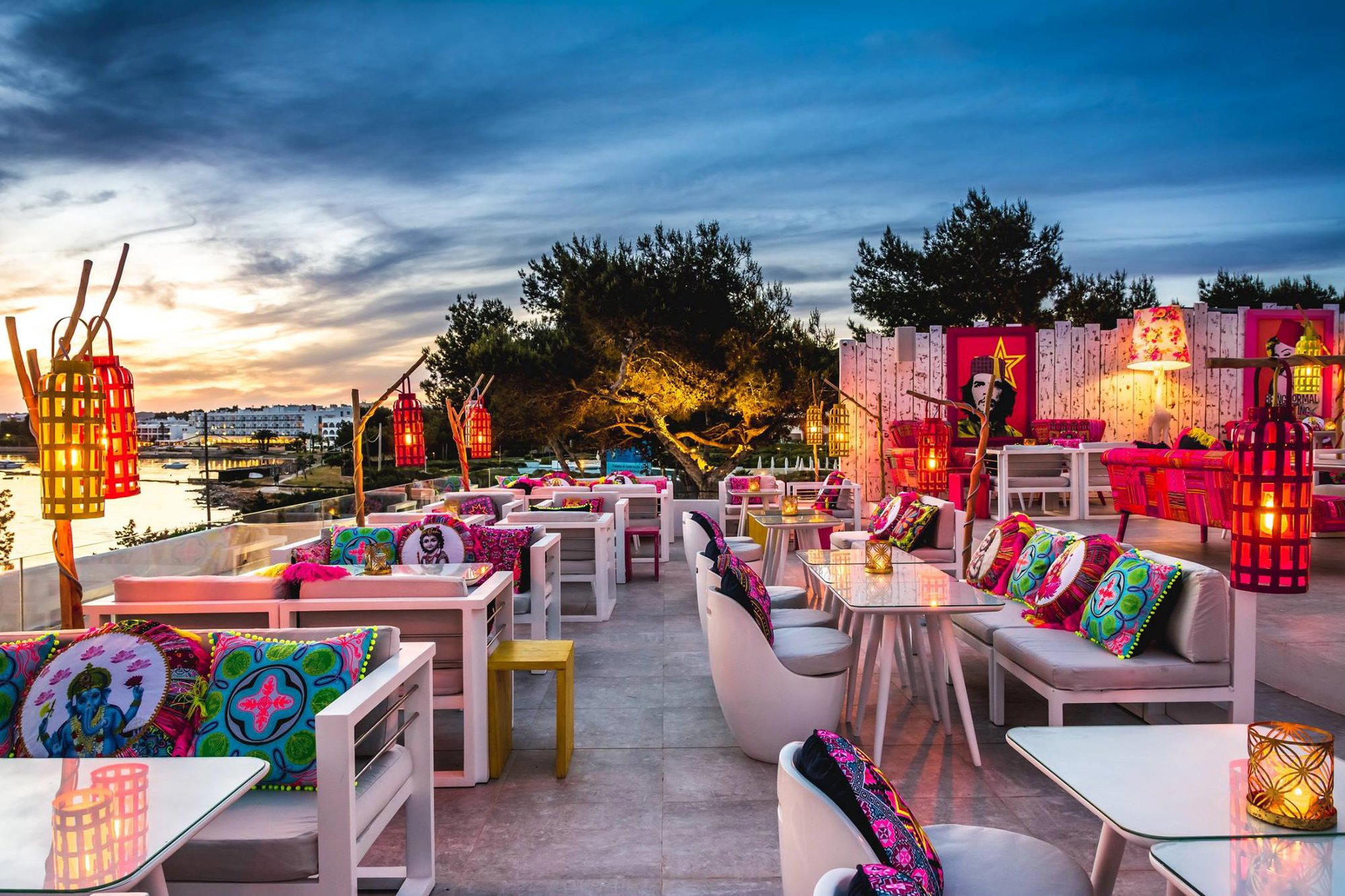
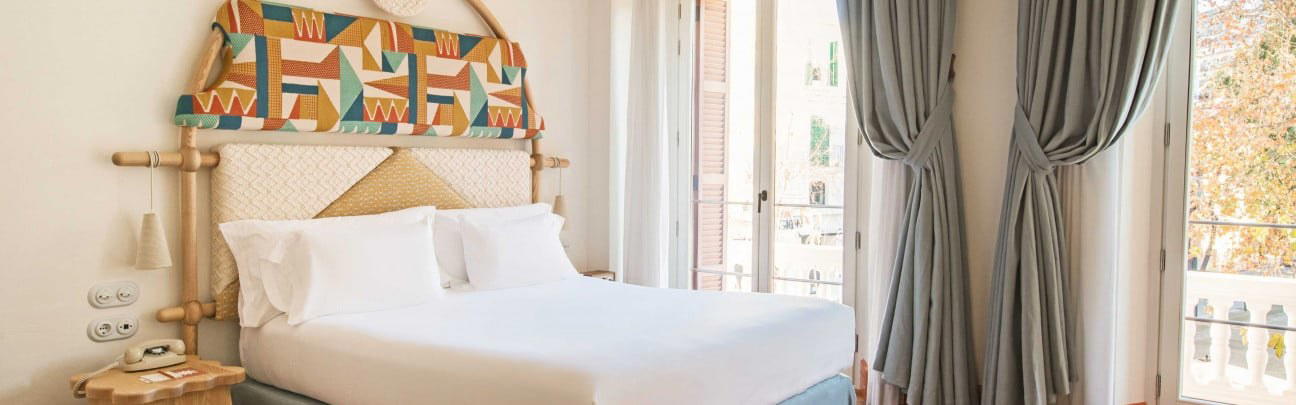
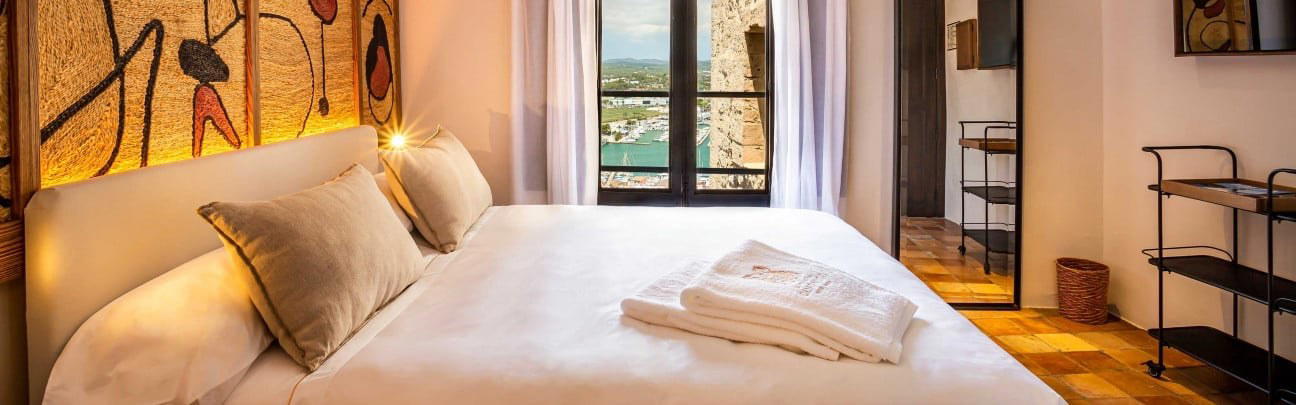
Charming historic interior with contemporary flair, lively terrace atmosphere in the city center.