
Tabelog 100 #81
Our verdict
Eau de Vie suits travelers who want Tokyo hotel-bar discipline without the theatre of a speakeasy. Its Tabelog Bar 100 selection in 2022, broad drinks remit across sake, shochu, wine, and cocktails, and Shinjuku hotel setting place it in a quieter category of serious Tokyo drinking: provenance-led, controlled, and built for conversation rather than spectacle.

Pearl is the En Primeur Club membership app, where members save venues, book tables and use the concierge.
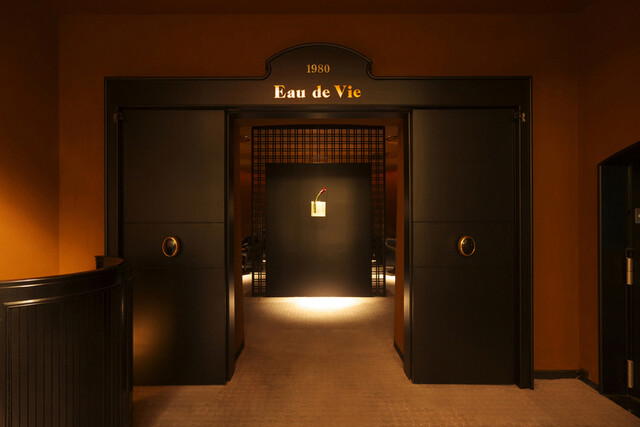
The approach to a serious Tokyo bar is usually a lesson in subtraction. Street noise falls away first, then the city’s visual clutter, then the pressure to perform insider knowledge at a door with no sign. In Tokyo, that shift matters. The city is defined by office towers, station traffic, dining density, and a constant pull between work and leisure; after dark, its better drinking rooms work against the scale outside. They reduce the evening to a seat, a glass, and a bartender’s command of stock.
Eau de Vie belongs to that older Tokyo grammar. The format is not the new-wave cocktail lab, and it is not a standing bar built around speed. It sits inside the composed bar tradition, where procurement, service rhythm, and breadth of bottles can carry more weight than menu theatrics. Its selection for Tabelog Bar Hyakumeiten in 2022 gives it a useful external signal in a city where many capable bars remain hard for visitors to sort by reputation alone.
A Tokyo bar shaped by provenance, not performance
Tokyo’s cocktail culture has split into several lanes. Some areas reward counter ritual and personality-led bartending; other parts of the city have a wider spread, from dense late-night drinking blocks to polished rooms attached to formal dining and travel routines. The composed bar lane is different because it has to serve mixed demand: domestic guests, international travelers, regulars who want quiet, and drinkers who care about the source of what goes into the glass.
That is where the drinks program becomes the editorial point. Eau de Vie is best read as a bar rather than as a restaurant in disguise, a place where the pleasure comes from pacing, selection, and the way a room handles different kinds of drinkers. In Tokyo, that range of purpose is often more revealing than a long list of named house drinks. It shows whether a bar is built around sourcing and handling, or around a few photogenic serves.
The room also has a structural advantage: it feels broader than the city’s most hidden counters. That changes the experience. Counter drinking is where technical culture is easiest to read, while a more spacious bar setting can be more useful for conversation, post-dinner drinking, or an evening that does not need to revolve around the bartender. In a city where some serious bars can feel intentionally small and socially narrow, this is a more flexible proposition.
How it fits into Tokyo's broader eating-and-drinking map
For travelers using Tokyo as a base, the appeal is partly strategic. Tokyo rewards neighborhood planning. A night built around sushi, kaiseki, sukiyaki, or steak can end in a bar with a different register, and the city’s strongest itineraries often work by contrast rather than by repeating luxury in the same key. Comparison matters here: Cuisine Michel Troisgros in Tokyo signals French dining at a high formal pitch; 京懐石 みのきち points toward the codified pace of kaiseki; Bifteck Kawamura Ginza sits in the beef-led Ginza tradition; Sushi Kyubey remains part of the city’s classic sushi conversation. Eau de Vie occupies a separate role, less dinner destination than controlled landing point after the meal.
That distinction is useful because Tokyo’s dining scene can push visitors into over-scheduling. Not every serious stop needs to be a multi-course commitment. A bar can provide the correction: shorter, quieter, and more flexible, with enough depth to reward attention. The sourcing angle is especially important in Japan, where regional beverages and domestic drinking traditions are not decorative add-ons. A bar that gives them space beside the broader international language of drinking is acknowledging a local context that many visitor-facing rooms treat too lightly.
Readers building a wider Tokyo itinerary can use Our full Tokyo bars guide for drinking rooms across the city, then branch into food with Our full Tokyo restaurants guide. Nearby and citywide restaurant references can be kept generic: other Tokyo dining rooms, casual cafes, counter-led restaurants, and late-night spots all play different roles in the same itinerary. For trip architecture beyond dining, keep Our full Tokyo hotels guide, Our full Tokyo wineries guide, and Our full Tokyo experiences guide in the same planning loop.
Who should place it on the evening route
This is a strong fit for travelers who prefer the controlled manners of a polished bar over the hunt for a tiny address in a nightlife district. It also suits drinkers who want a Tokyo bar experience without turning the evening into another full dinner reservation. The external recognition is relevant, but the better reason to go is category fit: Tokyo needs places that can absorb different kinds of evenings, from a quiet drink after a formal meal to a longer conversation over carefully handled drinks.
The practical reading is simple. Choose it when the night calls for composure rather than novelty. Tokyo has plenty of louder choices and many smaller counters; this one belongs to the polished middle ground, with enough range to make the stop feel intentional. For Japan-wide planning, EP Club’s restaurant coverage also reaches beyond Tokyo through unnamed dining rooms in other cities and regions. For readers tracking Japanese drinking culture abroad, similar formats overseas can show how sake-bar and casual Japanese ideas translate outside Japan without changing the role Eau de Vie plays at home.
Frequently asked questions
What part of town is Eau de Vie in?
Tokyo.
What's the pricing like at Eau de Vie?
Pricing at Eau de Vie is listed as JPY 5,000 - JPY 5,999.
What days is Eau de Vie closed?
Specific closing days for Eau de Vie are not provided here.
What is Eau de Vie known for?
Eau de Vie is known as a Tokyo bar and was selected for Tabelog Bar Hyakumeiten in 2022.
Quick Comparison
Comparable options at the same price tier.
| Venue | Cuisine | Price | Awards | Notes |
|---|---|---|---|---|
| Eau de VieThis venue (the venue you are viewing) | Classic Hotel Bar & Cocktails | $50–100 | Tabelog 100 #81 | Not listed |
| mixology heritage | Classic Cocktail Bar | $50–100 | Not listed | Chiyoda |
| L'Atelier à Ma Façon | Seasonal parfait & dessert cafe | $30–50 | Tabelog 100 #4 | Setagaya |
| Larousse | Traditional Russian cuisine & wine bar | $50–100 | Tabelog 100 #96 | Taitō |
| Bar P.M.9 | Classic Japanese cocktail bar | $50–100 | Tabelog 100 #93 | Minato |
| BAR Hoshi | Cocktail & Whisky Bar | $50–100 | Tabelog 100 #7 | Chūō |
Recognition history
Dated appearances from independent guides and award organizations, with the underlying list record or original source where available.
Tabelog 100 #81 · No. 81
Tabelog · Tabelog 100 - Bar - 2022
Continue exploring
More in Tokyo
Restaurants in Tokyo
All restaurants in Tokyo →



Bars in Tokyo
All bars in Tokyo →







Details
- Elegant
- Classic
- Sophisticated
- Intimate
- Cozy
- Date Night
- Business Dinner
- After Work
- Group Dining
- Late Night
- Special Occasion
- Hotel Restaurant
- Design Destination
- Craft Cocktails
- Extensive Wine List
- A La Carte
- Small Plates
- Whisky
- Cocktails
- Gin
- Brandy
Current opening hours
- Monday
- 5–10:30 PM
- Tuesday
- 5–10:30 PM
- Wednesday
- 5–10:30 PM
- Thursday
- 5–10:30 PM
- Friday
- 5–11:30 PM
- Saturday
- 4–11:30 PM
- Sunday
- 4–10:30 PM
Hours can change for holidays and private events. Hours as of .
A quiet, clubby bar with heavy, classic decor, leather chairs, and subdued lighting that creates a refined, intimate atmosphere ideal for lingering over spirits and cocktails.