Eat Your Greens

The Good Food Guide GFG Good
Our verdict
A hyper-seasonal restaurant on New York Street where organic sourcing and a weekly-changing menu do most of the talking. Humble vegetables share billing with responsibly farmed meat and fish, while the wine list leans toward accessible natural European bottles. When the kitchen closes, the room shifts into a bar with guest DJs and a different kind of energy.

Pearl is the En Primeur Club membership app, where members save venues, book tables and use the concierge.
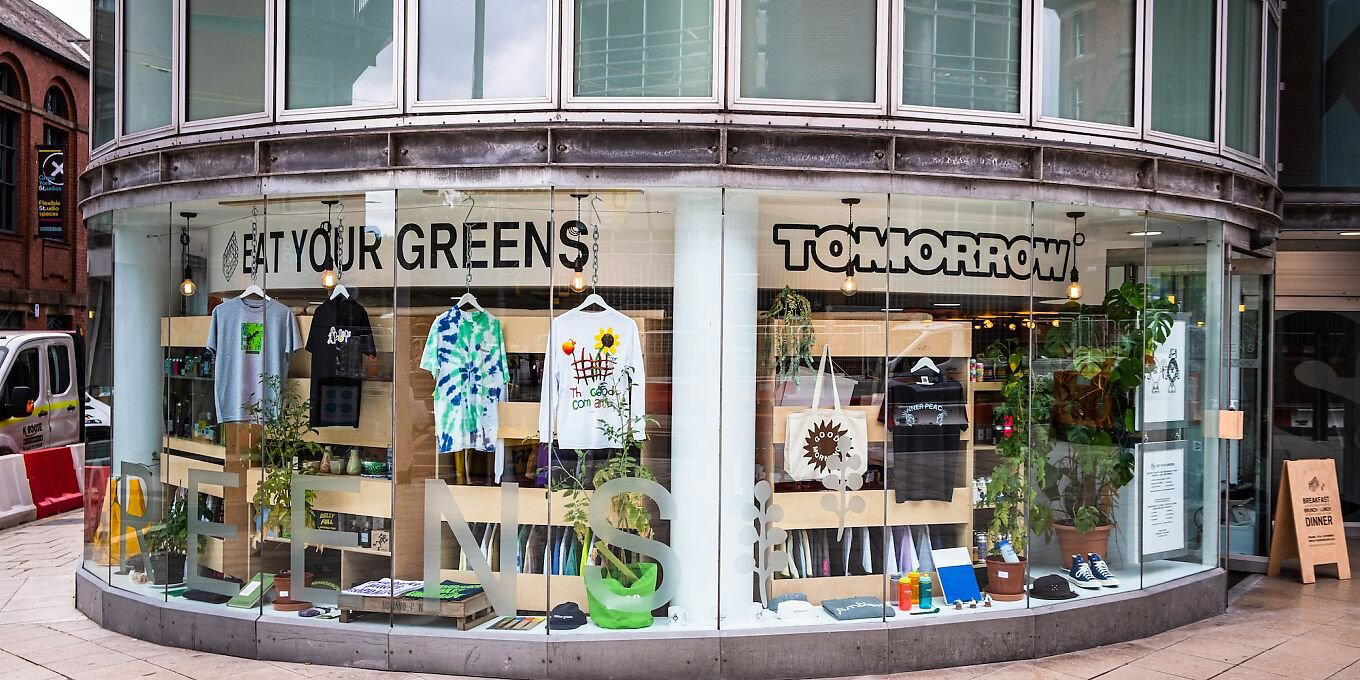
Light, Provenance, and a Menu That Changes Every Week
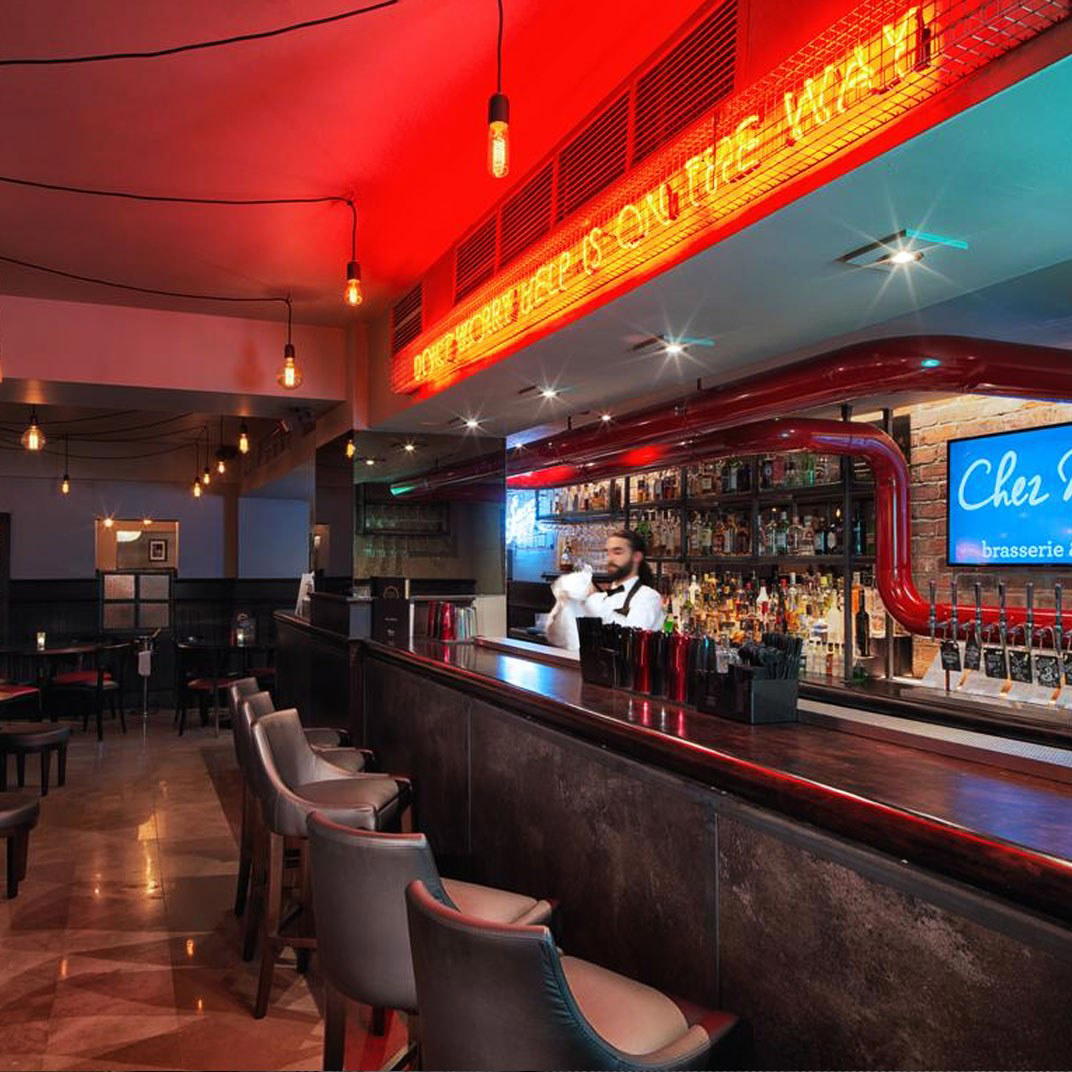
The 180-degree curved window frontage on New York Street pulls daylight deep into the room, which matters, because at Eat Your Greens the produce is meant to be seen as much as tasted. This is not a dimly lit temple to technique. The room is open and unguarded, the kind of space that announces its intentions without ceremony: a working deli and pantry along one wall, a bike rack outside, a wine list sourced with the same attention applied to the kitchen. The atmosphere sits somewhere between neighbourhood canteen and considered dining room, and that tension is deliberate.
Leeds has built a dining scene that now competes credibly with larger English cities. Alongside fire-led kitchens like Ox Club, ingredient-focused newcomers like Hern and emba, and more globally rooted addresses like Dastaan Leeds and Casa Susanna, the city now has enough range that a restaurant needs a clear point of difference to hold its ground. Eat Your Greens has one: a supply chain built around organic and local producers, a menu that resets every week, and a refusal to let that sourcing ethic become sanctimonious.
What 'Greens' Actually Means in the Kitchen
The name is a provocation as much as a description. Eat Your Greens is not a vegetarian restaurant, and it is not making a moral argument at the table. The word 'greens' is shorthand for an organic and sustainable sourcing framework, visible in the stocked shelves of the in-house deli, legible in the produce arriving from local farms, and traceable through a menu that changes weekly to follow what is actually ready to eat rather than what a static menu requires.
That discipline pushes the kitchen toward decisions that more fixed menus avoid. Vegetables are treated as primary ingredients rather than supporting cast: carrots poached in blood-orange juice and set on a leek purée with homemade kimchi is the kind of dish that only works when the carrot is worth tasting on its own terms. The ferments and pickles that appear as garnishes and condiments across the menu are made in-house, which signals a kitchen thinking about flavour development over time rather than assembly at service.
Responsibly farmed meat and fish arrive in supporting roles. Cod wing on spiced bouillabaisse-style yellow split peas places a British coastal cut against a Mediterranean framework, while a pork chop in tikka marinade with green tomato chutney and sauerkraut reflects the kitchen's tendency to use globally sourced flavour logic on locally sourced protein. These are not fusion gestures; they are the result of letting a rigorous sourcing framework meet a cooking team with wide references. The food is considered without becoming fussy, which is harder to achieve than it sounds. Restaurants that carry the weight of a provenance argument frequently cook defensively, as though the sourcing is the dish. Here, the sourcing is the foundation and the cooking does the rest.
For context, this kind of ingredient-led, producer-named approach has been the operating philosophy at some of England's most discussed restaurants for years. Places like L'Enclume in Cartmel and Moor Hall in Aughton built their reputations partly on the same logic, at a different price point and register. Eat Your Greens operates in a more accessible bracket, without the tablecloth or the tasting menu format, but the underlying commitment to knowing where the food comes from runs through the same vein.
Daytime, Evening, and After the Kitchen Closes
The restaurant runs two distinct formats across the day. Daytime menus offer a condensed selection drawn from the evening's lighter dishes, alongside a rotating soup, stew, or sandwich. These are meals for the room as much as for the plate: the curved window fills the space with afternoon light, and the deli shelves give the whole scene a purposeful, unhurried quality that distinguishes it from the lunch trade around Leeds city centre. It is the kind of place that works equally well for a working lunch and for sitting longer than you intended.
The evening menu runs the full range, and when the kitchen closes, the character of the room shifts. Guest DJs contribute a world music programme that lifts the volume gradually, turning the dining room into a bar with the kind of energy that comes from a place that has been full of people eating well. The transition is managed without self-consciousness, which is to say it does not feel like a concept. It feels like a natural extension of a room that people are reluctant to leave.
The Wine List and What the Front of House Does With It
Organic sourcing logic extends to the cellar. The wine list is built around natural European producers, accessible rather than academic, with glasses available from around £7. Bottles can also be pulled directly from the deli shelves for a corkage fee, which blurs the line between retail and restaurant in a way that suits the room's character. Non-drinkers are covered by a range of seasonal homemade cordials and shrubs, which receive the same ingredient attention as the food rather than being treated as an afterthought.
Front of house team is described as having both the knowledge and the enthusiasm to explain sourcing decisions and sauce construction without making the meal feel like a lecture. That combination is genuinely difficult to staff for. Plenty of ingredient-focused restaurants hire people who know the supply chain but cannot make the room feel comfortable, or people who make the room feel comfortable but cannot answer a question about a particular ferment. The version described here does both, which matters when the menu changes every week and the answers to basic questions change with it.
Planning Your Visit
Eat Your Greens sits at 42 New York St, Leeds LS2 7DY, within the city centre and accessible enough on foot from the main transport links. The bike rack outside is not decorative: it reflects a house position on how staff and guests arrive, and the address is well-placed for cycling routes from the inner suburbs. Given that the menu resets weekly, the specific dishes available depend entirely on when you go, which is a reason to check current offerings before visiting rather than arriving with fixed expectations. Daytime and evening formats run at different scope, so the time of day shapes the meal as much as the day of the week.
For a broader picture of where Eat Your Greens sits within the city's range, the full Leeds restaurants guide covers the complete field. Those planning a longer stay can cross-reference the Leeds hotels guide, bars guide, wineries guide, and experiences guide for a fuller itinerary. For those tracing producer-led cooking across England, the comparison set extends well beyond Leeds: The Ledbury in London, Waterside Inn in Bray, Gidleigh Park in Chagford, and Hand and Flowers in Marlow all represent different points on the same spectrum. Further afield, the sourcing rigour at places like Le Bernardin in New York City and Emeril's in New Orleans points to how widely the ingredient-first philosophy has travelled.
Frequently asked questions
Where exactly is Eat Your Greens?
Eat Your Greens is located at 42 New York St, Leeds LS2 7DY, United Kingdom, Leeds.
Is Eat Your Greens award-winning?
Eat Your Greens has received recognition including: Don’t let the name fool you into thinking this is some kind of pious and preachy wholefood temple. ‘Greens’ is shorthand for the restaurant's ethos of using organic and sustainable produce from local producers on their hyper-seasonal, weekl….
What dish is Eat Your Greens famous for?
No single dish defines the menu because it changes every week, built around whatever organic and seasonal produce the kitchen is sourcing at the time. Recurring combinations from the kitchen's repertoire include things like carrots poached in blood-orange juice on leek purée with homemade kimchi, and cod wing on spiced bouillabaisse-style yellow split peas. The weekly rotation is the point: returning guests come back precisely because the menu they ate last time no longer exists.
How hard is it to get a table at Eat Your Greens?
Booking details are not publicly listed, so the safest approach is to check directly at 42 New York St, Leeds LS2 7DY or reach out through their current contact channels. The restaurant runs both a daytime and an evening service, which spreads demand across the day and gives more options for walk-ins or last-minute plans than a dinner-only format would.
What's the signature at Eat Your Greens?
The signature is the format itself: a hyper-seasonal menu that changes weekly, sourced from local organic producers and built around vegetables as the structural centre of most plates. Globally inspired sauces, pickles, and ferments do the heavy lifting in terms of flavour, kimchi, sauerkraut, tikka marinades, and homemade green tomato chutney appear alongside responsibly farmed meat and fish. The result is a kitchen that applies serious technique to humble ingredients without the formality that often comes with it.
Do they accommodate allergies at Eat Your Greens?
What is clear from the kitchen's approach is that the front of house team are described as knowledgeable and enthusiastic about sourcing and preparation, which is a reasonable foundation for an informed conversation about dietary requirements.
Does Eat Your Greens have a natural wine list, and what does it cost?
Yes, the organic sourcing ethos extends to the wine list, which is built around natural European producers and priced to be accessible rather than academic. Glasses start from around £7, and bottles can also be purchased from the in-house deli and pantry shelves for a corkage fee. For non-drinkers, the kitchen produces a seasonal range of homemade cordials and shrubs.
At-a-Glance Comparison
Comparable venues nearby, for context on price, style, and recognition.
| Venue | Cuisine | Price | Awards | Notes |
|---|---|---|---|---|
| Eat Your GreensThis venue (the venue you are viewing) | Organic Seasonal European | $20–30 | The Good Food Guide GFG Good | Not listed |
| Hern | Modern British Seasonal Tasting Menu | $50–100 | The Good Food Guide GFG Very Good | Chapel Allerton |
| Arusuvai | Authentic South Indian | $20–30 | Not listed | Kirkstall |
| Salvo's | Contemporary Southern Italian | Not listed | Not listed | Headingley |
| Shears Yard | Modern British Brasserie | $50–100 | The Good Food Guide GFG Good | The Calls |
| Tharavadu | Authentic Keralan | $20–30 | SquareMeal UK Top 100 Restaurants #97 · The Good Food Guide GFG Good | City Centre |
Recognition history
Dated appearances from independent guides and award organizations, with the underlying list record or original source where available.
The Good Food Guide GFG Good
The Good Food Guide
Continue exploring
More in Leeds
Restaurants in Leeds
All restaurants in Leeds →







Details
- Cozy
- Trendy
- Modern
- Date Night
- Casual Hangout
- Group Dining
- Open Kitchen
- Natural Wine
- Craft Cocktails
- Farm To Table
- Organic
- Local Sourcing
- Street Scene
- Small Plates
- A La Carte
- Vegetarian Friendly
- Vegan Options
- Gluten Free Options
Current opening hours
- Monday
- Closed
- Tuesday
- 4–11 PM
- Wednesday
- 4–11 PM
- Thursday
- 4–11 PM
- Friday
- 12 PM–12 AM
- Saturday
- 12 PM–12 AM
- Sunday
- Closed
Hours can change for holidays and private events. Hours as of .
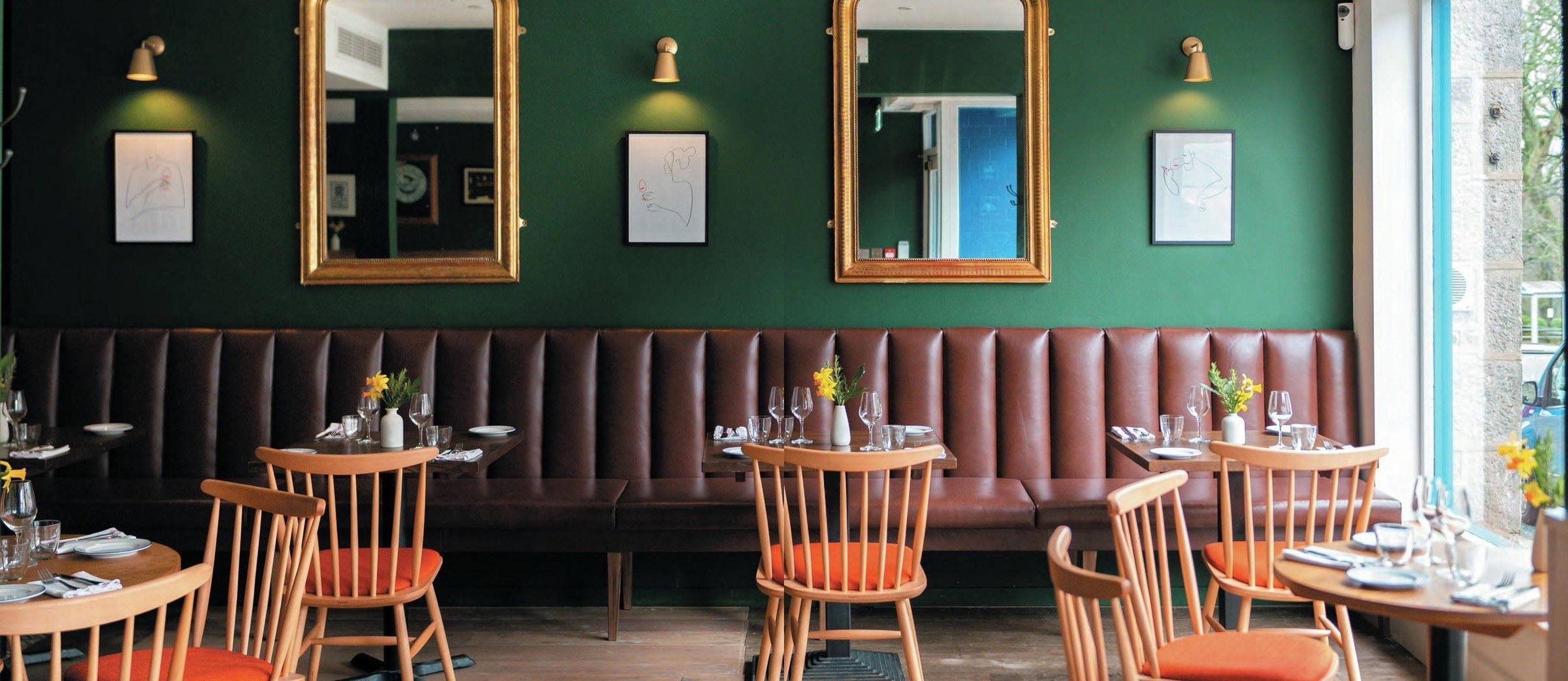
Laidback and cosy with natural light from large windows, brushed wood tables, greenery, and a buzzy atmosphere enhanced by DJs on weekends.