Paradise Café


A Michelin Plate-recognised café in the grounds of a garden centre near Harrogate, Paradise Café is run by former Yorke Arms chef Frances Atkins and her long-time collaborators. Open for breakfast, brunch and lunch, the 60-cover space serves a frequently rotating seasonal menu where roughly half the dishes are plant-based. The chef's table overlooking the open kitchen is worth requesting at the time of booking.
Pearl is the En Primeur Club membership app — saves, bookings, and concierge access live there. Same editors, same standards.
- Address
- Killinghall, Harrogate HG3 2AY, United Kingdom
- Phone
- +44 1423 877109
- Website
- paradisewithfrj.co.uk
- Directions
- Get directions
 Saves & bookings on Pearl
A Garden Setting With a Serious Kitchen Behind It
From the road outside Killinghall, a few miles north of Harrogate, the signs point toward a garden centre. The café sits behind the glasshouses, and on clear days the small terrace opens onto views across an adjacent lake. It is not the kind of address that typically earns a Michelin Plate, which is precisely what makes Paradise Café worth understanding in the context of how serious seasonal cooking in England has shifted over the past decade.
The British dining scene has long rewarded a certain kind of formality: tasting menus, multi-course architecture, white tablecloths, rooms that signal occasion. But a quieter strand of the same tradition holds that disciplined sourcing, clean technique and menus responsive to the season can be carried in a lighter format without sacrificing the underlying standard. Paradise Café represents one of the clearest expressions of that argument currently operating in the north of England.
From Nidderdale to Killinghall: The Weight of the Yorke Arms Inheritance
Understanding what Paradise Café is requires knowing what preceded it. The Yorke Arms at Ramsgill in Nidderdale, under Frances Atkins, ran for 23 years and accumulated a sustained record of recognition that placed it among the significant restaurant-with-rooms operations in northern England. When Atkins, long-time general manager John Tullett and head chef Roger Olive reappeared after the disruption of 2020, it was not in a townhouse dining room or a converted mill. It was in an Airstream caravan parked beside the glasshouses of a garden centre, serving daytime food. That transition from garlanded country house cooking to a casual daytime format is less a retreat than a deliberate compression: the same discipline, a different register.
The Airstream phase ran for roughly twelve months while a purpose-built space was constructed. The finished café seats 60, with pot plants, paintings, an open kitchen and a chef's table positioned to observe the kitchen at work. The architecture of the room is modern and bright rather than grand, and that tonal shift is intentional. Seasonal cooking of this standard, the format suggests, does not require a particular room type to justify itself.
What the Menu Actually Does
Seasonal cuisine is a phrase applied so broadly across British restaurant marketing that it has nearly lost descriptive precision. At the restaurant it has a specific meaning: the menu changes frequently, runs to roughly a dozen dishes, and holds approximately half its content as plant-based options. This is not a response to trend so much as a continuation of the Yorke Arms' long-standing emphasis on produce that speaks clearly on the plate without elaborate transformation.
Breakfast covers the familiar range, from full English through kedgeree to pancakes served with fruit compôte or bacon and maple syrup. At lunch the register shifts. Warm cheese tart in light crisp pastry, seared tuna with lightly pickled peppers, chorizo and little gem with Caesar dressing, lime- and ginger-seared scallops, belly pork with beans and mustard mash: these are dishes built around clear flavour relationships rather than technical complexity for its own sake. The afternoon section of the menu moves into cakes, tarts, and house-made ice cream and sorbet, giving the café a span from early morning through mid-afternoon.
The Michelin Plate awarded in 2025 signals that the cooking here meets a threshold of quality worth recording. For a daytime-only café operating within a garden centre, that recognition carries more information than the award itself: it confirms that the principles brought from a formally recognised kitchen are functioning in the new format.
Where Paradise Café Sits in the Broader Picture
The northern English dining scene has produced some of the country's most discussed kitchens in recent years. L'Enclume in Cartmel and Moor Hall in Aughton operate at the high-tasting-menu end of that spectrum, with price points and booking windows to match. FIFTY TWO in Harrogate itself represents modern cuisine at the formal dinner register. The restaurant occupies a different position in the same geography: lower price point, daytime hours, casual room, but with a kitchen that earns clear recognition.
Across Britain, the format of serious cooking delivered in informal daytime settings has precedents at various career stages and price points. The Fat Duck in Bray, The Ledbury in London, Midsummer House in Cambridge, Restaurant Andrew Fairlie in Auchterarder, Gidleigh Park in Chagford, Hand and Flowers in Marlow, Le Manoir aux Quat' Saisons in Great Milton, Kirchenwirt in Leogang and Mesnerhaus in Mauterndorf each represent the tradition of seasonally-driven, technique-grounded cooking in their own regional contexts. hide and fox in Saltwood offers a comparable pairing of serious kitchen credentials with a relaxed setting in the south of England. What connects them, and what connects the restaurant to the broader tradition, is a commitment to produce that changes with the season and cooking that does not hide behind complexity.
Planning Your Visit
The restaurant operates for breakfast, brunch and lunch only, which means the practical window is narrower than a conventional restaurant. The 60-cover room accommodates a meaningful volume of guests, and the chef's table is a specific format within that space, positioned to give a view of the open kitchen at work. Booking ahead is sensible, particularly for the chef's table and for weekend services. The price range sits at about £25 per person. The address is Killinghall, HG3 2AY, a short drive from Harrogate town centre. If the weather holds, the terrace with its lake view is worth prioritising. The café earned a Michelin Plate in 2025, a recognition that fits its daytime format and modern British cooking.
Booking and Cost Snapshot
Comparable venues nearby, for context on price, style, and recognition.
| Venue | Cuisine | Price | Awards | Notes |
|---|---|---|---|---|
| Paradise CaféThis venue — the venue you are viewing | Killinghall, Modern British Café | $$ | Michelin Plate | Not listed |
| Horto | Not listed | $$$ | Not listed | Follifoot, British-Mediterranean with Seasonal Garden Produce |
| FIFTY TWO | Not listed | $$$$ | Michelin Plate | Rudding Park, Modern British Tasting Menu |
| Ox Club | Not listed | $$$ | Michelin Plate | City Centre, Modern British Wood-Fired Grill |
| Larder | Bore Street, Modern British Brasserie | $$ | Michelin Plate | Not listed |
| The Star Inn The City | Not listed | $$$ | Michelin Plate | York city centre, Modern British Gastropub |
Recognition history
Dated appearances from independent guides and award organizations, with the underlying list record or original source where available.
Michelin Plate
Michelin
Michelin Plate
Michelin
The Good Food Guide GFG Good
The Good Food Guide
Michelin Plate
Michelin
Continue exploring
More in Harrogate
Restaurants in Harrogate
Browse all →
Bars in Harrogate
Browse all →
At a Glance
- Cozy
- Modern
- Scenic
- Brunch
- Casual Hangout
- Open Kitchen
- Terrace
Current opening hours
- Monday
- Closed
- Tuesday
- 9 a.m.–5 p.m.
- Wednesday
- 9 a.m.–5 p.m.
- Thursday
- 9 a.m.–5 p.m.
- Friday
- 9 a.m.–5 p.m.
- Saturday
- 9 a.m.–5 p.m.
- Sunday
- Closed
Hours can change for holidays and private events. Last verified .
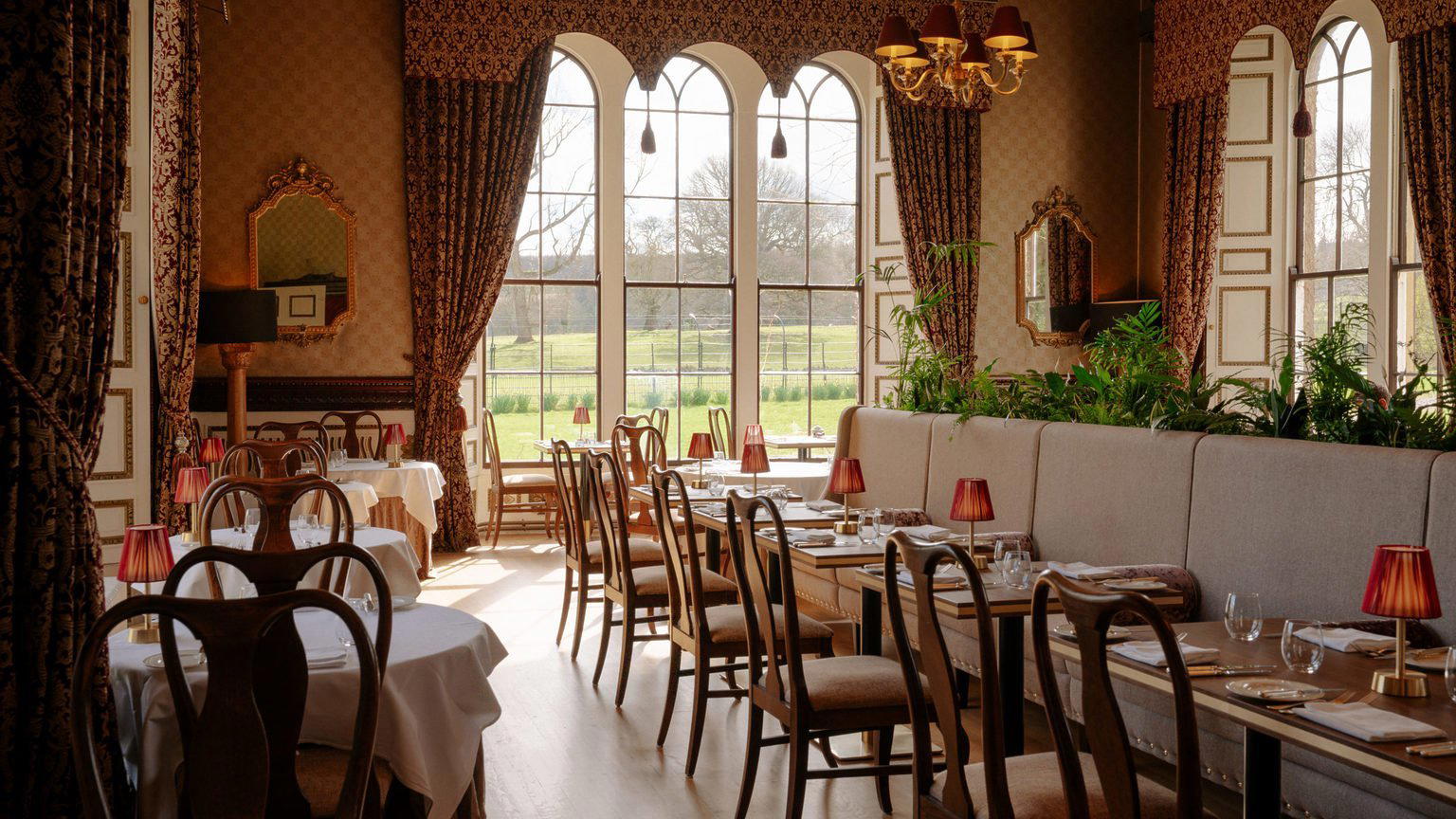
Bright, airy, plant-filled space with relaxed yet elegant atmosphere and natural light.