Don Camillo
Don Camillo occupies a quiet address on Burgweg in Basel's Kleinbasel district, positioning itself within a city that takes restaurant culture seriously enough to support multiple Michelin-starred operations within a few kilometres. The address alone signals a neighbourhood-level commitment to dining that rewards those who seek it out rather than those who stumble across it.
Pearl is the En Primeur Club membership app — saves, bookings, and concierge access live there. Same editors, same standards.
- Address
- Burgweg 7, 4058 Basel, Switzerland
- Phone
- +41616930507
- Website
- cantina-doncamillo.ch
- Directions
- Get directions
 Saves & bookings on Pearl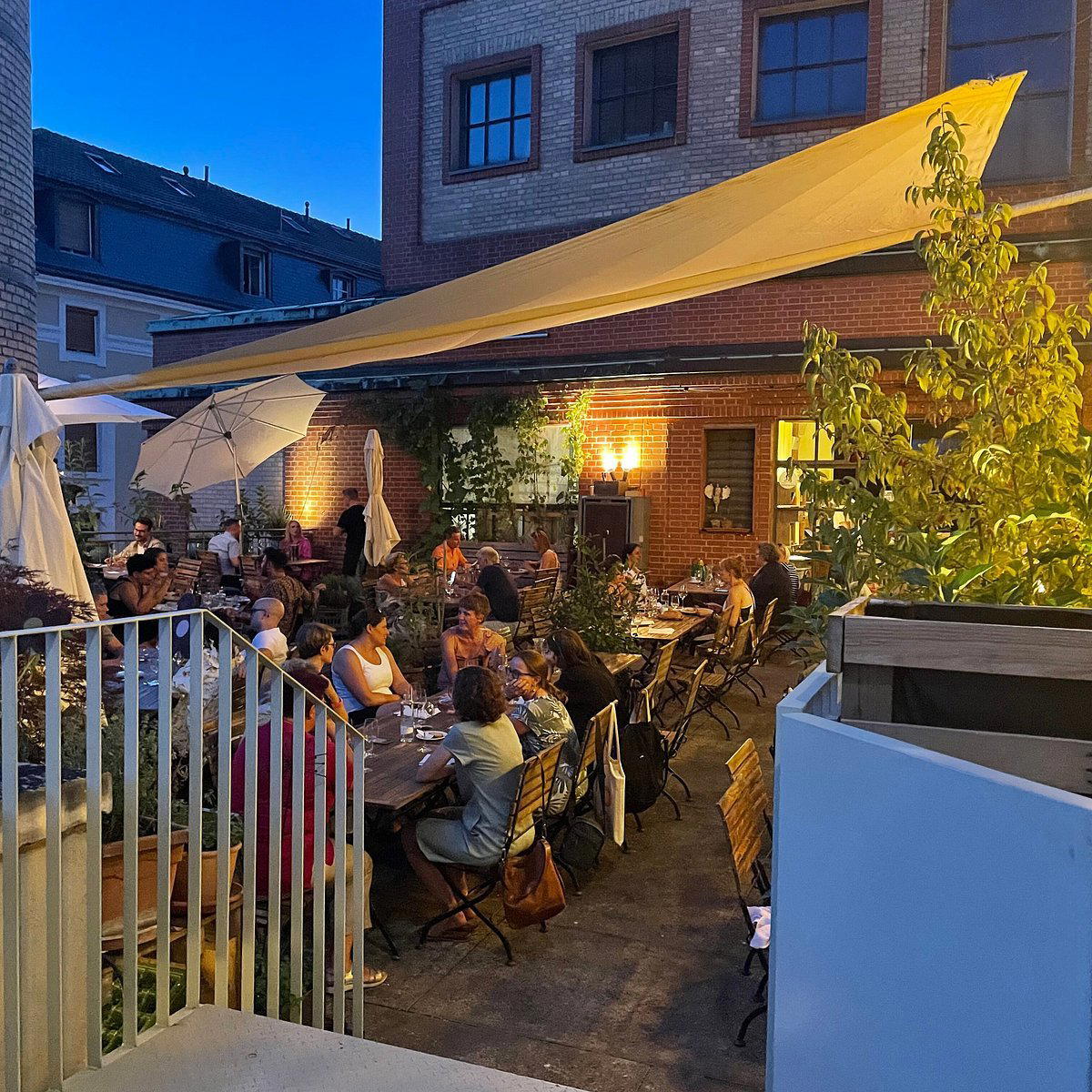
Kleinbasel's Quieter Register
Basel's restaurant scene has long operated on two registers. The louder one — three Michelin stars at Cheval Blanc by Peter Knogl, the creative ambition of Stucki - Tanja Grandits, the produce-driven rigour at roots — draws the international press and the pre-Art Basel reservation surge. The quieter register belongs to addresses like Don Camillo on Burgweg 7, in Kleinbasel, where the Rhine-adjacent streets retain a neighbourhood character that the city's museum-circuit side rarely broadcasts. Approaching from the river, the area feels less curated than the Altstadt across the water, which is precisely the point. Restaurants that survive here do so on the strength of repeat custom, not tourist throughput.
That dynamic shapes what Don Camillo is and what it is not. Swiss dining at this neighbourhood tier has historically drawn from Italian, French, and pan-Mediterranean traditions in roughly equal measure, with the weighting shifting depending on the proprietor's own formation. Without declared credentials in the public record, the kitchen's lineage remains something the room communicates over time rather than through press releases. That kind of earned reputation is, in the Swiss context, often more durable than the award-cycle variety.
The Scene at Burgweg
Kleinbasel sits on the right bank of the Rhine, administratively part of Basel-City but temperamentally its own district. The neighbourhood has historically housed a more working-class and immigrant-community character than the Altstadt, and its restaurant culture reflects that layering, trattorias alongside Turkish family spots alongside Swiss Beizli, the informal tavern format that Basel residents treat as a civic institution. Don Camillo's address places it within that fabric. The name itself references the Italian literary tradition, the fictional village priest of Giovanni Guareschi's postwar novels, a cultural signal that has long circulated through Italian-inflected establishments across Europe, from casual trattoria to mid-range ristorante.
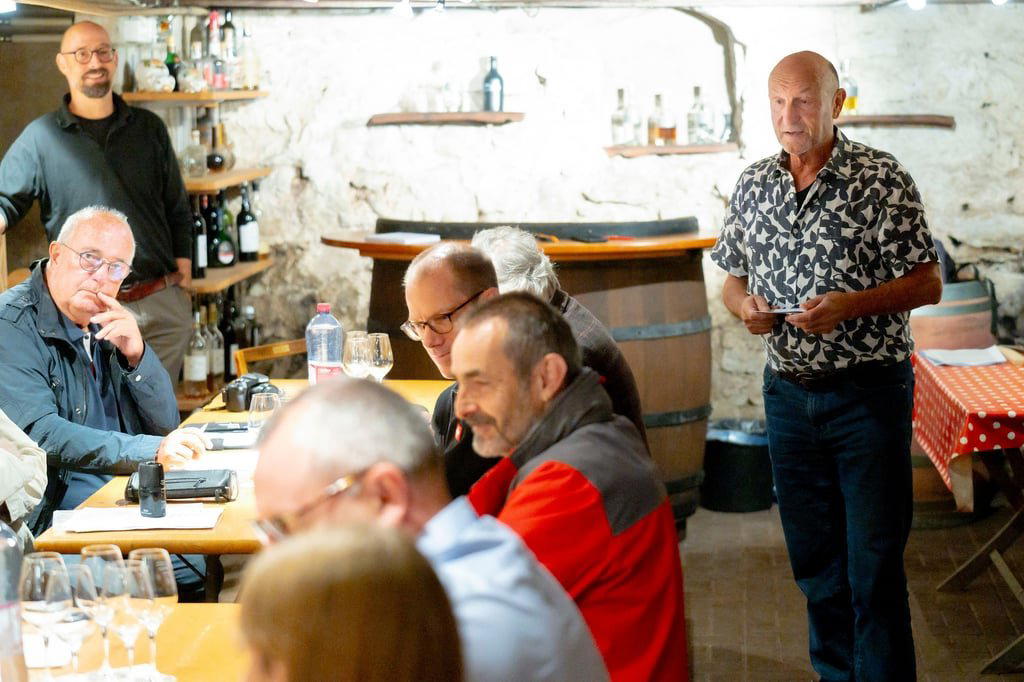
What that means in practice at Burgweg 7 is a room that likely reads more convivial than formal, where the gap between the person taking your order and the person who cooked your food is probably narrower than at the Michelin-tracked operations a tram ride away. Basel's mid-tier dining has been under pressure from the same forces reshaping restaurant economics across Switzerland, high labour costs, a strong franc discouraging cross-border experimentation, and a domestic market that demands value precision. Restaurants that hold through those pressures tend to do so by building a front-of-house culture where staff longevity creates the kind of table-side fluency that no training manual produces. You notice it in whether your wine is refilled before you ask, or whether the kitchen's pace adjusts to a table that is clearly in no hurry.
Team Dynamics and the Weight of Consistency
In Basel's more decorated tier, the rooms that appear in the same conversation as Hotel de Ville Crissier in Crissier or Schloss Schauenstein in Fürstenau, the collaboration between kitchen and front-of-house is a formal, documented discipline, with sommeliers who publish tasting notes and maîtres d'hôtel who have spent years in the same chairs. At neighbourhood level, that same dynamic operates differently. The chef-to-floor relationship is less stratified and often more instinctive, with the dining room functioning as a single organism rather than a hierarchy of departments.
That instinctive model has real advantages. It produces the kind of service that reads as genuinely attentive rather than procedurally correct, where the sommelier, formal or informal, steers a guest toward something interesting from the cellar because they read the table, not because a pairing matrix dictated it. Swiss neighbourhood restaurants with Italian orientation tend to maintain wine lists that punch above their apparent category: northern Italian bottles from Piedmont and Alto Adige sit alongside Swiss cantonal wines, with the Valais and Ticino offering regional options that visitors rarely encounter outside Switzerland. A room that knows its list and its guests well enough to connect them is doing something more useful than a list that simply catalogues available inventory.
The same collaborative logic applies to the kitchen's relationship with the market. Italian-tradition cooking at the neighbourhood level in Swiss cities often tracks seasonal availability more honestly than prestige operations, because the margin for waste is narrower and the sourcing relationships more personal. Basel's position at the corner of France, Germany, and Switzerland gives its kitchens unusual access: Alsatian produce, Black Forest game, Swiss dairy, and Italian imports all arrive through commercial and informal channels that a well-networked kitchen can activate. Whether Don Camillo works those channels is a question the menu answers, not the press release.
Placing Don Camillo in the Basel Picture
Basel's dining scene rewards a reader who understands its tiers. At the leading sits a cluster of internationally tracked restaurants, the venues that appear in Swiss Michelin editions alongside destinations like Memories in Bad Ragaz and Einstein Gourmet in Sankt Gallen. Below that, a mid-tier of well-resourced brasseries and modern European rooms like 1777 and Ackermannshof handle the city's business dining and anniversary-dinner traffic. Then there is the neighbourhood tier, where the competitive set is defined less by awards and more by whether the room fills on a Tuesday. Don Camillo occupies that third register, which in a city of Basel's density and income level is a sustainable and often rewarding position.
For a reader calibrating expectations: this is not the room you book when you want to compare notes with a companion on the Swiss fine-dining circuit, the way you might cross-reference an evening at Da Vittorio - St. Moritz against focus ATELIER in Vitznau. It is, or should be, the room you book when you want Basel to feel like a city rather than a museum, where the measure of a good evening is a well-cooked plate and a table you are in no hurry to leave. That is a different value proposition, and in the right mood, a more satisfying one.
Planning a Visit
Don Camillo's address at Burgweg 7 places it in Kleinbasel, reachable from the central tram network with stops on Claraplatz a short walk from the street. As with most neighbourhood restaurants in Basel that have built a local following, contacting the venue directly to check current hours and availability before arriving is advisable, particularly on weekday evenings when covers can fill ahead of time. The absence of a published website or phone number in the standard directories suggests the operation communicates primarily through its regulars and local word-of-mouth, a pattern common to long-standing neighbourhood fixtures in Swiss cities. For broader orientation across the city's dining options, the EP Club Basel restaurants guide maps the full range from neighbourhood tables to the fine-dining tier.
Visitors arriving in Basel primarily for the art fairs, Art Basel in June or Liste in the same week, will find Kleinbasel less saturated with fair-crowd restaurant traffic than the Altstadt and St. Alban districts. That seasonal pressure point makes the neighbourhood-side options meaningfully more accessible during those periods, which is information worth holding onto.
Continue exploring
More in Basel
Restaurants in Basel
Browse all →
Bars in Basel
Browse all →
Hotels in Basel
Browse all →

At a Glance
- Cozy
- Industrial
- Relaxed
- Date Night
- Casual Hangout
- Terrace
- Open Kitchen
- Natural Wine
- Street Scene
Current opening hours
- Monday
- 5:30–11 PM
- Tuesday
- 5:30–11 PM
- Wednesday
- 5:30–11 PM
- Thursday
- 5:30–11 PM
- Friday
- 5:30–11 PM
- Saturday
- 5:30–11 PM
- Sunday
- Closed
Hours can change for holidays and private events. Last verified .
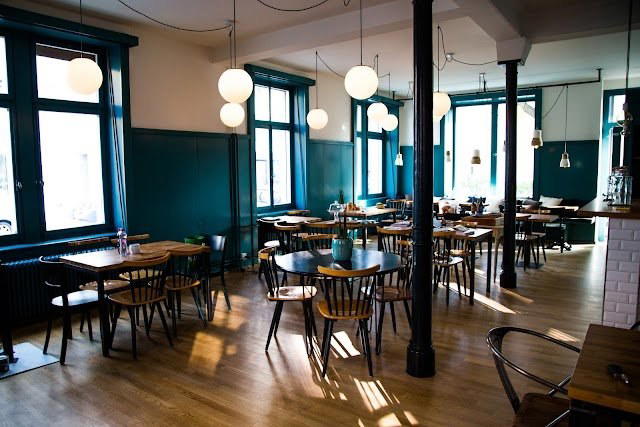
Pleasant relaxed atmosphere in the lofty post-industrial space of the former Warteck Brewery.
Know Before You Go
- Getting there
- Burgweg 7, 4058 Basel, Switzerland