Domani Pizzeria and Restaurant
On Queen Anne Avenue North, Domani Pizzeria and Restaurant occupies a neighborhood corner that rewards repeat visits over destination dining. The kitchen works within the Italian-American pizzeria tradition while Seattle's broader dining scene shifts toward sourcing transparency and reduced-waste cooking. For Queen Anne locals and visiting diners alike, it represents the neighborhood's middle tier of casual dining done with commitment.
Pearl is the En Primeur Club membership app — saves, bookings, and concierge access live there. Same editors, same standards.
- Address
- 1515 Queen Anne Ave N, Seattle, WA 98109
- Phone
- +12068122222
- Website
- domaniqueenanne.com
- Directions
- Get directions
 Saves & bookings on Pearl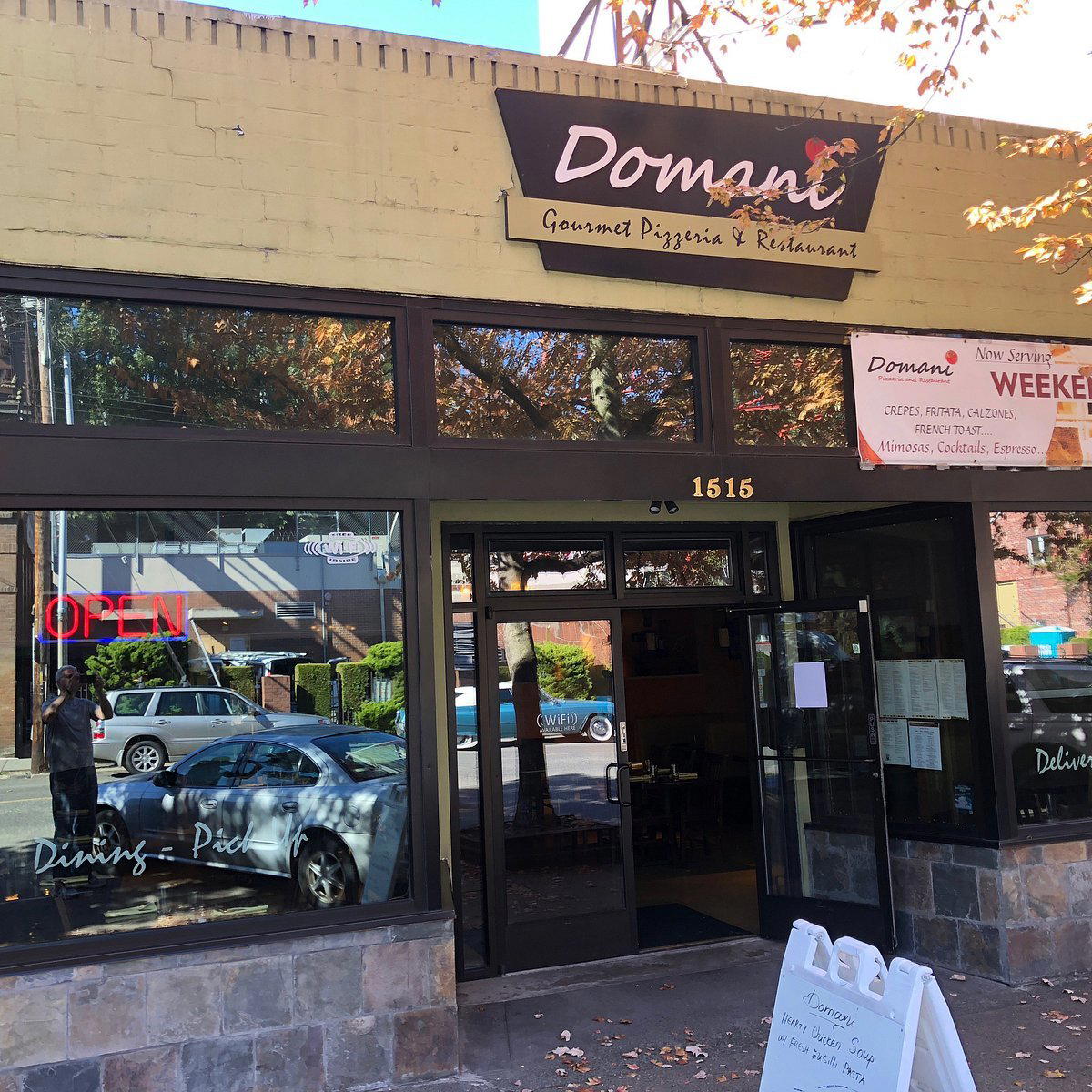
Queen Anne's Neighborhood Dining Register
Seattle's Queen Anne neighborhood has a layered dining scene, with destination restaurants and committed neighborhood spots both drawing regular traffic. Domani Pizzeria and Restaurant, at 1515 Queen Anne Ave N, sits in the latter category, a position that carries its own set of expectations and, when met, its own kind of loyalty. The avenue it occupies runs through the commercial spine of Lower Queen Anne, a stretch that feeds Uptown workers, Seattle Center visitors, and the dense residential population above it. That mixed foot traffic shapes what a pizzeria on this block needs to be: reliable, accessible, and rooted enough to survive on repeat custom rather than novelty.
The pizzeria format itself is worth contextualizing against Seattle's wider dining map. The city has produced nationally recognized restaurants, Canlis (New American) on the lake and Joule (New Asian) in Fremont among them, but its neighborhood restaurant culture, particularly in the pizza and casual Italian segment, has remained closer to community institution than culinary showcase. Domani operates in that tradition.
Pizza as a Sourcing Argument
Across the United States, one substantive shift in pizzeria culture over the past decade has not been about dough hydration ratios or imported flour, though those conversations continue, but about supply chain. The farm-to-table movement that reshaped fine dining at places like Blue Hill at Stone Barns in Tarrytown and Single Thread Farm in Healdsburg has filtered, slowly and unevenly, into casual formats. The question for neighborhood pizzerias is whether sourcing transparency and waste-reduction practices can survive the margin pressures of a mid-price operation.
Seattle is a city with structural advantages here. The Pacific Northwest's agricultural infrastructure, dairy producers, grain growers, vegetable farms within two hours of the city, gives any kitchen that wants to engage with local sourcing a realistic supply chain to work with. Restaurants across the price spectrum, from the tasting-menu tier down to casual formats, increasingly signal their sourcing relationships on menus and in staff training. Whether a given pizzeria chooses to engage with that infrastructure, or defaults to national food-service supply chains, tells you something meaningful about its orientation toward the neighborhood and the season.
The sustainability argument for pizzerias more broadly also runs through waste. Wood-fired or high-temperature electric ovens, which dominate serious pizza operations, run continuously during service and generate consistent fuel costs. Kitchens that manage dough production to minimize day-end waste, that treat their tomato applications with the same economy as a fine-dining pass, and that source cheese in quantities calibrated to weekly rather than monthly projections, operate with a different cost structure and a different environmental footprint than those that do not. These are operational choices that rarely appear on menus but accumulate into a kitchen's character over time.
The Italian-American Pizzeria in a Pacific Northwest Context
The Italian-American pizzeria tradition arrived on the Pacific Northwest coast later and in smaller volume than it did in New York, New Haven, or Chicago, which means Seattle has not had the same century-long conversation about what constitutes a correct slice. That absence of orthodoxy is, an opening. Kitchens here have room to work with regional ingredients, adjust to local palate preferences around acid and weight, and develop a house style without the weight of an entrenched local canon. The parallel exists in higher-end American dining: Smyth in Chicago and Addison in San Diego both emerged from regions with strong culinary histories and built distinct contemporary identities within them. The neighborhood pizzeria equivalent of that work is quieter but not less consequential for the people who eat there weekly.
For comparison, consider what distinguishes the pizza operations in cities with longer Italian-American dining histories. In New York, the conversation at places like Atomix in New York City's neighborhood or those adjacent to Le Bernardin in New York City is about tradition and deviation from it. In New Orleans, where Emeril's in New Orleans helped define a different kind of regional American restaurant identity, Italian-American cooking took on Creole inflections. Seattle's identity remains less fixed, which is both a challenge and a structural freedom for operators like Domani.
Placing Domani in Seattle's Casual Tier
Among Seattle's casual dining addresses, the Queen Anne corridor competes with distinct neighborhood clusters. The Ballard stretch around 1744 NW Market St draws a different residential demographic. The SoDo area near 2963 4th Ave S skews toward post-event and industrial-adjacency dining. Downtown, 1415 1st Ave positions toward the tourist and office corridor. Queen Anne's civilian feel, residential streets, local errands, dogs tied to parking meters, sets Domani in a context where consistency and familiarity carry more weight than the novelty-seeking that drives destination dining decisions.
The neighborhood pizzeria operates at the other end of the American dining spectrum, where consistency and repeat visits matter more than occasion dining. Across Europe, the equivalent debate plays out in formats like Atelier Moessmer Norbert Niederkofler in Brunico, where hyper-regional sourcing has become the organizing principle even at altitude. And in the Bay Area, Lazy Bear in San Francisco has shown how communal dining formats can carry sourcing integrity alongside casual atmosphere. The question Domani's format invites is whether the same integrity, scaled down to a neighborhood pizzeria on Queen Anne Ave, is being pursued with comparable seriousness.
A Tight Comparison
Comparable venues nearby, for context on price, style, and recognition.
| Venue | Cuisine | Price | Notes |
|---|---|---|---|
| Domani Pizzeria and RestaurantThis venue — the venue you are viewing | Not listed | $$ | Not listed |
| La Fontana Siciliana | Belltown, Authentic Sicilian Italian | $$ | Not listed |
| La Spiga | Not listed | $$ | Pike/Pine, Authentic Northern Italian (Emilia-Romagna) |
| La Vita E Bella | Belltown, Authentic Sicilian-Italian | $$ | Not listed |
| Limoncello Belltown | Belltown, Italian Pasta & Pizza | $$ | Not listed |
| Bar Cotto | Stevens, Authentic Italian Pizza & Pasta | $$ | Not listed |
Continue exploring
More in Seattle
Restaurants in Seattle
Browse all →
Bars in Seattle
Browse all →
Hotels in Seattle
Browse all →


At a Glance
- Cozy
- Classic
- Family
- Casual Hangout
- Group Dining
- Open Kitchen
- Extensive Wine List
- Local Sourcing
Current opening hours
- Monday
- 4–10 PM
- Tuesday
- 4–10 PM
- Wednesday
- 4–10 PM
- Thursday
- 4–10 PM
- Friday
- 4–10 PM
- Saturday
- 12–10 PM
- Sunday
- 12–9 PM
Hours can change for holidays and private events. Last verified .
Warm and welcoming neighborhood atmosphere with focus on hospitality and fresh, flavorful dishes.