Dishoom Manchester
Dishoom Manchester brings the Irani café tradition of Bombay to Bridge Street, translating a subcontinent's breakfast and all-day dining culture into a northern English city with considerable conviction. The formula — slow-cooked dal, chai by the pot, and a room that reads like a 1960s Bombay photograph — has earned the brand a following that consistently outpaces its seat count. Walk-ins are possible at off-peak hours; queues form early.
Pearl is the En Primeur Club membership app — saves, bookings, and concierge access live there. Same editors, same standards.
- Address
- 32 Bridge St, Manchester M3 3BT, United Kingdom
- Phone
- +441615373737
- Website
- dishoom.com
- Directions
- Get directions
 Saves & bookings on Pearl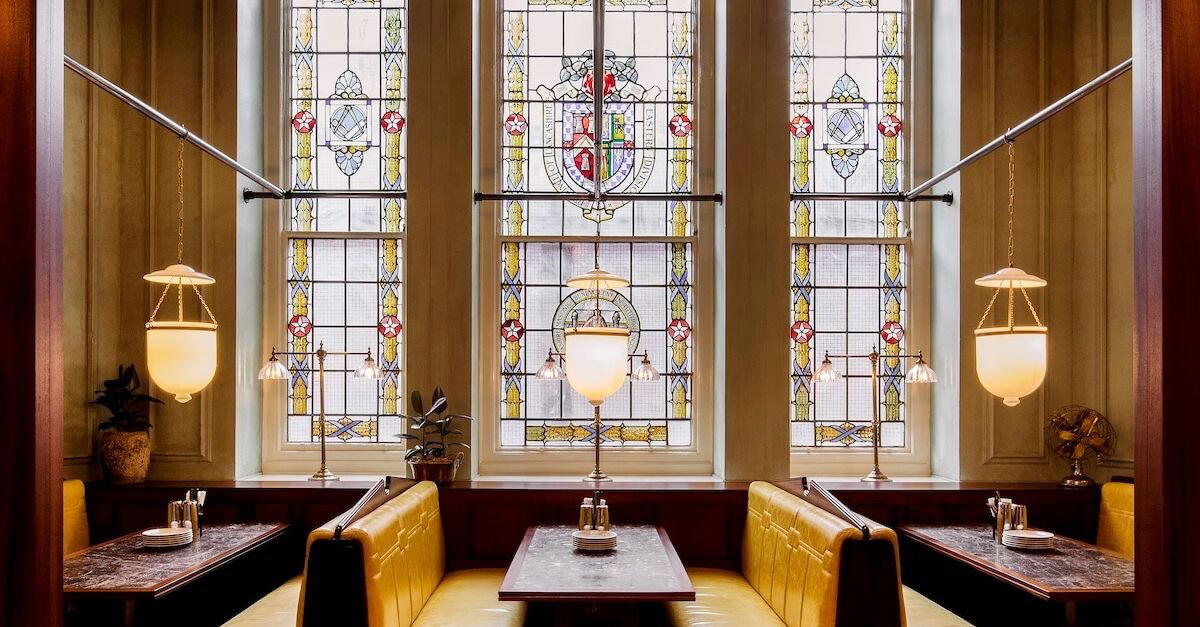
The Irani Café Tradition, Reimagined in the North
Bombay's Irani cafés were always democratic spaces: marble-topped tables, ceiling fans, the smell of chai and charred bread before the city had properly woken up. By the mid-twentieth century they numbered in the hundreds; today fewer than thirty remain. Dishoom's project, across its UK restaurants, has been to take that vanishing format and transplant it somewhere it was never native — British city centres, where the all-day café culture is entirely different in rhythm and reference. The Manchester outpost on Bridge Street sits in that frame, operating less as a subcontinental restaurant and more as a considered argument about what the Irani café could look like if it had migrated north rather than declined.
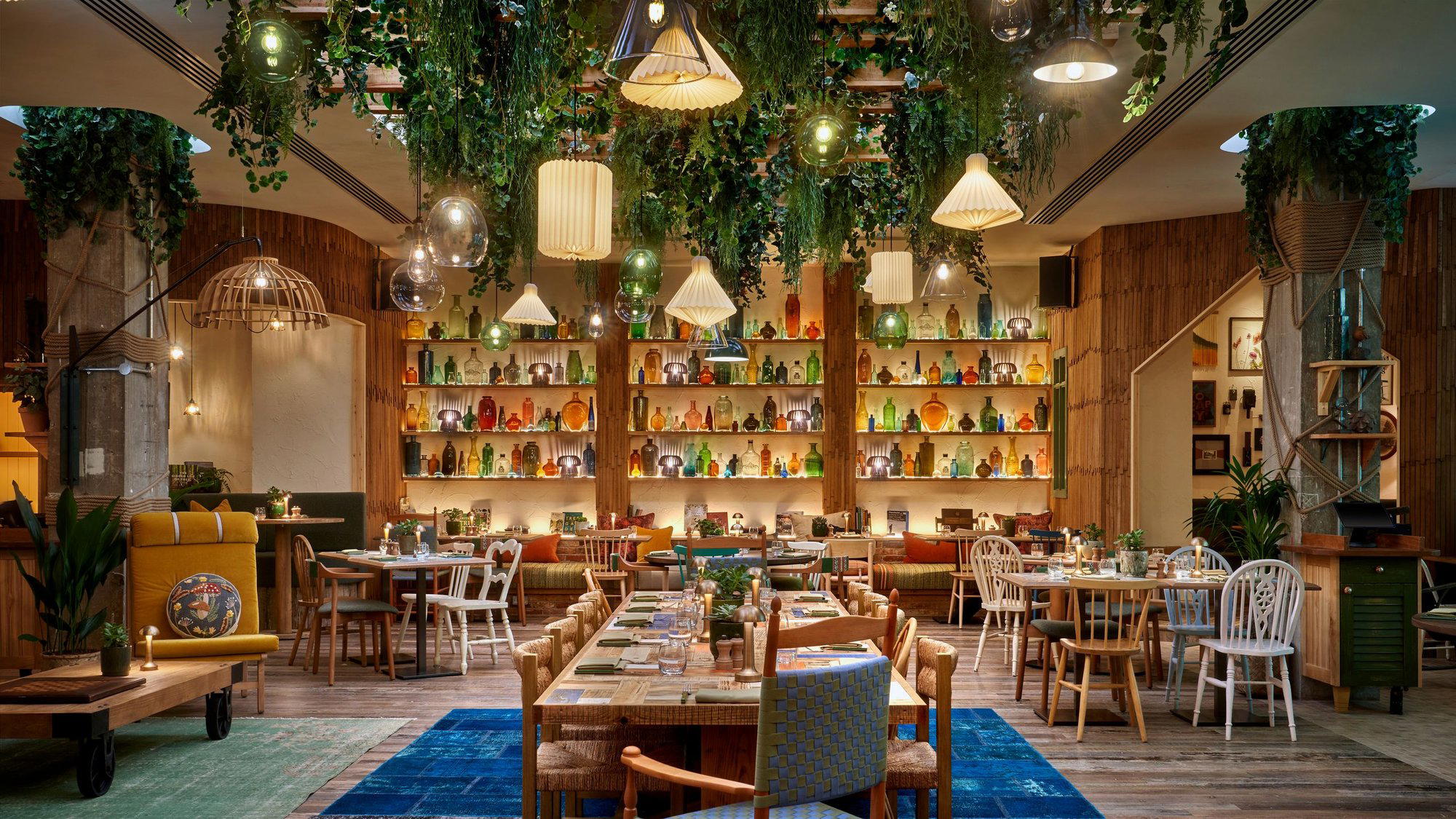
That editorial context matters because it changes how you read the room. The worn-wood panelling, the black-and-white photography, the pressed-tin ceilings: none of it is decorative nostalgia for its own sake. It is a deliberate reconstruction of a social space that prioritised lingering and conversation over table turns. In a Manchester dining scene that has moved steadily toward the tasting menu and the counter format — see mana and Skof for that trajectory, Dishoom operates on the opposite axis: high volume, democratic pricing, and a menu designed for repetition rather than occasion.
Where Imported Technique Meets British Pantry
The editorial angle worth pressing on is not simply that Dishoom serves Indian food in Manchester. It is the specific intersection of Bombay cooking methods and British supply chains that gives the food its character. The black dal, slow-cooked overnight, finished with butter and cream, is a technique with roots in the dhabas of Punjab and the Irani cafés of South Bombay. The discipline required to execute it consistently across multiple sites is substantial: the cooking time alone, often cited as around twenty-four hours, places it in a different production register from most casual dining operations in the city.
British sourcing is embedded in the format without being laboured as a selling point. The eggs in the breakfast dishes, the meat in the bacon naan roll, the dairy that finishes the dal: these are British-supply ingredients processed through Bombay technique. That relationship between imported method and indigenous product is precisely the territory that defines a strand of contemporary British cooking, the same conversation, at a very different price point and register, that venues like Adam Reid at the French and 10 Tib Lane are working through from a Modern European starting point.
Internationally, this negotiation between technique and terroir is the animating question at houses as far apart in register as Le Bernardin in New York City and Lazy Bear in San Francisco. Dishoom operates in a mass-market tier where that conversation is rarely made explicit, but it is present in the kitchen discipline nonetheless.
Breakfast as the Signature Hour
The strongest argument for Dishoom's place in Manchester's food culture is the breakfast service. Serious breakfast restaurants are scarce in any British city; venues that treat the first meal of the day with the same kitchen rigour applied to dinner are rarer still. The bacon naan roll has become the brand's most discussed dish nationally, partly because it is genuinely difficult to replicate at home and partly because it occupies a category, high-technique street food with South Asian spicing, that almost nothing else in the city matches.
The chai programme deserves separate attention. In the Irani café tradition, tea was never incidental: it was the social adhesive of the whole operation. Dishoom serves chai by the pot and treats it as a menu anchor rather than a beverage afterthought. That positioning distinguishes the breakfast offer from every other café on Bridge Street and most in the surrounding Spinningfields area.
For context on the broader Manchester dining map, the venues at the top of the critical hierarchy are doing something structurally different: 20 Stories operates at the rooftop-destination register, while the UK's recognised fine dining benchmark, typified by L'Enclume in Cartmel, Moor Hall in Aughton, and Waterside Inn in Bray, is built around a single tasting format in a single room. Its comparison group is the all-day café, and by that measure it operates well above the category average.
The Dinner and Evening Offer
While breakfast drives the strongest editorial case, the all-day format means the dinner service carries its own logic. Small plates, grilled meats from a charcoal sigri, and room-temperature chutneys served alongside: the evening menu leans into the Irani café's original function as a neighbourhood restaurant open to anyone who walked in. Seasonal adjustments to the menu have been documented across the Dishoom estate, which is relevant timing-wise for visitors planning around autumn and winter months, when the slow-cooked dal and spiced house black tea feel most suited to the Manchester climate.
The competitive Indian dining field in the UK's major cities has become increasingly sophisticated. Opheem in Birmingham represents the Michelin-starred end of that evolution. Dishoom sits at the opposite end, not because the cooking is less considered, but because the format is deliberately non-hierarchical. No tasting menu, no prix fixe, no dress code signal. That accessibility is a choice, not a constraint.
Planning Your Visit
Bridge Street places Dishoom within easy reach of Manchester's central rail network, making it a practical option whether you are arriving from elsewhere in the city or from further afield via Manchester Piccadilly or Victoria. Walk-in queues are a documented feature of the operation, particularly at weekend breakfast and the early dinner window. Arriving before the standard breakfast rush, the restaurant opens earlier than most city-centre kitchens, or timing an evening visit to the later service window (after 21:00 on busy nights) reduces wait time considerably. The no-reservation policy for most tables is not an oversight; it is structural to the Irani café format, where dropping in without prior arrangement was the entire point.
For those building a wider Manchester itinerary, the EP Club's full Manchester restaurants guide maps the city's dining options across price tiers and formats. Companion reads for the UK fine dining circuit include CORE by Clare Smyth in London, Gidleigh Park in Chagford, Hand and Flowers in Marlow, hide and fox in Saltwood, Midsummer House in Cambridge, and Ynyshir Hall in Machynlleth, all operating in an entirely different register but useful for understanding where Dishoom sits in the broader national dining conversation.
How Dishoom Manchester compares with similar nearby venues.
| Venue | Cuisine | Price |
|---|---|---|
| El Gato Negro | Spanish | ££ |
Continue exploring
More in Manchester
Restaurants in Manchester
Browse all →
Bars in Manchester
Browse all →
At a Glance
- Lively
- Cozy
- Classic
- Well Known
- Group Dining
- Family
- Celebration
- Casual Hangout
- Brunch
- Late Night
- Standalone
- Design Destination
- Craft Cocktails
- Zero Proof
- Beer Program
Current opening hours
- Monday
- 8 AM–11 PM
- Tuesday
- 8 AM–11 PM
- Wednesday
- 8 AM–11 PM
- Thursday
- 8 AM–11 PM
- Friday
- 8 AM–12 AM
- Saturday
- 9 AM–12 AM
- Sunday
- 9 AM–11 PM
Hours can change for holidays and private events. Last verified .
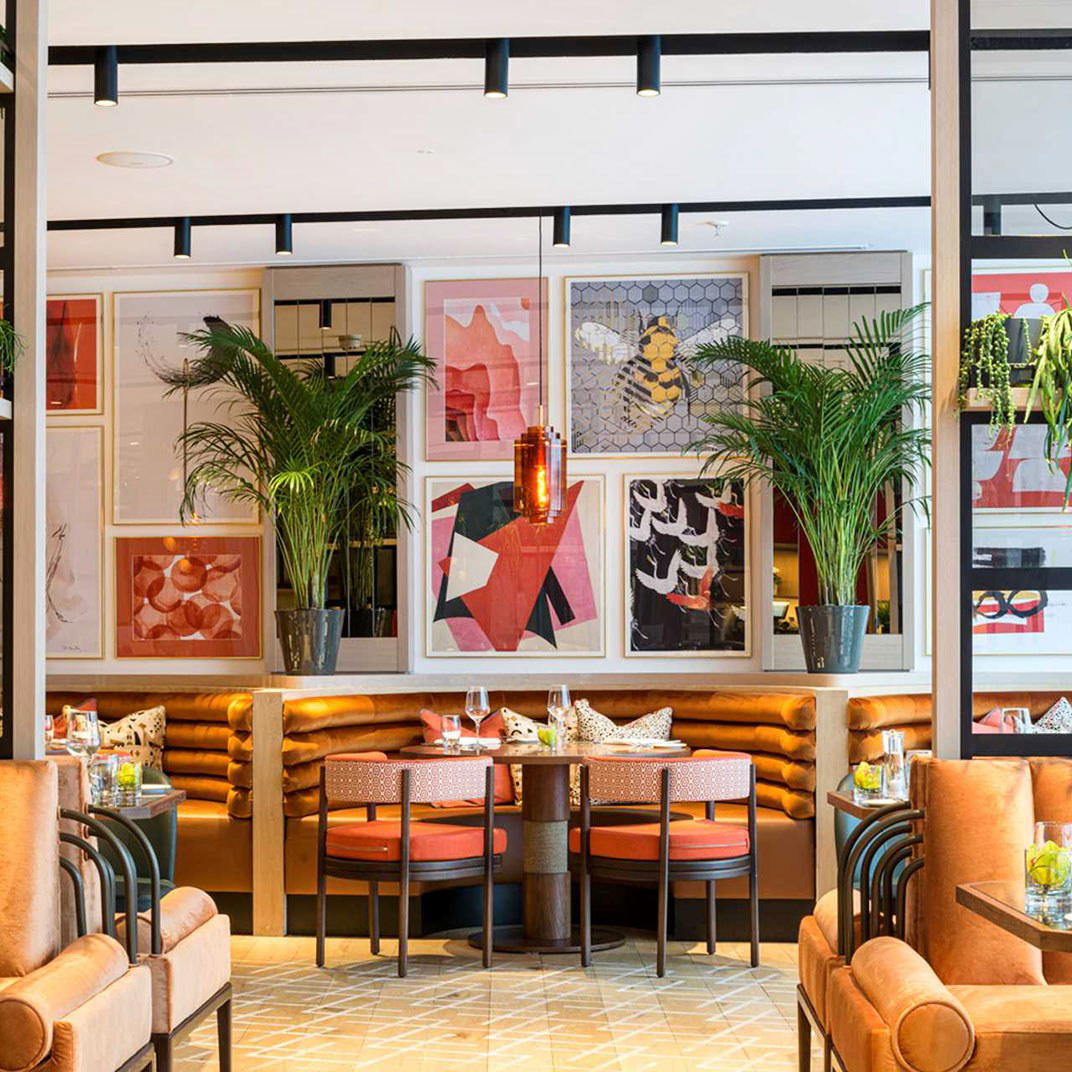
Bustling, warmly atmospheric, and design-led, with an Irani Bombay-inspired identity and a lively, convivial dining room.
Know Before You Go
- Getting there
- 32 Bridge St, Manchester M3 3BT, United Kingdom