Our verdict
On Karl-Heine-Straße in Leipzig's Plagwitz district, Dipasquale has operated as a reference point for Italian fine food products in a city that rewards specialist retailers who know their supply chains. The shop sits within a neighbourhood undergoing sustained creative redevelopment, drawing residents and visitors who treat sourcing seriously. It occupies the Italian delicatessen tier where product provenance, curation, and depth of range carry more weight than restaurant-style theatre.

Pearl is the En Primeur Club membership app — saves, bookings, and concierge access live there. Same editors, same standards.
- Address
- Karl-Heine-Straße 63, 04229 Leipzig, Germany
- Phone
- +4934124741821
- Hours
- Mon–Wed 11 AM–7 PMThu–Fri 10 AM–10 PMSat 10 AM–8 PMSun 10 AM–4 PM
- Website
- speisekartenweb.de
- Directions
- Get directions
- Booking
- Book on the venue's website
The menu
What to order
- Piadina
- Focaccia
- Sicilian Cannoli
- Aperitivo Buffet
Karl-Heine-Straße and the Case for Serious Italian Provisions
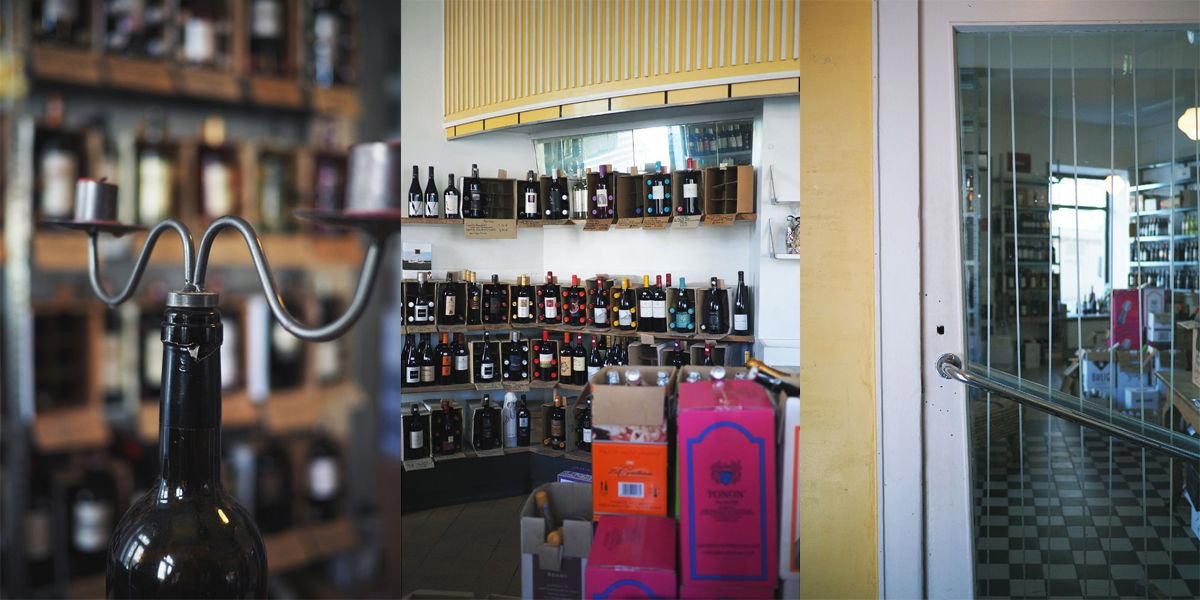
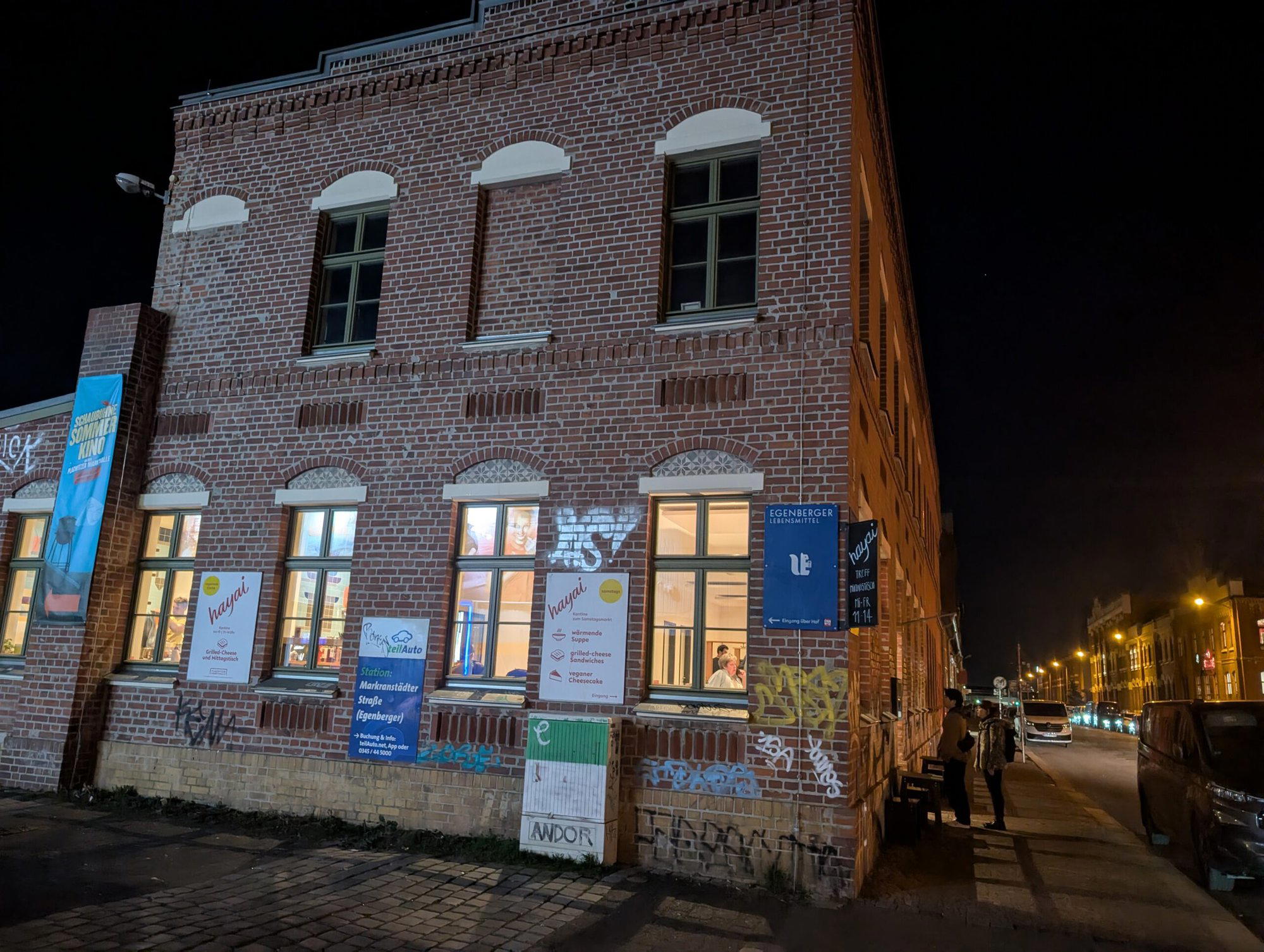
Approach Karl-Heine-Straße on a weekday morning and you encounter the particular rhythm of a street that has been quietly repositioning itself for over a decade. Former industrial units give way to independent traders, studios, and the kind of narrow-fronted specialist shops that survive precisely because they offer something a supermarket cannot replicate. Dipasquale - Italienische Feinkost occupies one of those positions at number 63, and the sensory cues announce themselves before you reach the door: cured meats, aged cheese, and the faint mineral note of good olive oil in a space that does not waste square metres on decoration.
The Plagwitz district, where Karl-Heine-Straße runs, has followed the trajectory common to post-industrial neighbourhoods across German cities: gradual creative influx, rising rents, and a surviving layer of genuinely specialist traders who pre-date the gentrification wave or arrived early enough to establish themselves before the market tightened. Italian delicatessens of this kind sit in a specific commercial and cultural niche. They function less like shops and more like curated arguments about a national larder, where the selection of producers on the shelf communicates a point of view as clearly as any editorial.
The Italian Feinkost Category in a German Context
Germany's relationship with Italian food products has a longer and more serious history than the tourist-restaurant version of that connection suggests. Italian Feinkost shops have operated in German cities since the postwar era of labour migration, and the category has since split into two distinct tiers: mass-market import operations stocking familiar branded goods, and smaller, selection-led shops where product provenance and producer relationships determine what gets shelf space. Dipasquale positions itself in the latter group.
In Leipzig specifically, the premium food retail scene is thinner than in Frankfurt, Munich, or Hamburg, which makes specialist operators more conspicuous and more necessary. Restaurants working in the finer registers of Italian and European cooking in the city — Kuultivo (Modern Cuisine) at the €€€ tier, Stadtpfeiffer (Creative) at the top of the local bracket — draw on sourcing networks that extend well beyond what standard wholesale channels provide. A specialist delicatessen that maintains its own relationships with Italian producers fills a gap in that supply chain and, equally, gives private customers access to ingredients that rarely reach the general retail market.
The editorial angle for understanding a shop like Dipasquale is not the inventory list but the curation logic behind it. Italian fine food products span a range as large as the country itself: aged Parmigiano Reggiano from different mountain dairies, prosciutto from producers whose curing times and pig breeds diverge substantially, olive oils from Sicilian, Pugliese, and Ligurian groves that share a name but almost nothing else in the bottle. A Feinkost operation that takes this seriously is making hundreds of small editorial decisions about which version of a product to stock, and those decisions reveal whether the operation is a genuine specialist or a branded goods reseller with Italian signage.
Wine as a Structural Element of the Italian Delicatessen
The wine dimension of an Italian Feinkost shop is where the editorial angle sharpens most clearly. Italy produces from approximately 350 authorised grape varieties across 20 regions, making it arguably the most complex national wine offer in the world. The selection decisions a specialist retailer makes within that range communicate the depth of their engagement with Italian wine culture far more precisely than any shelf label. At one end of the spectrum, a shop stocks the internationally recognised names: Barolo, Brunello, Amarone, Chianti Classico Riserva from familiar estates. At the other, a genuinely wine-literate operation fills gaps with producers from Trentino-Alto Adige, Campania, Calabria, or Etna who have no international marketing presence and require a buyer with direct producer relationships and the willingness to invest in stock that does not sell itself.
Germany's broader wine retail scene has its own high-reference operations. Institutions like Waldhotel Sonnora in Dreis and Schanz in Piesport maintain wine programs that draw on decades of cellar depth. At the multi-star restaurant level, operations like Schwarzwaldstube in Baiersbronn, Vendôme in Bergisch Gladbach, and Victor's Fine Dining by christian bau in Perl set the national benchmark for sommelier-led selection. In a different register entirely, CODA Dessert Dining in Berlin and ES:SENZ in Grassau demonstrate the range of approaches to beverage pairing that Germany's current dining scene is willing to pursue. A specialist Italian retailer does not compete in any of those registers directly, but the underlying logic of principled selection is the same.
Leipzig's Dining Ecology and Where Dipasquale Fits
Leipzig's restaurant offering has diversified considerably over the past decade. The city now includes 997 Sushi Restaurant, Addis Café, and Alfa Restaurant alongside the more established fine dining tier. For those whose interest extends beyond eating out to cooking and sourcing at home, a specialist Feinkost operation on Karl-Heine-Straße addresses a gap that restaurants cannot fill. The Italian delicatessen category at its finest functions as culinary infrastructure for an entire neighbourhood.
For reference-point comparison beyond Germany, the principle holds internationally. Operations like Le Bernardin in New York City and Lazy Bear in San Francisco are built on ingredient sourcing as a founding discipline, as are JAN in Munich, Aqua in Wolfsburg, and Restaurant Haerlin in Hamburg within Germany's high-end restaurant tier. The common thread is that product quality precedes technique. A specialist retailer like Dipasquale operates at the supply end of that same chain.
Planning a Visit
Dipasquale sits at Karl-Heine-Straße 63 in the Plagwitz district of Leipzig, reachable from the city centre by tram on the lines serving the western corridor. The surrounding streets are walkable and dense with independent traders, making the area worth an unhurried visit rather than a targeted stop. Contact and opening hours are best confirmed directly, as specialist retail operations in this district tend to operate on schedules that reflect their owner-operated character rather than standardised retail hours. For broader context on Leipzig's dining and food scene, our full Leipzig restaurants guide covers the city's current range across price points and cuisines.
Frequently asked questions
Where is Dipasquale - Italienische Feinkost located?
Dipasquale - Italienische Feinkost is located at Karl-Heine-Straße 63, 04229 Leipzig, Germany, Leipzig.
What makes Dipasquale a useful stop for Italian wine in Leipzig?
Italian Feinkost shops with a serious wine component give access to Italy's approximately 350 authorised grape varieties through a curated lens that general wine retail rarely replicates — the selection is typically shaped by regional affinity and producer relationships rather than import volume. Dipasquale sits at Karl-Heine-Straße 63 in Leipzig's Plagwitz district, a neighbourhood that has been repositioning itself around specialist food and drink retail over the past decade. For Leipzig residents sourcing Italian regional wines outside the mainstream distribution chain, a shop of this type fills a gap the city's broader restaurant offering does not.
What's the must-try dish at Dipasquale - Italienische Feinkost?
Dipasquale is a Feinkost shop rather than a seated restaurant, so the question of a single dish is less relevant than knowing which product categories to focus on. Italian delicatessens of this type in Germany typically anchor their offer around cured meats and aged cheeses sourced from specific regional producers — these are the provisions that reward close attention. Visiting with a specific request, whether a particular salumi or a regional olive oil, tends to surface the shop's real depth.
What's the best way to book Dipasquale - Italienische Feinkost?
As a Feinkost shop at Karl-Heine-Straße 63 in Leipzig, Dipasquale operates on a walk-in basis rather than a reservation model. No booking contact or online reservation system is currently documented for the venue. Arriving on a weekday morning, when Karl-Heine-Straße runs at its local rather than weekend pace, gives more time to work through the range with staff.
What is Dipasquale - Italienische Feinkost known for?
Dipasquale operates as an Italian provisions shop on Karl-Heine-Straße 63 in Leipzig's Plagwitz district, stocking the kind of serious Feinkost range — cured meats, cheeses, oils, pasta, and Italian wines — that positions it closer to a specialist importer than a general deli. In the German Feinkost tradition, the Italian category carries particular depth, and Dipasquale draws on that lineage rather than the tourist-restaurant version of Italian food.
Can Dipasquale - Italienische Feinkost handle vegetarian requests?
Italian Feinkost shops are inherently well-suited to vegetarian shoppers: the category includes pasta, preserved vegetables, olive oils, vinegars, aged cheeses, and dried legumes alongside cured meats. At a shop like Dipasquale in Leipzig's Plagwitz district, the non-meat offer is structural rather than an afterthought. The wine selection, where present in shops of this type, is also accessible regardless of dietary preference.
Is eating at Dipasquale - Italienische Feinkost worth the cost?
Dipasquale is a Feinkost provisions shop at Karl-Heine-Straße 63, Leipzig, not a restaurant with a fixed menu cost. The value equation sits in the quality of imported Italian products relative to what a supermarket carries — specialty Feinkost shops in Germany at this level typically source from producers not represented in general retail.
Same-City Peers
A compact comparison to help you place this venue among nearby peers.
| Venue | Cuisine | Price | Awards | Notes |
|---|---|---|---|---|
| Dipasquale - Italienische FeinkostThis venue — the venue you are viewing | Authentic Italian Delicatessen & Café | $10–20 | Not listed | Not listed |
| Kuultivo | Modern Creative Cuisine | $100–150 | 1 Michelin Star | Modern Cuisine |
| Stadtpfeiffer | Modern European Fine Dining | $150–200 | 1 Michelin Star · La Liste Top Restaurants | Creative |
| Falco | Modern European Fine Dining | $100–150 | Falstaff Bar - 92 Falstaff Points | Modern European |
| C'est la vie | Modern French Fine Dining | $100–150 | Michelin Plate | French |
| Michaelis | Seasonal German Fine Dining | $50–100 | Michelin Plate | International |