Diljān

Diljān is an Afghan bakery at 330 Hicks St, Brooklyn, focused on breakfast and brunch with quick-bite pacing and signatures like cream cheese naan and halwa sticky bun.
Pearl is the En Primeur Club membership app — saves, bookings, and concierge access live there. Same editors, same standards.
- Address
- 330 Hicks St, Brooklyn, NY 11201
- Website
- instagram.com
- Directions
- Get directions
 Saves & bookings on Pearl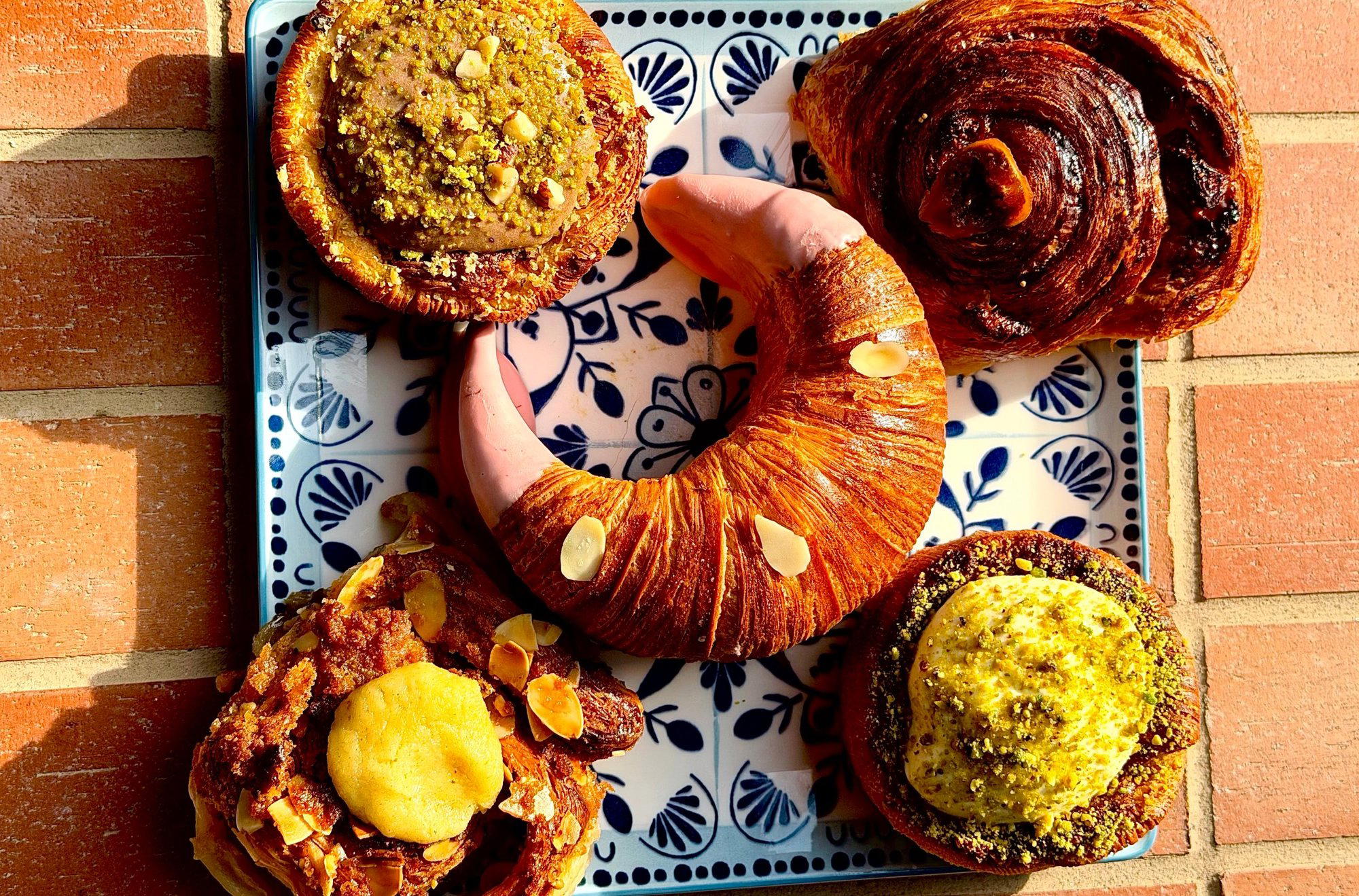
Afghan Baking in Brooklyn Heights
Brooklyn Heights has spent the last decade quietly accumulating a small-business food culture that resists easy categorization. Along Hicks Street, the residential scale of the neighbourhood keeps foot traffic deliberate rather than casual, which means the places that survive here do so on repeat business and word of mouth. Diljān, an Afghan bakery at 330 Hicks St, sits in that context: a specialist operation in a borough that has more space for specialist operations than Manhattan ever will. It is a casual, walk-in friendly bakery. Afghan baking, as a category, remains underrepresented in New York even as Afghan cuisine has grown in visibility nationally, making a dedicated pastry and bread operation something the city's food press has not yet fully mapped.
The Aromatic Foundation
Afghan baked goods draw from the same spice vocabulary that defines the broader Central and South Asian corridor: cardamom in the sweets, nigella seed pressed into flatbreads, saffron dissolved into syrup. These are not flourishes applied at the end of a recipe. They are structural, built into doughs and batters at the mixing stage, so that the scent of the finished product is inseparable from its flavour. This is a tradition with deep roots in Persian court baking, transmitted through Mughal kitchens and adapted across the Afghan plateau where wheat, rice flour, and chickpea flour each play different roles depending on altitude and regional custom.
The aromatic profile of this cooking places it in a different register from the Middle Eastern baking more familiar to New York audiences. Where Lebanese or Turkish sweets often foreground rosewater and pistachio in relatively sweet, syrup-soaked formats, Afghan pastry tends toward a drier, more restrained sweetness, with spice doing more of the structural work. Cardamom and saffron here are not garnish; they are the argument of the dish. Understanding that distinction is useful before arriving at a counter like Diljān, because the expectation gap is where most first-time customers either find something new or miss what they are tasting.
Where Diljān Fits in Brooklyn's Bakery Tier
Brooklyn's bakery scene has stratified considerably. At one end sit the high-production, social-media-driven operations in Williamsburg and Greenpoint, where lines form before opening and the product is as much photogenic as edible. At the other end, smaller neighbourhood operations do most of their trade with locals who have already made their decision about the place. Diljān occupies the latter position by geography if nothing else: Brooklyn Heights is not a neighbourhood that generates bakery tourism at scale. The address on Hicks Street pulls from a residential catchment rather than a destination-dining one, which shapes what a visit looks like in practice.
For comparison, the Brooklyn restaurants EP Club covers across categories, from Barker Cafeteria with its daytime sandwich focus to the pop-up energy of Bad Cholesterol, illustrate how much variety the borough holds within the daytime and casual eating tier. An Afghan bakery slots into that diversity as a category unto itself: no direct competitor in the immediate neighbourhood, no comparable format within easy walking distance. The full Brooklyn restaurants guide maps this across the borough's many zones.
The Spice Bazaar Argument
There is a useful way to think about what bakeries like Diljān represent in a city whose spice vocabulary has expanded faster than its understanding of how individual traditions use those spices. Za'atar, sumac, baharat, and saffron have all become available in mainstream grocery stores in New York over the past ten years, which has made Middle Eastern and Central Asian flavours simultaneously more accessible and more flattened. When everything is available everywhere, the distinctions between a Lebanese flatbread, a Turkish simit, and an Afghan bolani start to blur for consumers who encounter them all on the same shelf.
A specialist bakery operating within one culinary tradition is a corrective to that flattening. The spice decisions at an Afghan counter are not the same as those at a Levantine one, and the grain choices are not the same, and the sweetness calibration is not the same. Visiting a place like Diljān with that frame in mind makes it a more instructive experience than treating it as a generic Middle Eastern option. The distinction matters in the same way that recognising the difference between a Cantonese roast duck counter and a Peking duck restaurant matters: the surface similarity hides a technical and cultural specificity that rewards attention.
This is also why Afghan baking in New York has a different kind of significance than, say, another iteration of the croissant or the sourdough loaf, two formats whose critical and commercial infrastructure is already fully built out in Brooklyn. The restaurant tiers that attract critical attention, from the tasting-menu format associated with places like Alinea in Chicago or The French Laundry in Napa to the seafood precision of Le Bernardin in New York City, operate far from the neighbourhood bakery tier, but the cultural work done at the bakery level is what sustains culinary traditions over time. Diljān operates at that level.
Planning a Visit
Hicks Street in Brooklyn Heights is accessible by subway, with the 2 and 3 trains at Clark Street a short walk away, and the A and C at High Street also within reasonable distance. The neighbourhood itself is quiet by Brooklyn standards, with little of the bar or late-night restaurant culture that defines areas like Brooklyn's bar scene further north or east. A visit to Diljān fits logically into a daytime itinerary that might also take in the Brooklyn Heights Promenade and its views of Lower Manhattan. Diljān is open Monday, Thursday through Sunday from 8 AM to 4 PM and closed Tuesday and Wednesday.
Other Brooklyn eating worth pairing into a day in the area includes Border Town for its tortilleria-driven Northern Mexican format, Bong, and 6 Restaurant, all of which illustrate the borough's breadth across format and cuisine.
Cuisine and Awards Snapshot
Comparable venues nearby, for context on price, style, and recognition.
| Venue | Cuisine | Price | Notes |
|---|---|---|---|
| DiljānThis venue — the venue you are viewing | Afghan Bakery | $$ | Not listed |
| Goldfinch Café | Modern American Bakery Café | $$ | Downtown Brooklyn |
| Bad Cholesterol | Neo-Neapolitan Brooklyn-Style Pizza | $$ | Red Hook |
| Il Leone | Neapolitan Pizza | $$ | Park Slope |
| Grand Street Healing Project | Dining | Not listed | Brooklyn |
| Saint Street Cakes | Artisanal Custom Cakes & Pastries | $$ | Fort Greene |
Recognition history
Dated appearances from independent guides and award organizations, with the underlying list record or original source where available.
Star Wine List
Star Wine List
Continue exploring
More in Brooklyn
Restaurants in Brooklyn
Browse all →
Bars in Brooklyn
Browse all →
Hotels in Brooklyn
Browse all →






At a Glance
- Cozy
- Warm
- Casual Hangout
Current opening hours
- Monday
- 8 AM–4 PM
- Tuesday
- Closed
- Wednesday
- Closed
- Thursday
- 8 AM–4 PM
- Friday
- 8 AM–4 PM
- Saturday
- 8 AM–4 PM
- Sunday
- 8 AM–4 PM
Hours can change for holidays and private events. Last verified .