Deux Amis
On East 51st Street in Midtown Manhattan, Deux Amis occupies a neighbourhood that rewards those who look beyond the obvious. The restaurant sits in a dining corridor where French-inflected sensibility and intimate scale define the better rooms, placing it in a comparable set that values proximity and quiet over spectacle. For visitors working through New York's mid-block discoveries, it earns attention.
Pearl is the En Primeur Club membership app — saves, bookings, and concierge access live there. Same editors, same standards.
- Address
- 356 E 51st St, New York, NY 10022
- Phone
- +1 212 230 1117
- Website
- deuxamisnyc.com
- Directions
- Get directions
 Saves & bookings on Pearl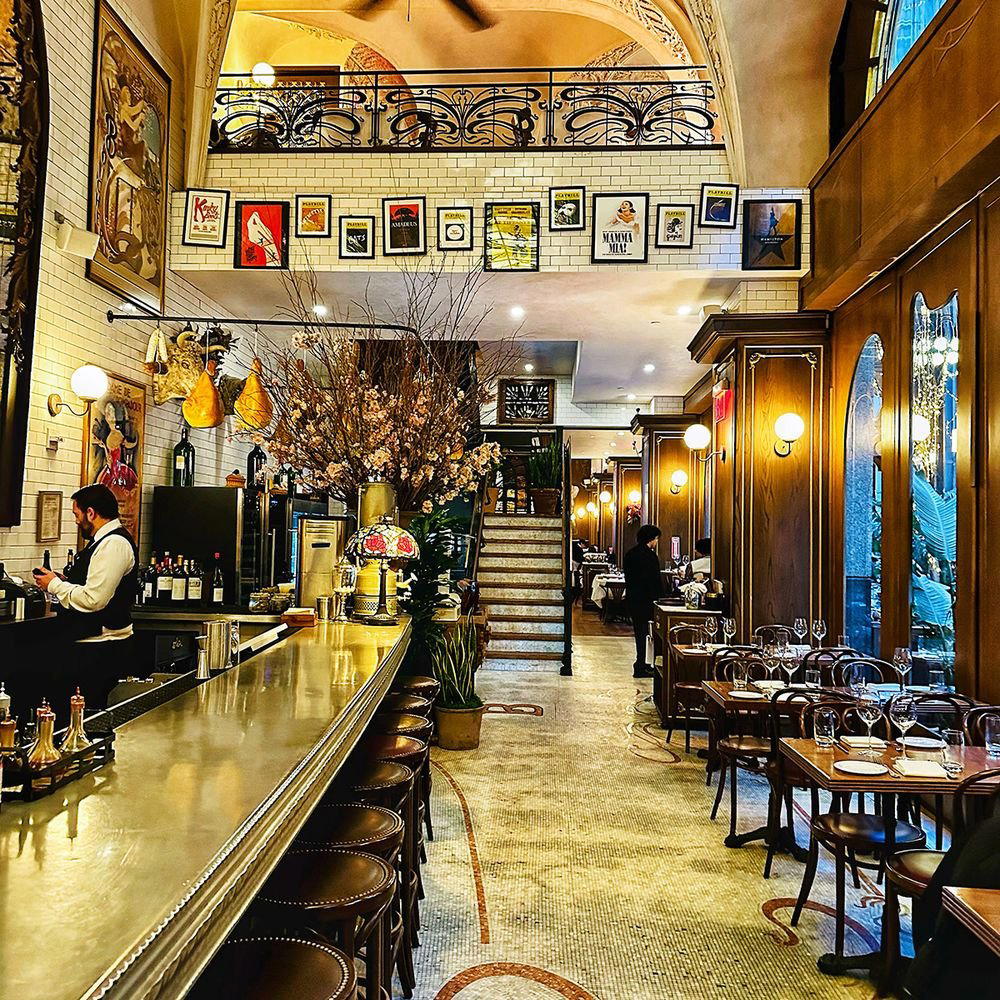
The Room Before the Meal
East 51st Street between Second and First Avenues occupies an ambiguous zone in Manhattan's dining geography: close enough to Midtown's expense-account corridors to draw that crowd, far enough east to shed the performance and noise that define restaurants built around visibility. Buildings here are lower, the sidewalks quieter, and the restaurants that survive tend to do so on repeat custom rather than tourist churn. Deux Amis, at 356 East 51st, belongs to that pattern.
Midtown's trophy dining rooms, the ones that justify $400 covers at Masa or demand a jacket at Per Se, operate as destinations in themselves, spaces where the architecture announces ambition before a single dish arrives. Smaller East Side rooms take the opposite position: the space recedes, the conversation comes forward, and the measure of a good room is how little you notice it while you are inside it. That calibration, getting the interior to disappear into the evening, is harder to execute than building something theatrical.
What defines this tier of New York dining room is proportion. Not the compressed banquette-and-elbow geometry of a downtown bistro trying to pack revenue into 800 square feet, but a considered restraint that keeps tables at a distance where conversation stays private. The rooms that work in Midtown's quieter residential stretch tend toward warm materials, lower ceilings than their Midtown West counterparts, and lighting that flatters without flattening.
Where Deux Amis Sits in the East Side Dining Pattern
The Upper East Side and its southern Midtown extension have long supported a category of French-adjacent neighbourhood restaurant that does not compete directly with the flagship institutions. Le Bernardin in the West 50s operates at a remove from this world, its seafood tasting menus and four-star reputation pulling from a global audience. Eleven Madison Park in the Flatiron has spent years building a reputation that draws diners from across the country. These are not the restaurants that East 51st Street competes with.
The relevant comparable set for a room at this address is smaller: French-influenced, modestly priced relative to the flagship tier, built for regulars rather than occasion diners, and dependent on a kitchen that delivers consistency over novelty. New York has always had this category, and it survives not because the city lacks ambitious alternatives but because not every dinner requires a tasting menu and a three-month booking lead. The bistro-adjacent neighbourhood room fills a gap that institutions like Atomix or the destination properties leave open deliberately.
Across the country, the equivalent tier is well-represented: Frasca Food and Wine in Boulder built its reputation on exactly this model of intimate scale and repeatable excellence, as did Smyth in Chicago at its own level of ambition. In New York, the challenge is sustaining that register against a market that constantly pulls restaurants toward either scaling up or collapsing. The ones that hold their position on a quiet Midtown block for more than a decade are doing something worth examining.
Design as Discipline: What Small Rooms Have to Solve
Intimate dining rooms in New York carry a particular set of spatial problems. The city's real estate economics push kitchens small, ceilings low, and table counts toward whatever the fire code allows. The restaurants that turn these constraints into an asset rather than an apology tend to make deliberate choices: fewer seats, better acoustics, materials that age rather than date. The goal is a room that feels considered rather than compressed.
In the broader American fine dining context, the rooms that have accumulated lasting reputations share this quality. Blue Hill at Stone Barns in Tarrytown uses its converted barn setting to make the physical space itself an argument about sourcing and season. The Inn at Little Washington invests heavily in the theatrical dimension of its interiors. Single Thread in Healdsburg treats the dining room as an extension of its farm-to-table discipline. Each approach reflects a different theory of what the room is for.
For a Midtown East address, the theory is more pragmatic: the room should support the evening without dominating it. Proximity to the UN, to corporate offices, and to the residential streets of Sutton Place and Turtle Bay means the likely audience includes people who eat out frequently and have calibrated expectations. They notice when a room is too loud to talk across a table. They notice when lighting is unkind. They notice, above all, when the space has been thought through versus when it has simply been furnished.
The Wider New York Context
New York's restaurant geography has shifted considerably over the past decade, with the centre of gravity in ambitious dining moving toward Brooklyn and downtown Manhattan. Midtown's dining reputation has suffered from an association with tourist-facing steakhouses and expense-account seafood towers, a reputation the neighbourhood's better rooms have to work against. The East Side's residential pockets represent a partial exception: they retain a local clientele that expects a different register entirely.
For context, New York dining ranges from flagship tasting menus to neighborhood rooms that remain consistently full. The comparison set for any East 51st Street address runs through French-inflected rooms that prioritise the table experience over the media narrative, a category that tends to attract less coverage than it deserves.
Internationally, the closest equivalents to this dining register appear in Paris's arrondissement bistros and in rooms like Dal Pescatore in Runate, where family-run continuity and spatial intimacy define the proposition more than any single chef's creative ambition. The American version of this model has produced durable institutions, from Emeril's in New Orleans to Providence in Los Angeles to Addison in San Diego, though each operates at its own scale and ambition level. The East Side neighbourhood room sits below these in profile but serves a different function in the dining ecosystem.
Planning a Visit
East 51st Street between First and Second Avenues is a short walk from the 51st Street station on the 6 line, or roughly ten minutes on foot from Grand Central Terminal. The neighbourhood is quiet enough that arriving by taxi or car presents no particular difficulty. Given the address and the likely table count for a room of this size, calling ahead to confirm availability is advisable, particularly for weekend evenings, when the local residential crowd competes with anyone making a specific journey.
Category Peers
Comparable venues nearby, for context on price, style, and recognition.
| Venue | Cuisine | Price | Notes |
|---|---|---|---|
| Deux AmisThis venue — the venue you are viewing | Southern French Bistro | $$ | Not listed |
| Tournesol | Southwestern French Bistro | $$ | Long Island City-Hunters Point |
| La Bergamote | Classic French Bistro & Patisserie | $$ | Chelsea-Hudson Yards |
| La Ripaille | Modern French Bistro | $$ | West Village |
| Le Petit Cafe | French Cafe Bistro | $$ | Carroll Gardens-Cobble Hill-Gowanus-Red Hook |
| Little Prince | Classic French Bistro | $$ | SoHo-Little Italy-Hudson Square |
Continue exploring
More in New York City
Restaurants in New York City
Browse all →
Bars in New York City
Browse all →
Hotels in New York City
Browse all →





At a Glance
- Cozy
- Intimate
- Classic
- Romantic
- Date Night
- Business Dinner
- Special Occasion
- Standalone
- Extensive Wine List
- Local Sourcing
Current opening hours
- Monday
- 12–10:30 PM
- Tuesday
- 12–10:30 PM
- Wednesday
- 12–10:30 PM
- Thursday
- 12–10:30 PM
- Friday
- 12–10:30 PM
- Saturday
- 12–10:30 PM
- Sunday
- 12–10:30 PM
Hours can change for holidays and private events. Last verified .
Warm and inviting with soft lighting reminiscent of a quaint Parisian eatery; intimate and cozy atmosphere that encourages leisurely dining and conversation.