Denis Kebap
Our verdict
Denis Kebap occupies a straightforward address on Raiffeisengürtel in Bruck an der Leitha, a small Lower Austrian town positioned between Vienna and the Hungarian border. As a kebap specialist in a region where Austrian dining culture skews toward schnitzel and Heurigen, it represents a distinct alternative in the local eating scene. For context on where it fits across the region's food offerings, see our full Bruck an der Leitha restaurants guide.

Pearl is the En Primeur Club membership app, where members save venues, book tables and use the concierge.
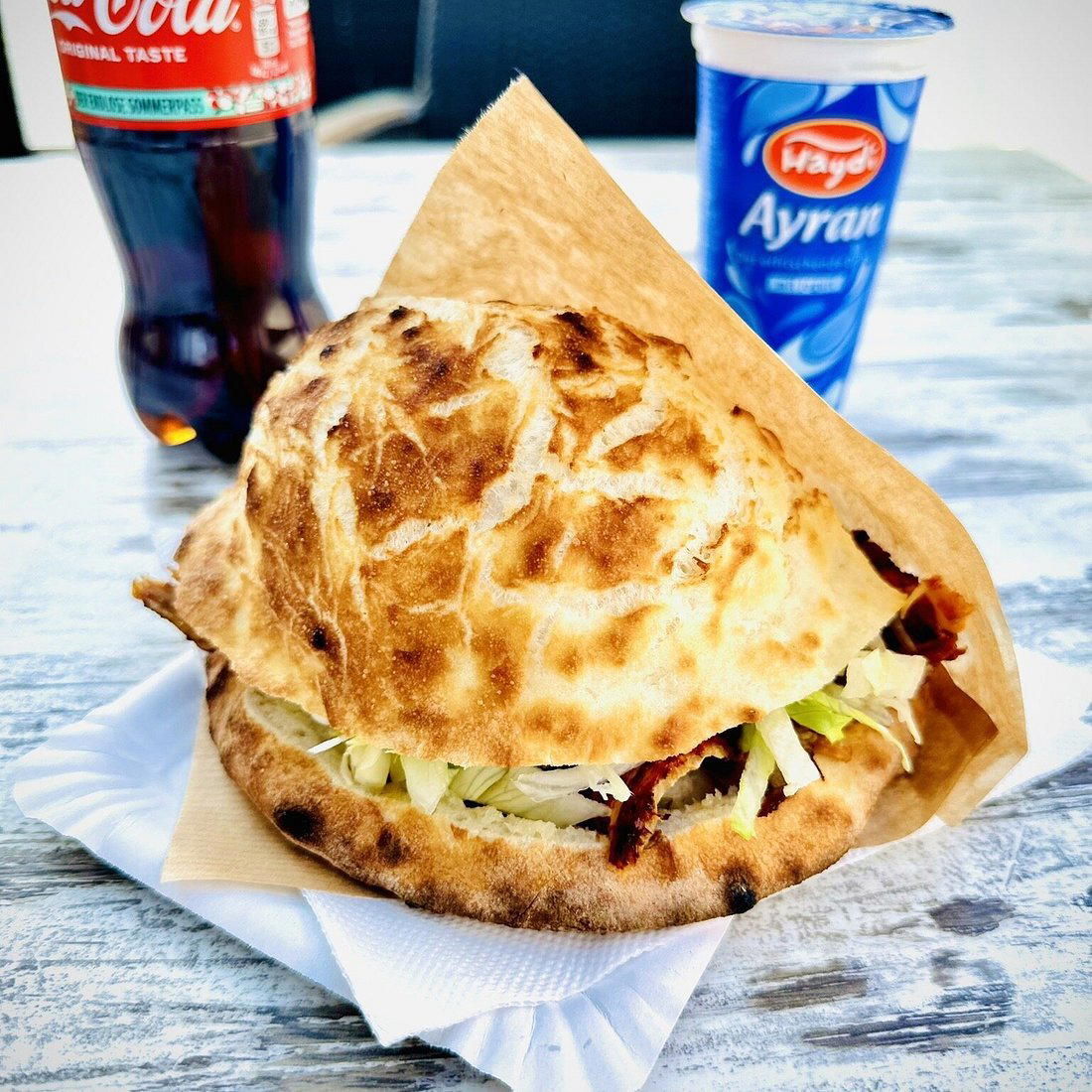
Kebap in Lower Austria: What the Format Means Here
In small Austrian market towns, the kebap shop occupies a specific civic role that has little equivalent in the fine-dining cities further west. Bruck an der Leitha sits roughly 40 kilometres southeast of Vienna, close enough to the capital's commuter belt to absorb some of its demographic diversity, yet far enough to retain a provincial character where eating options outside the traditional Austrian register remain limited. Along the Raiffeisengürtel, Denis Kebap addresses that gap directly. The address is functional rather than atmospheric: a commercial strip, not a destination quarter, which is precisely the point. Kebap counters of this type operate as neighbourhood infrastructure rather than dining events, and understanding them on those terms is more useful than applying a restaurant-critical lens borrowed from somewhere else.
The broader context matters here. Austria's kebap culture arrived primarily through Turkish and broader Anatolian migration during the latter half of the twentieth century and has since become one of the country's most consumed fast-food formats, particularly in smaller cities and suburban corridors where international restaurant density is low. In Vienna, the Döner has its own micro-economy, with late-night counters competing on meat quality, bread freshness, and sauce balance. Outside the capital, that competitive pressure drops considerably, which means individual operators carry more weight in defining what the category tastes like locally. For fine-dining contrast at the opposite end of Austria's dining register, venues like Steirereck im Stadtpark in Vienna or Döllerer in Golling an der Salzach anchor the premium end; Denis Kebap operates at the other pole entirely.
Ingredient Sourcing and the Kebap Supply Chain
The ingredient question is where kebap as a format gets most interesting when examined seriously. Traditional Döner preparation centres on a spit-roasted meat column, typically veal, beef, or chicken, seasoned with a spice blend that varies by regional origin and operator preference. The quality differential between kebap counters correlates closely with two variables: the freshness and composition of the meat blend, and the quality of the bread. Flatbread freshness is particularly telling as bread baked or delivered same-day behaves differently under the meat's heat and fat than bread that has sat overnight. Operators who take sourcing seriously tend to show it in the structural integrity of the assembled wrap rather than in any claim on the menu.
In towns of Bruck an der Leitha's scale, supply chains for produce used in kebap accompaniments, typically tomato, onion, cabbage, cucumber, and fresh herbs, often run through regional wholesale markets rather than farm-direct arrangements. The proximity to the Austrian-Hungarian border creates some sourcing options that urban operators further west do not have, including seasonal produce from Hungarian market gardeners, which has historically been present in Lower Austrian food supply networks. Whether any individual operator at this address taps those networks is something only a direct conversation with the counter staff can confirm, which is why we do not specify sourcing claims for Denis Kebap beyond the structural observation that the regional supply environment makes local and cross-border sourcing viable here in ways it is not in, say, central Salzburg.
For reference on how seriously sourcing can define Austrian restaurant identity at the fine-dining level, Taubenkobel in Schützen am Gebirge and Landhaus Bacher in Mautern an der Donau both situate themselves explicitly within regional ingredient networks as a core part of their identity. The principle that sourcing proximity affects flavour outcome applies at every price point, even if the execution conversation looks very different at a kebap counter than at a tasting-menu kitchen.
The Eating Scene in Bruck an der Leitha
Bruck an der Leitha is a Bezirkshauptstadt with a population in the low thousands, historically significant as a crossing point on the Leitha river that once marked the border between Austria and Hungary within the Habsburg empire. Today it functions primarily as a commuter town and light-industrial centre within the Vienna metropolitan catchment. Its dining scene reflects that character: practical, unpretentious, and oriented toward everyday rather than occasion eating. The Austrian gastronomy tradition of the Gasthaus and the Heuriger is present but not dominant in terms of variety. International formats, kebap counters included, fill a real demand gap.
Within that context, a kebap operation on Raiffeisengürtel is not competing with the fine-dining restaurants of Salzburg or Tyrol. It competes with the lunch options available to workers, residents, and transit travellers passing through. That is a different and arguably more socially embedded competition. Austria's premium dining tier, which includes venues like Obauer in Werfen, Ikarus in Salzburg, and Gourmetrestaurant Tannenhof in Sankt Anton am Arlberg, serves a traveller demographic seeking dining as destination. Denis Kebap serves a local demographic for whom eating is logistics. Both are legitimate and the latter is often where you learn more about how a place actually functions day to day.
Readers who want to map Bruck an der Leitha's full range of eating options should consult our full Bruck an der Leitha restaurants guide for a broader picture. Additional Austrian dining references across price tiers include Ois in Neufelden, Schwarzer Adler in Hall in Tirol, Restaurant 141 by Joachim Jaud in Mieming, Kräuterreich by Vitus Winkler in Sankt Veit im Pongau, Griggeler Stuba in Lech, Stüva in Ischgl, Atelier Fischer in Sankt Gilgen, and Thaller Gasthaus in Sankt Veit am Vogau. For international reference points at the fine-dining tier, Le Bernardin in New York City and Lazy Bear in San Francisco illustrate how sourcing and format discipline operate at the opposite end of the price spectrum.
Planning a Visit
Frequently asked questions
Would Denis Kebap be comfortable with kids?
Counter-service kebap is about as low-friction a dining stop as exists in Bruck an der Leitha: no reservation, no dress expectation, and the format is walk-in and order-at-the-counter. Children fit naturally into that rhythm. The Döner itself is a format most kids handle without objection.
How would you describe the vibe at Denis Kebap?
Utilitarian and direct. Denis Kebap sits at Raiffeisengürtel 50 in a working Bezirkshauptstadt, not a tourist destination, so the atmosphere reflects that: counter service, no ceremony, and a clientele that is there to eat rather than linger. That straightforwardness is part of what makes it a practical stop.
Is Denis Kebap a practical stop if you're driving the A4 between Vienna and the Hungarian border?
Bruck an der Leitha sits close to the A4 motorway corridor, positioning Denis Kebap at Raiffeisengürtel 50 as a realistic detour for travellers moving between Vienna and the Hungarian border. A counter-service kebap requires no reservation and minimal time, making it a functional break rather than a dedicated dining destination. Few alternatives of this format and price accessibility exist between the capital and the border crossing.
What should I eat at Denis Kebap?
The Döner is the format's structural test and the place to start: it reveals meat quality, bread freshness, and sauce balance in one wrap. At a counter-service operation in a small Austrian town, the Döner is also the dish the kitchen builds its throughput around, which typically means it is the most consistently executed item on the menu.
Quick Comparison
Comparable venues nearby, for context on price, style, and recognition.
| Venue | Cuisine | Price | Notes |
|---|---|---|---|
| Denis KebapThis venue (the venue you are viewing) | Middle Eastern Kebab | Not listed | Not listed |
| Denis Kebap | Turkish & Middle Eastern Kebab | $1–10 | Neusiedl am See |
| DR-FALAFEL | Israeli Falafel & Shawarma | $1–10 | Wieden |
| Asala Halal Food | Egyptian Halal Street Food | $10–20 | Alsergrund |
| Falafilo Imbiss | Syrian Street Food | $10–20 | Favoriten |
| Ossi's Bowl & Streetfood | Modern Middle Eastern Streetfood Bowls | $10–20 | Vösendorf |
Continue exploring
More in Bruck An Der Leitha
Restaurants in Bruck An Der Leitha
All restaurants in Bruck An Der Leitha →

Bars in Bruck An Der Leitha
Browse all →
Hotels in Bruck An Der Leitha
Browse all →

Details
- Casual Hangout
- Family
- A La Carte
- Vegetarian Friendly
Current opening hours
- Monday
- 11 AM–7 PM
- Tuesday
- 11 AM–7 PM
- Wednesday
- 11 AM–7 PM
- Thursday
- 11 AM–7 PM
- Friday
- 11 AM–7 PM
- Saturday
- 11 AM–3 PM
- Sunday
- Closed
Hours can change for holidays and private events. Hours as of .
Casual street food spot with fast service and a welcoming family-friendly atmosphere.