Tabelog 100 #3
Our verdict
Deiribashi Kintsuba Ya sits in Osaka’s wagashi tradition rather than the city’s louder restaurant theatre. Its Tabelog 100 selections for sweets in 2022 and Japanese traditional sweets / Japanese sweets cafe WEST in 2023 place it among Kansai’s serious everyday sweet shops, where red bean, griddle work, and tea-room restraint matter more than spectacle.

Pearl is the En Primeur Club membership app, where members save venues, book tables and use the concierge.
The menu
What to order
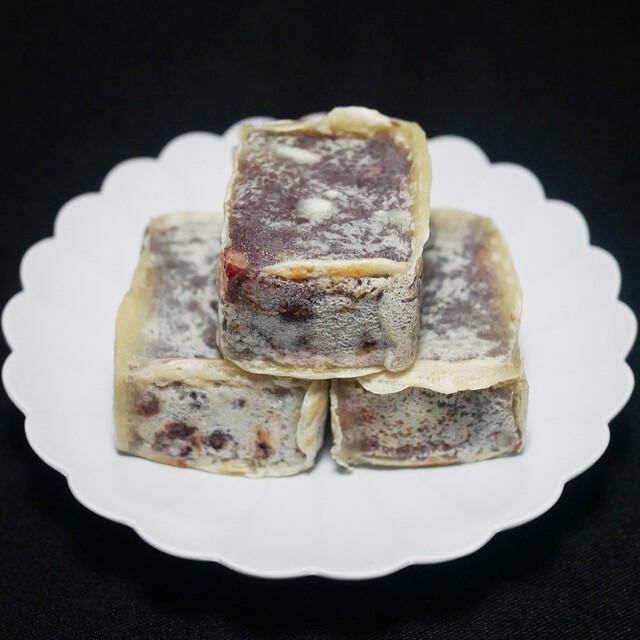
- Kintsuba (sweet red bean paste square)
- Abekawa mochi
- Isobe roll
- Zenzai (sweet red bean soup)
- Seasonal wagashi such as summer-limited Shigaraki
Approaching in Osaka, the city changes register. The city’s appetite is often read through neon, frying oil, late trains, and counter seats, but this pocket of the city is quieter: office workers, short errands, and small shops built on repeat custom rather than ceremony. Here, Japanese sweets make sense. Wagashi is not dessert in the Western restaurant sense; it is a language of texture, temperature, season, and tea, compressed into a few bites and a narrow display case.
Deiribashi Kintsuba Ya belongs to that older grammar. Its public identity is plain: Japanese traditional sweets and a cafe format featuring Japanese sweets. The recognition matters because wagashi shops rarely compete through the same signals as sushi counters or hotel dining rooms. Tabelog Hyakumeiten recognition in 2023 places the shop in a peer group judged by consistency and local devotion, not imported luxury codes.
Kintsuba in Osaka: a small sweet with a long technical memory
Kintsuba looks simple enough to underestimate: a compact traditional sweet, generally associated with bean paste, light coating, and griddle work. The technique belongs to traditional confectionery, while Osaka has long had its own relationship with bean sweets, tea culture, and gifting. The point is restraint. Sugar is present, but it should not flatten the sweet’s balance. The outer layer gives definition rather than drama. A shop in this category asks guests to slow down and judge precision in a quieter register than tempura batter or omakase rice.
The assigned Osaka comparison helps. At a high-end counter such as TEMPURA HANAGATAMI, craft is measured in oil management, timing, and ingredient sequence. In a hotel dining room such as La Baie, cooking reads through plating, pacing, and fine-dining convention. Wagashi works at the opposite scale. The stakes remain technical, but the footprint is smaller: preparation, batter thickness, surface heat, portion discipline. Deiribashi Kintsuba Ya sits in an accessible, lower-theatre tier, clarifying that Osaka dining culture is not only about dinner reservations.
The “local ingredients, global technique” frame is subtler here than in contemporary restaurants. Wagashi absorbed outside influences over time, from sugar routes to tea culture’s formal demands, then made them local through Japanese ingredients, rice flours, griddles, molds, and gifting customs. That tension remains readable in traditional sweets: something that travels in a box, anchors a cafe pause, or accompanies tea without needing a plated dessert course. Osaka’s modern restaurant scene may trade in Italian, French, and cafe idioms, but traditional sweet shops preserve an older technique: exacting, modest, and resistant to trend churn.
Osaka's sweet-shop register, between city traffic and hotel dining
Osaka gives this shop its practical edge. The city supports expense-account dining and polished hotel lounges, yet also rewards efficient stops before a train or between meetings. The Lobby Lounge operates in another bracket, with hotel pricing and a room designed for lingering. Deiribashi Kintsuba Ya follows the compact urban sweet-shop model, closer to a calibrated pause than an afternoon production.
That distinction matters for travelers building a serious Osaka food day. A route that begins with wagashi can later move toward Italian at il luogo di TAKEUCHI or the larger hotel-restaurant universe around Splendido and La Baie without tiring the palate early. It also gives context to Osaka’s everyday food intelligence: the same city that normalizes casual staples, specialist bakeries, and daytime cafe addresses can sustain a traditional sweets shop with award recognition and a focused format.
The practical discipline is part of the appeal. Public listings place the shop in the Japanese traditional sweets and Japanese-sweets cafe categories, with an approachable budget profile. That clarity is valuable: not a special-occasion dining room dressed down as a cafe, but a focused sweet shop in Osaka.
How to place it inside an Osaka itinerary
For a visitor, the strongest use case is not dessert after a large meal. It is a deliberate daytime stop that teaches another part of the city’s palate. Osaka’s reputation abroad leans on savory street food and late-night energy, but wagashi reveals another civic habit: respect for small purchases made to exacting standards. Tabelog’s 3.71 score adds a useful signal. In Japan’s user-rating culture, numbers in that range for specialist sweets tend to indicate sustained local approval rather than transient tourist attention.
Internal comparisons across EP Club’s Osaka coverage separate categories rather than rank them. Other Osaka dining rooms reflect the city’s comfort with imported technique translated through local habits, while more casual daytime addresses point to the everyday city. Deiribashi Kintsuba Ya belongs in that conversation, but with a more traditional vocabulary.
For broader planning, Our full Osaka restaurants guide maps the city’s dining range, while Our full Osaka hotels guide, Our full Osaka bars guide, Our full Osaka wineries guide, and Our full Osaka experiences guide help place a sweets stop among hotels, drinking rooms, cellar-focused addresses, and cultural formats. Cross-city readers can also compare how focused Japanese food categories travel through other dining formats, from counter specialties to casual sweets, sake bars, and compact takeaway shops, each showing another version of format discipline.
The editorial case is simple: a small Osaka sweets address with credible recognition, clear wagashi focus, and a format that rewards craft over spectacle. In a city where visitors often chase volume, heat, and night-time appetite, a traditional sweets stop in Osaka offers a quieter but revealing measure of taste.
Frequently asked questions
What should I budget for a meal at Deiribashi Kintsuba Ya?
Pricing at Deiribashi Kintsuba Ya is listed as Dinner: JPY 1,000 - JPY 1,999; Lunch: - JPY 999.
Where is Deiribashi Kintsuba Ya located?
Osaka.
What days is Deiribashi Kintsuba Ya closed?
Current closure details for Deiribashi Kintsuba Ya are not provided in the available venue data.
What is Deiribashi Kintsuba Ya known for?
Deiribashi Kintsuba Ya is known for Japanese traditional sweets and a cafe format featuring Japanese sweets in Osaka.
Cuisine and Credentials
Comparable venues at the same tier for side-by-side context.
| Venue | Cuisine | Price | Awards | Notes |
|---|---|---|---|---|
| Deiribashi Kintsuba YaThis venue (the venue you are viewing) | Traditional Japanese Wagashi & Kintsuba Café | $10–20 | Tabelog 100 #3 | Not listed |
| umugi Hankyu sanbangai ten | Japanese Udon | $1–10 | Tabelog 100 #98 | Kita |
| Osaka Naniwaya | Japanese taiyaki & kakigori sweets shop | $10–20 | Tabelog 100 #34 | Kita |
| Columbia8 Kitahama honten | Osaka spice curry counter | $10–20 | Tabelog 100 #82 | Chūō |
| Ebishi | Soba noodle shop | Not listed | Tabelog 100 #61 | Chūō |
| Taniguchi Curry | Osaka spice curry & Japanese curry | $1–10 | Tabelog 100 #54 | Chūō |
Recognition history
Dated appearances from independent guides and award organizations, with the underlying list record or original source where available.
Tabelog 100 #3 · No. 3
Tabelog · Tabelog 100 - Japanese traditional sweets / Japanese sweets cafe - WEST - 2023