Damon Baehrel at The Basement Bistro

Our verdict
Damon Baehrel at The Basement Bistro operates from a working farm property in Earlton, New York, where the kitchen draws almost entirely on ingredients grown, foraged, or produced on the surrounding land. Ranked #93 on Opinionated About Dining's North America list in 2025, it occupies an extreme end of the farm-to-table spectrum that few restaurants anywhere approach. Reservations are notoriously difficult to secure, and the drive from New York City takes roughly two and a half hours through the Catskills.

Pearl is the En Primeur Club membership app — saves, bookings, and concierge access live there. Same editors, same standards.
- Address
- 776 Co Hwy 45, Earlton, NY 12058
- Hours
- Mon–Sat 4–10 PMSun 3:45–10 PM
- Website
- damonbaehrel.com
- Directions
- Get directions
- Booking
- Book on the venue's website
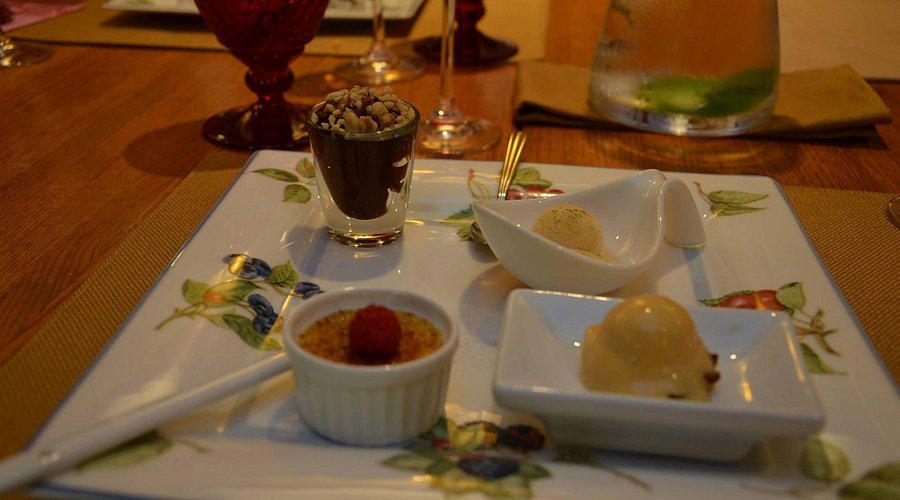
The menu
What to order
- Handmade charcuterie
- Puffball mushroom soup
- Goose pepperoni
- Goat cheese brie
- Wild carrot sorbet
The End of the Road, Literally
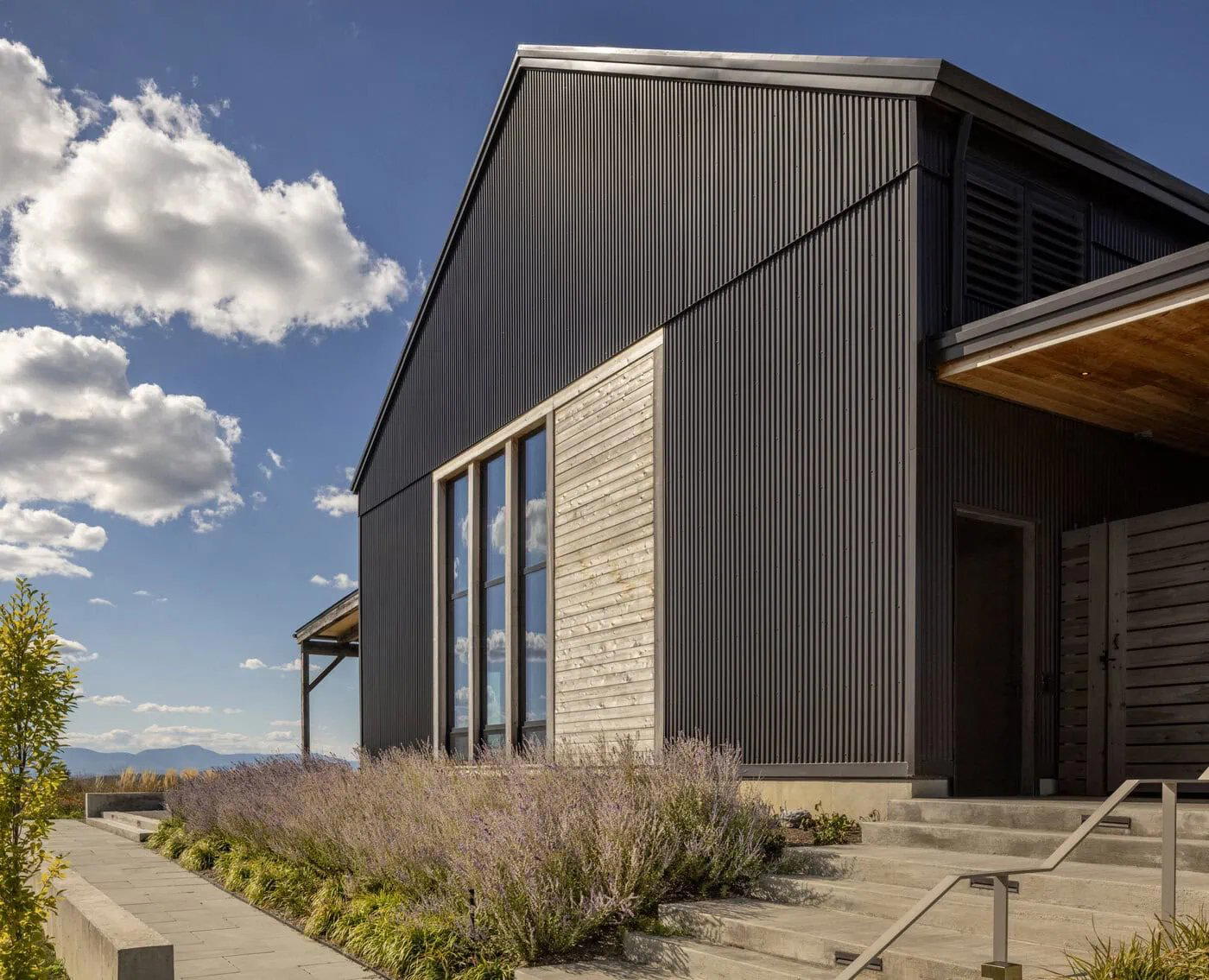
County Highway 45 in Greene County, New York, does not lead anywhere obvious. The Catskills flatten into farmland here, the kind that looks more functional than scenic, and Earlton itself registers as little more than a crossroads between larger towns. That remoteness is not incidental to the experience at Damon Baehrel at The Basement Bistro — it is, in a meaningful sense, the entire premise. The dining room sits on a working farm property, and the distance from the nearest city is proportional to the distance the kitchen keeps from conventional supply chains.
American fine dining has spent decades performing its relationship with the land. From the early locavore commitments of the 1990s through the sourcing disclosures that became standard menu text by the 2010s, the farm-to-table movement largely remained aspirational shorthand for restaurants that bought from good farms. What happens at The Basement Bistro operates closer to the movement's theoretical limit: the kitchen produces and forages the overwhelming majority of what it serves from the property itself. That position puts it in a different category from most of its North American peers, including celebrated farm-linked operations like Blue Hill at Stone Barns in Tarrytown and Single Thread Farm in Healdsburg, both of which maintain close sourcing relationships with dedicated agricultural partners but do not operate with the same degree of self-sufficiency.
Where the Farm-to-Table Lineage Leads
The farm-to-table movement in American cooking has a traceable arc. Alice Waters established its moral grammar at Chez Panisse in the 1970s, linking seasonal produce to an ethics of place and anti-industrialism. By the 1990s, chefs at restaurants like Bayona in New Orleans were building menus around regional producers as a point of culinary identity rather than ideology. In the 2000s and 2010s, the model became institutionalized: sourcing became marketing, and the farm name on the menu became a trust signal rather than a constraint. What distinguishes the most radical end of this tradition — the strand that The Basement Bistro occupies, is that sourcing is not a relationship managed with suppliers but a condition of production managed on-site. The kitchen's menu is not seasonal in the conventional sense of responding to what's available at market; it responds to what is ready on the property on a given day.
Operations like The French Laundry in Napa and Alinea in Chicago occupy the highest tier of American fine dining through mastery of technique and consistent execution at volume; The Basement Bistro's claim on serious critical attention is built on an almost opposite logic, one where the constraint of the land drives what is possible in the kitchen each service.
Recognition and Where It Sits Among North American Restaurants
Opinionated About Dining, which publishes one of the more data-driven crowd-sourced rankings of serious restaurants in North America, has listed The Basement Bistro in its top tier for three consecutive years: #110 in 2023, #99 in 2024, and #93 in 2025. That upward movement on the list is meaningful context. OAD rankings aggregate scores from a self-selecting group of experienced diners who eat frequently at high-end restaurants, which means the constituency awarding points to The Basement Bistro is the same one rating Le Bernardin in New York City, Lazy Bear in San Francisco, Providence in Los Angeles, and Addison in San Diego. That this rural Greene County property sits alongside those urban flagships in the same ranking, and is rising rather than fading, says something about the experience that repeated diners are finding there.
Getting There, Booking, and What to Expect Practically
Earlton sits roughly two and a half hours north of Manhattan by car, via the New York State Thruway to the Catskill exit and then through Greene County farm roads. There is no practical public transit option; this is a driving destination, and most guests coming from New York City combine the trip with an overnight stay in the Hudson Valley or the Catskills. For accommodation and other options in the area, see our full Earlton hotels guide.
Booking is the central logistical challenge. Reservations have historically been difficult to secure, with wait times that have been documented in press coverage as extending months or longer. The restaurant does not operate a standard online reservation system in the manner of OpenTable-linked urban restaurants, and contact methods should be verified through current channels before planning a trip. The phone number and website fields in our venue data are not currently populated, which reflects the restaurant's arms-length relationship with conventional hospitality infrastructure rather than a data gap to be solved by calling directory assistance.
Press coverage over the years has described The Basement Bistro as a premium-priced experience consistent with its peer tier on the OAD list, but specific figures change and should be confirmed at time of booking. Given the sourcing model and the cooking format, this is not a venue where pricing benchmarks against casual Catskills dining; the relevant comparison set is the same restaurants listed in that OAD ranking.
For those planning a wider Hudson Valley trip, our guides to Earlton restaurants, Earlton bars, Earlton wineries, and Earlton experiences provide context for building a longer stay around the region.
The New American Frame
The cuisine classification is New American, which is a broad enough category to cover almost everything from gastropubs to tasting-menu destinations. In the context of The Basement Bistro, it functions as the most honest available label for cooking that does not fit neatly into European fine dining categories. Restaurants like Craft in New York City, Emeril's in New Orleans, and The Inn at Little Washington also operate under that banner while occupying very different positions within it. What connects them is a willingness to treat American ingredients and American idiom as sufficient material for serious cooking, without recourse to French technique as the default legitimating framework. Albi in Washington, D.C. represents another strand of that same broader impulse, drawing from a different regional tradition entirely. At The Basement Bistro, the New American identity is expressed through its most literal interpretation: the food is American because it comes from American land, specifically this parcel of Greene County, New York.
Frequently Asked Questions
- Can I bring kids to Damon Baehrel at The Basement Bistro?
- The Basement Bistro is a serious tasting-menu experience at the upper end of the North American dining tier, comparable in format and price positioning to other OAD top-100 restaurants. That format, which prioritises extended multi-course meals in an intimate setting, generally suits older teenagers or adults with a genuine interest in the food rather than younger children. If price and format are the primary considerations, this is not a casual family outing: it requires advance planning, a long drive to rural Greene County, and a meal that will take several hours. Families with young children would likely find the format challenging regardless of the children's behaviour.
- What should I expect atmosphere-wise at Damon Baehrel at The Basement Bistro?
- The setting is a working farm property in rural upstate New York, not an urban dining room designed around a specific aesthetic brief. The awards context, a consistent OAD top-100 ranking in North America, suggests the experience is taken seriously by the kind of diner who travels specifically for meals, but the physical environment is rooted in the agricultural property rather than in the conventions of city fine dining. Expect something closer to the atmosphere of a countryside property than to the polished service environments of, say, a Michelin-starred Manhattan restaurant at a comparable price point. That contrast is part of what makes the trip worthwhile for the guests who make it.
- What do people recommend at Damon Baehrel at The Basement Bistro?
- What the OAD ranking and the consistent pattern of guest reviews suggest is that the sourcing model itself, the degree to which the food reflects the specific land and season, is the element diners find most distinctive. Chef Damon Baehrel's approach to producing and foraging ingredients on-site is the through-line that makes individual dishes cohere as a meal rather than a sequence of courses.
Frequently asked questions
Can I bring kids to Damon Baehrel at The Basement Bistro?
The Basement Bistro is a single-chef tasting-menu operation in a residential setting on County Highway 45 in Earlton, NY — not a format that accommodates casual family dining. It has ranked among Opinionated About Dining's top 100 restaurants in North America in both 2024 and 2025, which signals the seriousness of the experience. Older teenagers with a genuine interest in composed tasting menus may be appropriate; young children are not the intended audience for this format.
What should I expect atmosphere-wise at Damon Baehrel at The Basement Bistro?
The setting is a working property in rural Greene County, New York, with the dining room functioning as an extension of the farm rather than a formal restaurant space. There is no front-of-house team in the conventional sense; Damon Baehrel operates as a solo practitioner, which gives the experience an intimate, workshop-like quality that sits closer to a private meal than a restaurant service. Guests arriving from Manhattan are two and a half hours from the city and should expect nothing that resembles urban dining infrastructure.
What awards or recognition does Damon Baehrel at The Basement Bistro have?
Damon Baehrel at The Basement Bistro has received recognition including: Opinionated About Dining Top Restaurants in North America Ranked #93 (2025); Opinionated About Dining Top Restaurants in North America Ranked #99 (2024); Opinionated About Dining Top Restaurants in North America Ranked #110 (2023).
What do people recommend at Damon Baehrel at The Basement Bistro?
What the record does show is that Opinionated About Dining, whose rankings are crowd-sourced from experienced diners across North America, has placed The Basement Bistro in the top 100 on the continent for two consecutive years. The consistent thread in its recognition is Baehrel's use of ingredients sourced from the surrounding property, which shapes the menu entirely.
Fast Comparison
| Venue | Cuisine | Price | Awards | Notes |
|---|---|---|---|---|
| Damon Baehrel at The Basement BistroThis venue — the venue you are viewing | Native Harvest Fine Dining | $300–500 | Not listed | Not listed |
| Le Bernardin | French Seafood Fine Dining | $300–500 | 3 Michelin Stars · World's 50 Best #13 | French, Seafood |
| Atomix | Modern Korean Tasting Menu | $300–500 | 2 Michelin Stars · World's 50 Best #7 | Modern Korean, Korean |
| Lazy Bear | Modern American Tasting Menu | Not listed | 2 Michelin Stars · World's 50 Best #25 | Progressive American, Contemporary |
| Alinea | Avant-Garde Molecular Gastronomy | $300–500 | 2 Michelin Stars · World's 50 Best #37 | Progressive American, Creative |
| Masa | Seasonal Hokkaido Tempura Omakase | $150–200 | Tabelog 100 #34 | Sushi, Japanese |
Recognition history
Dated appearances from independent guides and award organizations, with the underlying list record or original source where available.
Opinionated About Dining Top Restaurants in North America Ranked #107
Opinionated About Dining
Full recognition history (4 entries)
Opinionated About Dining Top Restaurants in North America Ranked #93
Opinionated About Dining
Opinionated About Dining Top Restaurants in North America Ranked #99
Opinionated About Dining
Opinionated About Dining Top Restaurants in North America Ranked #110
Opinionated About Dining
Continue exploring
More in Earlton
Restaurants in Earlton
Browse all →
Bars in Earlton
Browse all →
Hotels in Earlton
Browse all →
Wineries in Earlton
Browse all →
Details
- Intimate
- Rustic
- Elegant
- Cozy
- Special Occasion
- Date Night
- Historic Building
- Extensive Wine List
- Farm To Table
- Local Sourcing
- Tasting Menu
Current opening hours
- Monday
- 4–10 PM
- Tuesday
- 4–10 PM
- Wednesday
- 4–10 PM
- Thursday
- 4–10 PM
- Friday
- 4–10 PM
- Saturday
- 4–10 PM
- Sunday
- 3:45–10 PM
Hours can change for holidays and private events. Last verified .
Intimate basement setting with warm, personal service from the chef himself, creating a magical and memorable atmosphere.