Daebak Korean BBQ
Our verdict
On Milwaukee Avenue in Wicker Park, Daebak Korean BBQ operates within one of Chicago's most competitive casual dining corridors, drawing a loyal neighborhood crowd to the communal ritual of tabletop grilling. The address puts it at the center of a stretch that has absorbed multiple dining trends over the past decade, and Korean BBQ's durability in that context says something about the format's staying power in this city.

Pearl is the En Primeur Club membership app, where members save venues, book tables and use the concierge.
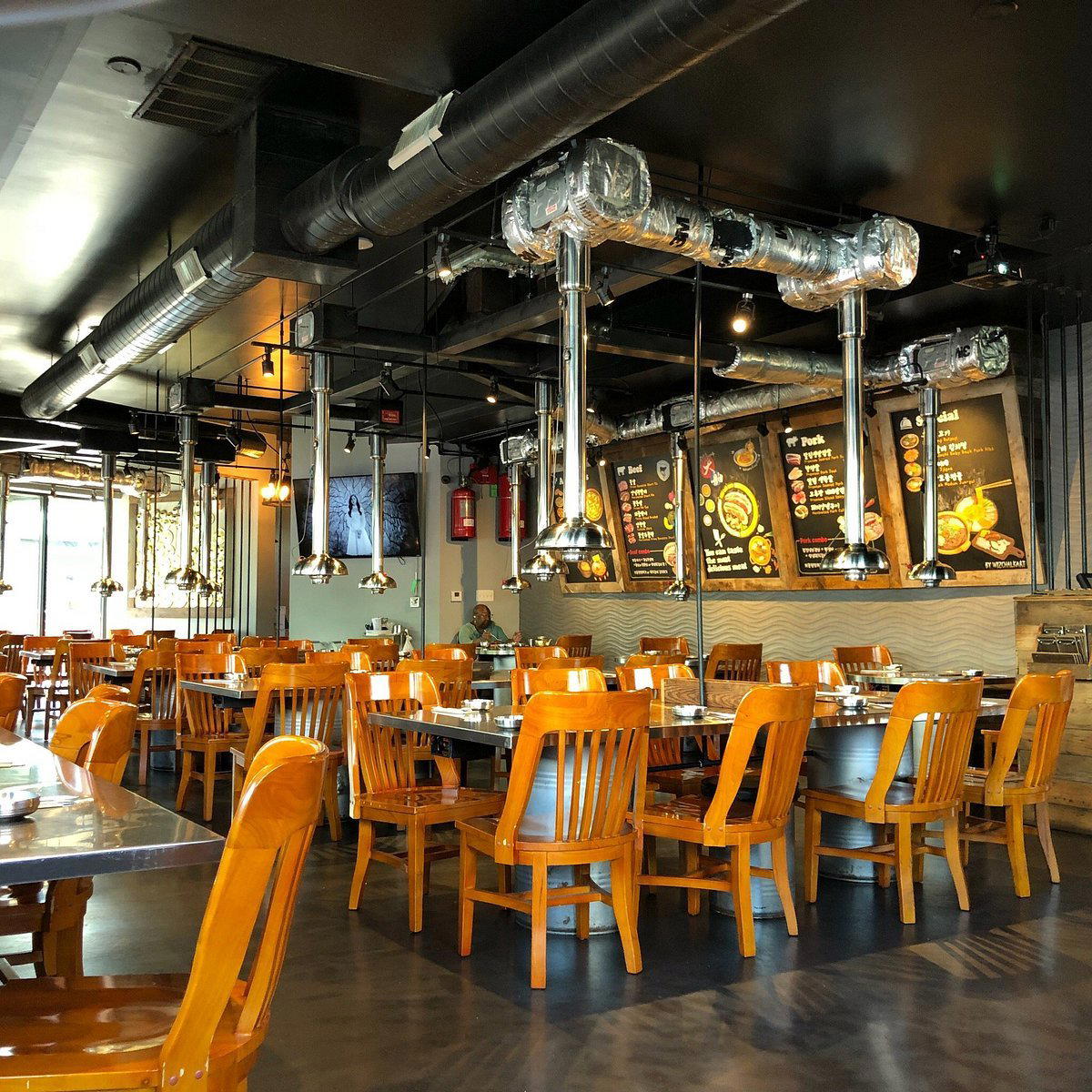
The Ritual on Milwaukee Avenue
There is a particular kind of restaurant that earns its regulars not through novelty but through repetition, through the knowledge that what you ordered last time will be there next time, and that the table will carry the same warmth of charcoal and rendered fat that you remembered. Korean BBQ, as a format, is structurally built for this kind of loyalty. The meal is collaborative, paced by the diner rather than the kitchen, and anchored in a social logic that most tasting-menu formats can only approximate. At 1266 N Milwaukee Ave in Wicker Park, Daebak Korean BBQ sits inside that tradition.
Milwaukee Avenue runs through one of Chicago's more restless dining corridors, a stretch that has absorbed ramen counters, Filipino spots, and progressive American tasting rooms within a few blocks of each other. The neighborhood does not reward timidity in positioning, it has seen enough concepts open and close to have developed collective taste. Korean BBQ's durability here speaks less to trend and more to function: it gives a table something to do together for two hours, which is an underrated competitive advantage.
What Keeps the Regulars Coming Back
The unwritten menu at any Korean BBQ restaurant is really the sequence of decisions a returning guest has already mapped out: which cuts to anchor the order, in what order to put them on the grill, which banchan to eat immediately versus which to hold for the final rice. First-time visitors follow the written menu; regulars follow a script they've written themselves over multiple visits. That accumulated knowledge is what separates a dining format from a dining habit, and Korean BBQ crosses into habit more readily than most.
In Chicago, the Korean BBQ category has grown beyond its traditional Koreatown clusters. Wicker Park and the neighborhoods flanking it now carry their own constellation of the format, and the regulars who gravitate toward any one spot tend to be motivated by proximity, consistency, and the specific mix of proteins and banchan on offer. The social architecture of the meal, everyone around the grill, everyone reaching, means the room itself becomes part of what people return for. A table of four at a Korean BBQ restaurant is a different social experience from the same four people at a chef's counter, and the format rewards venues that understand this difference and design for it.
Korean BBQ in Chicago's Dining Context
Chicago's fine-dining conversation tends to run toward the progressive American format. Alinea, Smyth, and Oriole define one pole of the city's reputation, long tasting menus, significant investment, theatrical presentation. Kasama and Next Restaurant represent adjacent approaches that fold cultural specificity and conceptual ambition into the same conversation. Korean BBQ operates in an entirely different register, it is not competing with those formats, and the regulars who return to a tabletop grill on a Tuesday evening are not trading off against a tasting-menu reservation. The comparison set for Korean BBQ is internal to its own category: quality of protein sourcing, variety and execution of banchan, calibration of the ventilation system, and the pace at which servers engage with a table that is doing most of the cooking itself.
Nationally, Korean BBQ has attracted serious critical attention at its upper end. Atomix in New York has demonstrated that Korean culinary tradition carries enough depth to sustain Michelin-level recognition when the format is pushed toward refinement. That is a different ambition from a neighborhood Korean BBQ operation, and it is worth naming the distinction: most Korean BBQ restaurants are not trying to be Atomix, and the comparison would be as misplaced as benchmarking Le Bernardin against a neighborhood French bistro. The formats serve different purposes within the same culinary tradition.
For context on how Chicago's restaurant scene positions itself within the broader national conversation, our full Chicago restaurants guide maps the city's dining tiers and neighborhood-by-neighborhood character in more detail.
The Format as the Point
One thing the Korean BBQ format does unusually well is resist the kind of experience degradation that affects many casual dining concepts over time. Because the guest is an active participant in the cooking, the meal's quality is partly self-determined. A knowledgeable regular who knows how to manage the grill, which cuts need higher heat, which benefit from a slower render, will consistently eat better than a first-timer working from instinct alone. This creates an incentive structure that rewards return visits in a concrete, edible way, not just a sentimental one.
The banchan selection is the other axis of differentiation within the category. A rotating or seasonally adjusted banchan spread signals kitchen engagement; a static set that never changes signals the opposite. Regulars learn to read a restaurant's ambition through the small dishes before the grill is lit.
Planning Your Visit
Wicker Park is accessible via the CTA Blue Line (Damen stop), which places the Milwaukee Avenue corridor within direct reach from the Loop and Lincoln Park. The neighborhood is walkable and densely served by rideshare, which matters for a dinner format that typically runs two hours or longer. Parking on Milwaukee Avenue itself is limited during evening hours.
For reference, here is how Daebak Korean BBQ sits against a selection of Chicago restaurants across a few practical dimensions:
| Venue | Cuisine Format | Price Tier | Booking Pattern | Neighborhood |
|---|---|---|---|---|
| Daebak Korean BBQ | Korean BBQ / Tabletop Grill | Not published | Not confirmed | Wicker Park |
| Kasama | Filipino | $$$$ | Advance booking advised | Ukrainian Village |
| Smyth | Progressive American | $$$$ | Books weeks ahead | West Loop |
| Alinea | Progressive American | $$$$ | Books months ahead | Lincoln Park |
| Next Restaurant | American Cuisine | $$$$ | Ticketed, advance purchase | Fulton Market |
Visiting the address directly or checking current listings is the most reliable approach for up-to-date information.
Frequently asked questions
What's the address for Daebak Korean BBQ?
Daebak Korean BBQ is located at 1266 N Milwaukee Ave, Chicago, IL 60622, Chicago.
Is Daebak Korean BBQ a good option for groups dining in Wicker Park?
The tabletop grill format that defines Korean BBQ is structurally suited to group dining, the meal is communal by design, with shared cuts, rotating banchan, and a cooking process that gives a table of four to six something to do collectively throughout the meal. Daebak sits on Milwaukee Avenue in Wicker Park, accessible from the CTA Blue Line Damen stop, which makes it a practical anchor for groups coming from different parts of Chicago. Group-specific seating arrangements and any minimum spend requirements should be confirmed with the venue directly.
What's the signature dish at Daebak Korean BBQ?
Daebak's menu has not been formally documented in published sources available to EP Club, so naming a single signature cut would be speculation. What the Korean BBQ format reliably anchors on, at restaurants of this type across Chicago, is the interplay between marinated short rib (galbi) and unmarinated brisket (chadolbaegi), the contrast between the two is typically where regulars build their ordering logic. Confirm current cuts directly with the venue at 1266 N Milwaukee Ave.
Can I walk in to Daebak Korean BBQ?
Walk-in availability at Daebak on Milwaukee Ave in Wicker Park depends heavily on the day and time, and no publicly confirmed reservation policy is documented. Korean BBQ restaurants in Chicago's active dining corridors often fill quickly on Thursday through Saturday evenings, so arriving early or on a weeknight reduces wait risk. Calling ahead or checking their current booking channel before visiting is the practical move.
What do critics highlight about Daebak Korean BBQ?
No formal critical reviews or award citations for Daebak Korean BBQ are currently on record with EP Club. What the broader Chicago dining press has consistently noted about the city's Korean BBQ category is that the format rewards consistency over novelty, and restaurants that hold regulars over time tend to do so through reliable sourcing and attentive tableside service rather than menu reinvention. Daebak's Milwaukee Ave location places it inside one of the city's more competitive casual dining corridors.
How does Daebak Korean BBQ handle allergies?
Korean BBQ menus typically involve marinades that contain soy, sesame, and garlic, which are common allergen triggers, and shared grill surfaces raise cross-contact considerations for guests with serious sensitivities. Anyone with dietary restrictions should contact the restaurant at 1266 N Milwaukee Ave, Chicago directly before visiting to confirm current protocols.
Price and Recognition
Comparable venues nearby, for context on price, style, and recognition.
| Venue | Cuisine | Price | Notes |
|---|---|---|---|
| Daebak Korean BBQThis venue (the venue you are viewing) | Korean BBQ | $30–50 | Not listed |
| SoJu BBQ | Korean BBQ | $20–30 | West Loop, Korean BBQ |
| To Korean Cuisine | Casual Korean | $20–30 | Lakeview / East Lakeview, Casual Korean |
| Kong Dog | Korean Street Food - Corn Dogs | $10–20 | Downtown, Korean Street Food - Corn Dogs |
| Daebak Chinatown | Korean BBQ | $30–50 | Chinatown, Korean BBQ |
| Call Your Mother | Modern Bagel Deli | $10–20 | Wicker Park, Modern Bagel Deli |