
curry bar nidomi is a 19-seat Osaka curry and Sri Lankan dining bar near Tanimachi 4-chome, selected for Tabelog Curry WEST 100 in 2024 with a 3.81 score. Expect a compact second-floor room, lunch and dinner pricing in the JPY 1,000–1,999 range, dinner-only reservations, no credit cards, and a scene that rewards travelers tracking Osaka beyond takoyaki and kushikatsu.
Pearl is the En Primeur Club membership app — saves, bookings, and concierge access live there. Same editors, same standards.
- Address
- 大阪府大阪市中央区常盤町2-4-9 エクセル第6ビル 2F
- Phone
- +81669493067
- Website
- tabelog.com
 Saves & bookings on Pearl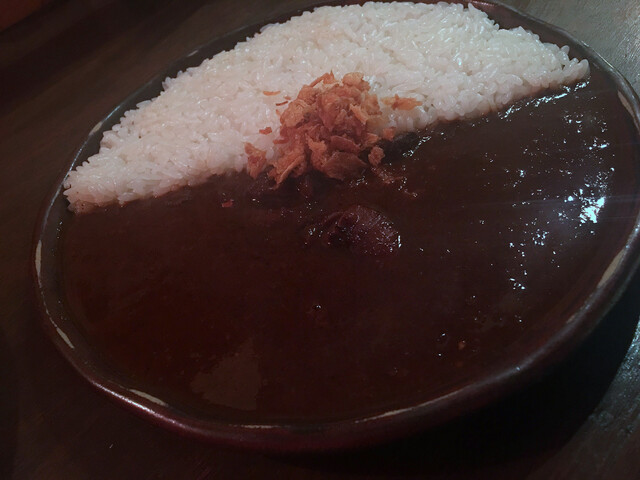
The approach is vertical rather than theatrical: a second-floor address in Chuo-ku, a compact room, counter seats in view, tables close enough to make curry feel like part of Osaka’s everyday urban rhythm rather than a staged tasting-menu event. This is the useful corrective to the city’s louder food clichés. Osaka may sell itself through market snacks, train-station pork buns, and late-night izakaya energy, but its curry culture has developed its own grammar: spice shops, lunch counters, Sri Lankan influences, dining-bar formats, and small rooms where regulars track daily availability as closely as a sushi obsessive tracks neta.
That context matters because curry bar nidomi sits in a category where value and obsession overlap. The recognition is not Michelin-style formality; it is Tabelog’s Curry WEST 100 selection in 2024, with earlier selections across 2017, 2019, 2020, 2022, and 2023. In practical editorial terms, that places it among western Japan’s better-documented curry specialists rather than among Osaka’s high-budget destination rooms such as Fujiya 1935 or KAMINOZA. The comparison is instructive: Osaka’s serious dining does not live only at the formal end of the market. It also appears in small-format curry shops where a low spend can still carry serious local signal.
Osaka curry with Sri Lankan edges, not another comfort-food cliché
Japanese curry is often flattened abroad into sweetness, roux, and convenience. Osaka complicates that picture. The city’s modern curry scene has absorbed spice-forward Indian and Sri Lankan references, then filtered them through Japanese portioning, lunch economics, and bar-like evening service. Here, the listed categories, curry, dining bar, and Sri Lankan, point to that hybrid lane. It is a useful format for travelers who want spice without committing to a long tasting menu, and who understand that some of Japan’s more interesting regional eating happens in rooms designed for repeat local use.
The dining-bar element also changes the expectation. Drinks include shochu, wine, and cocktails, which moves the experience away from a simple curry counter and toward Osaka’s after-work rhythm. That does not make it a grand night out in the register of a ¥¥¥¥ room; it makes it a sharper choice for readers mapping how the city actually eats on ordinary evenings. For a broader sense of the city’s range, compare this with the casual ubiquity of 551 Horai (551蓬莱), the bakery precision of 52CHO-ME BAKERY, or the Italian lane represented by a canto (Italian) and 99 Pizza Napoletana Gourmet.
A small room changes the tempo
Capacity shapes the meal before the first order. Nineteen seats, including a five-seat counter and a handful of two- and four-person tables, put the room closer to Osaka’s small specialist culture than to the city’s department-store dining floors. Counter seating keeps the meal direct; table seating gives small groups enough space; the second-floor setting filters out casual street-level drift. The result is not secrecy, but selection by intent. Diners usually arrive because they know what they are looking for: curry with a stronger identity than convenience-chain comfort, in a room with enough bar structure to carry dinner.
That scale also explains why operational details matter here more than at larger restaurants. Lunch demand is high enough that inquiries are directed away from peak hours, and dinner is the reservation window. Social media is used for sold-out notices, reserved status, and menu announcements, a pattern common in Japan’s small specialist restaurants, where day-to-day information often moves faster through social channels than through a static website. The room is non-smoking indoors, with smoking allowed on the terrace, and families are accommodated, though the stair access to the second floor is a real consideration for strollers.
Within Osaka, this sits in a different lane from the yoshoku nostalgia of Yoshokuya Fujiya, the izakaya register of Benikurage, or the heavier spend of New Babe. It is closer in spirit to the city’s compact, category-specific addresses: restaurants that do not need theatrical décor because the format already tells the story. Readers building a wider Osaka itinerary should use Our full Osaka restaurants guide for dining, then cross-check the city’s hotel, bar, winery, and experience context through Our full Osaka hotels guide, Our full Osaka bars guide, Our full Osaka wineries guide, and Our full Osaka experiences guide.
Why this address belongs on a serious Osaka food map
The case for curry bar nidomi is not built on luxury coding. It is built on repeat recognition in a competitive curry field, a small-seat format, and a cuisine category that shows a more specific Osaka than the standard visitor checklist. Tabelog Curry WEST 100 selection in 2024 gives the address a clear trust signal, while the long operating history since 2011 suggests more than short-cycle hype. For travelers who care about how a city’s food culture works below the formal fine-dining tier, that combination is persuasive.
There is also a useful national comparison. Japan’s curry culture is not a single story. Sapporo has soup curry and specialist shops such as [Curry Senmon Ten] Maruyama Kyoju. in Sapporo; Kansai has its own spice-curry conversation; Tokyo and Kyoto fold curry into broader counter-dining and café habits. That wider map includes places as different as [ki:] in Kyoto. 鮪と炭火焼き うお炭 秋葉原店 in Tokyo.know in Kumamoto, (Shoku) Vietnam in Kawasaki, and the casual Japanese formats seen overseas at Jōdo Saké Bar in Los Angeles and Onigiri Time in Pasadena.
The better way to read this address is as part of Osaka’s middle register: not cheap filler, not ceremony, but a focused room with a clear culinary lane. Add nearby café culture such as.cafe and occasional cross-city detours like -Grilled beef Sukiyaki- KAMAKURA TANUKIAN 鎌倉 たぬき庵 in Kamakura, and the pattern becomes clear: Japan’s rewarding meals often sit outside the postcard categories. In Osaka, this curry bar gives that idea a compact, spice-led address.
Price and Recognition
Comparable venues at the same tier.
| Venue | Cuisine | Price | Notes |
|---|---|---|---|
| curry bar nidomiThis venue — the venue you are viewing | Not listed | $$ | Not listed |
| ERICK SOUTH Nishitenma | Kita, South Indian Dosa & Biryani House | $$ | Not listed |
| Curry & Spice Warung | Nishi, Osaka Spice Curry & Indian Curry | $$ | Not listed |
| Ult Coffee Roasters | Kyomachibori, Specialty Coffee Roasters | $$ | Not listed |
| Menya JouRoku (麺屋 丈六) | Namba, Takaida-Style Tamari Shoyu Ramen | $$ | Not listed |
| wapiti | Not listed | $$ | Chūō, Modern standing bar with smoked dishes and Spanish-style small plates |
Recognition history
Dated appearances from independent guides and award organizations, with the underlying list record or original source where available.
Tabelog 100 #29 · No. 29
Tabelog · Tabelog 100 - Curry - WEST - 2024
Continue exploring
More in Osaka
Restaurants in Osaka
Browse all →




Bars in Osaka
Browse all →

Hotels in Osaka
Browse all →



Wineries in Osaka
Browse all →
At a Glance
- Cozy
- Trendy
- Lively
- Casual Hangout
- After Work
- Group Dining
- Solo
- Family
- Private Event
- Live Music
- Terrace
- Standalone
- Design Destination
- Craft Cocktails
- Beer Program
Small second‑floor hideout with a stylish yet relaxed bar‑like interior, counter and sofa seating, and an easygoing, lively atmosphere that works for solo diners, friends, and casual parties.