Cultivar
On Chestnut Street in San Francisco's Marina district, Cultivar positions itself through its wine program as much as its kitchen, drawing a neighborhood crowd that takes both seriously. The address sits within walking distance of the Presidio and a short distance from the city's broader fine-dining corridor, making it a practical anchor for wine-focused evenings that don't require crossing town.
Pearl is the En Primeur Club membership app — saves, bookings, and concierge access live there. Same editors, same standards.
- Address
- 2379 Chestnut St, San Francisco, CA 94123
- Phone
- +14159624200
- Website
- cultivarwine.com
- Directions
- Get directions
 Saves & bookings on Pearl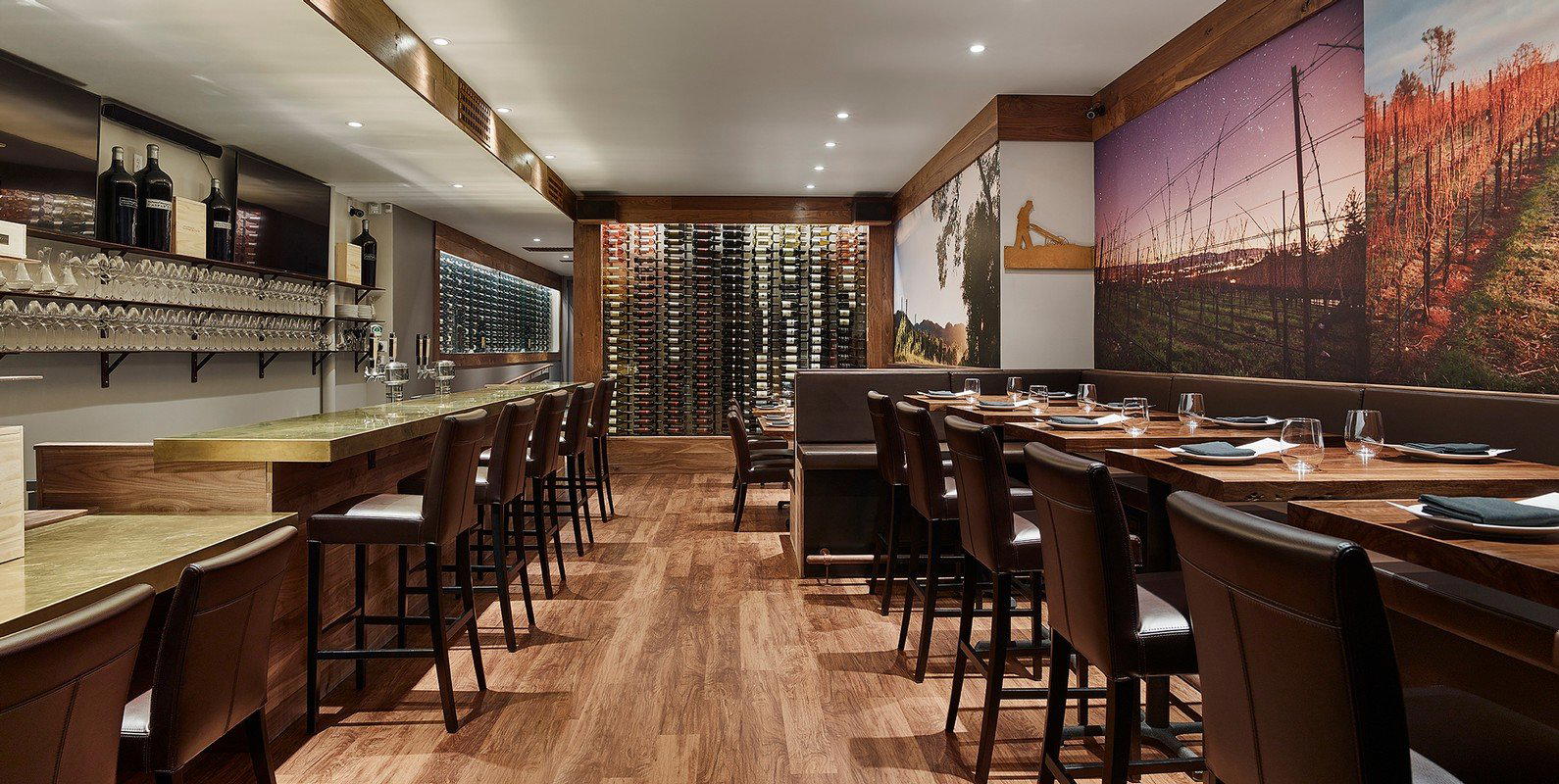
Chestnut Street and the Wine-Bar Inflection Point
San Francisco's Marina district has always occupied an interesting position in the city's dining conversation: residential enough to attract regulars, polished enough to draw destination diners, yet rarely mentioned in the same breath as the Michelin-heavy SoMa corridor where Benu and Atelier Crenn anchor the city's formal end. The city's drinking-and-dining culture has moved toward more integrated programs where the list and the kitchen carry equal editorial weight. Cultivar, at 2379 Chestnut St, sits inside that shift.
What the Wine-Forward Format Actually Means Here
The wine-bar category in American cities has split into a few clear tiers. At one end sit the pour-and-cheese rooms, designed for accessibility and throughput. At the other end are collector-grade programs attached to destination restaurants. In the middle, neighborhood-anchored rooms carry genuine curation ambition without requiring a four-figure commitment to access it.
Cultivar operates in that middle register. The Chestnut Street address positions it as a neighborhood anchor rather than a destination. That is not a demotion. In a city where many serious wine drinkers live in the northern neighborhoods and have limited appetite for crossing town on a Tuesday, a well-curated list within walking distance of the Presidio fills a real gap.
The Curation Logic of a Neighborhood Wine Program
Wine programs designed for neighborhood regulars face a different editorial problem than those attached to tasting-menu restaurants. At a place like The French Laundry, the list can be built around a single extended experience, with pairings calibrated course by course. A neighborhood wine room has to serve the couple celebrating an anniversary, the group of four splitting bottles across two hours, and the solo diner at the bar who wants one interesting glass and a plate of something substantial. The list has to work in fragments as well as it works as a whole.
Particularly coherent neighborhood programs in American cities accomplish this through strong by-the-glass architecture: a rotating selection that reflects the same curation philosophy as the full list, so that a single glass still tells you something about the room's point of view. Programs like Frasca Food and Wine have shown how deeply a wine identity can embed itself in a neighborhood without requiring tasting-menu formality.
Cultivar's position on Chestnut Street suggests a similar logic: the Marina has the demographics for a program that takes wine seriously, and a room that reads its neighborhood correctly tends to build a more durable regular base than one chasing destination traffic.
San Francisco's Wine Identity and Where Marina Fits
California wine culture presents a specific opportunity and a specific risk for any restaurant program. The opportunity is proximity: Sonoma, Napa, the Santa Cruz Mountains, and the Anderson Valley are all within two hours, which means access to producers who don't distribute widely. The risk is provincialism: lists that lean too heavily on California can feel narrow to the wine-literate diner who drinks across Europe and wants the list to reflect that range.
The strongest programs in the city tend to use California as an anchor rather than a ceiling. Atelier Crenn's wine program, for instance, maintains a French-leaning sensibility that reflects the kitchen's identity while still engaging with California producers. Further afield, a program like Le Bernardin operates with different constraints, where the cellar has to support a seafood-only kitchen across French and global producers.
A Marina address like Cultivar draws from a neighborhood that historically skews toward California wines by default, which means the interesting editorial decision is how far the list reaches beyond the obvious. A program that uses local-producer relationships as a starting point but builds outward toward lesser-known European appellations occupies a more interesting critical position than one that simply reflects local preference back at the customer.
Kitchen and List as a Single Argument
Wine-forward formats work leading when the kitchen and the sommelier are making the same argument. The format breaks down when the list and the food feel like parallel programs that happen to share a room. Across American cities, one coherent examples of the format tend to show up in places where a culinary tradition already has a natural affinity for wine-driven thinking: Italian-influenced kitchens like the one at Quince in San Francisco's Financial District, where the wine and food are in genuine dialogue, or farm-to-table formats like Blue Hill at Stone Barns in Tarrytown, where seasonal discipline in the kitchen mirrors the way a serious sommelier thinks about vintage and provenance.
Cultivar's California farm-to-table approach suggests a kitchen designed to support rather than overshadow the list. In that format, dishes tend toward the ingredient-led and textural rather than the heavily sauced or aggressively spiced, since the goal is to keep the palate available for the wine.
Planning Your Visit
Cultivar is located at 2379 Chestnut St, San Francisco, CA 94123 in the Marina district, within reach of the Presidio and the northern waterfront. Cultivar serves dinner Monday through Friday from 4 to 10 PM, Saturday from 11 AM to 10 PM, and Sunday from 11 AM to 9 PM. It is casual and walk-in friendly, with an estimated price of about $40 per person. For broader context on where Cultivar sits within the city's dining options, see our full San Francisco restaurants guide. Readers planning a longer wine-focused trip through California may also want to consider Addison in San Diego and Providence in Los Angeles as part of a broader West Coast itinerary.
Cuisine Lens
Comparable venues nearby, for context on price, style, and recognition.
| Venue | Cuisine | Price | Notes |
|---|---|---|---|
| CultivarThis venue — the venue you are viewing | California Farm-to-Table | $$$ | Not listed |
| The FreshMarket at Neiman Marcus | American Café | $$$ | Financial District/South Beach |
| The Harlequin | New American | $$$ | Financial District/South Beach |
| 1300 on Fillmore | Modern Southern-Inspired American | $$$ | Fillmore Jazz District |
| Union Larder | Wine Bar with Charcuterie & Cheese | $$$ | Russian Hill |
| Presidio Social Club | California Comfort Cuisine | $$$ | Presidio |
Continue exploring
More in San Francisco
Restaurants in San Francisco
Browse all →
Bars in San Francisco
Browse all →
Hotels in San Francisco
Browse all →
At a Glance
- Cozy
- Intimate
- Modern
- Scenic
- Brunch
- Business Dinner
- Group Dining
- Casual Hangout
- Private Event
- Private Dining
- Terrace
- Garden
- Extensive Wine List
- Craft Cocktails
- Sommelier Led
- Farm To Table
- Local Sourcing
Current opening hours
- Monday
- 4–10 PM
- Tuesday
- 4–10 PM
- Wednesday
- 4–10 PM
- Thursday
- 4–10 PM
- Friday
- 4–10 PM
- Saturday
- 11 AM–10 PM
- Sunday
- 11 AM–9 PM
Hours can change for holidays and private events. Last verified .
Warm and inviting with heated outdoor dining, fireplace-backed patio, and lively atmosphere celebrating California's seasonal produce.