Our verdict
In the market town of Sizun, at the edge of the Monts d'Arrée in western Finistère, crêperies occupy a specific and serious place in the local food order. This address on Rue de l'Argoat sits within that tradition, where buckwheat galettes and sweet crêpes are the point, not a novelty, and the sourcing of flour and dairy from the surrounding Breton countryside gives the food its character.

Pearl is the En Primeur Club membership app — saves, bookings, and concierge access live there. Same editors, same standards.
- Address
- 5 Rue de l'Argoat, 29450 Sizun, France
- Phone
- +33298688150
- Hours
- Mon ClosedTue–Thu 12–1:30 PMFri–Sat 12–1:30 PM, 7–8:30 PMSun 12–1 PM, 7–8 PM
- Directions
- Get directions
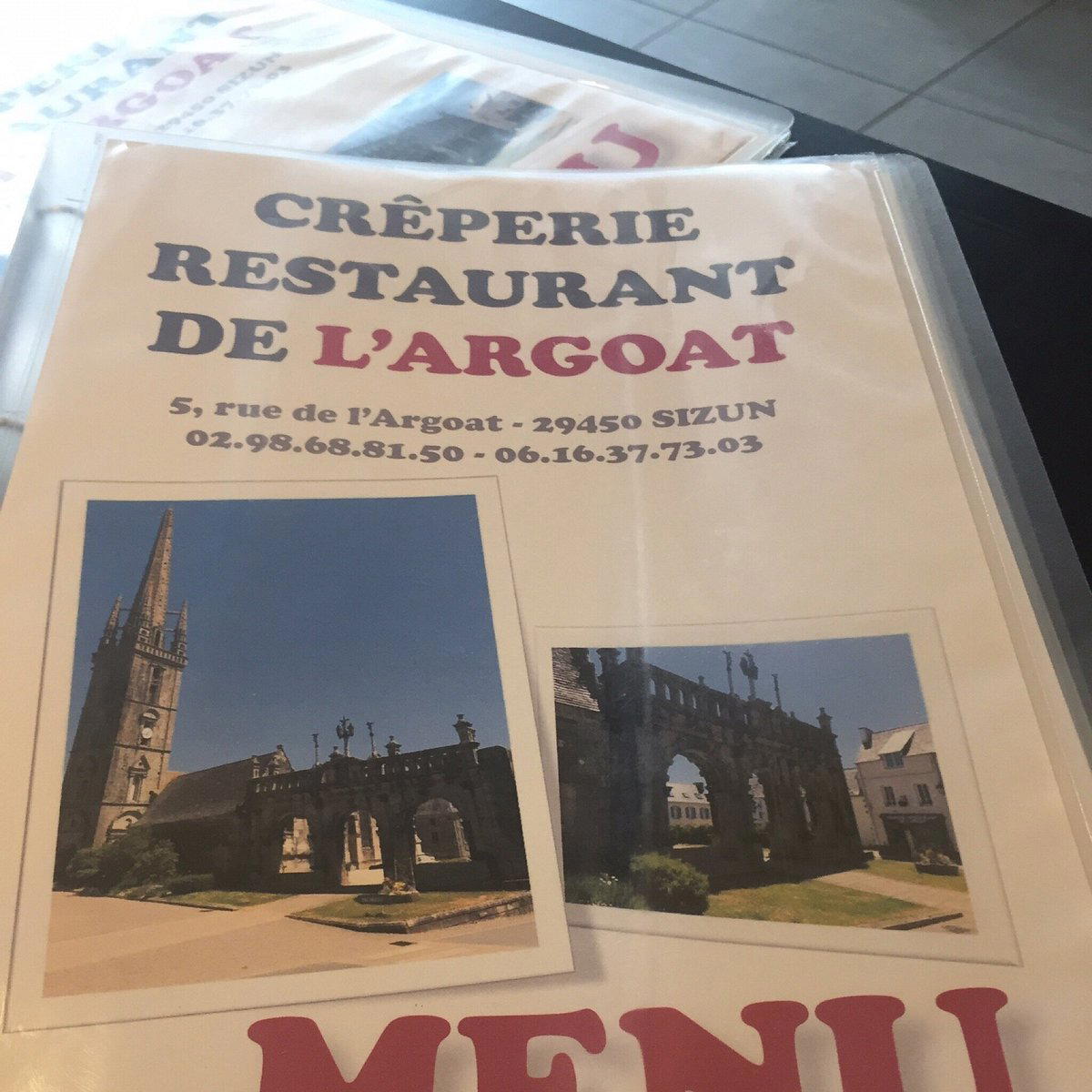
The menu
What to order
- La Super Complète
- La Steph Galette
- La Bretonne
Buckwheat Country: What Crêperies Mean in Finistère
Brittany's crêperie tradition is not a regional curiosity preserved for tourists. In the departments of western France that make up Breizh, the galette de sarrasin, a buckwheat crêpe filled with savoury ingredients, has functioned as a staple for centuries. The crop grew well in Brittany's acidic soils when wheat would not, and the tradition of eating it at communal tables, accompanied by local cider, predates the modern restaurant format entirely. In Finistère, the westernmost department, that culture is arguably at its most concentrated. Sizun, a small market town at the southern approach to the Parc Naturel Régional d'Armorique and the Monts d'Arrée, is embedded in this tradition rather than adjacent to it.
Crêperies in this part of France sit in a different evaluative framework from the three-Michelin-star circuit that includes addresses like Mirazur in Menton or Alléno Paris au Pavillon Ledoyen. The criteria here are execution of a constrained form: the quality of the buckwheat flour, the crispness of the lace edge on a galette, the balance of filling, and whether the kitchen respects the galette's own flavour rather than burying it. These are technical questions, and the gap between a well-made and a poorly made galette is substantial.
The Ingredient Logic of a Breton Galette
The sourcing argument for buckwheat crêpes is more direct than for almost any other French regional dish. Sarrasin flour ground from local grain carries a nuttiness and slight bitterness that industrially processed buckwheat does not. Breton butter, made from the milk of cattle grazing the bocage and coastal pastures of Finistère, has a distinct salted character that defines the sweet crêpe end of the menu. The cider that traditionally accompanies both courses comes from apple orchards in neighbouring Cornouaille or from producers around the Rade de Brest.
When any of these sourcing chains shorten, the result is perceptible on the plate. Crêperies that use mass-market flour and standard butter produce a technically similar object, but the flavour compression is different. This is why regional crêperies in western Brittany have a different standing from their equivalents in Paris's Montparnasse neighbourhood, where the tradition also has deep roots but where ingredient provenance is harder to maintain. Sizun's position in the agricultural interior of Finistère, close to producers, is a practical advantage.
For context on how ingredient sourcing at the regional level defines French culinary identity at the high end, consider Bras in Laguiole, where Michel and Sébastien Bras built their reputation partly on the specificity of Aubrac plateau ingredients. The principle scales down to any format that takes its local supply chain seriously.
Sizun and the Armorique Interior
Sizun is most immediately known for its triumphal parish close, one of the finest examples of the enclos paroissial tradition that defines church architecture across this part of Finistère. The town draws visitors travelling the Monts d'Arrée circuit, a range of granite moorland and forest that runs through the heart of the Parc Naturel Régional d'Armorique. The combination of a genuine architectural monument and access to one of Brittany's more atmospheric inland landscapes means Sizun functions as a logical stopping point rather than a destination constructed around tourism infrastructure.
In that context, the crêperie as a meal format makes particular sense. A well-executed galette and crêpe sequence, with a bowl of cider, is a complete meal that takes sixty to ninety minutes, fits the rhythms of a day exploring the park, and costs a fraction of what a similar time commitment would demand at a formal restaurant. For travellers moving through interior Finistère rather than staying on the coast, this kind of address fills a specific practical role.
France's premium restaurant circuit runs from mountain addresses like Flocons de Sel in Megève and Le 1947 à Cheval Blanc in Courchevel to historic provincial institutions such as Auberge de l'Ill in Illhaeusern, Maison Lameloise in Chagny, and Georges Blanc in Vonnas, as well as southern addresses including L'Oustau de Baumanière in Les Baux, La Table du Castellet in Le Castellet, and La Vague d'Or in Saint-Tropez. None of that circuit maps onto the crêperie format, which operates on its own terms. The comparison is instructive only in demonstrating that French food culture sustains multiple, parallel hierarchies of quality, each internally coherent.
Similarly, restaurants recognised for sustained excellence at the regional level, such as Auberge du Vieux Puits in Fontjoncouse, Les Prés d'Eugénie in Eugénie-les-Bains, and Troisgros - Le Bois sans Feuilles in Ouches, demonstrate how deeply rooted regional identity can produce food that travels in reputation. The crêperie operates on a smaller radius but shares the same underlying logic: place-specific ingredients, an inherited technique, and a form whose apparent simplicity makes quality immediately legible. International comparisons, such as Le Bernardin in New York City or Lazy Bear in San Francisco, belong to entirely different formats, though both demonstrate how a constrained format executed with seriousness builds its own category of authority.
Planning a Visit
The Crêperie is at 5 Rue de l'Argoat, 29450 Sizun, in the centre of town adjacent to the parish close. Sizun is accessible by road from Brest, approximately 35 kilometres to the northwest, and from Châteaulin to the south. Public transport connections to Sizun are limited, making a car the practical option for most visitors approaching from outside the department. Given the town's function as a waypoint for Monts d'Arrée touring, midday is the natural meal time, and crêperies in small Breton towns can fill quickly on market days and during summer weekends. Contact and hours information was not available at time of writing; checking locally on arrival or consulting the Sizun tourist office is advisable. See our full Sizun restaurants guide for additional context on eating in the area. For reference on Paul Bocuse - L'Auberge du Pont de Collonges, another address where regional French tradition remains the organising principle, the broader guide covers comparable questions of format and place.
Frequently asked questions
Is Creperie suitable for children?
Crêperies are among the most family-accommodating formats in French regional dining. In Sizun, at 5 Rue de l'Argoat, the galette-and-crêpe menu translates well across ages: savoury buckwheat galettes for a main, sweet crêpes to follow. The format is informal and portions are typically straightforward to share or adapt.
What kind of setting is Creperie?
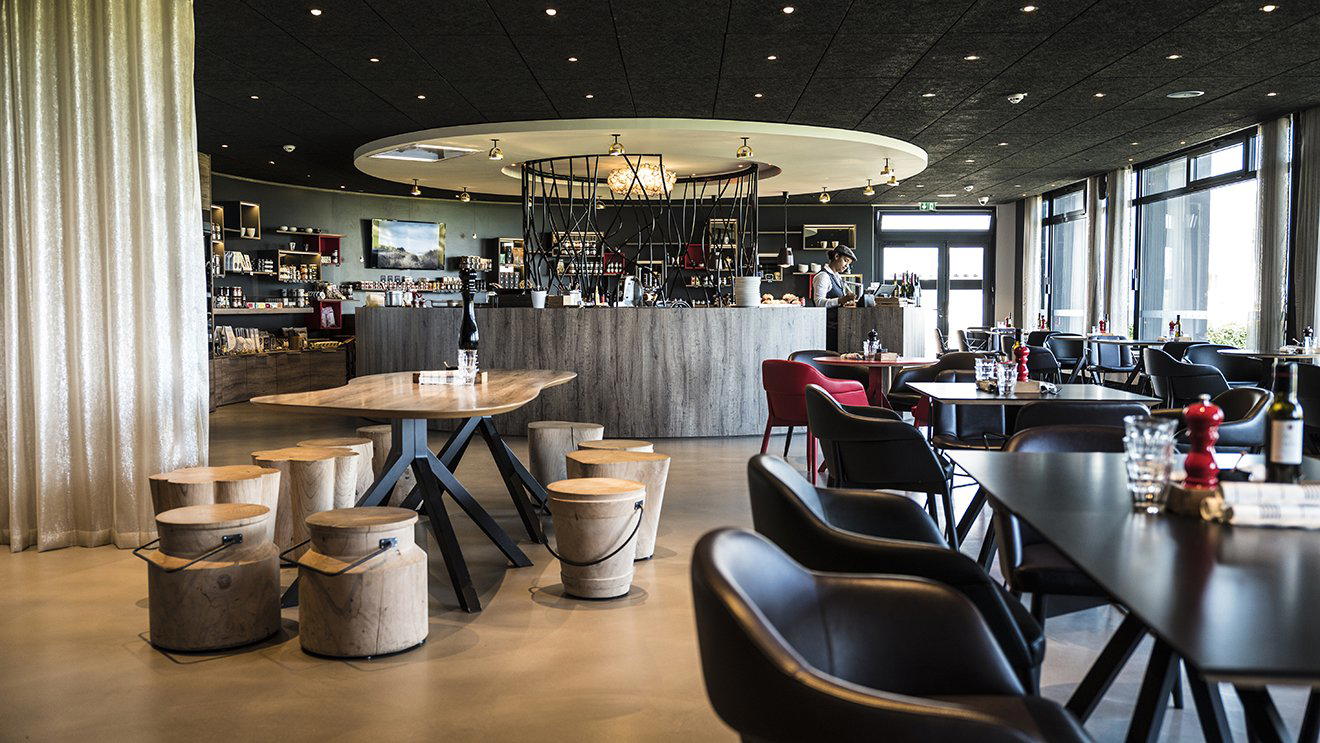
The Crêperie sits in the centre of Sizun, a small inland commune in Finistère, adjacent to the town's celebrated enclos paroissial parish close. The setting reflects the character of the Armorique interior rather than the coastal tourist circuit: a working town crêperie serving a local community. Expect a no-frills, regional dining room rather than a polished destination restaurant.
Is Sizun's Creperie a good stop when visiting the Armorique Regional Natural Park?
Sizun sits at the edge of the Armorique Regional Natural Park and is accessible by road from Brest, making it a practical midpoint for visitors crossing the Finistère interior. The Crêperie at 5 Rue de l'Argoat is positioned in the town centre, directly adjacent to the parish close, which is one of the finest enclos paroissiaux in Brittany. A galette lunch here fits the rhythm of a park day without requiring a detour into a larger town.
What dish is Creperie famous for?
The galette de sarrasin, the savoury buckwheat crêpe that anchors Breton culinary identity, is the defining preparation at any Finistère crêperie. Made from sarrasin flour ground from local grain, the galette carries stronger, earthier character than wheat-based crêpes and forms the main course before sweet crêpes close the meal. This is the format the Crêperie in Sizun operates within.
Where do I go for Creperie?
Creperie is located at 5 Rue de l'Argoat, 29450 Sizun, France, Sizun.
Comparable Venues
Comparable venues nearby, for context on price, style, and recognition.
| Venue | Cuisine | Price | Notes |
|---|---|---|---|
| CreperieThis venue — the venue you are viewing | Breton Creperie | $10–20 | Not listed |
| Auberge Du Menez | Modern Breton Locavore | $30–50 | Monts d'Arrée |
| Creperie Ti Saozon | Breton Creperie | $20–30 | Roscoff |
| La Cassonade | Breton Crêperie | $10–20 | Ile de Batz |
| Le Colibri | French Brasserie | $10–20 | Plabennec |
| Nikaïa | French Mediterranean Bistro | Not listed | quai Cosmao |
Continue exploring
More in Sizun
Restaurants in Sizun
Browse all →
Details
- Cozy
- Rustic
- Classic
- Family
- Casual Hangout
- Standalone
- Local Sourcing
- Street Scene
- A La Carte
Current opening hours
- Monday
- Closed
- Tuesday
- 12–1:30 PM
- Wednesday
- 12–1:30 PM
- Thursday
- 12–1:30 PM
- Friday
- 12–1:30 PM, 7–8:30 PM
- Saturday
- 12–1:30 PM, 7–8:30 PM
- Sunday
- 12–1 PM, 7–8 PM
Hours can change for holidays and private events. Last verified .
Classic and nicely decorated with a friendly, welcoming atmosphere.