Crabby Jack's
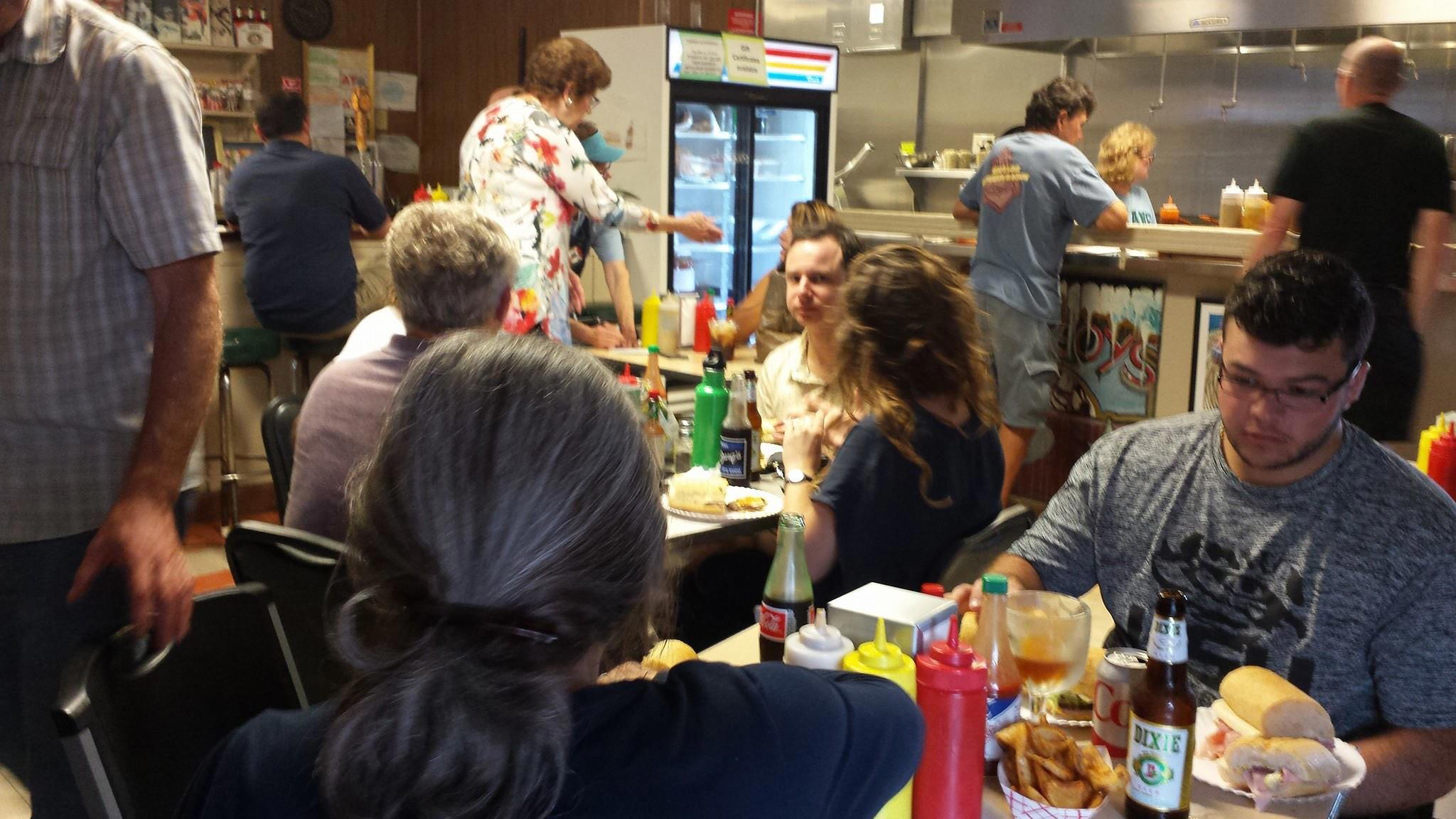
Crabby Jack's sits on Jefferson Highway in the greater New Orleans area, where the line between parish and city blurs and the food tends to be more honest for it. The cooking here draws on the same Gulf and bayou sourcing traditions that define Louisiana's broader culinary identity, placing it in a category of neighborhood institutions that outlast trends by staying rooted in place and ingredient.
Pearl is the En Primeur Club membership app — saves, bookings, and concierge access live there. Same editors, same standards.
- Address
- 428 Jefferson Hwy, New Orleans, LA 70118
- Phone
- +15048332722
- Website
- crabbyjacksnola.com
- Directions
- Get directions
 Saves & bookings on Pearl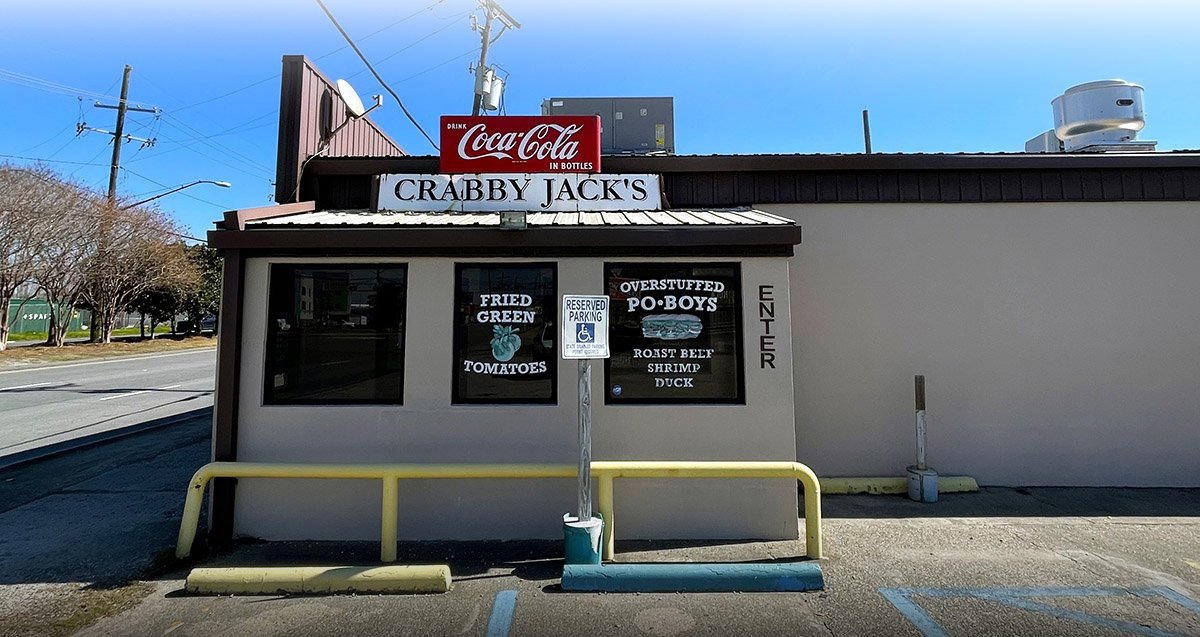
Where Jefferson Parish Meets the Gulf Coast Table
Jefferson Highway runs like a connective thread between New Orleans proper and the residential parishes that sprawl westward along the Mississippi. The corridor is not a tourist route. It is a commuter strip lined with strip malls, local grocers, and the kind of eating places that exist because people who live nearby need somewhere reliable to eat well without ceremony. Crabby Jack's occupies that register, a spot where the sourcing traditions of coastal Louisiana do the work that a printed pedigree might do elsewhere.
In southern Louisiana, the ingredient has always preceded the chef. The Gulf of Mexico and the Atchafalaya Basin together form among the more productive seafood and crustacean systems in North America, and the cooking culture of the New Orleans metro has been organized around that supply for generations. Crabs, shrimp, oysters, crawfish, and catfish move from water to kitchen with a directness that more landlocked culinary scenes can only approximate. Crabby Jack's name signals that orientation plainly: this is a place defined by what comes out of the water.
The Sourcing Logic Behind Louisiana Seafood Kitchens
The ingredient-first philosophy that runs through New Orleans-area cooking is not a recent farm-to-table rebranding. It predates that language by decades, rooted instead in practical geography. Louisiana's commercial fishing industry supplies both the white-tablecloth dining rooms of the French Quarter and the po'boy counters of Jefferson Parish with product that, in terms of freshness and variety, is difficult to match in most American cities. The compressed distance between harvest and plate is structural, not aspirational.
What distinguishes the Jefferson Parish end of this tradition from the more celebrated downtown institutions is informality and volume. Restaurants along Jefferson Highway are not calibrating for out-of-town critics or national press cycles. They are calibrating for regulars who know what good local seafood tastes like and will notice immediately if it slips. That accountability to a knowledgeable local base tends to keep quality honest in ways that tourist-facing restaurants do not always manage. For context on how that sourcing ethos scales upward into fine dining, Emeril's in New Orleans represents one trajectory, the same Gulf product, applied with more formal technique and a larger reputation behind it.
The broader American conversation about ingredient provenance and sourcing transparency has produced celebrated examples from Blue Hill at Stone Barns in Tarrytown to Single Thread Farm in Healdsburg to Smyth in Chicago. Those restaurants make sourcing a programmatic statement. On Jefferson Highway, it tends to be assumed rather than announced, which is its own kind of credential.
The Po'boy as a Document of Place
Any serious reading of the New Orleans food tradition eventually arrives at the po'boy, and any serious po'boy conversation eventually arrives at debates about bread, protein, and dressing. The sandwich form that originated in the city during the 1929 streetcar strike has become a reliable index of a kitchen's commitment to local sourcing. The bread must come from a New Orleans bakery to produce the right crust-to-crumb ratio, the airy interior and crackling exterior that cannot be replicated with generic hoagie rolls. The proteins, whether fried shrimp, roast beef, or soft-shell crab, track directly to what Gulf and regional suppliers are providing.
Crabby Jack's has a reputation in Jefferson Parish circles as a serious po'boy address. That reputation, in this context, carries more weight than it might elsewhere. New Orleans residents hold strong opinions about the form, and a neighborhood spot that survives on local trade does not maintain standing with po'boy partisans by cutting corners on either the bread supply or the seafood sourcing.
Jefferson Parish as a Dining Context
Jefferson Parish occupies an interesting position in the greater New Orleans dining conversation. It lacks the marketing infrastructure of the French Quarter and the cachet of Magazine Street, but it has a dense population of working-class and middle-class New Orleanians who eat out frequently and have specific expectations. That demographic produces a different kind of restaurant economy: less reliant on first-time visitors, more dependent on repeat locals who are difficult to fool.
The result is a corridor where price points tend to stay accessible, portions tend toward generosity, and the cooking stays anchored to the regional supply chain by necessity as much as by philosophy. This is not the register of The French Laundry in Napa or Providence in Los Angeles or Addison in San Diego, where tasting-menu formats and extensive wine programs define the experience. It is a register where the quality case rests entirely on the ingredient and the technique applied to it, with no ambient luxury to soften a weak product.
For travelers approaching New Orleans from the airport along Jefferson Highway, or for those staying in the western parishes, this stretch offers a practical and legitimate entry point into the city's food culture. The restaurants here are not performing New Orleans for an outside audience. They are feeding the people who live here, which is usually a better guarantee of authenticity than any guidebook endorsement. See our full Jefferson restaurants guide for additional context on where Crabby Jack's sits within the broader local dining picture.
For those interested in how ingredient-focused approaches play out across other American regional cuisines, the comparison set is instructive: Oyster Oyster in Washington, D.C. applies a similar sourcing-first logic to mid-Atlantic produce, while ITAMAE in Miami roots its cooking in the Peruvian-Japanese traditions of Florida's South American diaspora. Bacchanalia in Atlanta and Frasca Food & Wine in Boulder represent the fine-dining end of regional American sourcing commitments. Lazy Bear in San Francisco, The Inn at Little Washington in Washington, The Wolf's Tailor in Denver, and Atomix in New York City each represent distinct takes on how American kitchens build identity around what they source and from where. Le Bernardin in New York City and Atelier Moessmer Norbert Niederkofler in Brunico sit at the furthest end of that formal spectrum. The restaurant operates at the opposite end, no tasting menu, no critical apparatus, no international press, but the same underlying argument about proximity to source applies.
Planning Your Visit
The restaurant is located at 428 Jefferson Highway, a direct drive from central New Orleans or the airport. The format is casual and counter-service-adjacent, meaning dress code and reservation logistics are non-issues. Visitors arriving from out of town should treat it as a lunch stop rather than a destination dinner, which matches the rhythm of Jefferson Highway generally. Specific hours and current pricing are best confirmed directly before visiting, as operational details for neighborhood spots in this corridor can shift seasonally.
In Context: Similar Options
Comparable venues nearby, for context on price, style, and recognition.
| Venue | Cuisine | Price | Notes |
|---|---|---|---|
| Crabby Jack'sThis venue — the venue you are viewing | Cajun Po'boys & Fried Seafood | $$ | Not listed |
| BABs | Modern American Bistro | $$ | Bywater |
| Curio | American with Creole Soul | $$ | French Quarter |
| Johnny's Po-Boys | Classic New Orleans Po'Boys | $$ | French Quarter |
| Dick & Jenny's | Contemporary New Orleans Creole | $$ | West Riverside |
| The Bower | Modern American Small Plates | $$ | Central City |
Continue exploring
More in New Orleans
Restaurants in New Orleans
Browse all →
Bars in New Orleans
Browse all →
At a Glance
- Rustic
- Cozy
- Lively
- Casual Hangout
- Local Sourcing
Current opening hours
- Monday
- Closed
- Tuesday
- 10:30 AM–3 PM
- Wednesday
- 10:30 AM–3 PM
- Thursday
- 10:30 AM–3 PM
- Friday
- 10:30 AM–3 PM
- Saturday
- 10:30 AM–3 PM
- Sunday
- Closed
Hours can change for holidays and private events. Last verified .
Casual, character-filled dive with friendly staff and industrial highway views, full of local charm and bustling lunch energy.