Coniglio’s Di Napoli
Coal-oven pizza in the Italian American tradition, Coniglio's Di Napoli occupies the kind of neighbourhood-anchor position that New York's red-sauce belt has always produced but rarely sustains across generations. The kitchen works a format rooted in Neapolitan technique and Italian American adaptation, sitting in a different register from the city's tasting-menu circuit while serving a local clientele that measures loyalty in decades rather than reservation windows.
Pearl is the En Primeur Club membership app — saves, bookings, and concierge access live there. Same editors, same standards.
- Address
- 616 Metropolitan Ave, Brooklyn, NY 11211
- Directions
- Get directions
 Saves & bookings on Pearl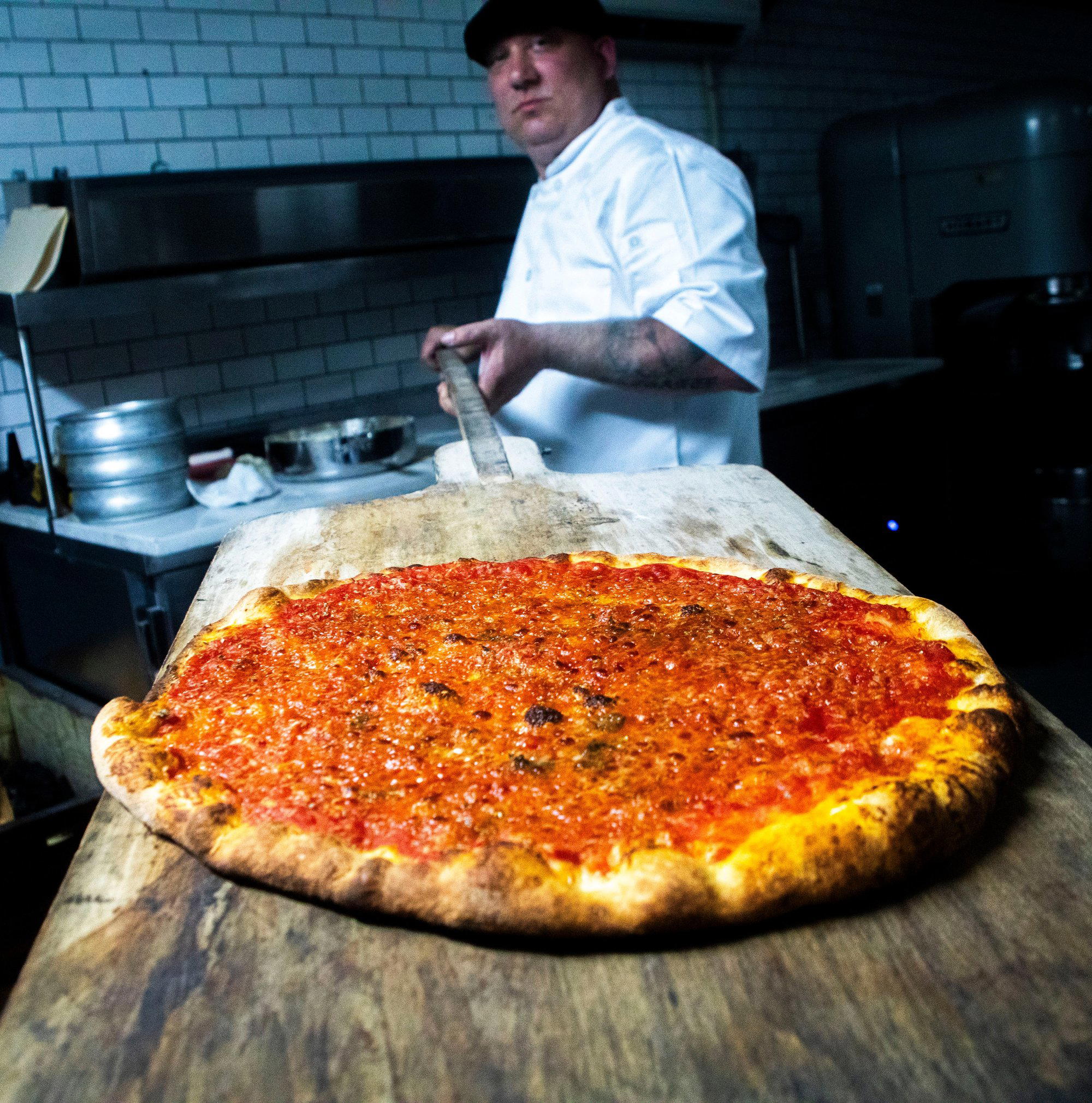
The Corner Restaurant That Holds a Neighbourhood Together
There is a category of New York restaurant that no award committee fully captures: the place that functions as a social institution before it functions as a dining destination. Coniglio's Di Napoli belongs to that category. Coal-oven pizza and Italian American cooking have anchored specific corridors of New York since the late nineteenth century, when southern Italian immigrant communities built their own supply chains, bakeries, and neighbourhood tables. Coniglio's operates inside that tradition, carrying forward a format that the city's dining press tends to overlook precisely because it predates the metrics the press uses to evaluate it.
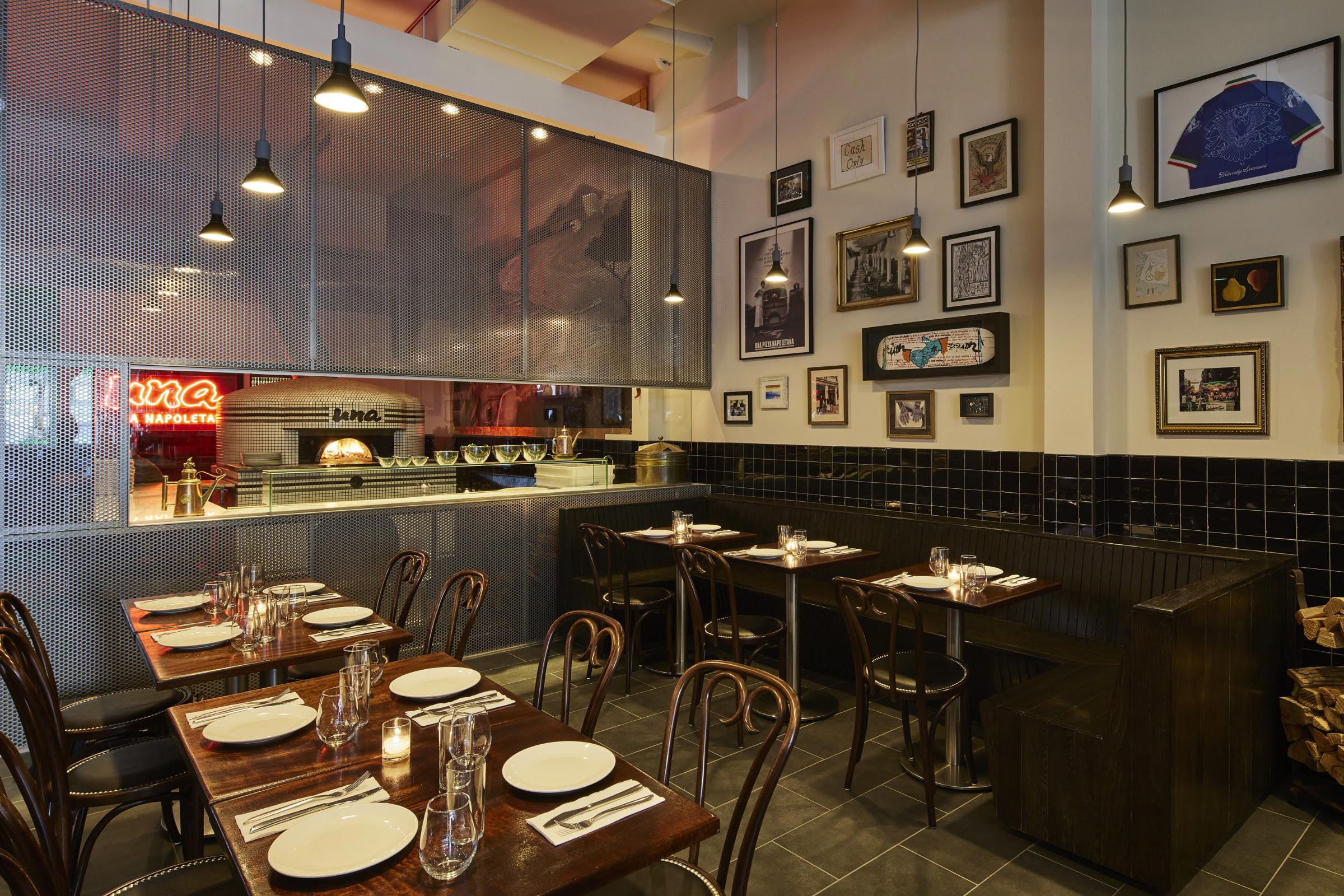
The physical environment reads immediately. Coal-oven pizzerias have a particular sensory register: the low ceiling blackened by years of radiant heat, the smell of charred crust that settles into the walls and tablecloths, the ambient noise of a room where tables turn and conversations overlap. These are not design choices; they are accumulations. A room like this cannot be replicated by a new opening spending on distressed tile and imported brick. It is earned through repetition, and a regular can read the difference in the first thirty seconds.
Coal-Oven Pizza and the Italian American Continuum
New York's pizza taxonomy is more stratified than most cities acknowledge. At one end sit the Neapolitan-certified operators, working to D.O.C. standards with imported Caputo flour and San Marzano tomatoes, competing on adherence to a codified tradition. At the other end are the city's dollar-slice institutions, which operate on volume and accessibility. Italian American coal-oven houses occupy a distinct middle register: they draw on Neapolitan origins but have evolved through decades of local adaptation, producing a crust with more char and structural integrity than a certified Neapolitan pie, calibrated for a clientele that has eaten this style of pizza since childhood.
Coal fires differently from wood or gas. The fuel reaches higher sustained temperatures and imparts a dry, mineral heat that produces a particular char pattern on the crust's underside. The result is a pizza that holds its structure across a full table-size format, where the Neapolitan tradition values a softer, wetter centre. Neither is superior; they are answers to different questions about what pizza should do. Coniglio's answers belong to the Italian American lineage, and that lineage has produced particularly durable restaurants in the city's history.
For context on how New York's fine dining tier compares, the tasting-menu circuit represented by venues like Le Bernardin, Eleven Madison Park, Per Se, Atomix, and Masa operates on reservation lead times measured in months and per-head spends that reach into the hundreds of dollars. Coniglio's exists in an entirely different economy and serves an entirely different function, yet both categories are necessary to understanding what New York's dining culture actually is, as opposed to what the award-season coverage suggests it is.
The Regulars and What They Signal
One reliable indicator of a neighbourhood anchor is not critical recognition but customer behaviour. A restaurant that draws the same families on Friday nights for fifteen years, where the staff knows orders before they are placed and where a table held for a regular is understood rather than negotiated, is performing a social function that a destination restaurant rarely achieves. That function is also harder to sustain than a Michelin rating, because it depends on consistency rather than on peaks of excellence.
Italian American restaurants of this type have always been the civic infrastructure of their blocks. They host the post-funeral gathering, the birthday that needs a large table, the weeknight dinner where nobody wants to make a decision. The menu's breadth, the room's noise level, and the pricing that allows a table of four to eat and drink without calculation are all features of this function, not accidents of format. Comparable neighbourhood-anchor institutions exist across the country: Emeril's in New Orleans has played a similar role in anchoring a local dining identity, as have community-embedded restaurants in cities from San Francisco to Chicago, where places like Lazy Bear and Alinea represent the tasting-menu end of a spectrum that requires its other end to make sense.
Planning a Visit
Coniglio's Di Napoli sits in New York City's Italian American dining tradition, which means the practical calculus differs from the city's reservation-required, prix-fixe tier. Coal-oven houses of this type tend to be most themselves at high volume, when the room is full and the oven is running at sustained temperature. Mid-week visits tend to be quieter; Friday and Saturday evenings fill early and stay full. Walking in remains a viable option at off-peak hours, though a call ahead on weekend evenings is advisable. Pricing sits well below the tasting-menu tier: this is a restaurant where a table of four can order generously without the spend becoming a discussion point.
For travellers building a broader New York itinerary, the city's full range is documented in our full New York City restaurants guide, and the supporting infrastructure of where to stay and what to drink is covered in our New York City hotels guide, bars guide, wineries guide, and experiences guide. For those tracking the American fine dining circuit more broadly, Single Thread Farm in Healdsburg, The French Laundry in Napa, and Providence in Los Angeles represent comparable anchor institutions in their respective cities, each operating at the opposite end of the formality spectrum from Coniglio's but fulfilling an equivalent role as a reference point for their local dining culture. Internationally, Alain Ducasse at Louis XV in Monte Carlo and Alléno Paris au Pavillon Ledoyen demonstrate how institutional longevity can coexist with critical recognition, a combination that Italian American neighbourhood houses achieve through entirely different means.
Just the Basics
Comparable venues nearby, for context on price, style, and recognition.
| Venue | Price | Notes |
|---|---|---|
| Coniglio’s Di NapoliThis venue — the venue you are viewing | $$$$ | Not listed |
| Bocelli | $$$$ | Grasmere-Arrochar-South Beach-Dongan Hills, Authentic Italian Trattoria |
| Allegretto al Forno | $$$ | Williamsburg, Southern Italian Neapolitan Pizza & Small Plates |
| Rossini's | $$$ | Murray Hill-Kips Bay, Northern Italian Trattoria |
| DelBianco Italian Restaurant | $$$$ | Midtown-Times Square, Upscale Northern Italian |
| Osteria al Doge | $$$ | Midtown-Times Square, Authentic Venetian Italian |
Continue exploring
More in New York City
Restaurants in New York City
Browse all →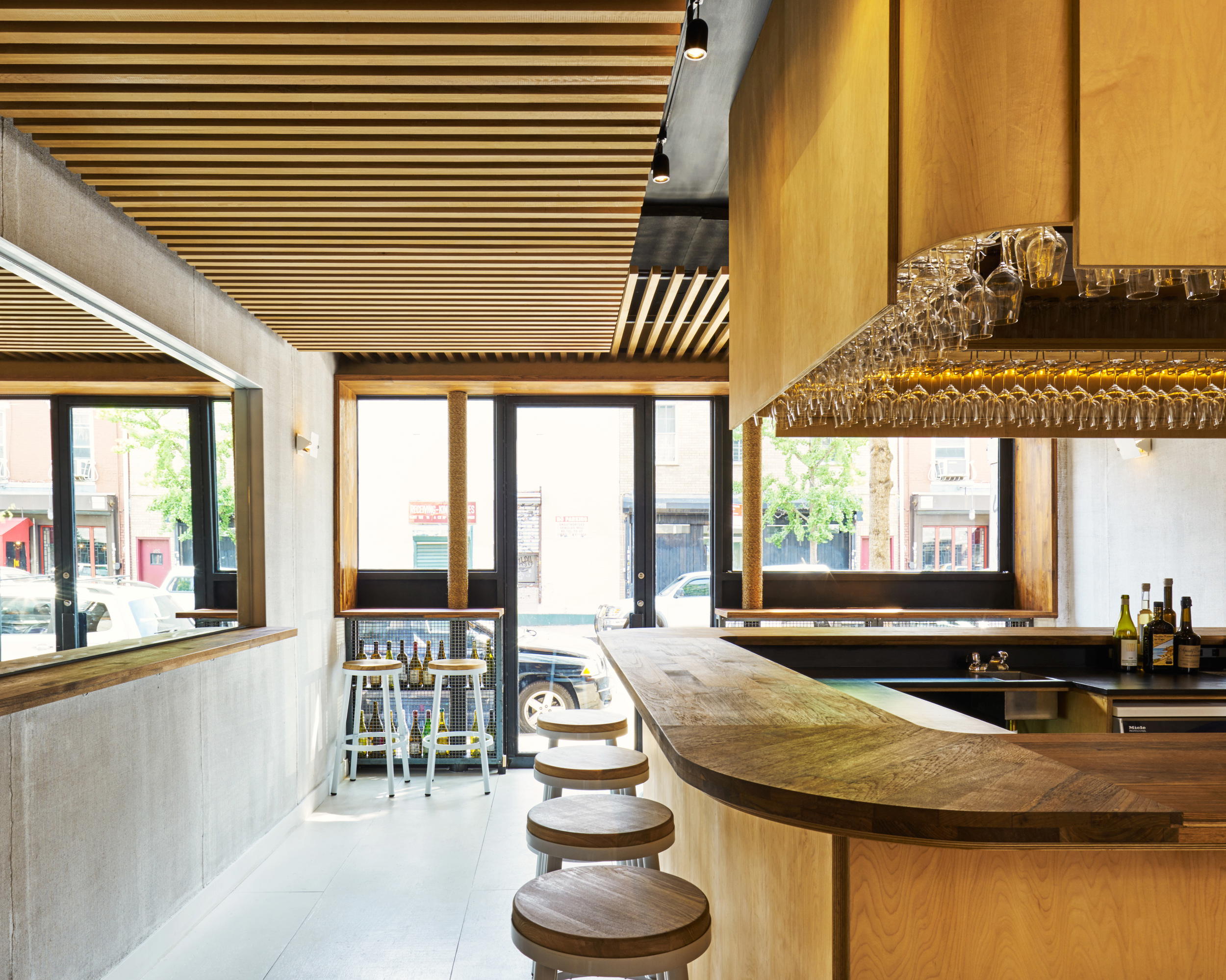
Bars in New York City
Browse all →
Hotels in New York City
Browse all →






At a Glance
- Classic
- Rustic
- Well Known
- Energetic
- Casual Hangout
- Group Dining
- Family
- Open Kitchen
- Historic Building
- Standalone