
Tabelog 100 #90
Our verdict
Chuka Soba Taiga belongs to Nagoya’s lean, high-turnover ramen culture: compact counter seating, breakfast service, and a sub-¥1,000 price point in the Meieki area. Its 2025 Tabelog 100 Ramen Aichi selection gives the shop a clear signal in a city where everyday noodle counters often carry more local weight than formal dining rooms.

Pearl is the En Primeur Club membership app, where members save venues, book tables and use the concierge.
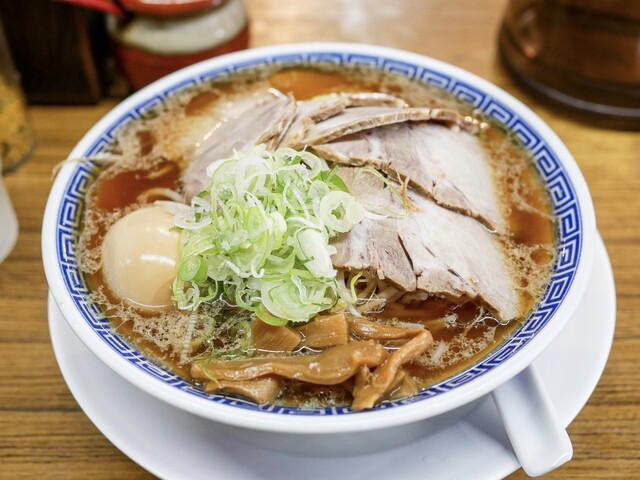
Morning ramen changes the rhythm of a city. Around Nagoya Station and the market-side blocks of Meieki, the day starts less with linen service than with shutters, steam, and counter stools turning over before office hours. Chuka Soba Taiga fits that grammar: a small ramen room built around counter seating rather than ceremony, where the physical experience is direct, compact, and governed by pace.
That spatial discipline matters in Nagoya. The city’s dining identity is often discussed through miso katsu, hitsumabushi, and kishimen, but its ramen culture rewards a different kind of literacy: reading queue behavior, counter flow, opening hours, and price ceilings. A shop selected for Tabelog 100 Ramen Aichi 2025 at under JPY 999 sits in a category where recognition is not about luxury cues. It signals consistency inside a crowded everyday format.
A compact counter built for speed, not lingering
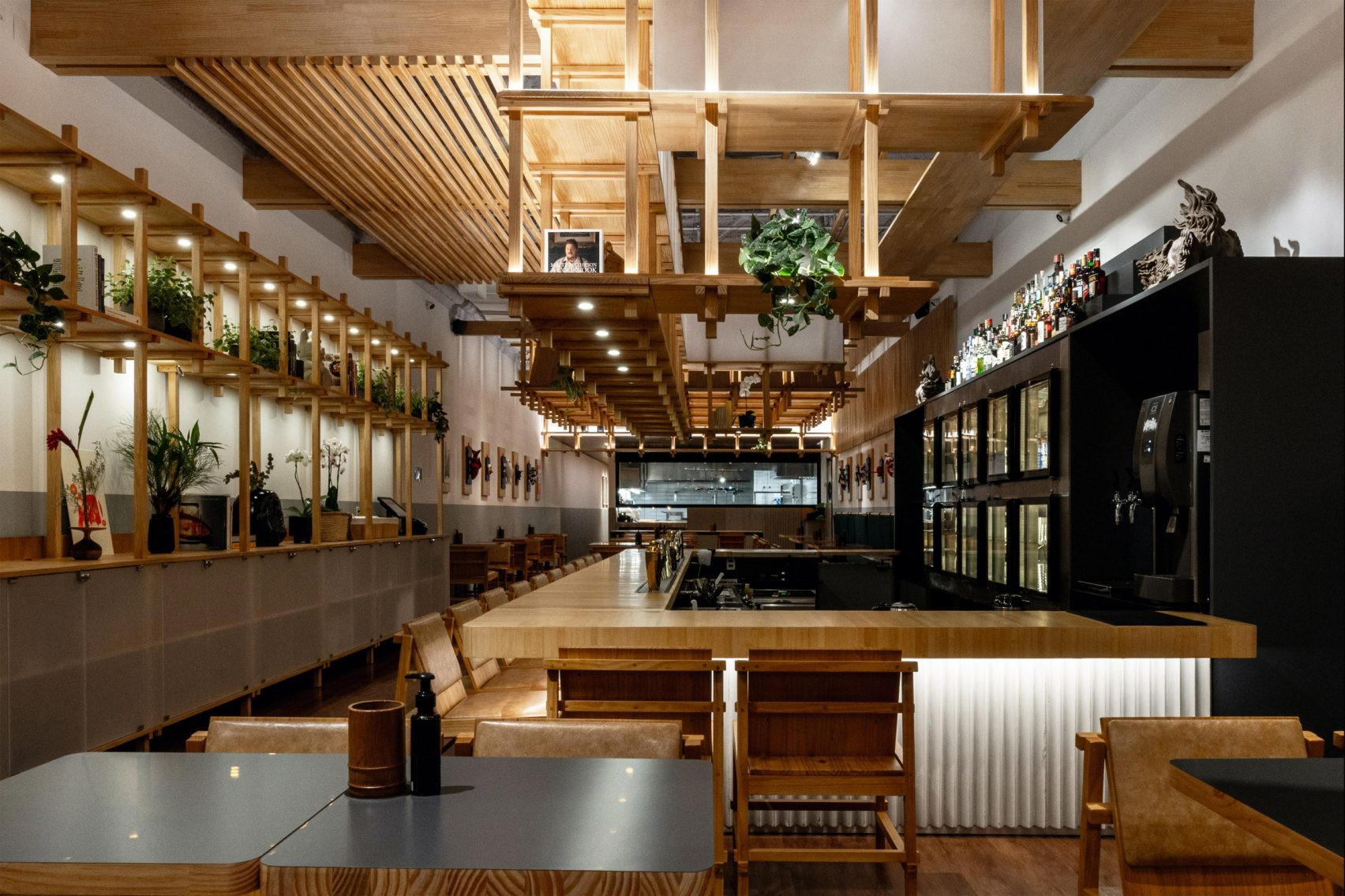
The room’s defining feature is its scale. Ten seats, with standing counter service and separate table seating noted before lunchtime, place the meal closer to a market-counter format than a conventional restaurant. That arrangement shapes the experience before the bowl arrives. Diners enter, order, eat, and move on; the architecture discourages long pauses and rewards decisiveness.
This is where ramen in Japan differs sharply from premium dining categories that dominate travel itineraries. At Yanagibashi Yakiniku Waniku, nearby beef dining moves into a higher spend bracket; Yakiniku & Teuchi Korean Cold Noodles Jiro Yanagibashi ten operates with a broader lunch-to-dinner range; Chuka Kappo Warajin belongs to a more formal Chinese-Japanese register. Chuka Soba Taiga, by contrast, belongs to the low-ticket, high-frequency counter tradition, the kind of place where the room itself enforces the rules.
That distinction is useful for visitors planning Nagoya meals across a day. The city can support both a serious dinner reservation and a quick ramen stop, but they should not be judged by the same criteria. Ramen counters trade in efficiency, repeatability, and a narrow promise. The Tabelog 100 recognition gives this address a public marker within Aichi’s ramen field, while the price point keeps it anchored to daily use rather than occasion dining.
Breakfast ramen and the Meieki market-side mood
Breakfast availability is not a decorative detail here. Early ramen belongs to a specific Japanese eating pattern: workers, travelers, solo diners, and market-adjacent regulars who want a hot, filling bowl before the day properly widens. In Nagoya’s station district, that format makes practical sense. Meieki has hotels, office towers, underground shopping corridors, and transport churn; a compact ramen counter can serve a different audience at 7 a.m. than it does near lunch.
The location near Kokusai Center and the Nagoya Station orbit also places the shop in a useful corridor for travelers who do not want to surrender a major meal slot. This is not the theatrical side of Japanese dining. It is the side where design, timing, and price do much of the editing. Counter seating keeps the exchange short; non-smoking status suits a quick morning or midday stop; QR payments add a modern convenience even as cards and electronic money are not part of the payment mix.
Within Nagoya’s broader restaurant map, that makes the shop a functional counterpoint to heavier meals. Yanagibashi Wa nico shares the sub-¥1,000 affordability bracket, while Kiwami sits in a higher dinner range with a modest lunch band. The lesson is not that one format outranks another. It is that Nagoya’s appeal comes from switching registers: market ramen in the morning, regional specialties at lunch, and charcoal, kappo, or yakiniku after dark.
How to place it in a Nagoya itinerary
The strongest use case is a short, focused meal in the station area, especially when the day involves onward rail travel or a packed city schedule. Reservations are unavailable, which suits the format: this is a walk-in ramen counter, not a table-management exercise. Sunday and public-holiday closures shape the week, while the early schedule makes weekday and Saturday mornings the natural window.
For readers building a wider Nagoya plan, Chuka Soba Taiga works better as a precision stop than a destination evening. Pair it with deeper city scouting through Our full Nagoya restaurants guide, then map drinks, hotels, producers, and cultural time separately through Our full Nagoya hotels guide, Our full Nagoya bars guide, Our full Nagoya wineries guide, and Our full Nagoya experiences guide.
For adjacent restaurant research, compare compact Nagoya formats and wider Japanese casual dining through 1022, 451, Aaron, Alan., and All Day Dining Montmartre. Broader Japan and diaspora references can be useful too: -Grilled beef Sukiyaki- KAMAKURA TANUKIAN 鎌倉 たぬき庵 in Kamakura. 鮪と炭火焼き うお炭 秋葉原店 in Tokyo.cafe in Osaka.know in Kumamoto, (Shoku) Vietnam in Kawasaki, [Curry Senmon Ten] Maruyama Kyoju. in Sapporo, Jōdo Saké Bar in Los Angeles, and Onigiri Time in Pasadena.
The editorial read is clear: this is a Nagoya ramen stop where the container is part of the appeal. Ten seats, a counter-led room, breakfast availability, and Tabelog 100 Ramen Aichi 2025 recognition put it in the city’s practical, high-signal noodle tier rather than its celebratory dining tier. Treat it accordingly and it makes sense.
Frequently asked questions
What's the pricing like at Chuka Soba Taiga?
Pricing at Chuka Soba Taiga is listed as - JPY 999.
What's the address for Chuka Soba Taiga?
Chuka Soba Taiga is located in Nagoya.
Is Chuka Soba Taiga open every day?
Hours at Chuka Soba Taiga: Mon: 6 AM–2 PM; Tue: 6 AM–2 PM; Wed: 9 AM–2 PM; Thu: 6 AM–2 PM; Fri: 6 AM–2 PM; Sat: 6 AM–2 PM; Sun: Closed.
What's the defining dish or idea at Chuka Soba Taiga?
The draw is ramen served in a compact 10-seat counter format in Nagoya’s Meieki district. It is selected for Tabelog Ramen AICHI 2025, and the opening hours show an early-service rhythm that suits breakfast ramen and quick midday dining.
Is Chuka Soba Taiga allergy-friendly?
The venue is a ramen counter, so the format is focused on a narrow service style rather than custom menus. For guests with allergies, the sensible move is to confirm ingredients before ordering, especially with a kitchen built around noodles and broth.
Is Chuka Soba Taiga a family-friendly restaurant?
Yes, the public record explicitly lists children as welcome, with school-age children accepted. The 10-seat counter in Nagoya also makes it a straightforward stop for families who want a quick ramen meal near Kokusai Center Station. Check the venue's official channels for the latest details.
Similar Picks
Side-by-side context: comparable cuisine and price.
| Venue | Cuisine | Price | Awards | Notes |
|---|---|---|---|---|
| Chuka Soba TaigaThis venue (the venue you are viewing) | Traditional Japanese Ramen (Chuka Soba) | $1–10 | Tabelog 100 #90 | Not listed |
| Yanagibashi Yakiniku Waniku | Kobe Beef Yakiniku Kaiseki | $50–100 | Tabelog 100 #20 | JPY 10,000 - JPY 14,999 JPY 3,000 - JPY 3,999 |
| Yakiniku & Teuchi Korean Cold Noodles Jiro Yanagibashi ten | A5 Wagyu Yakiniku & Handmade Korean Cold Noodles | $50–100 | Tabelog 100 #26 | JPY 6,000 - JPY 7,999 JPY 1,000 - JPY 1,999 |
| Chuka Kappo Warajin | Chinese kappo with Japanese sensibility | Not listed | Tabelog 100 #61 | JPY 8,000 - JPY 9,999 |
| Yanagibashi Wa nico | Niboshi-focused Ramen Shop with Morning Ramen | $10–20 | Tabelog 100 #96 | JPY 999 - JPY 999 |
| Kiwami | Standing Edomae Sushi Bar | $30–50 | Tabelog 100 #42 | JPY 6,000 - JPY 7,999 JPY 1,000 - JPY 1,999 |
Recognition history
Dated appearances from independent guides and award organizations, with the underlying list record or original source where available.
Tabelog 100 #90 · No. 90
Tabelog · Tabelog 100 - Ramen - AICHI - 2025
Continue exploring
More in Nagoya
Restaurants in Nagoya
All restaurants in Nagoya →
Details
- Lively
- Classic
- Solo
- Casual Hangout
- After Work
- Standalone
- Beer Program
- Street Scene
- A La Carte
- Counter Dining
- Beer
Current opening hours
- Monday
- 6 AM–2 PM
- Tuesday
- 6 AM–2 PM
- Wednesday
- 9 AM–2 PM
- Thursday
- 6 AM–2 PM
- Friday
- 6 AM–2 PM
- Saturday
- 6 AM–2 PM
- Sunday
- Closed
Hours can change for holidays and private events. Hours as of .