
Our verdict
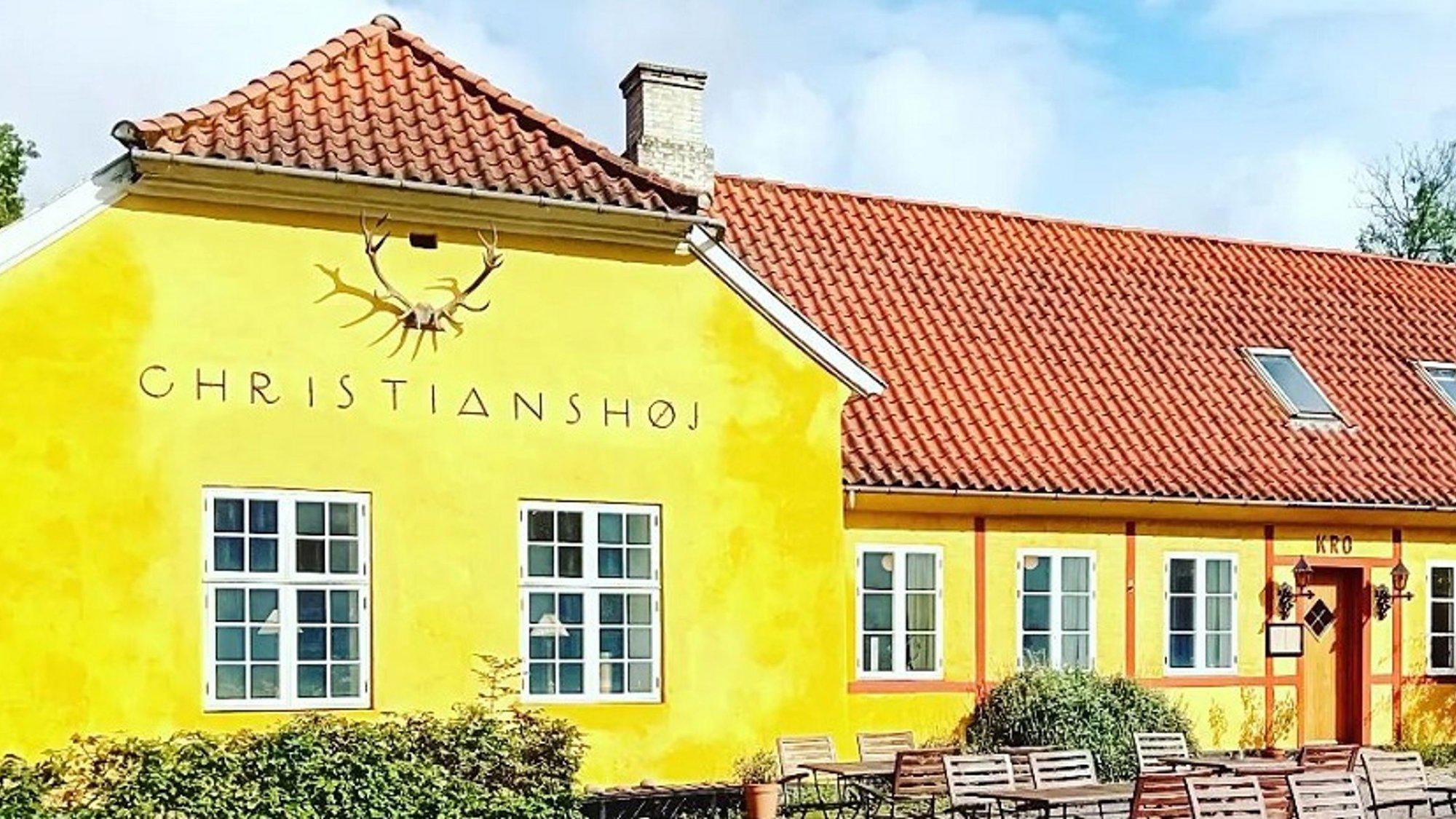
Christianshøjkroen sits along Segenvej in Aakirkeby, in the agricultural interior of Bornholm, an island whose short supply chains and distinct local produce have shaped a dining culture unlike anywhere else on Danish soil. The kroen format, a traditional Danish inn with roots in rural hospitality, positions this address within a category that prizes locality and seasonal rhythm over metropolitan polish.

Pearl is the En Primeur Club membership app, where members save venues, book tables and use the concierge.
Where Bornholm's Interior Meets the Kro Tradition
Approach Aakirkeby from the coast road and the landscape shifts quickly: the chalk-white round churches that dot Bornholm's interior mark a different pace than the harbour towns that draw most visitors to Denmark's easternmost island. Segenvej 48 sits inside that quieter geography, where the kroen, the Danish country inn, remains one of the more durable formats in Scandinavian rural hospitality. The kro is not a contemporary invention. It evolved over centuries as a waystation for travellers moving between parishes, and its architecture and function often reflect that layered history: low ceilings, thick walls, a hearth culture built around the assumption that the weather outside is not cooperating. Christianshøjkroen occupies that tradition and, by extension, asks to be read against it rather than against Copenhagen's restaurant scene.
Bornholm's Supply Chain Advantage
The editorial case for Bornholm as a food destination rests primarily on geography and agricultural density. The island covers roughly 588 square kilometres, which means the distance between farm, smokehouse, or fishing boat and a kitchen on Segenvej is measured in minutes rather than hours. That compression matters in ways that urban restaurants cannot easily replicate: produce arrives with less transit stress, seasonal windows are tighter and more legible to kitchen teams that deal with the same growers year after year, and the culinary identity of the island remains distinctly tied to what the land and sea actually produce rather than what commodity supply chains make available.
Bornholm's smoked herring, røget sild, is among the most documented examples of this local specificity. The island's smokehouses, several of which have operated for over a century, process herring in ways that reflect accumulated local technique rather than industrial standardisation. Similarly, Bornholmer tomatoes have earned regional recognition for their quality during the short summer window, and the island's lamb, grazed on coastal heath, carries a flavour profile shaped by that particular terroir. Any serious kro kitchen in this part of the island operates within proximity to all of these inputs, and the sourcing decisions made by that kitchen are consequently more visible and more consequential than in most urban contexts. This is part of what makes the kroen format on Bornholm different from its mainland counterparts.
For comparative context, the broader movement toward hyper-local sourcing in Scandinavian fine dining is well-documented through addresses like Jordnær in Gentofte and Geranium in Copenhagen, both of which have made provenance a structural part of their identity. On Bornholm, the same principle operates at the kro level, where the supply chain is shorter and the price tier is typically more accessible. That contrast, sourcing quality without fine-dining pricing, is one of the more interesting tensions in Danish regional dining right now.
The Kro Format in Context
Denmark has a small but well-regarded cohort of destination inns that have repositioned the kro format upward without losing the warmth that defines the category. Henne Kirkeby Kro in Henne is the most cited example, holding Michelin recognition while retaining the physical and atmospheric register of a rural inn. Frederiksminde in Præstø follows a similar logic on Zealand. These venues have demonstrated that the format can carry serious culinary ambition without becoming a metropolitan restaurant that happens to be located in the countryside.
Christianshøjkroen sits within this broader category conversation. The address in Aakirkeby places it in the island's administrative centre, a town defined more by its medieval round church and market function than by tourism infrastructure. That positioning is meaningful: visitors who make the journey to this part of the island are typically there for the island itself rather than for a specific dining spectacle, which shifts the dynamics of how a kro kitchen can operate. The audience self-selects for engagement with place.
Other strong regional addresses across Denmark worth knowing as comparative references include Ti Trin Ned in Fredericia, Dragsholm Slot Gourmet in Hørve, LYST in Vejle, and Frederikshøj in Aarhus, all of which have established credible regional identities outside the Copenhagen orbit. On a smaller scale, Tri in Agger and Pearl by Paul Proffitt in Kruså represent a similar peripheral-but-purposeful positioning. Internationally, the model of high-intent destination dining in rural settings finds expression in places like Lazy Bear in San Francisco, where format and sourcing combine to define the experience.
Planning a Visit
Aakirkeby is located in Bornholm's southern interior, accessible from Rønne, the island's main port, in approximately 15 minutes by car. Ferry services connect Rønne with Copenhagen (Køge) and the Swedish coast at Ystad, with crossing times ranging from roughly 80 minutes on the fast ferry from Ystad to around six hours from Køge. Given the limited public transport options within the island itself, a rental car is the practical choice for visitors based in Rønne or arriving from the ferry terminal. The address at Segenvej 48 sits just outside the town centre, in the kind of semi-rural setting typical of Bornholm's agricultural parishes.
Because specific hours, booking requirements, and current pricing for Christianshøjkroen are at time of writing, we recommend contacting the venue directly or consulting our full Akirkeby restaurants guide for updated operational details. Other Danish addresses with confirmed include Syttende in Sønderborg, Domæne in Herning, ARO in Odense, Parsley Salon in Hellerup, and Alimentum in Aalborg. For international comparison points in the premium category, Le Bernardin in New York City illustrates how sourcing specificity operates at the highest tier.
Frequently asked questions
Does Christianshøjkroen work for a family meal?
The kro format is historically one of Denmark's most family-accommodating dining structures, built around long tables and unhurried service rather than tasting-menu formality. Christianshøjkroen sits on Segenvej in Aakirkeby, a quiet southern Bornholm town with no pretension toward destination-restaurant theatre. That combination typically suits multi-generational groups better than coastal or urban venues angling for a different crowd.
What should I expect atmosphere-wise at Christianshøjkroen?
Kro inns in Denmark's interior carry a specific register: low ceilings, functional warmth, and a pace set by the kitchen rather than a floor manager with a tablet. Christianshøjkroen on Segenvej in Aakirkeby fits that template geographically, situated inland away from Bornholm's busier coastal tourist belt. The surrounding area, marked by the island's distinctive round churches, reinforces the sense of a place oriented toward locals and returning visitors rather than first-time walk-ins.
How far is Christianshøjkroen from Rønne, and is it easy to reach without a car?
Christianshøjkroen is located at Segenvej 48 in Aakirkeby, which sits roughly 15 minutes by car from Rønne, Bornholm's main ferry port. Public bus connections link Rønne to Aakirkeby, though frequency drops significantly outside peak season. For visitors arriving by ferry from Copenhagen or Ystad, hiring a car in Rønne gives the most reliable access to this southern interior part of the island.
What's the signature dish at Christianshøjkroen?
What is documentable is that Bornholm's agricultural density gives any serious local kitchen access to island-raised produce, smoked fish from the island's smokehouses, and lamb grazed on its heathland. Any visit is the practical way to establish what the kitchen is currently leading with.
Where is Christianshøjkroen in Akirkeby?
Christianshøjkroen is located at Segenvej 48, 3720 Aakirkeby, Denmark, Akirkeby.
Is Christianshøjkroen reservation-only?
Danish kro venues outside the major cities vary widely on this: some operate a walk-in culture, others hold tables strictly by reservation especially in peak summer months when Bornholm sees significant ferry traffic from Copenhagen. Contacting the venue directly ahead of arrival is the safest approach, particularly if visiting between June and August.
What's Christianshøjkroen best at?
The kro format Christianshøjkroen occupies is at its strongest when it delivers exactly what the tradition promises: straightforward Danish cooking, a sense of place, and no performance beyond that. Aakirkeby is Bornholm's administrative centre and inland hub, which means the venue draws a local clientele rather than relying on seasonal tourism alone. That regulars-first dynamic tends to keep kitchens honest.
Comparable Spots, Quickly
Comparable venues nearby, for context on price, style, and recognition.
| Venue | Cuisine | Price | Awards | Notes |
|---|---|---|---|---|
| ChristianshøjkroenThis venue (the venue you are viewing) | Traditional Danish Smørrebrød | Not listed | Not listed | Not listed |
| Kadeau Bornholm | Bornholm Nordic Fine Dining | $150–200 | 1 Michelin Star · Star Wine List | Åkirkeby |
| Almanak | Modern Danish Nordic | $50–100 | Not listed | Indre By |
| Lumskebugten | Traditional Danish with Modern French Influences | $50–100 | White Guide Denmark Restaurants - Masters Level | Indre By |
| Christianshavns Færgecafé | Classic Danish | $30–50 | Not listed | Indre By |
| Skoemagerkroen | Traditional Danish & Modern Scandinavian | Not listed | Not listed | Kirke Saaby |
Recognition history
Dated appearances from independent guides and award organizations, with the underlying list record or original source where available.
White Guide Denmark Restaurants - Very Fine Level
White Guide
Continue exploring
More in Åkirkeby
Restaurants in Åkirkeby
All restaurants in Åkirkeby →
Hotels in Åkirkeby
Browse all →
Details
- Cozy
- Rustic
- Scenic
- Casual Hangout
- Family
- Historic Building
- Local Sourcing
- A La Carte
Cozy and relaxed atmosphere in a historic forest cottage with eventyrlige ro (enchanting forest tranquility).