Skoemagerkroen
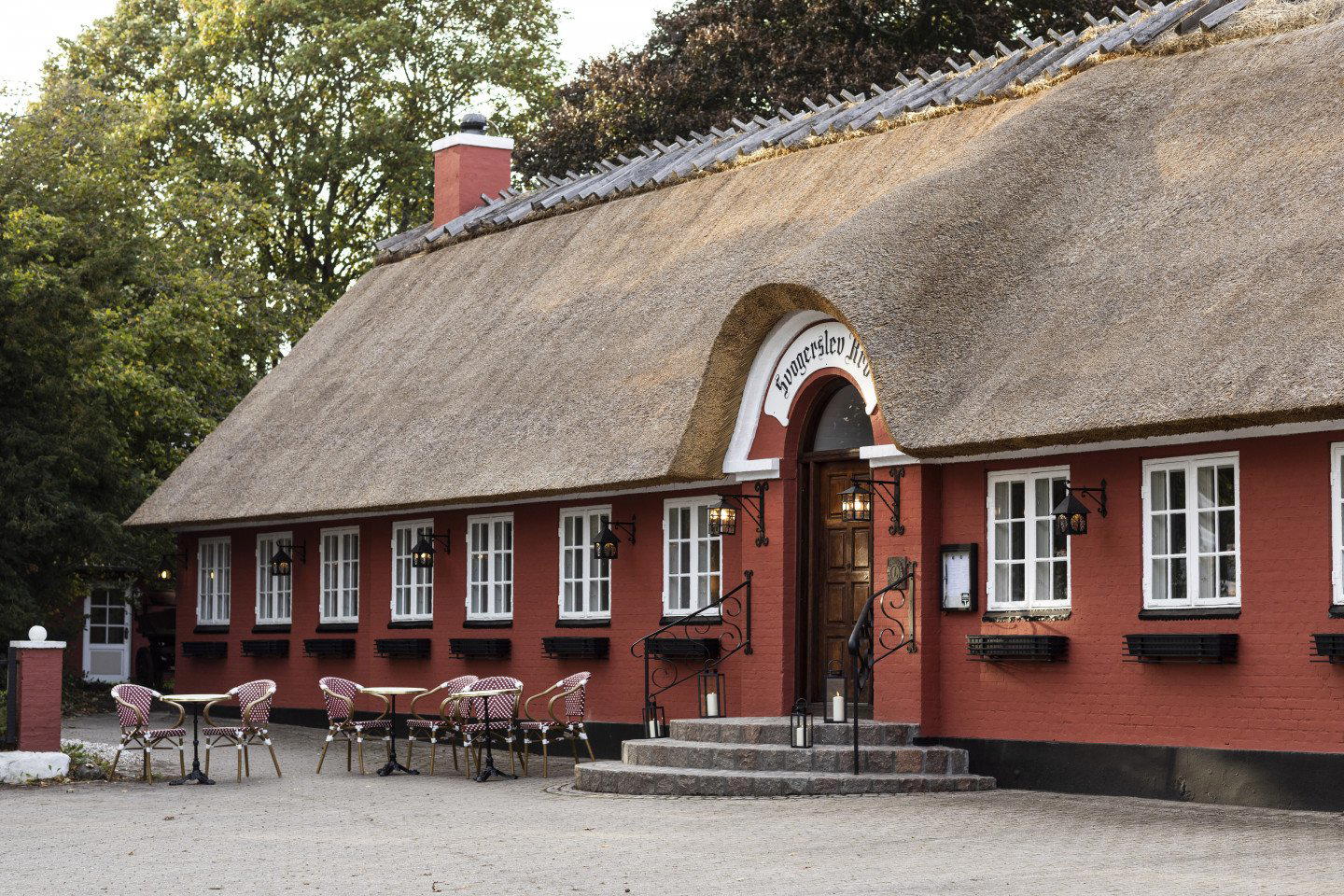
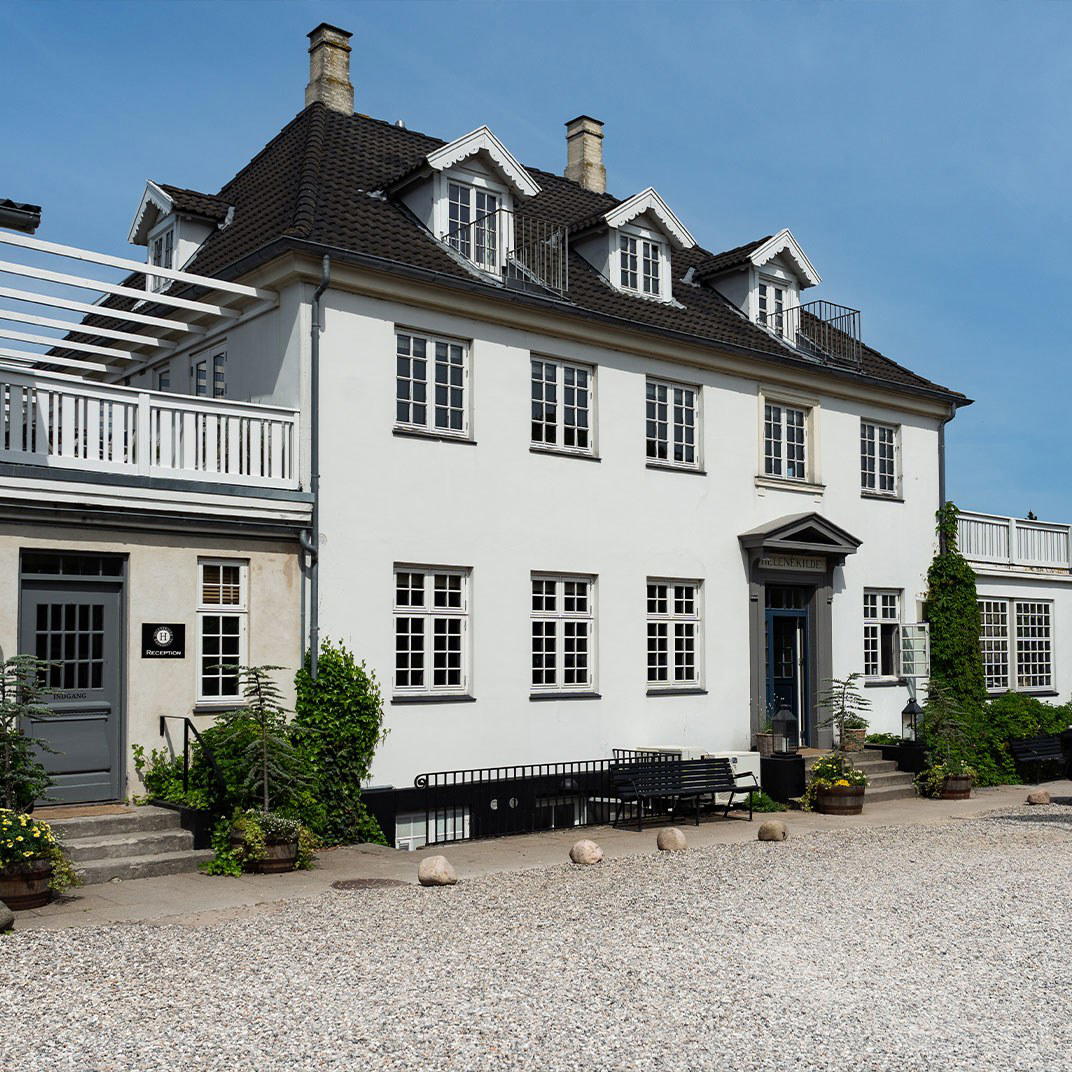
Skoemagerkroen sits in Kirke Såby, a rural Zealand village where Denmark's tradition of the landsby kro, the country inn at the crossroads, has shaped local hospitality for centuries. The setting places it within a broader pattern of destination dining outside Copenhagen, where sourcing proximity and regional character carry more weight than urban spectacle. For travellers already tracing Denmark's provincial fine-dining circuit, it belongs on the itinerary alongside similar rural properties.
Pearl is the En Primeur Club membership app — saves, bookings, and concierge access live there. Same editors, same standards.
- Address
- Landevejen 4, 4060 Kirke Såby, Denmark
- Phone
- +4546491930
- Website
- skoemagerkroen.dk
- Directions
- Get directions
 Saves & bookings on Pearl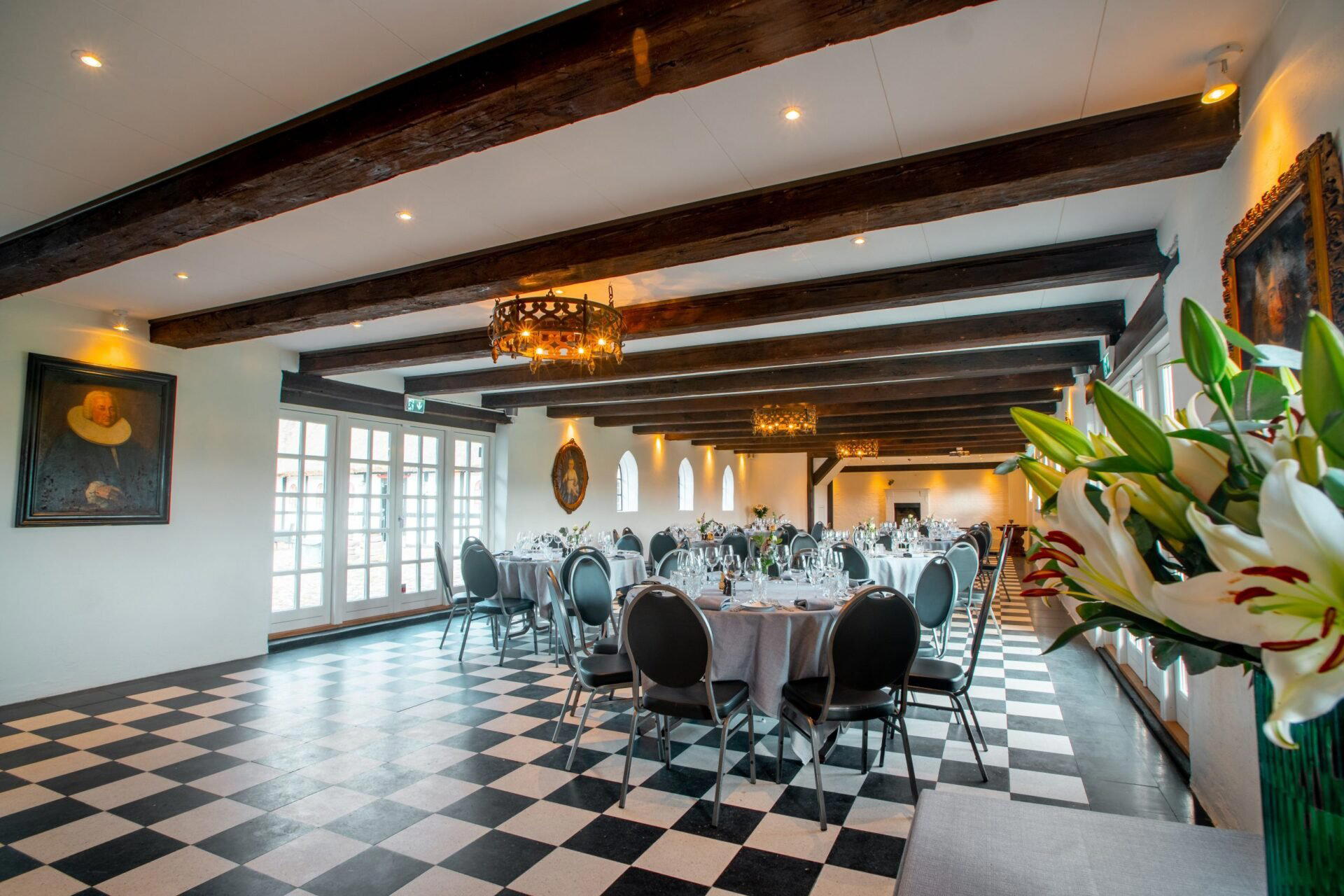
A Country Road, a Crossroads, and the Logic of the Kro
Skoemagerkroen is a restaurant in Kirke Såby, Denmark, at Landevejen 4, serving Traditional Danish and Modern Scandinavian cuisine. The kro, Denmark's traditional country inn, positioned historically at crossroads to serve travellers and local communities alike, is one of the country's oldest hospitality formats, and addresses like Landevejen 4 carry that institutional weight. The name Landevejen translates simply as 'the country road,' which tells you something about the relationship between place and purpose here. You are not arriving at a destination that has been constructed around the idea of destination dining; you are arriving somewhere that has existed in dialogue with its surrounding land from the beginning.
That distinction matters when you consider the broader arc of Danish dining. Copenhagen's top tier, represented by properties like Geranium in Copenhagen and Jordnær in Gentofte, has spent two decades building a global reputation on the back of hyper-local sourcing and Nordic produce philosophy. That movement did not begin in restaurant kitchens; it drew intellectual energy from the fact that Denmark's agricultural and coastal geography is genuinely notable. The kro tradition pre-dates New Nordic as a concept by several hundred years, but it operated on the same underlying logic: cook what the land and the season give you, and do it with care.
Ingredient Sourcing and the Rural Zealand Larder
Zealand's agricultural character is distinct within Denmark. The island sits on some of the country's most fertile soil, with a range of mixed arable farms, beech forests, and a coastline that runs to both the Øresund and the inner fjords. For a kitchen operating from Kirke Såby, the sourcing radius is dense with possibility: root vegetables and brassicas from the surrounding fields, game from the managed woodlands, and freshwater and coastal fish from the inland lakes and Isefjord to the north. This is not the dramatic coastal foraging geography of western Jutland that defines places like Henne Kirkeby Kro in Henne, but it is a different kind of agricultural richness, quieter, more pastoral, defined by proximity rather than drama.
The kro format, at its most serious, has always been inseparable from its supply lines. The inn that fed travellers on the Landevejen did so because farmers delivered to its door, because the kitchen preserved and pickled through winter, because the cellar held what the harvest allowed. Contemporary rural Danish kitchens that take this tradition seriously tend to be defined less by technical ambition than by sourcing discipline, knowing where every component originates, working within seasonal constraints rather than around them. This is a different kind of restaurant intelligence than the kind that animates the multi-course progressive menus at Frederikshøj in Aarhus or the destination resort experience at Dragsholm Slot Gourmet in Hørve, but it is no less demanding.
Provincial Denmark's Dining Circuit
The appetite for serious food outside Copenhagen has matured considerably over the past decade. Denmark now has recognised destination restaurants distributed across its geography in a way that would have seemed improbable in 2005, when the country's fine-dining credibility was almost entirely concentrated in the capital. Properties like Alimentum in Aalborg, ARO in Odense, LYST in Vejle, and MOTA in Nykøbing Sjælland have established that serious cooking is no longer a metropolitan privilege. On Zealand specifically, the geography favours short drives from Copenhagen to reach a fundamentally different dining register, one where the silence of a rural setting and the proximity of the source material are themselves part of what is being offered.
Kirke Såby sits roughly an hour west of Copenhagen by car, placing it within range of a day trip for capital residents but sufficiently removed to feel like a genuine departure. The village has the character of rural central Zealand rather than the more visited coastline or the capital's commuter belt: it is agricultural, unhurried, and without the self-consciousness that comes with being on an established tourist route. For dining, that translates into a context where the audience is likely local and regional rather than international, and where the kitchen's relationship to its community carries more narrative weight than any award citation. This pattern echoes what has made similarly positioned rural properties like Frederiksminde in Præstø and Domæne in Herning compelling to travellers willing to move beyond obvious stops.
The Kro in Context
To understand what Skoemagerkroen represents, it helps to consider the category it occupies. The Danish kro at its traditional core is neither a fine-dining restaurant in the contemporary sense nor a simple pub: it is a hospitality institution with roots in the 17th and 18th centuries, licensed to serve travellers at a time when road networks were the arteries of commercial life. The leading surviving examples of the format retain the warmth and informality that made the kro a community anchor, while applying contemporary kitchen standards to the food. At their most coherent, they represent a form of hospitality that urban dining cannot replicate, slower, more rooted, oriented around the rhythms of the surrounding land rather than the expectations of a metropolitan clientele.
This is a different ambition from what drives a counter like Parsley Salon in Hellerup or the precision-oriented cooking at Pearl by Paul Proffitt in Kruså, and it should be evaluated accordingly. The point of comparison for a rural kro is not Copenhagen's top tier or the technical ambition of something like Syttende in Sønderborg, it is the quality of the sourcing, the honesty of the cooking, and the integrity of the setting. Those are the terms on which the kro tradition earns its place in Denmark's broader dining story, and they are terms worth taking seriously.
Travellers building an itinerary around Denmark's provincial dining circuit will find relevant context in our full Kirke Såby restaurants guide, which maps the area's options across categories. For those approaching from the ambition end of the spectrum, Copenhagen to rural Zealand as a deliberate detour rather than an accidental one, the logic of the kro format, with its emphasis on place, season, and sourcing, is worth understanding before you arrive. It is a different kind of restaurant intelligence than what you encounter at Villa Vest in Lønstrup or in the international register of Le Bernardin in New York City and Atomix in New York City, but on its own terms, it is no less worth seeking out.
Planning Your Visit
Skoemagerkroen is located at Landevejen 4, 4060 Kirke Såby, Denmark. The address places it directly on the main road through the village, consistent with the crossroads logic of the traditional kro.
How It Stacks Up
Comparable venues nearby, for context on price, style, and recognition.
| Venue | Cuisine | Price | Notes |
|---|---|---|---|
| SkoemagerkroenThis venue — the venue you are viewing | Traditional Danish & Modern Scandinavian | $$ | Not listed |
| KILDEN i haven | Modern Danish Bistro | $$ | Indre By |
| Under Uret | Traditional Danish Smørrebrød | $$ | Indre By |
| Restaurant L'øst | Modern Scandinavian Grill | $$ | Midtbyen |
| Gothersgade 87 | Nordic Danish Wine Bar | $$ | Indre By |
| Restaurant Store Børs | Seasonal Danish | $$$ | Roskilde Harbor |
Continue exploring
More in Kirke Saby
Restaurants in Kirke Saby
Browse all →
Bars in Kirke Saby
Browse all →
Hotels in Kirke Saby
Browse all →

At a Glance
- Rustic
- Cozy
- Historic
- Classic
- Family
- Casual Hangout
- Special Occasion
- Historic Building
- Local Sourcing
Authentic historical interiors evoking Danish heritage with an idyllic, quaint atmosphere.