

1 Michelin Star · Gault & Millau Remarkable Restaurant
Our verdict
A Michelin-starred address in the Basque village of Espelette, Choko Ona earns its recognition through rigorous local sourcing and a kitchen garden visible from the dining room. The menu reads as a map of the surrounding terrain: piment d'Espelette, ewe's milk Tomme, Arto Gorria corn, and langoustines from nearby waters. At €€€, it occupies the serious end of regional dining without the remove of a destination-only institution.

Pearl is the En Primeur Club membership app — saves, bookings, and concierge access live there. Same editors, same standards.
- Address
- 155 rue Xerrendako bidea, 64250 Espelette, France
- Phone
- +33 5 59 15 71 65
- Hours
- Mon ClosedTue 12:15–1:30 PM, 8–9:30 PMWed ClosedThu–Sat 12:15–1:30 PM, 8–9:30 PMSun Closed
- Website
- choko-ona.fr
- Directions
- Get directions
- Booking
- Book on Zenchef
Espelette at the Table
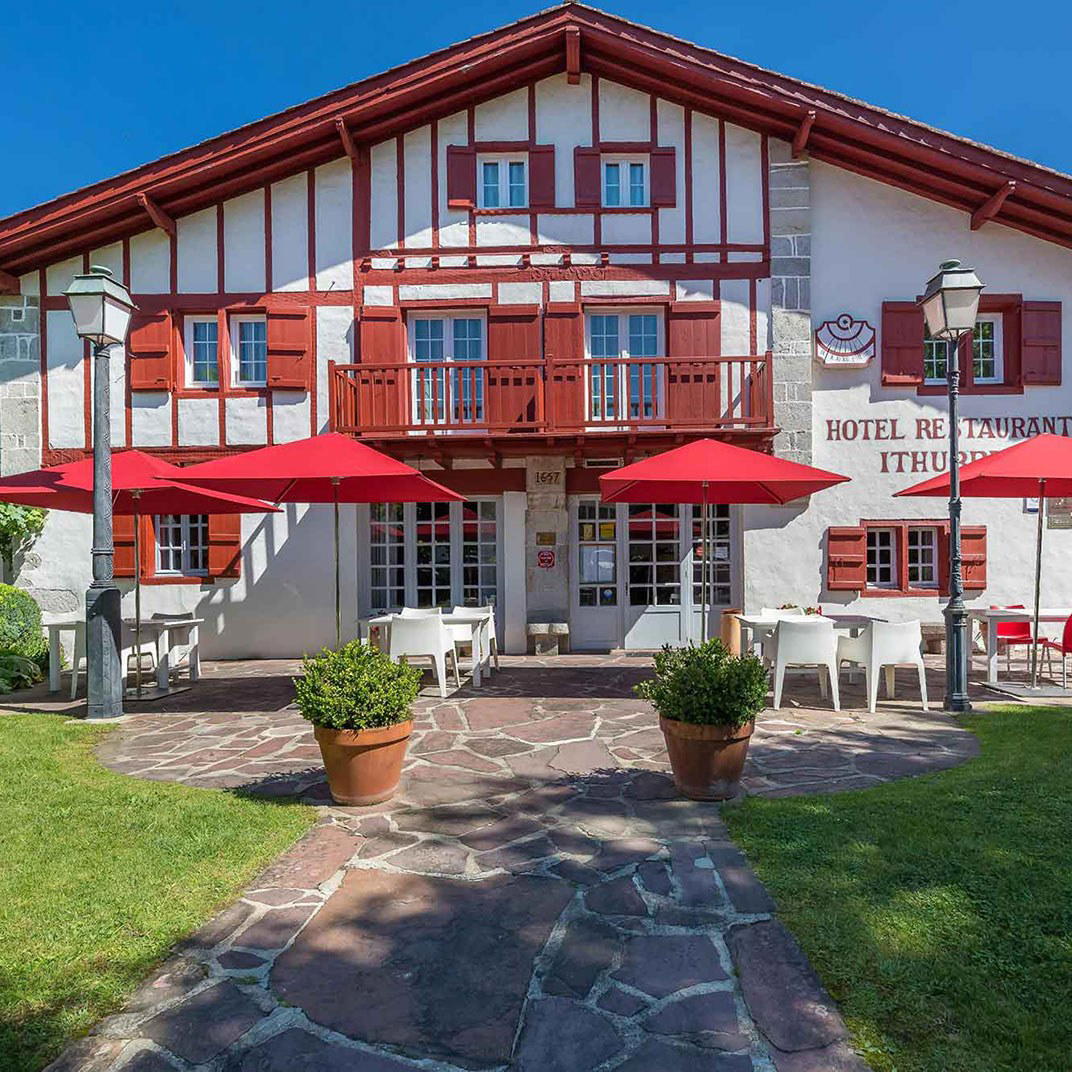
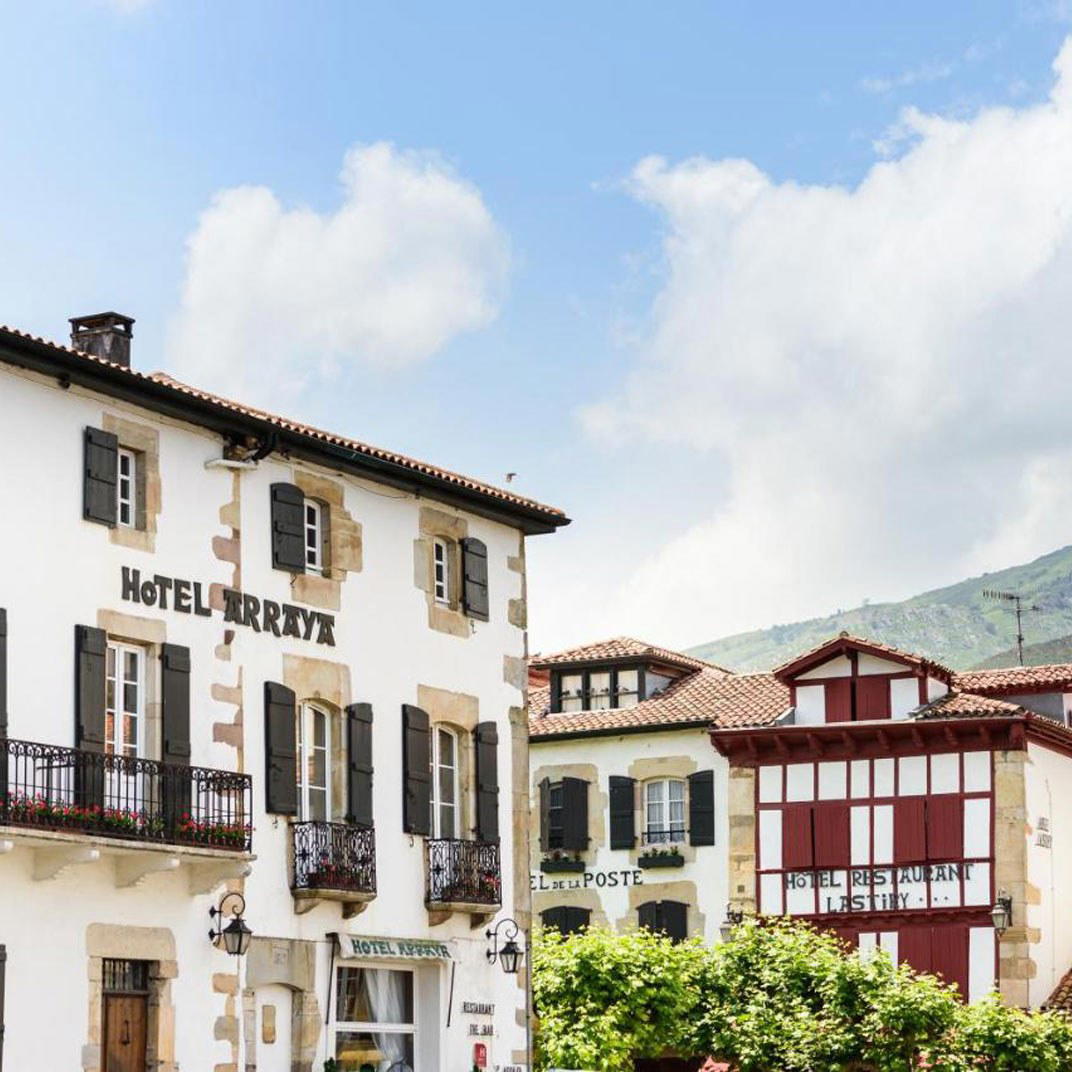
The village of Espelette is leading known beyond France for a single product: the piment d'Espelette, the slender red pepper that dries in long strings across the whitewashed facades of Labourd farmhouses every autumn. That image has become so associated with Basque Country tourism that the pepper risks becoming a souvenir rather than an ingredient. What Choko Ona does is insist on taking it seriously, folding the pepper back into a contemporary cooking framework where it functions as flavour architecture rather than regional decoration.
The restaurant sits at 155 rue Xerrendako bidea, in the heart of a village that rewards arriving on foot. The approach through Espelette's historic centre, past the pepper-draped facades and the Château des Barons d'Ezpeleta, sets the register before you reach the dining room. This is not a venue that exists despite its location; it is continuous with it.
A Kitchen Garden as Sourcing Manifesto
French fine dining has long traded on the idea of terroir, but the word has been applied so liberally, from Burgundy to the Basque coast, that it can arrive at a table stripped of specific meaning. What separates the more rigorous operations from the rhetorical ones is whether the sourcing claims have a physical address. At Choko Ona, the kitchen garden of herbs and aromatic flowers is visible from the dining room tables. That transparency is not incidental; it is the argument made visible.
The menu extends that argument outward from the garden into the surrounding region. White asparagus arrives gently grilled on the barbecue and served with ewe's milk Tomme, a pairing that draws on the pastoral agriculture of the Pyrenean foothills where sheep farming and asparagus cultivation share the same seasonal calendar. Langoustines, seared and placed in a saffron broth, point toward the Atlantic coast, the Basque fishing ports that sit within a relatively short reach of the village. Braised confit foie gras accompanied by an Arto Gorria corn foam anchors the menu in specifically Basque agricultural heritage; Arto Gorria is a heritage corn variety native to the region, its use here a choice that prioritises genetic continuity over standardised product.
This kind of sourcing specificity places Choko Ona in a category of French regional cooking that is doing something different from the broader one-star field. Compare it against the metropolitan register of, say, Alléno Paris au Pavillon Ledoyen in Paris or the mountain-inflected precision of Flocons de Sel in Megève, and what emerges is a different set of priorities: not the maximalist creative ambition of a three-star urban institution, but a sustained commitment to a circumscribed geography. The closest analogy in French dining's wider landscape might be Bras in Laguiole, where the Aubrac plateau exerts an almost gravitational pull on every dish. The scale of ambition differs, but the method, treating the landscape around the restaurant as the primary creative constraint, is recognisably similar.
Contemporary Technique in a Regional Frame
The Michelin Guide's designation of Choko Ona as "Remarkable" reflects a particular reading of the restaurant's project. The starred operations recognised in this register tend to be those where technique serves a coherent point of view rather than technique for its own sake. The dishes described in Michelin's own notes use words like "delicate" and "subtle" alongside "contemporary," which signals a kitchen operating at the restrained end of modern French idiom rather than the maximalist.
A restaurant in Espelette is making a different kind of argument: that the ingredients at hand, from the garden outside the window to the peppers drying on the village facades, justify a cooking register that does not need to compete with Mirazur in Menton or Troisgros - Le Bois sans Feuilles in Ouches on their terms.
The 2024 Michelin star, awarded after what the guide describes as a process of "perpetual rejuvenation" by Clément and Flora, reflects an ongoing project rather than a legacy resting position. That framing matters: Michelin's recognition here is of a kitchen still in active development, which for a restaurant of this scale in a village of this size represents a different kind of achievement than consolidating an existing reputation.
The Espelette Context
Dining seriously in the French Basque Country has historically required either travelling to Biarritz or Saint-Jean-de-Luz for coastal seafood restaurants, crossing into the Spanish Basque Country for the high-end pintxos circuit, or seeking out a small number of address-specific destinations in the interior. Espelette itself has functioned largely as a day-trip destination, its appeal concentrated in the annual pepper festival in October and the photogenic streets that attract visitors from nearby beach resorts.
A Michelin-starred restaurant in Espelette repositions the village slightly within that geography, giving it a reason to anchor a longer visit. For travellers organising time in the French Basque Country, Choko Ona offers a different register from the coastal seafood operations: a more agricultural, land-facing cuisine that reads the Pyrenean foothills and the Labourd interior rather than the Atlantic shoreline. If you are building an itinerary that spans both coasts and interior, the logic of including Espelette becomes clear. See our full Espelette restaurants guide for the broader picture, and our full Espelette hotels guide for where to stay if you plan to extend the visit beyond a single meal.
The village also has the advantage of proximity to some of the Basque Country's more interesting secondary producers: small-batch Txakoli makers, artisan cheesemakers working with the local Ossau-Iraty tradition, and cider producers operating in the Basque apple orchard belt. For those interested in the wider food and drink culture of the region, our full Espelette wineries guide, our full Espelette bars guide, and our full Espelette experiences guide map the surrounding offer.
Planning Your Visit
Choko Ona sits in the €€€ price range, placing it clearly in the serious-occasion bracket without reaching the €€€€ tier of the metropolitan three-star circuit, including addresses like AM par Alexandre Mazzia in Marseille, Assiette Champenoise in Reims, or Au Crocodile in Strasbourg. At this price point in a rural Basque village, the value calculus is favourable relative to comparable cooking in urban centres.
Given the restaurant's scale and single-star profile, booking ahead is advisable, particularly during the October pepper festival period when Espelette draws its largest visitor numbers. The address is 155 rue Xerrendako bidea, walkable from the village centre. For those combining Choko Ona with wider regional travel, the French Basque Country is most accessible by car; Biarritz and its airport sit approximately 30 kilometres to the northwest, and the Spanish border town of Irun is around 40 kilometres east along the coast. For context on how Choko Ona sits within the broader tradition of destination-led French regional dining, the work at Paul Bocuse - L'Auberge du Pont de Collonges in Collonges-au-Mont-d'Or represents the historical pole of that tradition, while more contemporary iterations can be found at Frantzén in Stockholm and FZN by Björn Frantzén in Dubai in the international modern register.
Frequently asked questions
Is Choko Ona a family-friendly restaurant?
Choko Ona sits in the €€€ price range and operates as a focused, ingredient-led Michelin-starred restaurant in a quiet Basque village. The setting suits adults and older children who can engage with a deliberate, course-by-course format. Families with young children would find the experience a poor fit for the pace and price.
How would you describe the vibe at Choko Ona?
Espelette is an agricultural village, not a resort town, and Choko Ona reflects that register: grounded and specific rather than formal or performative. The kitchen garden visible from the tables sets the tone — the focus is on what is growing and what is on the plate, not on the trappings of destination dining. The Michelin star sits quietly in that context.
Is Choko Ona Michelin-listed?
Choko Ona has received recognition including: Category: Remarkable; Clément and Flora are perpetually rejuvenating Choko Ona, with touches such as the kitchen garden of herbs and aromatic flowers that can be admired from the tables and tasted on your plate. And then of course there is ….
What do people recommend at Choko Ona?
The Michelin Guide's own notes supporting the 2024 one-star award single out the white asparagus grilled on the barbecue with ewe's milk Tomme, seared langoustine in saffron broth, and braised confit foie gras with an Arto Gorria corn foam — a Basque heritage variety. The throughline is local sourcing pushed into contemporary technique, with piment d'Espelette appearing as both seasoning and emblem of the menu's geography.
| Venue | Cuisine | Price | Awards |
|---|---|---|---|
| Choko OnaThis venue — the venue you are viewing | Modern French Basque Fine Dining | $50–100 | 1 Michelin Star · Gault & Millau Remarkable Restaurant |
| Alléno Paris au Pavillon Ledoyen | Creative | Not listed | Michelin 3 Star |
| Kei | Contemporary French, Modern Cuisine | Not listed | Michelin 3 Star |
| L'Ambroisie | French, Classic Cuisine | Not listed | Michelin 3 Star |
| Le Cinq - Four Seasons Hôtel George V | French, Modern Cuisine | Not listed | Michelin 3 Star |
| Plénitude | Contemporary French | Not listed | Michelin 3 Star |
Recognition history
Dated appearances from independent guides and award organizations, with the underlying list record or original source where available.
Michelin 1 Star
Michelin
Gault & Millau Remarkable Restaurant
Gault & Millau
Full recognition history (4 entries)
Michelin 1 Star
Michelin
Michelin 1 Star
Michelin
Continue exploring
More in Espelette
Restaurants in Espelette
Browse all →
Bars in Espelette
Browse all →
Details
- Elegant
- Sophisticated
- Cozy
- Rustic
- Special Occasion
- Date Night
- Open Kitchen
- Garden
- Extensive Wine List
- Farm To Table
- Local Sourcing
- Mountain
- Garden
- Tasting Menu
- Prix Fixe
Current opening hours
- Monday
- Closed
- Tuesday
- 12:15–1:30 PM, 8–9:30 PM
- Wednesday
- Closed
- Thursday
- 12:15–1:30 PM, 8–9:30 PM
- Friday
- 12:15–1:30 PM, 8–9:30 PM
- Saturday
- 12:15–1:30 PM, 8–9:30 PM
- Sunday
- Closed
Hours can change for holidays and private events. Last verified .
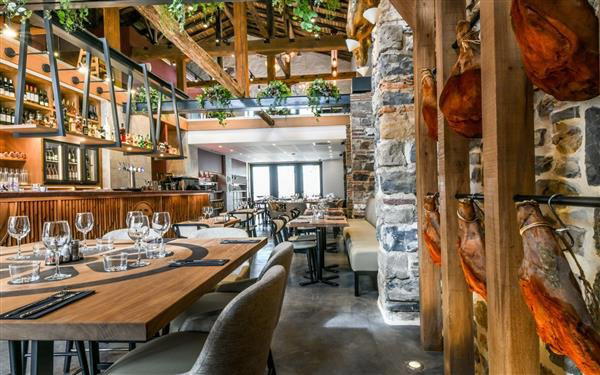
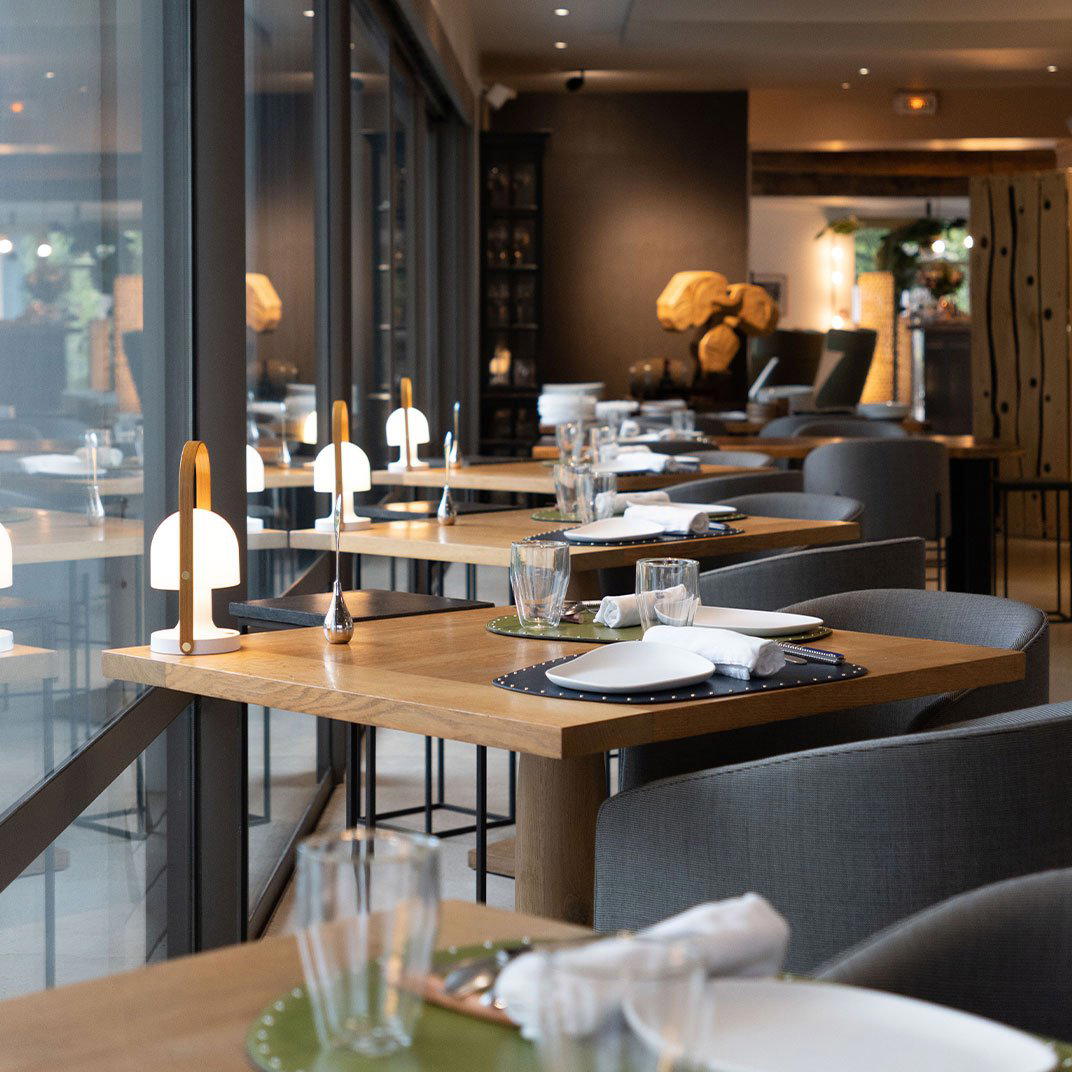
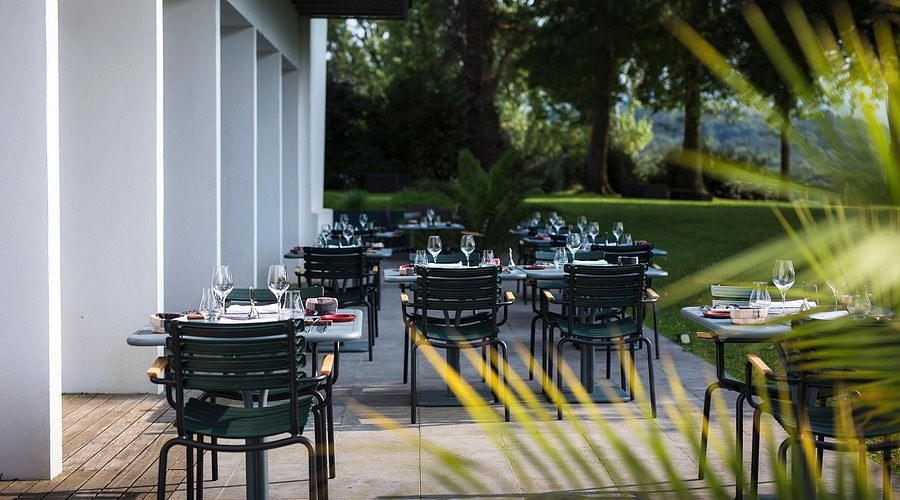
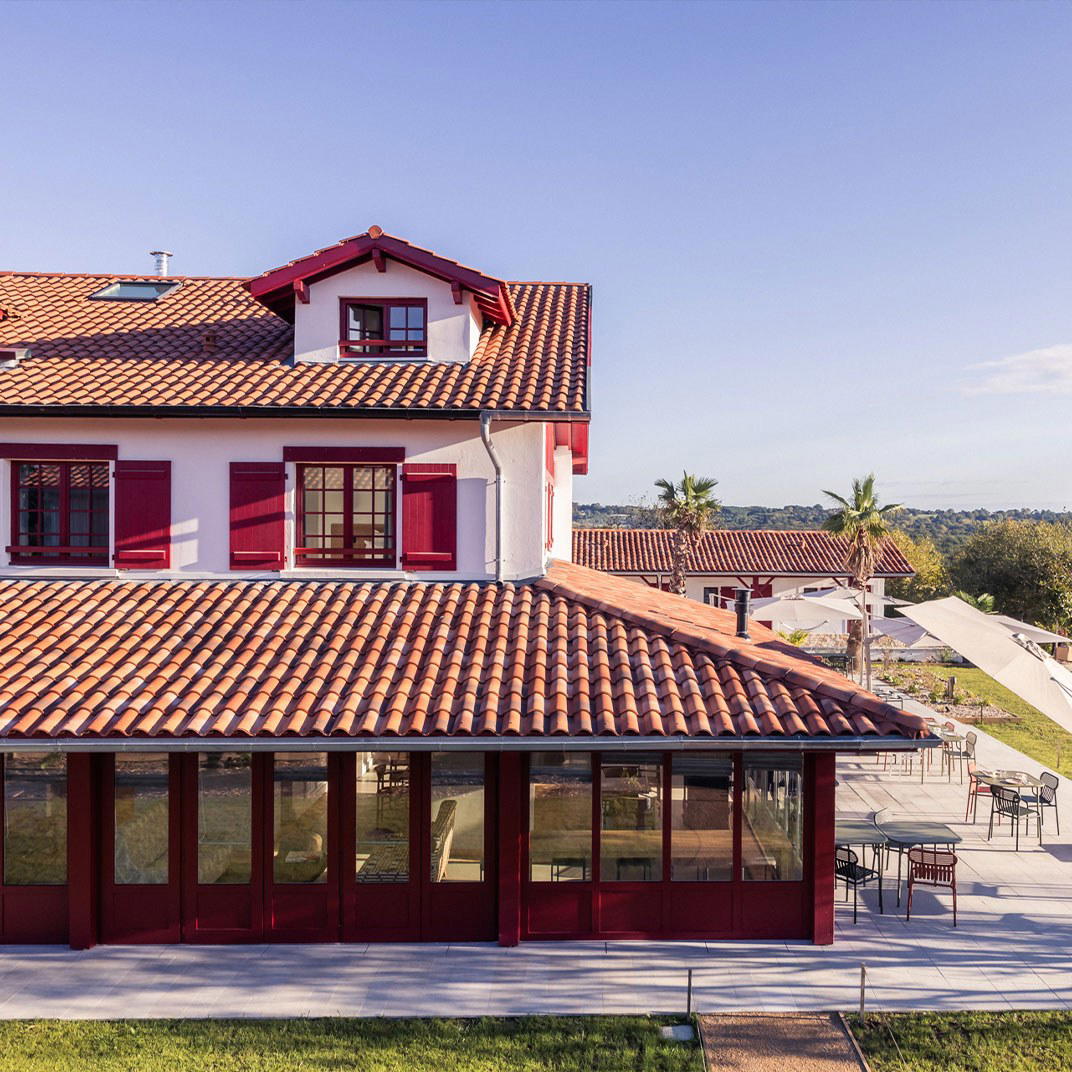
Contemporary and warm interior in a renovated 18th-century building with terrace views of mountains, complemented by an open kitchen and elegant, aesthetic plating.