
1 Michelin Star
Our verdict
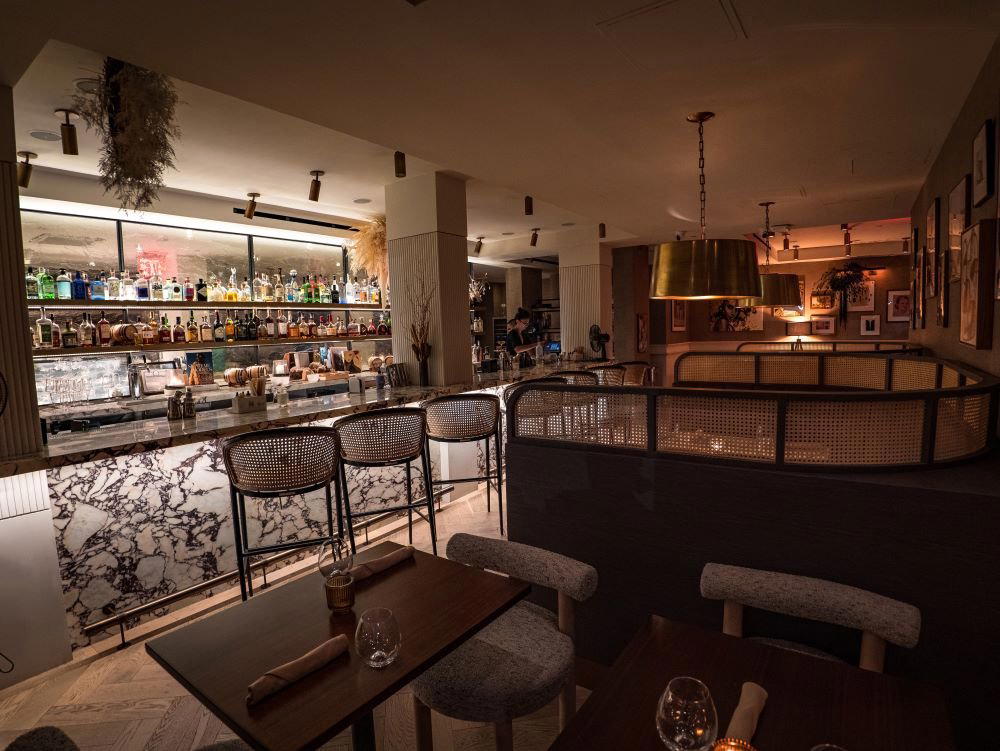
At La Maison de Pierre, classic French sensibilities meet modern finesse in a setting that feels at once intimate and ineffably grand. Candlelit stone walls, the hush of crisp linen, and a hearth-kissed kitchen yield plates that celebrate terroir with restraint and confidence—think luminous sauces, impeccable sourcing, and textures that unfurl with each bite. The experience is guided with quiet precision: a sommelier curates rare vintages to echo the kitchen’s rhythm, while discreet service orchestrates a calm, confident tempo. This is not merely dinner—it’s a beautifully paced conversation between craft and season, designed for those who collect memories as thoughtfully as they collect wines.

Pearl is the En Primeur Club membership app — saves, bookings, and concierge access live there. Same editors, same standards.
- Address
- Hôtel Berria, 68 Rue Francis Jammes, 64240 Hasparren, France
- Phone
- +33 5 59 93 40 49
- Hours
- Mon 12:30–2 PMTue–Wed ClosedThu–Sun 12:30–2 PM, 8–10 PM
- Website
- lamaisondepierre.fr
- Directions
- Get directions
- Booking
- Book on TheFork
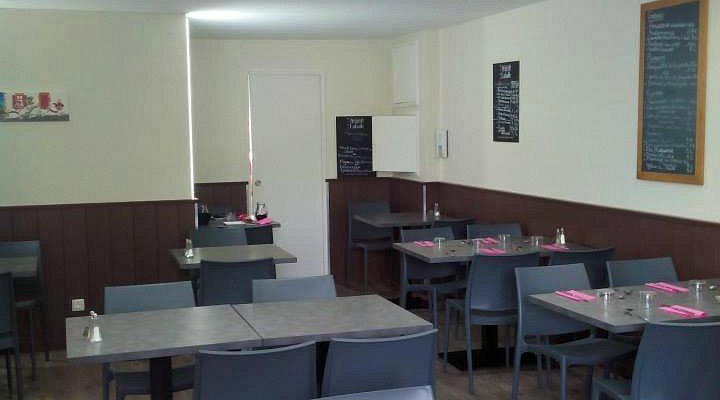
The menu
What to order
- Surprise tasting menu with local seafood
- Lobster ravioli
- Line-caught hake
- Oyster sorbet
- Mussel salad
- Tuna carpaccio
A Half-Timbered Room in Basque Country
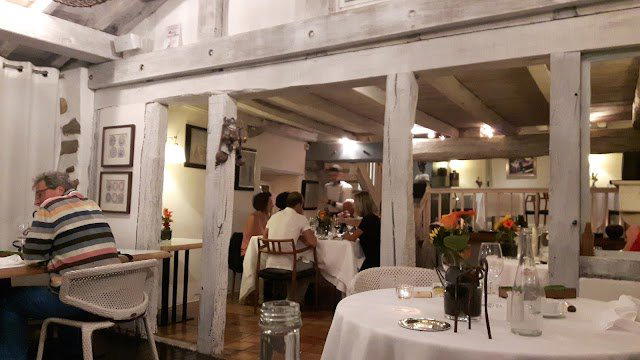
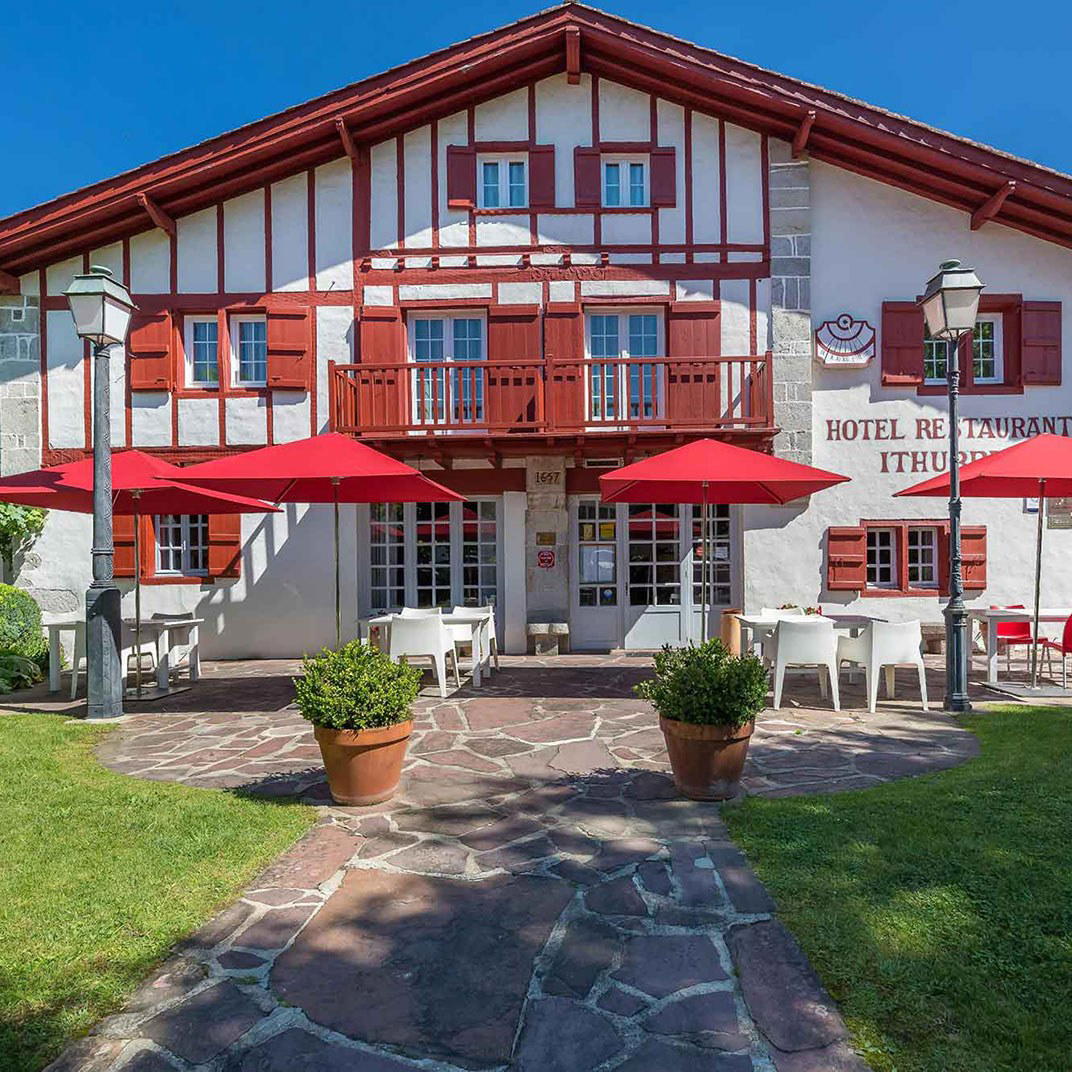
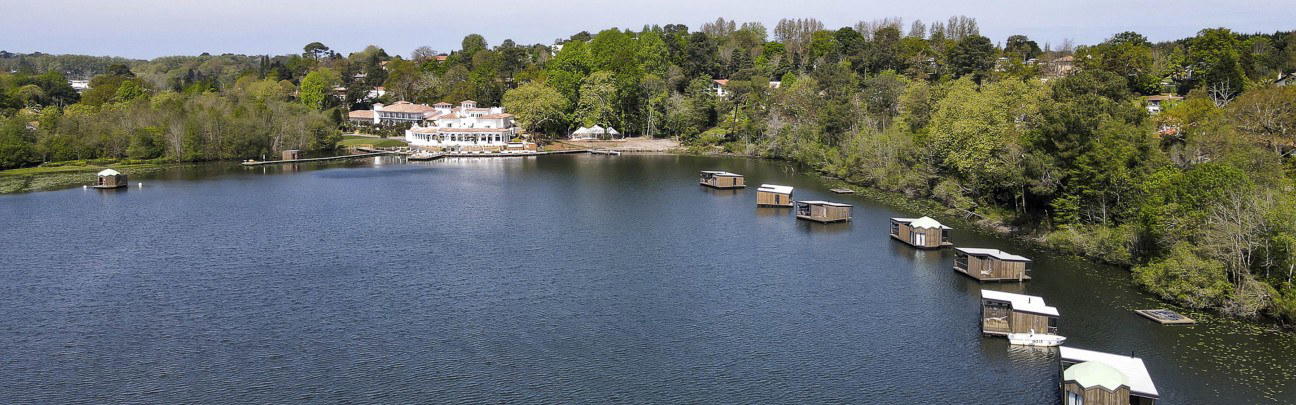
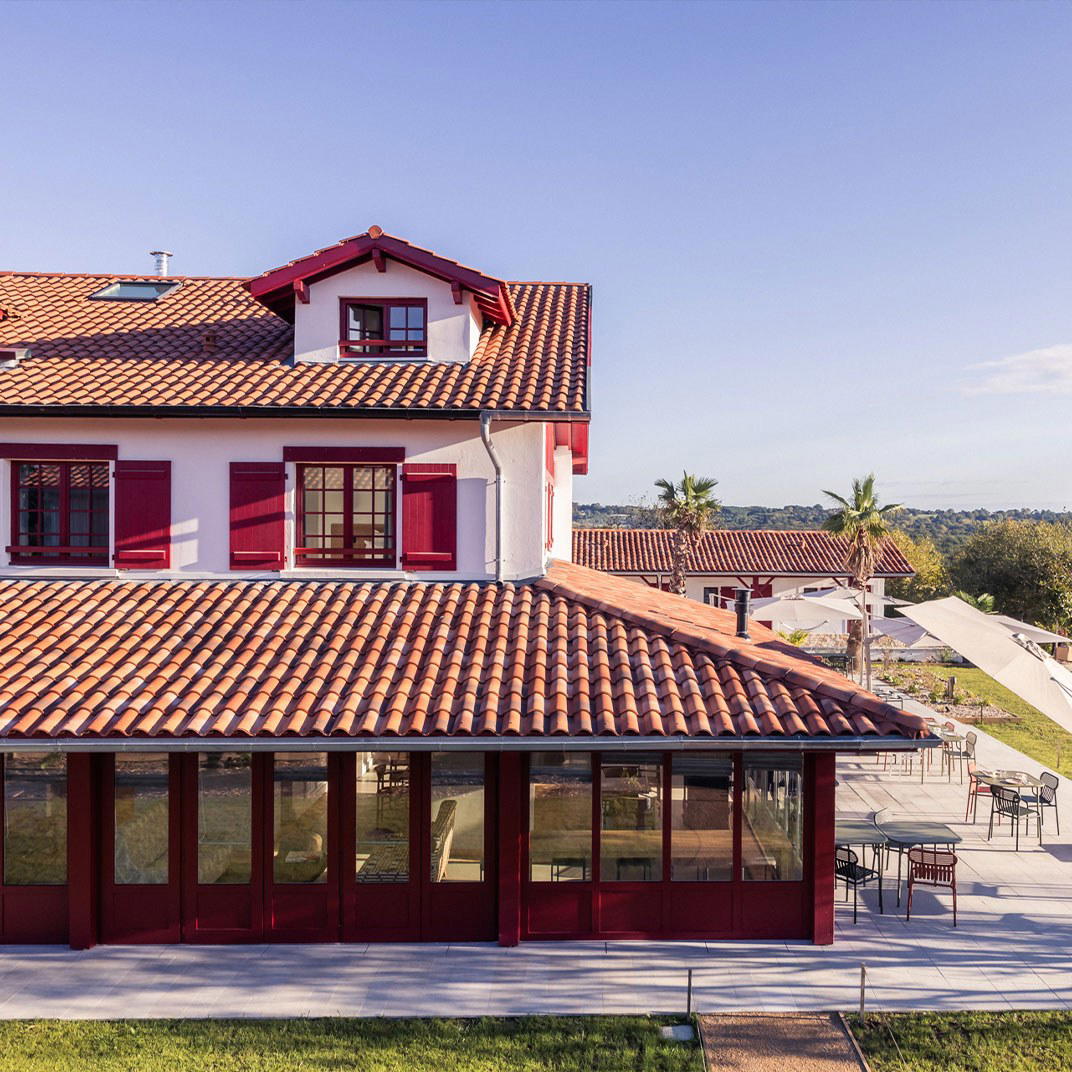
The approach to Hasparren sets the register before you reach the table. This is interior Basque Country, a few kilometres from the Atlantic coast but insulated from the tourist circuits that cluster around Biarritz and Saint-Jean-de-Luz. The town moves at a different pace, its character shaped by pelota courts, local markets, and a food culture that draws on both the French and Spanish sides of the Pyrenean border. The building that houses La Maison de Pierre — Hôtel Berria on Rue Francis Jammes — carries the region's visual shorthand: half-timbered facade, the characteristic red-and-white palette of the Basque Country. Inside, the old ticket windows from the original pelota ground survive in the reception, a glass door still opens onto the trinquet court. The architectural memory of that previous life is the first signal that this is not a venue trying to erase its context.
Where the Produce Comes From
Michelin-starred cooking in provincial France has increasingly sorted into two camps: restaurants that import the logic of Paris, refined, metropolitan, occasionally disconnected from geography, and those that treat the surrounding terrain as the primary text. La Maison de Pierre falls clearly in the second category. The kitchen's commitment to local produce is not decorative. The Basque Country, straddling the French-Spanish border and bracketed by the Atlantic to the west and the Pyrenees to the south and east, is one of the more agriculturally diverse regions in southwestern France. Lamb from the mountain pastures, fish from the Basque coast, peppers and tomatoes grown in the valley lowlands, dairy from small farm operations, the ingredient map here is geographically dense in a way that rewards a kitchen paying attention.
That sourcing posture connects La Maison de Pierre to a broader tradition in French regional cooking that has its most articulate expression at houses like Bras in Laguiole, where the Aubrac plateau defines both ingredient logic and aesthetic. At Auberge du Vieux Puits in Fontjoncouse, a village in the Corbières similarly off the mainstream circuit, the kitchen has built a multi-starred reputation on the same premise: that geographic specificity, rather than cosmopolitan ambition, is the more demanding and ultimately more rewarding creative constraint. La Maison de Pierre operates at a comparable scale of ambition, with its single Michelin star awarded in 2024 marking the recognition of a project that is doing what regional fine dining is supposed to do.
The Format: Surprise Sequences
The menu structure is a multi-course surprise tasting format, delivered in several sequences. This format has become the dominant mode at serious provincial French tables because it transfers creative authority fully to the kitchen while freeing the diner from the anxiety of choice. The Michelin assessment notes harmonious combinations of flavours, with considered sauces and jus, and a consistent vein of creativity across the sequences. The pastry chef partner is also responsible for plating throughout the meal, which gives the visual presentation a coherence that menus divided between savory and pastry departments sometimes lack. The open kitchen is visible from the dining room, and the restaurant's own guidance suggests requesting a table facing it, the production of a multi-sequence tasting in a kitchen of this scale is worth observing as part of the meal.
The price register sits at €€€, which in this context means a serious tasting menu at a price point that would read as moderate in Paris or Lyon but represents a genuine premium against the everyday dining in this part of the Basque hinterland. For comparison, three-star operations like Alléno Paris au Pavillon Ledoyen or Mirazur in Menton price at the highest tier; La Maison de Pierre occupies a meaningfully lower band, making the commitment more accessible for diners willing to make the journey to Hasparren rather than book into the established resort destinations along the coast.
The Wider French Fine-Dining Conversation
France's single-star tier has experienced a gradual rehabilitation of the countryside as a credible address for serious cooking. The model that treated Paris as the gravitational centre, where ambitious chefs trained, earned recognition, then perhaps opened something regional as a later-career retreat, has been challenged by a generation of kitchens that built from a specific place outward. Flocons de Sel in Megève and Auberge de l'Ill in Illhaeusern represent the longer-established version of this argument, that a provincial address is not a limitation but a form of definition. La Maison de Pierre fits that tradition, adding the particular intensity of Basque cultural identity, which has always maintained a strong localism regardless of which country's culinary mainstream was dominant at any given moment.
The Basque Country specifically has produced a disproportionate share of notable kitchens on both sides of the border, and the density of serious food culture in the region means that a kitchen in Hasparren is operating inside a competitive and attentive local context, not in a vacuum. That context is useful: it shapes supplier relationships, keeps the sourcing honest, and creates a dining public with existing expectations. For international visitors more accustomed to making comparisons across the broader spectrum of modern European fine dining, venues like Frantzén in Stockholm or AM par Alexandre Mazzia in Marseille illustrate how the surprise-sequence, produce-led format operates at different scales and price points; La Maison de Pierre sits in the same broad family of thinking, rooted more specifically in its southwest French address.
Staying and Planning
La Maison de Pierre operates inside Hôtel Berria at 68 Rue Francis Jammes, which means overnight accommodation is available on-site, a practical advantage given that Hasparren is not a day-trip destination from any major hub, and that the format of the meal (multi-sequence tasting, evening service) encourages a stay rather than a drive back. The restaurant opens Thursday through Monday for both lunch (12:30 to 2:00 PM) and dinner (8:00 to 10:00 PM), and is closed Tuesday and Wednesday. Lunch at a one-star tasting format is a different commitment from dinner, more compressed, often better value, and a reasonable entry point for diners who want to assess the kitchen before committing to a full evening. For anyone building a longer itinerary in southwestern France, La Maison de Pierre pairs logically with the broader offering in the area; see our full Hasparren restaurants guide, our full Hasparren hotels guide, our full Hasparren bars guide, our full Hasparren wineries guide, and our full Hasparren experiences guide for context on what surrounds it.
Reservations at Michelin-starred provincial restaurants in France typically require advance booking, particularly for Saturday evenings and holiday periods. For further reference on what one-star tasting formats look like across different French regions and price tiers, Troisgros - Le Bois sans Feuilles in Ouches, Assiette Champenoise in Reims, Au Crocodile in Strasbourg, and Paul Bocuse - L'Auberge du Pont de Collonges offer comparative anchors across French regional fine dining. For a look at how the modern-cuisine format exports to international contexts, FZN by Björn Frantzén in Dubai provides a useful counter-example of the same format operating entirely outside its originating geography.
Frequently asked questions
Is La Maison de Pierre suitable for children?
The multi-course surprise tasting format, €€€ pricing, and the atmosphere of a Michelin-starred dining room in a small Basque town all point toward an adult-oriented experience. That said, the venue does not publish a formal policy restricting younger guests. Families considering a visit should factor in the meal length and format: surprise tasting menus in several sequences typically run two to three hours, which is a significant ask for younger diners. For families visiting Hasparren more broadly, the surrounding area offers more relaxed options; the main case for bringing children to La Maison de Pierre would be a family of engaged food enthusiasts comfortable with a long, structured sitting.
What should I expect atmosphere-wise at La Maison de Pierre?
The room is housed in a half-timbered building in the centre of Hasparren, with the architectural heritage of a former pelota court still visible in the reception. The Basque Country's characteristic red-and-white palette frames the exterior. Inside, the dining room is oriented around an open kitchen, and the kitchen team's described enthusiasm, noted in the Michelin assessment as infectious, shapes the register toward engaged rather than formal. This is not the stiff ceremony of a three-star Paris room; the setting is provincial, the town is quiet, and the cooking is the main event.
What's the signature dish at La Maison de Pierre?
Format is a multi-course surprise tasting menu, which means no fixed dishes are published in advance. The Michelin assessment highlights harmonious flavour combinations, carefully crafted sauces and jus, and a creative approach that runs through the sequences. The kitchen's sourcing priority, local Basque Country produce, is the consistent through-line, and the pastry chef partner's dual role in both desserts and plating gives the meal a visual continuity across courses.
At-a-Glance Comparison
| Venue | Cuisine | Price | Awards |
|---|---|---|---|
| La Maison de PierreThis venue — the venue you are viewing | Modern French Gastronomique | $100–150 | 1 Michelin Star |
| Alléno Paris au Pavillon Ledoyen | Creative | Not listed | Michelin 3 Star |
| Kei | Contemporary French, Modern Cuisine | Not listed | Michelin 3 Star |
| L'Ambroisie | French, Classic Cuisine | Not listed | Michelin 3 Star |
| Le Cinq - Four Seasons Hôtel George V | French, Modern Cuisine | Not listed | Michelin 3 Star |
| Plénitude | Contemporary French | Not listed | Michelin 3 Star |
Recognition history
Dated appearances from independent guides and award organizations, with the underlying list record or original source where available.
Michelin 1 Star
Michelin
Full recognition history (3 entries)
Michelin 1 Star
Michelin
Michelin 1 Star
Michelin
Continue exploring
More in Hasparren
Restaurants in Hasparren
Browse all →
Bars in Hasparren
Browse all →
Details
- Romantic
- Elegant
- Intimate
- Sophisticated
- Date Night
- Special Occasion
- Celebration
- Open Kitchen
- Hotel Restaurant
- Private Dining
- Extensive Wine List
- Sommelier Led
- Farm To Table
- Local Sourcing
- Tasting Menu
- Set Menu
- Wine Pairing
- Regional Wines
- Allergy Accommodating
- Vegetarian Friendly
Current opening hours
- Monday
- 12:30–2 PM
- Tuesday
- Closed
- Wednesday
- Closed
- Thursday
- 12:30–2 PM, 8–10 PM
- Friday
- 12:30–2 PM, 8–10 PM
- Saturday
- 12:30–2 PM, 8–10 PM
- Sunday
- 12:30–2 PM, 8–10 PM
Hours can change for holidays and private events. Last verified .
Refined and convivial atmosphere with an open kitchen allowing guests to watch the chef's precise work in impressive silence; warm, professional service in a restored Basque building with traditional red and white colombage details.