Chin Chin on Flinders Lane sits at the intersection of Southeast Asian cooking and Melbourne's laneway dining culture, drawing crowds that accept the no-reservations format as part of the deal. The menu ranges across Thailand, Vietnam, and beyond, pitched at a pace and price point that keeps the room moving. Few places in the CBD manage this volume without sacrificing kitchen precision.
Pearl is the En Primeur Club membership app — saves, bookings, and concierge access live there. Same editors, same standards.
- Address
- 125 Flinders Ln, Melbourne VIC 3000, Australia
- Phone
- +61 3 8663 2000
- Website
- chinchin.melbourne
- Directions
- Get directions
 Saves & bookings on Pearl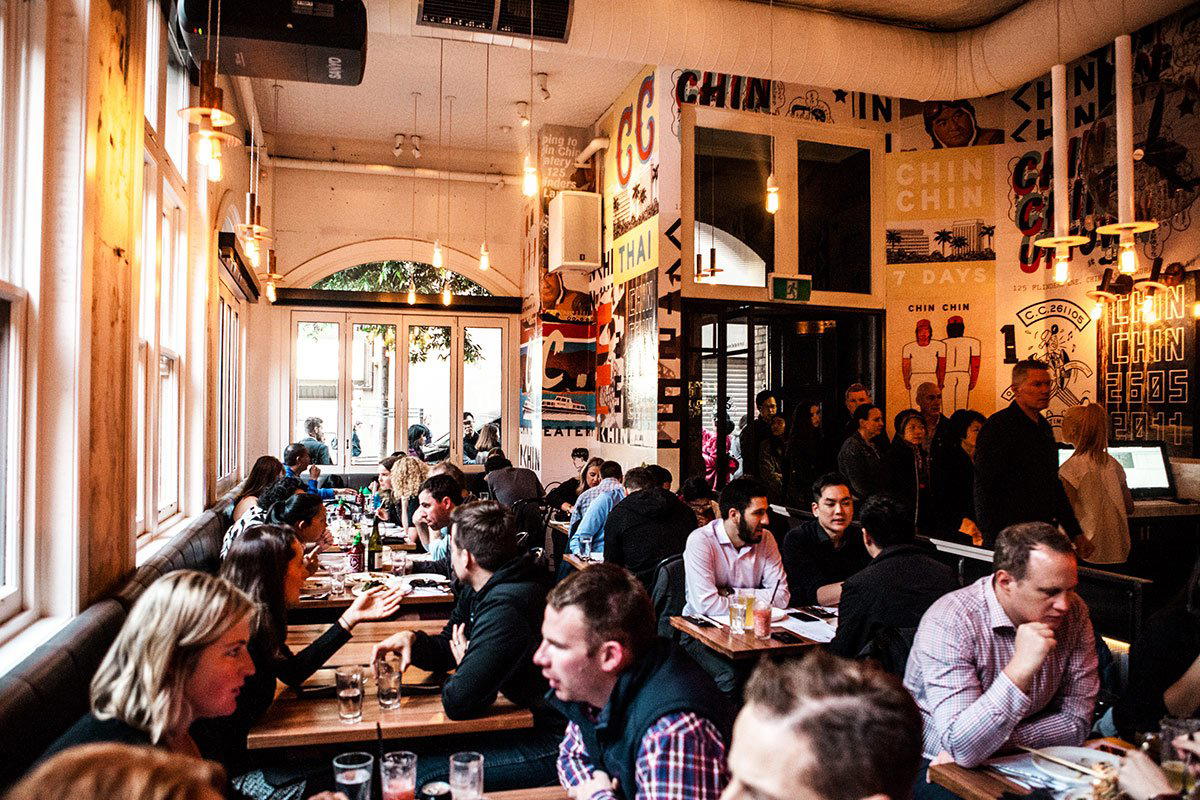
Flinders Lane and the Equation of the No-Booking Room
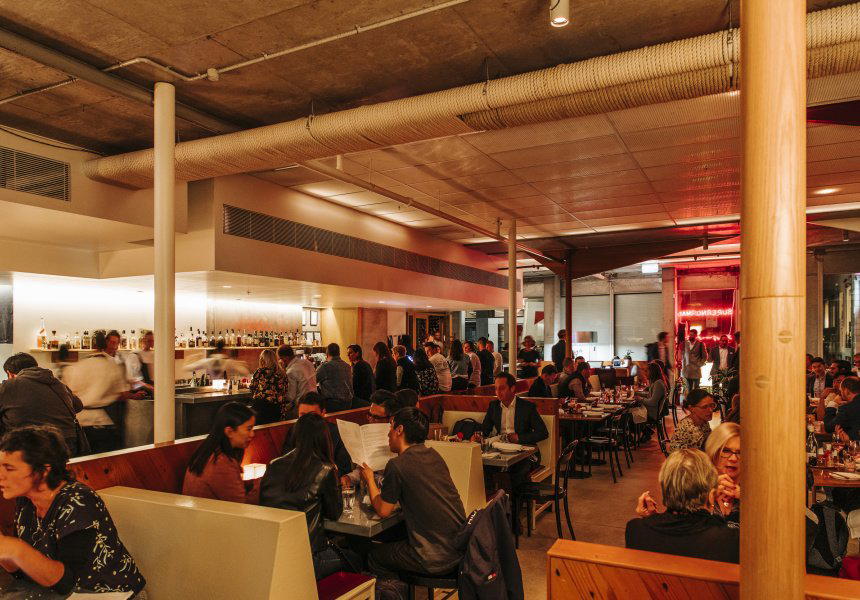
Flinders Lane has a specific gravitational pull in Melbourne. The block between Swanston and Exhibition streets is where the city's dining culture crystallised into something recognisably its own: laneways narrow enough that kitchen noise bleeds onto the pavement, facades that give nothing away from outside, and a density of options that rewards the walker who has no fixed plan. Chin Chin at 125 Flinders Lane sits inside this logic precisely. The building is large by laneway standards, the queue often visible from the street, and the sound inside, a sustained, overlapping roar of a full house, announces the format before you read the menu. This is not a quiet room designed for long consideration. It is a room designed for appetite and momentum.
Melbourne's CBD dining corridor has split over the past decade into two broad registers: the long-form, booking-required experiences typified by places like Attica or Florentino, and the higher-volume, walk-in formats that treat accessibility as a deliberate editorial stance. Chin Chin operates firmly in the second category. The no-reservations policy is not a logistical oversight; it is the point. It keeps the demographic wide, the energy consistent, and the tables turning at a rhythm that suits the cooking, which is built for sharing, ordering in rounds, and eating at pace.
Southeast Asian Cooking Inside a Melbourne Frame
The cuisine at Chin Chin draws across Southeast Asia, with Thai technique and flavour profiles forming the backbone. This is a common reference point in Australian cities, where Thai cooking has moved from suburban strip-mall familiarity into CBD dining rooms that treat it with the same seriousness once reserved for French or Italian traditions. The critical question for any restaurant in this space is where it sits on the spectrum between popularised approximation and genuine technical engagement. The restaurant has always operated closer to the latter end, with dishes pitched at heat levels and complexity that assume the diner can handle the real register of the cuisine.
The menu structure rewards group eating. Dishes arrive as they are ready, assembled for sharing, and the logic of ordering builds across categories rather than in the conventional starter-main sequence. This format has become standard across Melbourne's Southeast Asian-influenced dining rooms, but the restaurant was among the earlier CBD venues to commit to it without hedging toward a more conservative plating approach. For readers building a Melbourne itinerary that spans multiple cuisines, the contrast with Cantonese tradition at Flower Drum or the Italian precision of 48h Pizza e Gnocchi Bar gives useful triangulation on the range of Asian and European influences the city holds simultaneously.
The Queue and What It Tells You About the Room
Walk-in dining at this scale in a city like Melbourne creates a specific social contract. You join the queue or the bar, you wait, and the waiting period becomes part of the experience rather than a friction point to be apologised for. The bar program carries its own weight here, it is not a holding pen but a functional first act, with cocktails calibrated to the food's heat profile. This approach puts the restaurant in a broader cohort of Melbourne venues, including Charrd, where the pre-table experience is considered rather than incidental. For a fuller picture of how the city's drinking culture maps onto its eating culture,
The capacity of the space means that even at peak service, the wait rarely extends beyond what the bar can absorb. Thursday through Saturday evenings run the longest queues; arriving before 6pm or after 8:30pm shortens the wait materially. This is the kind of timing that regular visitors use, and it applies to much of Melbourne's walk-in dining tier.
Where Chin Chin Sits in the Wider Melbourne Picture
Positioning the restaurant against Melbourne's full dining range requires some precision. It does not compete with the tasting-menu tier represented by Brae in Birregurra or the restrained modernism of Amaru in Armadale. Its comparable set is the mid-to-upper casual tier: venues where the cooking is genuinely considered, the room is loud by design, and the price point allows for a full table spread without the calculus of a tasting menu. Within that tier, the restaurant has maintained consistent recognition for over a decade, which in Melbourne's competitive dining environment is a more meaningful signal than any single award cycle.
Comparisons with Southeast Asian dining in other Australian cities are instructive. Rockpool in Sydney and venues like Bacchus in Brisbane represent different registers entirely, but the broader point holds: Australian cities have developed serious, non-derivative Southeast Asian restaurant culture in CBD contexts, and the restaurant was part of the first wave that made that shift credible rather than trend-driven. For visitors arriving from cities with internationally recognised tasting-counter formats like Le Bernardin in New York City or Atomix in New York City, the contrast in format and register is as informative as the food itself.
Melbourne's dining ecosystem is dense enough to warrant dedicated research across categories.
Planning Your Visit
It sits within easy walking distance of Federation Square and Flinders Street Station. The no-reservations format means arrival time is the primary variable to manage. The venue is open daily from 11am to 11pm; weekday lunches draw a different crowd than weekend evenings, and the energy of the room shifts accordingly. Groups of four to six eat well here, as the menu structure rewards the table that can cover more of the range. Solo diners and pairs should position themselves at the bar or counter seating, where service pacing and kitchen visibility make the format work at smaller scale.
The Essentials
Comparable venues nearby, for context on price, style, and recognition.
| Venue | Cuisine | Price | Notes |
|---|---|---|---|
| Chin ChinThis venue — the venue you are viewing | Melbourne, Modern Thai Fusion | $$$ | Not listed |
| MoVida | Melbourne, Modern Spanish Tapas | $$$ | Not listed |
| Seamstress | Melbourne, Modern Asian Fusion | $$$ | Not listed |
| KOMEYUI Japanese Restaurant - Melbourne | Not listed | $$$ | Southbank, Modern Japanese Omakase & Sushi |
| Cha Tra Mue | Not listed | $ | Swanston Street / CBD, Thai Tea Cafe |
| 7 Alfred | Melbourne, Steak Frites | $$$ | Not listed |
Continue exploring
More in Melbourne
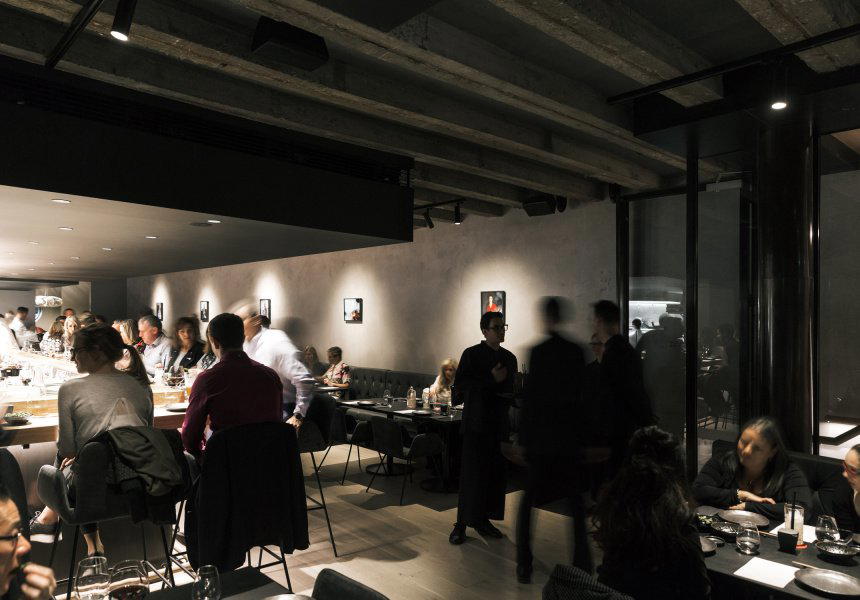
Restaurants in Melbourne
Browse all →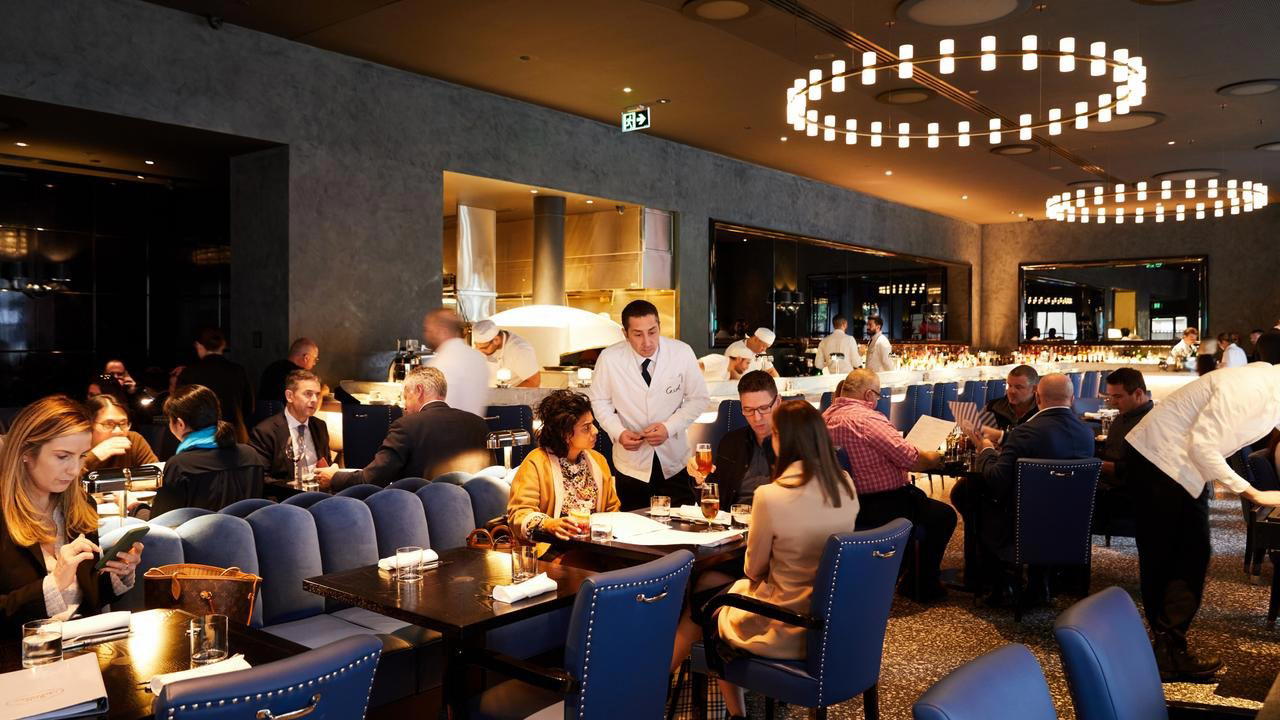
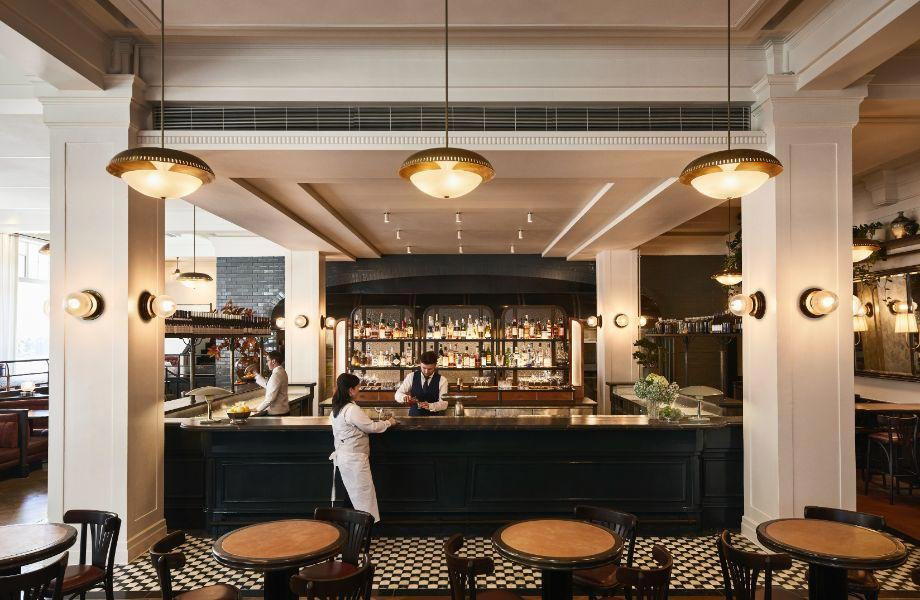
Bars in Melbourne
Browse all →
Hotels in Melbourne
Browse all →
At a Glance
- Lively
- Trendy
- Energetic
- Group Dining
- Casual Hangout
- Open Kitchen
Current opening hours
- Monday
- 11 AM–11 PM
- Tuesday
- 11 AM–11 PM
- Wednesday
- 11 AM–11 PM
- Thursday
- 11 AM–11 PM
- Friday
- 11 AM–11 PM
- Saturday
- 11 AM–11 PM
- Sunday
- 11 AM–11 PM
Hours can change for holidays and private events. Last verified .