Our verdict
Chili Club occupies a compact address on Anne's Lane in Dublin 2, operating within a city where Thai dining has found a committed audience alongside the Irish capital's broader fine-dining scene. The room rewards those who approach the meal at the pace it suggests: unhurried, course by course, with attention to the layered heat and aromatics that define the kitchen's register.

Pearl is the En Primeur Club membership app — saves, bookings, and concierge access live there. Same editors, same standards.
- Address
- 1 Anne's Ln, Dublin 2, D02 Y052, Ireland
- Phone
- +35316773721
- Hours
- Mon ClosedTue 5–10 PMWed–Fri 12:30–2:30 PM, 5–10 PMSat–Sun 5–10 PM
- Website
- chiliclub.ie
- Directions
- Get directions
- Booking
- Book on OpenTable
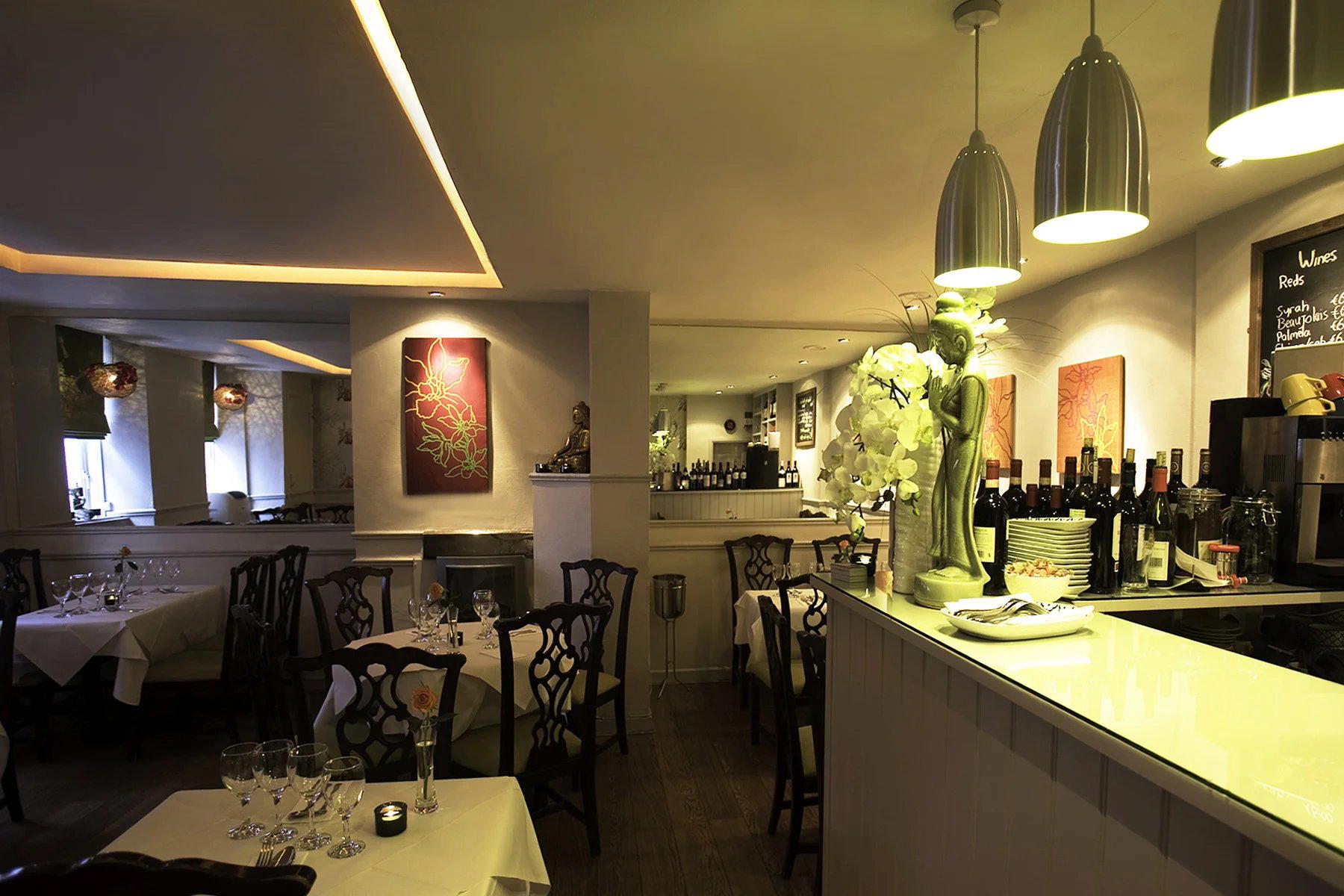
Anne's Lane and the Thai Table in Dublin
Dublin 2's network of lanes and tight side streets has a habit of concentrating the city's more focused dining rooms into small, easy-to-miss addresses. Anne's Lane, running off South Anne Street, sits in that tradition. The approach is brief — a few steps off the main pedestrian flow — and the transition from street to interior is where the meal's particular logic begins to assert itself. Thai restaurants in European cities tend to occupy one of two registers: fast and informal, or deliberate and spice-calibrated. The better rooms in the latter category treat the meal as a structured event, where heat builds across courses rather than arriving all at once, and where the table's pace is set by the kitchen rather than the clock.
Dublin's dining scene has broadened considerably over the past decade. The city now supports two Michelin-starred French-Irish rooms alongside a range of modern Irish addresses: Patrick Guilbaud and Chapter One by Mickael Viljanen anchor the best of the formal tier, while Bastible and Glovers Alley represent the city's confidence in modern Irish cooking. Within that context, a room specialising in Thai cuisine occupies a different position entirely: it answers a different question about what the city's dining culture has space for, and Chili Club has held that address on Anne's Lane long enough to have become a reference point for the category.
The Ritual of the Thai Meal
In Thailand, the organisation of a meal differs structurally from the European sequence of starter, main, and dessert. Dishes arrive closer to simultaneously, or in an order governed by temperature and texture rather than a fixed progression. Soups, salads, and main dishes share the table at once; individual rice portions sit alongside shared plates; heat is a variable managed across the spread rather than concentrated in a single dish. Thai restaurants that adapt this structure for Western diners tend to find a middle position: a loose sequencing that preserves the communal logic while respecting the expectation of some ordering to the meal.
The ritual dimension of Thai dining is worth taking seriously as a frame for approaching the meal here. Eating alone at a Thai table removes some of the kitchen's logic, many dishes are calibrated for sharing, and the interplay of flavours across a spread of four or five plates is part of the point. Groups of two or more who order across the menu's range will experience a more complete version of what the kitchen is attempting: the contrast between fresh herb salads and slow-cooked curries, the shift in register between a clear broth and a coconut-based sauce, the way jasmine rice functions as a palate reset between strong flavours.
This approach to pacing has analogies in other Asian dining formats. The kaiseki progression at Liath in Blackrock operates on a different set of rules but shares the same underlying logic: the meal teaches the diner how to eat it, course by course, rather than leaving the structure entirely to the guest's discretion. At the other end of the formality spectrum, the communal dinner format at Lazy Bear in San Francisco similarly treats the meal as a collective experience rather than a series of individual transactions.
What the Kitchen Is Doing
Thai cooking at its more careful end is less about heat as spectacle and more about the balance of five flavour registers: sour, sweet, salty, bitter, and spicy. The leading Thai kitchens in European cities treat chilli as one element in that framework rather than its defining feature, which means dishes can carry significant complexity even at moderate heat levels. Diners who ask the kitchen to calibrate spice levels are working within a practice that is normal in Thai dining: adjusting heat to preference is not a concession but a standard part of the ordering conversation.
The gap between good and indifferent Thai cooking in European capitals often comes down to the quality of aromatics: whether galangal, lemongrass, kaffir lime leaf, and fresh turmeric are used in their fresh form or substituted with dried or processed equivalents. This is the variable that separates the category's more serious kitchens from the rest, and it is a distinction that applies as much to Dublin's Thai dining rooms as to those in London or Paris.
For context on how Irish restaurants across the country are handling questions of sourcing, seasonality, and regional identity, the broader field repays attention: Aniar in Galway, Campagne in Kilkenny, and dede in Baltimore each represent different regional approaches to ingredient-led cooking. The question of how a Thai kitchen in Dublin sources its aromatics places Chili Club inside a broader conversation about what the island's food culture can support at the ingredient level.
Placing Chili Club in the City's Dining Map
Anne's Lane's location in Dublin 2 puts it within easy reach of the city's core dining corridor. D'Olier Street sits nearby, and the wider southside concentration of restaurants means that a pre- or post-dinner drink is logistically simple. For visitors building a Dublin itinerary, the city's dining now extends well beyond the centre: Terre in Castlemartyr, Bastion in Kinsale, Homestead Cottage in Doolin, The Morrison Room in Maynooth, The Oak Room in Adare, and Chestnut in Ballydehob map a wider Irish dining circuit for those moving beyond the capital.
For a city whose restaurant culture has historically tilted toward European cooking, Thai cuisine at the level of a long-established address like Chili Club represents something worth noting in the city's story. The full picture of Dublin's options is covered in our full Dublin restaurants guide.
Know Before You Go
- Address: 1 Anne's Lane, Dublin 2, D02 Y052, Ireland
- Location context: Off South Anne Street, Dublin 2, central southside, walkable from St. Stephen's Green and Grafton Street
- Group dining: The shared-plate structure of Thai dining rewards tables of two or more ordering across multiple dishes
- Spice calibration: Adjusting heat levels is standard practice, discuss preferences with the server at the point of ordering
Frequently asked questions
Where is Chili Club located?
Chili Club is located at 1 Anne's Ln, Dublin 2, D02 Y052, Ireland, Dublin.
Is Chili Club suitable for a group dinner in Dublin city centre?
Anne's Lane, Dublin 2 sits within easy reach of the southside's main transport and hospitality corridor, making it a practical central meeting point for groups coming from across the city. Thai kitchen formats generally support shared ordering across multiple dishes simultaneously, which suits group dining better than a strictly sequenced European menu. For larger parties, contacting the venue directly ahead of time is advisable given the lane address and likely compact room size.
What do people recommend at Chili Club?
The core Thai repertoire is where established kitchens like this one tend to earn their reputation: curries built on coconut or chilli bases, larb-style salads sharpened with lime and fish sauce, and noodle dishes that test balance across sour, sweet, salty, bitter, and umami. At an Anne's Lane address drawing regulars from Dublin 2's dense office and hospitality crowd, the dishes that travel well by word of mouth are typically those that commit to the flavour registers rather than moderating them for a general audience.
How hard is it to get a table at Chili Club?
Anne's Lane is a compact side street in Dublin 2, meaning the dining room is unlikely to be large, and a high-footfall location near the city's core southside corridor pushes demand up on Friday and Saturday evenings. Booking ahead for weekend sittings is the practical approach; midweek visits to Dublin 2 restaurants at this address tend to offer more flexibility.
Comparable Venues
Comparable venues nearby, for context on price, style, and recognition.
| Venue | Cuisine | Price | Notes |
|---|---|---|---|
| Chili ClubThis venue — the venue you are viewing | Authentic Thai | $20–30 | Not listed |
| Opium | Thai-Vietnamese Fusion | $30–50 | Royal Exchange B |
| El Silencio | Mexican Tacos & Margaritas | $20–30 | Royal Exchange B |
| Chequer Lane by Jamie Oliver | Modern Irish Gastropub | $30–50 | Royal Exchange A |
| Boss Stop | Asian Fusion | $20–30 | Royal Exchange A |
| Zakura Noodle & Sushi Restaurant | Japanese Noodle & Sushi | $20–30 | Royal Exchange B |
Continue exploring
More in Dublin
Restaurants in Dublin
Browse all →
Bars in Dublin
Browse all →

Hotels in Dublin
Browse all →
Wineries in Dublin
Browse all →
Details
- Cozy
- Intimate
- Classic
- Date Night
- Casual Hangout
- Historic Building
- A La Carte
- Vegetarian Friendly
- Gluten Free Options
Current opening hours
- Monday
- Closed
- Tuesday
- 5–10 PM
- Wednesday
- 12:30–2:30 PM, 5–10 PM
- Thursday
- 12:30–2:30 PM, 5–10 PM
- Friday
- 12:30–2:30 PM, 5–10 PM
- Saturday
- 5–10 PM
- Sunday
- 5–10 PM
Hours can change for holidays and private events. Last verified .
Small and intimate with candle-lit tables, pretty crockery, furniture, and a warm, friendly atmosphere.