Google: 4.7 · 963 reviews
On College Street's Portuguese corridor, Chiado represents the more formal, seafood-centred strand of Toronto's Iberian dining scene. The kitchen draws on traditional Portuguese coastal cooking, where the progression from salt cod to grilled fish to sweet egg-based desserts follows a structure that predates contemporary tasting menus by centuries. For a neighbourhood with strong institutional memory, it occupies a distinct position in the upper tier.
 Discover on Pearl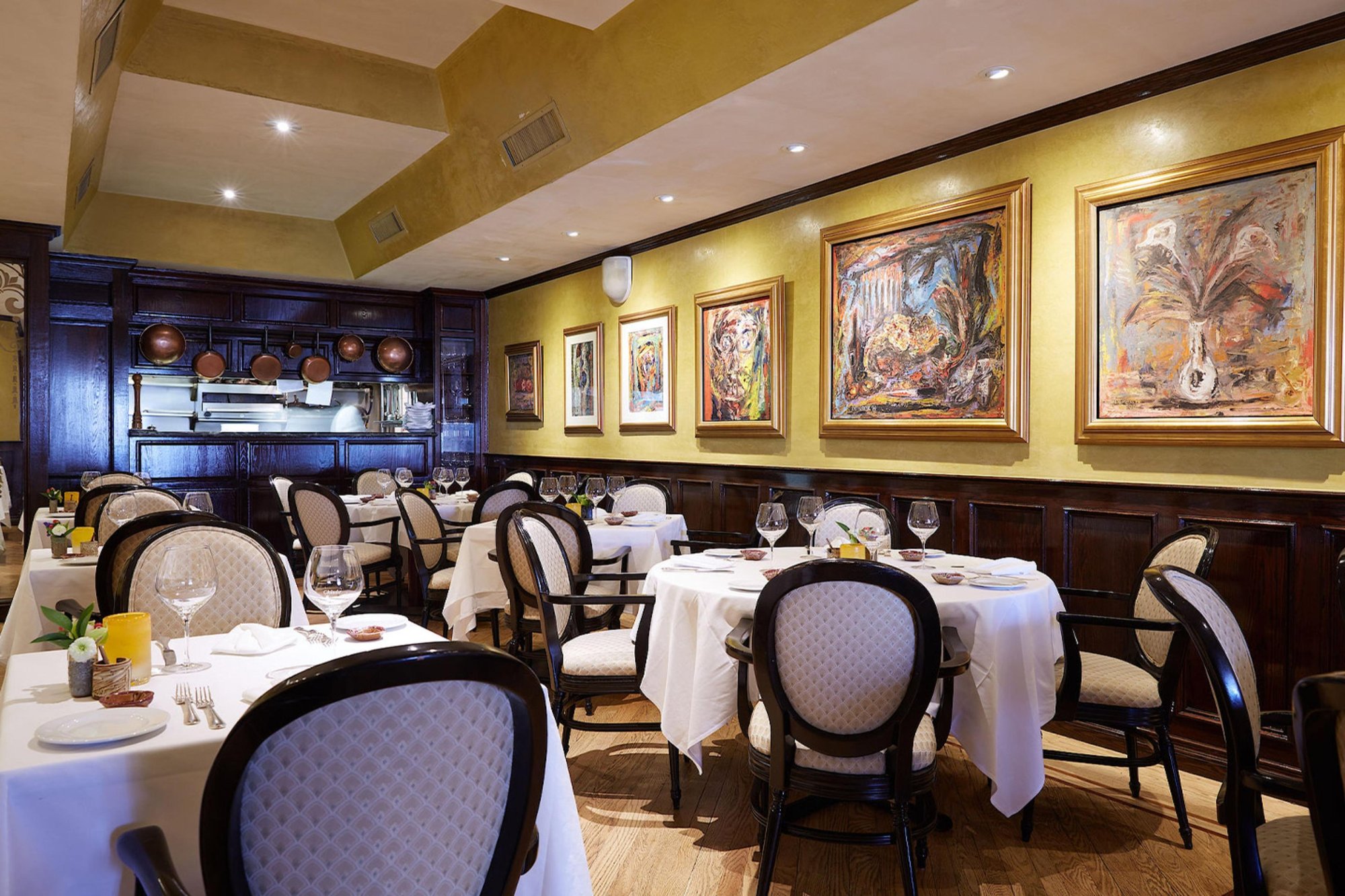
College Street's Portuguese Dining Room and What It Signals
The stretch of College Street between Ossington and Dufferin has functioned as Toronto's Portuguese residential and commercial core since the 1950s, when the first wave of Azorean and mainland Portuguese immigrants established the neighbourhood known colloquially as Little Portugal. The dining rooms that followed were, for decades, built around the logic of community feeding: generous portions, low prices, grilled meats, and the kind of wine list that prioritised Alentejo reds and vinho verde over anything international. Chiado, at 864 College Street, sits on that same strip but operates from a different premise. It represents the more formal, seafood-centred interpretation of Portuguese cooking that emerged as the neighbourhood's demographics shifted and a second generation of diners began asking whether Lisbon's coastal kitchen tradition could support something closer to the format of a serious dinner restaurant.
That question has been answered differently in different cities. In London, Portuguese restaurants cluster around Stockwell and remain largely casual. In Paris, the tradition barely registers at the fine-dining level. Toronto's version, shaped partly by its large and economically diverse Portuguese-Canadian community, has produced a handful of addresses that take the cuisine's architectural strengths — the precision required for salt cod preparation, the sourcing discipline behind good bacalhau, the patience of long-braised dishes — and place them in a setting where the meal has a structure and a pace. Chiado is part of that smaller cohort.
The Arc of a Portuguese Meal
Portuguese cuisine is among the few European traditions where the tasting-progression logic maps naturally onto the national ingredient lexicon without requiring modernist intervention. A meal that moves from petiscos through seafood-forward middle courses to slow-cooked meat and then to the egg-yolk-rich pastry tradition of conventual sweets has a narrative arc that holds together without artificial construction. This is partly why Portuguese restaurants that attempt a multi-course format tend to feel more coherent than, say, a Spanish restaurant trying to graft the same structure onto a tapas tradition that resists sequencing.
At College Street's price point for this category, the expectation is that each stage of the meal carries enough technical weight to justify the format. The salt cod courses that anchor Portuguese menus at this level , bacalhau à brás, bacalhau com natas, or the simpler grilled preparations , require sourcing discipline and a specific approach to desalination and rehydration that distinguishes a kitchen serious about the tradition from one treating it decoratively. The cold Atlantic seafood courses, whether percebes or amêijoas, depend on supply chain relationships that take years to establish in a city as far from the Algarve as Toronto. These logistical realities are what separate credible Portuguese restaurants from those that approximate the cuisine.
Toronto's broader fine-dining tier has moved decisively toward contemporary Canadian and Japanese formats in the past decade. Alo anchors the contemporary tasting-menu end; Sushi Masaki Saito and Aburi Hana have established serious Japanese counters. Against that context, a restaurant committed to Iberian seafood tradition represents a smaller niche but one with its own institutional authority. The comparison set is less domestic and more transatlantic: the question a diner should ask is whether the kitchen's command of the Portuguese repertoire holds up against what that cuisine looks like in Lisbon or Porto.
Portuguese Cooking in a North American Context
One recurring challenge for Portuguese restaurants outside Portugal is the ingredient substitution problem. The specific Atlantic fish species central to the cuisine , rouget, sea bass from the Algarve coast, percebes harvested from Galician and Portuguese rocks , do not have precise Canadian equivalents, and the substitutions that North American kitchens make reveal a great deal about their ambitions. A kitchen that sources carefully, perhaps drawing on North Atlantic species with comparable texture and salinity, signals a different level of commitment than one that replaces the Portuguese originals with whatever is convenient in the Great Lakes region.
The wine dimension matters here too. Portugal's wine geography has become substantially more legible internationally over the past fifteen years, with Dão, Bairrada, and the Alentejo establishing real critical profiles beyond vinho verde and port. A restaurant serious about the Portuguese tradition at this price point should carry a list that reflects that expanded geography, with producers from the Douro that go beyond the obvious port houses and white wines from regions that Toronto sommeliers were not stocking a decade ago. This is where the meal's pairing logic either reinforces the food's seriousness or undermines it.
For context on how other Canadian addresses handle regional European traditions at the high end, Jérôme Ferrer's Europea in Montreal and Tanière³ in Quebec City offer useful reference points, each anchoring a specific European culinary inheritance in a Canadian city with its own dining culture. Outside Canada, the comparison broadens: Le Bernardin in New York City demonstrates what a seafood-centred kitchen looks like at the highest level of technical execution, while Lazy Bear in San Francisco shows how a defined culinary identity can anchor a tasting format without losing focus. Within Ontario, Restaurant Pearl Morissette in Lincoln and Eigensinn Farm in Singhampton represent the province's farm-rooted fine-dining end, while The Pine in Creemore maps a different regional approach. Italian formats at the formal Toronto end include DaNico and Don Alfonso 1890, both operating in the same general price territory as Chiado's segment. For the broader picture of where Chiado fits among the city's restaurants, see our full Toronto restaurants guide.
Planning Your Visit
Chiado is located at 864 College Street in the Little Portugal neighbourhood, accessible via the College streetcar. Reservations: Given its position in a neighbourhood with strong institutional loyalty and limited comparable alternatives at this format level, booking ahead is advisable, particularly for weekend evenings. Dress: The room's register calls for smart casual at minimum; the more formal the occasion, the more the setting supports it. Budget: Specific pricing is not confirmed in current data, but the format and neighbourhood positioning place it in a tier consistent with a serious dinner restaurant rather than a casual neighbourhood trattoria. Timing: The kitchen's seafood-led format is typically at its leading when Atlantic supply chains are running cleanly, which generally means avoiding the transition weeks around major holidays when sourcing becomes less reliable across the board.
Fast Comparison
A compact peer snapshot based on similar venues we track.
| Venue | Cuisine | Price | Awards | Notes |
|---|---|---|---|---|
| Chiado | This venue | |||
| Alo | Contemporary | $$$$ | Michelin 1 Star | Contemporary, $$$$ |
| Sushi Masaki Saito | Sushi, Japanese | $$$$ | Michelin 2 Star | Sushi, Japanese, $$$$ |
| Aburi Hana | Kaiseki, Japanese | $$$$ | Michelin 1 Star | Kaiseki, Japanese, $$$$ |
| Don Alfonso 1890 | Contemporary Italian, Italian | $$$$ | Michelin 1 Star | Contemporary Italian, Italian, $$$$ |
| Edulis | Canadian, Mediterranean Cuisine | $$$$ | Michelin 1 Star | Canadian, Mediterranean Cuisine, $$$$ |
Continue exploring
More in Toronto
Restaurants in Toronto
Browse all →
Bars in Toronto
Browse all →


Hotels in Toronto
Browse all →



Wineries in Toronto
Browse all →
At a Glance
- Elegant
- Classic
- Cozy
- Sophisticated
- Intimate
- Date Night
- Business Dinner
- Group Dining
- Celebration
- Special Occasion
- Private Dining
- Wine Cellar
- Extensive Wine List
- Organic
Beautiful blend of old-world charm and timeless elegance with warm, luxurious interiors and subdued lighting.