Chez Savy occupies a quiet address on Rue Bayard in Paris's 8th arrondissement, a short walk from the Champs-Élysées yet squarely inside a more sober, professional quarter. Where the 8th's better-known dining rooms skew toward grand hotel formality or contemporary tasting menus, Chez Savy holds its position as a traditional French bistro operating at a register that the neighbourhood rarely prioritises. It is the kind of address that rewards knowing where to look.
Pearl is the En Primeur Club membership app — saves, bookings, and concierge access live there. Same editors, same standards.
- Address
- 23 Rue Bayard, 75008 Paris, France
- Phone
- +33 1 47 23 46 98
- Website
- chezsavy.com
- Directions
- Get directions
 Saves & bookings on Pearl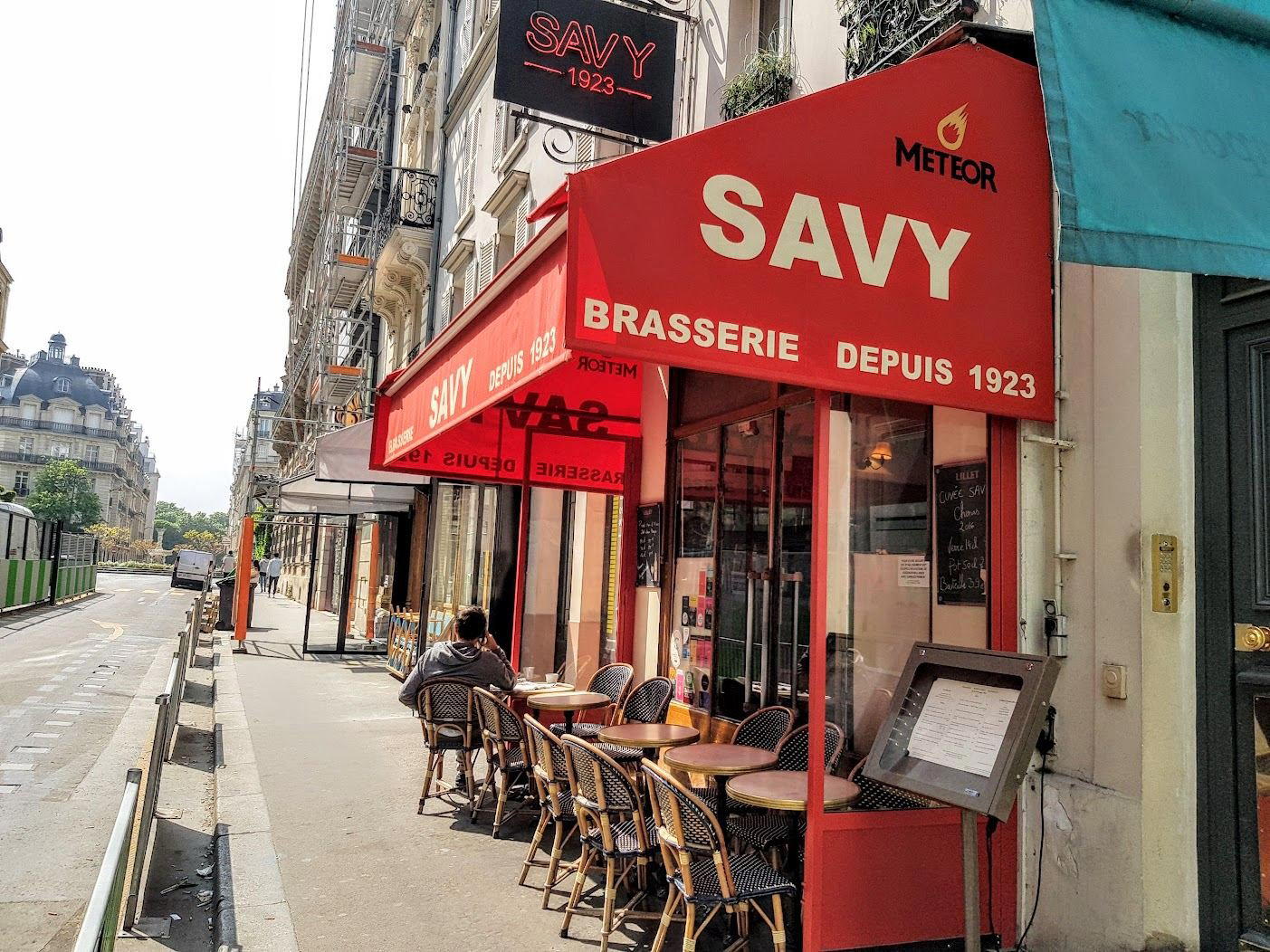
The 8th's Quieter Register
Paris's 8th arrondissement has a split personality at the table. On one side sit the grand hotels and their dining rooms: Le Cinq at the Four Seasons Hôtel George V and the formal French kitchens that have long served the Champs-Élysées corridor's diplomatic and corporate traffic. On the other, a narrower band of neighbourhood addresses operates at a different frequency entirely, serving the quarter's residents and professionals rather than its visitors. Chez Savy sits in this second category. At 23 Rue Bayard, it occupies a side street in the 8th arrondissement between the avenue Montaigne and the Seine.
Rue Bayard is a short walk from the Alma-Marceau metro and within the gravitational pull of the Triangle d'Or, yet it reads differently from the avenues that define that district. The street has the character of a professional neighbourhood that happens to have retained its local infrastructure, including a bistro that does not appear to have recalibrated itself for the passing trade from the fashion houses nearby.
A Room That Has Stayed Put
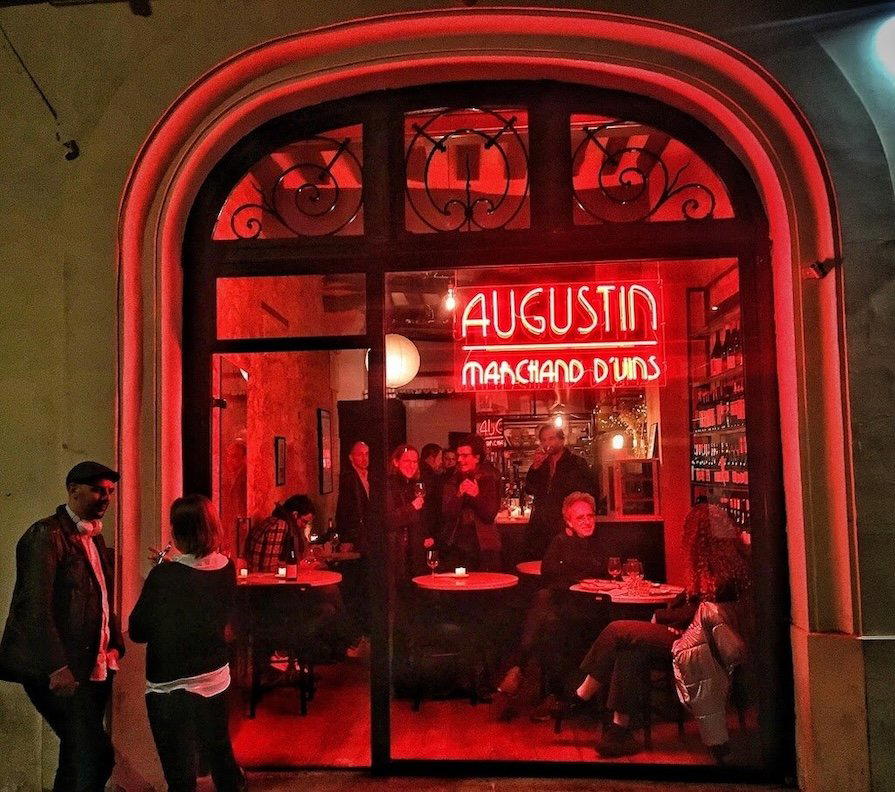
In a city where bistro interiors are regularly refreshed to project a curated version of nostalgia, rooms that arrive at their patina without intervention read differently. Chez Savy's dining room belongs to the category of Paris interiors that have accumulated rather than been designed, with the banquettes, the mirrors, and the general arrangement of space suggesting decades of continuity rather than a recent restoration. This matters because the 8th has historically been prone to high-investment renovation that produces rooms that look old without being so. The contrast with the formally decorated dining rooms of the avenue George V hotels, or with the precise contemporary environments of places like Alléno Paris au Pavillon Ledoyen, is clear.
The room functions at a human scale. It is the kind of space where a two-hour lunch does not require a special occasion to justify. That format, the extended midday meal as a working rhythm rather than a celebration, is one of the things that separates Paris's serious bistro tier from both its casual and its destination ends of the market.
Where It Sits in the Broader French Tradition
French bistro cooking in Paris operates across a wide spectrum. At one extreme, the tradition has been absorbed by the natural wine movement and the small-plate format that now dominates much of the Left Bank's output. At the other, classicism of the kind practiced at L'Ambroisie on the Place des Vosges or at Arpège in the 7th has moved so far into fine dining territory that the word bistro no longer applies. Chez Savy occupies a middle position: a kitchen that works within French regional tradition, specifically the cooking of Auvergne, without the self-consciousness that often accompanies regional revival projects in the capital.
Auvergnat cooking in Paris has a specific history. The region supplied the city with a disproportionate share of its coal merchants and café owners through the 19th and early 20th centuries, and the Auvergnat bistro became a recognisable subcategory of Parisian eating, associated with honest portions, direct preparation, and wine lists that reflected the patron's origins rather than the sommelier's ambitions. Several of those establishments have changed over time. The restaurant is frequently cited as one of the addresses where the format has remained coherent.
The contrast is instructive. Houses like Flocons de Sel in Megève, Mirazur in Menton, or Troisgros in Ouches represent the formal, destination-driven end of French regional cooking, where geography becomes a signature and the dining experience is designed around it. The restaurant represents a different relationship to region: lower in register, quieter in ambition, and more embedded in the daily life of a city neighbourhood. Both are valid modes; they serve different reader needs.
The same contrast applies when you set it against the legacy institutions of the French provinces. Paul Bocuse's Auberge du Pont de Collonges, Auberge de l'Ill in Illhaeusern, and Georges Blanc in Vonnas are all built around the idea of the destination meal, the journey as part of the experience. The restaurant inverts that: it is a place you arrive at because you are already in the neighbourhood, or because you have made the specific decision that this kind of meal is what the day calls for.
The comparable set in Paris
Within the 8th, the comparison set for the restaurant is not the tasting-menu rooms. It is instead the cluster of mid-register bistros and brasseries that serve the arrondissement's working population. That group has thinned over the past two decades as rents in the Triangle d'Or have pushed out operators or sent them to cheaper arrondissements. Contemporary addresses working in the more experimental register, such as Kei with its Franco-Japanese synthesis, are peers in price tier but not in format or intention. The address that survives in the traditional bistro mode in the 8th is increasingly the exception.
For a sense of how Parisian bistro ambition travels abroad, the comparison with places like Le Bernardin in New York, which carries the French fine-dining tradition into a different market, or the chef-driven communal format of Lazy Bear in San Francisco, clarifies how specific the restaurant register actually is. Neither of those addresses is trying to do what a Paris neighbourhood bistro does, and that clarity of purpose is worth recognising.
Planning Your Visit
Rue Bayard is accessible from Alma-Marceau on line 9 or from Franklin D. Roosevelt on lines 1 and 9, both within a short walk. The address sits in a quieter corridor of the 8th, away from the primary tourist circuits of the Champs-Élysées, which means that arrival by foot from those points passes through the more residential and professional face of the arrondissement rather than its commercial one. Lunch is the traditional format for this kind of bistro, and the midday service in this part of the 8th tends to draw a local professional clientele rather than a tourist majority. Reservations are recommended, particularly for weekday lunch. The evening service is quieter.
The Quick Read
Comparable venues nearby, for context on price, style, and recognition.
| Venue | Cuisine | Price | Notes |
|---|---|---|---|
| Chez SavyThis venue — the venue you are viewing | Not listed | $$$ | Not listed |
| 6 New-York | Not listed | $$$ | 16th Arr. - Passy, Modern French Bistro |
| Le Truffaut | Batignolles, Modern French Bistro | $$$ | Not listed |
| Attabler | Not listed | $$$ | 16th arrondissement, Authentic Parisian Bistro |
| L'Annexe | Montmartre, French Brasserie | $$$ | Not listed |
| Le Buci | Not listed | $$$ | Saint-Germain-des-Prés, Traditional French Brasserie |
Continue exploring
More in Paris
Restaurants in Paris
Browse all →
Bars in Paris
Browse all →
Hotels in Paris
Browse all →
At a Glance
- Classic
- Elegant
- Intimate
- Well Known
- Business Dinner
- Date Night
- Historic Building
- Extensive Wine List
Current opening hours
- Monday
- 12–2:30 PM, 7–11 PM
- Tuesday
- 12–2:30 PM, 7–11 PM
- Wednesday
- 12–2:30 PM, 7–11 PM
- Thursday
- 12–2:30 PM, 7–11 PM
- Friday
- 12–2:30 PM, 7–11 PM
- Saturday
- Closed
- Sunday
- Closed
Hours can change for holidays and private events. Last verified .
Classic Art Deco-inspired decor with wood paneling, mirrors, dim lighting, and a warm, timeless Parisian bistro atmosphere.