On Rue de Saintonge in the 3rd arrondissement, Chez Nenesse occupies the kind of position that destination restaurants spend decades trying to manufacture: a genuinely local bistro address in one of Paris's most visited neighbourhoods. Where €€€€ contemporaries like L'Ambroisie and Le Cinq operate at formal remove, Chez Nenesse sits in the older bistro tradition — neighbourhood-rooted, unpretentious, and read by regulars rather than tourists.
Pearl is the En Primeur Club membership app — saves, bookings, and concierge access live there. Same editors, same standards.
- Address
- 17 Rue de Saintonge, 75003 Paris, France
- Phone
- +33142784649
- Directions
- Get directions
 Saves & bookings on Pearl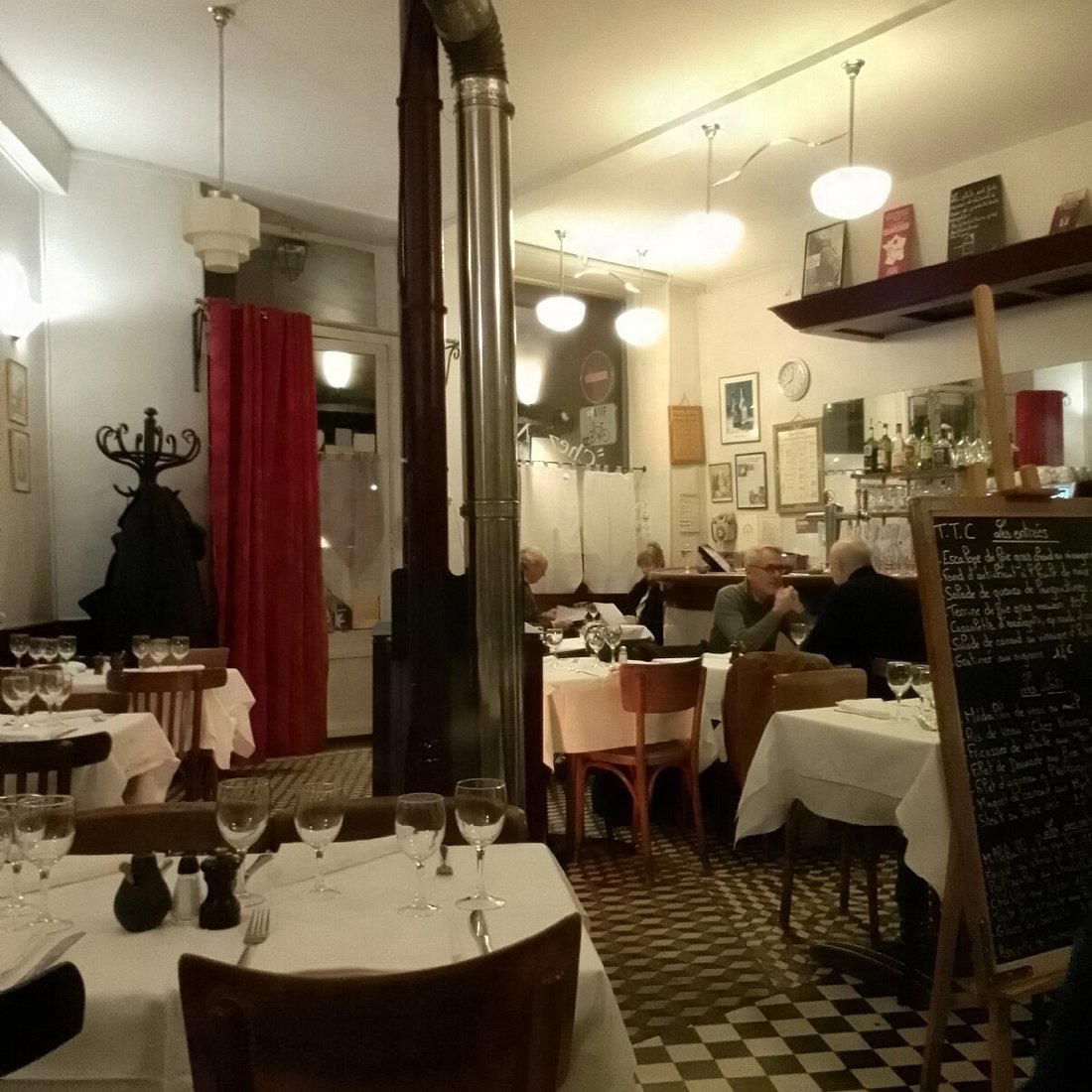
A Bistro Address in the Marais, Where the Room Does the Talking
The 3rd arrondissement has changed considerably over the past two decades. The streets around the Place de la République and the upper Marais have absorbed gallery openings, concept stores, and a generation of natural wine bars that have repositioned the neighbourhood as one of Paris's most commercially alert postcodes. Against that backdrop, a traditional bistro on Rue de Saintonge operates almost as a counter-argument — a room that has not recalibrated itself to meet arriving trends, and does not need to. Chez Nenesse, at number 17, sits in that older tier of Paris dining: the neighbourhood restaurant that feeds people who actually live nearby, rather than one that performs locality for visitors passing through.
The physical register of that kind of room follows a predictable grammar. Tiled floors, close-set tables, mirrors doing the work that decoration might otherwise do, a noise level that rises with the lunch service and does not apologise for it. Whether Chez Nenesse conforms precisely to those details is not confirmed in available records, but the bistro tradition it occupies has its own physical logic, and the address — a side street in the upper Marais, not a grand boulevard, signals something about what to expect before you arrive.
The Bistro Tradition It Sits In
French bistro cooking exists in a more complex critical position than it did fifteen years ago. The rise of the neo-bistro, led by a generation of chefs who trained in three-star kitchens and then opened forty-cover rooms with handwritten menus and natural wine lists, created a middle tier that displaced a lot of older neighbourhood restaurants from critical attention. Addresses like Alléno Paris au Pavillon Ledoyen or Arpège define the upper bracket of Paris dining, while Kei and L'Ambroisie anchor the classical and contemporary formal tiers. The bistro sits well below all of that in price and formality, but the leading examples carry a different kind of authority: the authority of a room that has served the same neighbourhood for decades without requiring a relaunch.
That longevity matters in Paris in ways it does not always matter elsewhere. The city has a long memory for addresses, and a bistro that has held its position through multiple cycles of neighbourhood change tends to carry that history in its clientele. The lunch crowd at a place like Chez Nenesse is likely to include people who have been eating there since before the Marais became what it is now, and that continuity is itself a form of editorial endorsement that awards databases do not capture.
France's wider restaurant geography places this kind of address in useful perspective. The country's most formally decorated rooms, Mirazur in Menton, Troisgros in Ouches, Bras in Laguiole, or the long-standing Paul Bocuse in Collonges-au-Mont-d'Or, represent one tradition. The neighbourhood bistro represents another, and the two are not in competition. They answer different questions. The former asks what French cooking can become; the latter asks what it has always been.
The Sensory Logic of a Neighbourhood Room
There is a specific kind of sensory experience that only traditional Paris bistros produce, and it is not reducible to the food alone. It is the combination of a room operating at full capacity, chairs close enough that conversations overlap, a kitchen whose output you can track by smell before the plate arrives, a service style that is efficient rather than ceremonious. In the formal dining rooms that cluster around the 8th arrondissement, Le Cinq at the Four Seasons George V, for instance, the room is engineered for quiet. A bistro in the Marais is engineered for something closer to the opposite: a density of activity that signals a room doing what it was built to do.
That sensory compression is part of what gives the leading bistros their character. The smell of a daube that has been reducing since morning, the sound of a zinc bar being wiped down between service, the particular quality of afternoon light in a room with net curtains and no design intervention, these are details that no amount of renovation can manufacture after the fact. They accumulate over time, and they are what distinguish an address with genuine history from one that has been styled to resemble it.
For context on how regional French cooking translates beyond Paris, see Auberge de l'Ill in Illhaeusern, Les Prés d'Eugénie in Eugénie-les-Bains, or Georges Blanc in Vonnas, each of which anchors a distinct regional tradition in the way that a Paris bistro anchors its neighbourhood.
Planning Your Visit
Chez Nenesse is at 17 Rue de Saintonge in the 3rd arrondissement, a short walk from the Filles du Calvaire metro station and within easy reach of the Marais's main gallery and museum cluster. The neighbourhood is dense with foot traffic on weekends, but Rue de Saintonge itself is quieter than the main commercial arteries. For a full picture of where Chez Nenesse sits within Paris's wider dining map, see our full Paris restaurants guide, which covers the range from classical haute cuisine through to neighbourhood addresses across each arrondissement. For comparison with how the bistro tradition translates to other formats internationally, Lazy Bear in San Francisco and Le Bernardin in New York represent different points on the spectrum of French-influenced cooking outside France. Closer to home, Flocons de Sel in Megève, Auberge du Vieux Puits in Fontjoncouse, and La Table du Castellet in Le Castellet illustrate how French kitchen ambition operates at a regional remove from the capital.
Quick reference: 17 Rue de Saintonge, 75003 Paris. Nearest metro: Filles du Calvaire (line 8). Contact and hours not confirmed in available records, verify directly before visiting.
How Chez Nenesse Paris compares with similar nearby venues.
| Venue | Cuisine | Price |
|---|---|---|
| Les Enfants du Marche | Neo-bistro | Not listed |
| Les Enfants Rouges | Neo-bistro, Farm to table | €€€ |
| Bistrot Instinct | Modern Cuisine | €€ |
Continue exploring
More in Paris
Restaurants in Paris
Browse all →
Bars in Paris
Browse all →
Hotels in Paris
Browse all →

At a Glance
- Classic
- Cozy
- Rustic
- Casual Hangout
- Date Night
- Historic Building
- Extensive Wine List
Current opening hours
- Monday
- 12–2:30 PM, 8–10:30 PM
- Tuesday
- 12–2:30 PM, 8–10:30 PM
- Wednesday
- 12–2:30 PM, 8–10:30 PM
- Thursday
- 12–2:30 PM, 8–10:30 PM
- Friday
- 12–2:30 PM, 8–10:30 PM
- Saturday
- Closed
- Sunday
- Closed
Hours can change for holidays and private events. Last verified .
Retro 1960s interior with mismatched tiled floors, uncovered wooden tables with pink evening cloths, ancient stove, warm, simple, and friendly atmosphere.
Know Before You Go
- Getting there
- 17 Rue de Saintonge, 75003 Paris, France