Chez Camille
Chez Camille occupies a quiet square in Arnay-le-Duc, a Burgundian market town whose position on the old Route Nationale 6 once made it a natural stopping point between Paris and the south. The kitchen draws on the agricultural depth of Côte-d'Or, where Charolais cattle, Bresse poultry, and Burgundy's vegetable gardens define what regional cooking actually means in this part of France.
Pearl is the En Primeur Club membership app — saves, bookings, and concierge access live there. Same editors, same standards.
- Address
- 1 place Edouard Herriot, 21230 Arnay-le-Duc, France
- Phone
- +33380900186
- Website
- chezcamillearnay.com
- Directions
- Get directions
 Saves & bookings on Pearl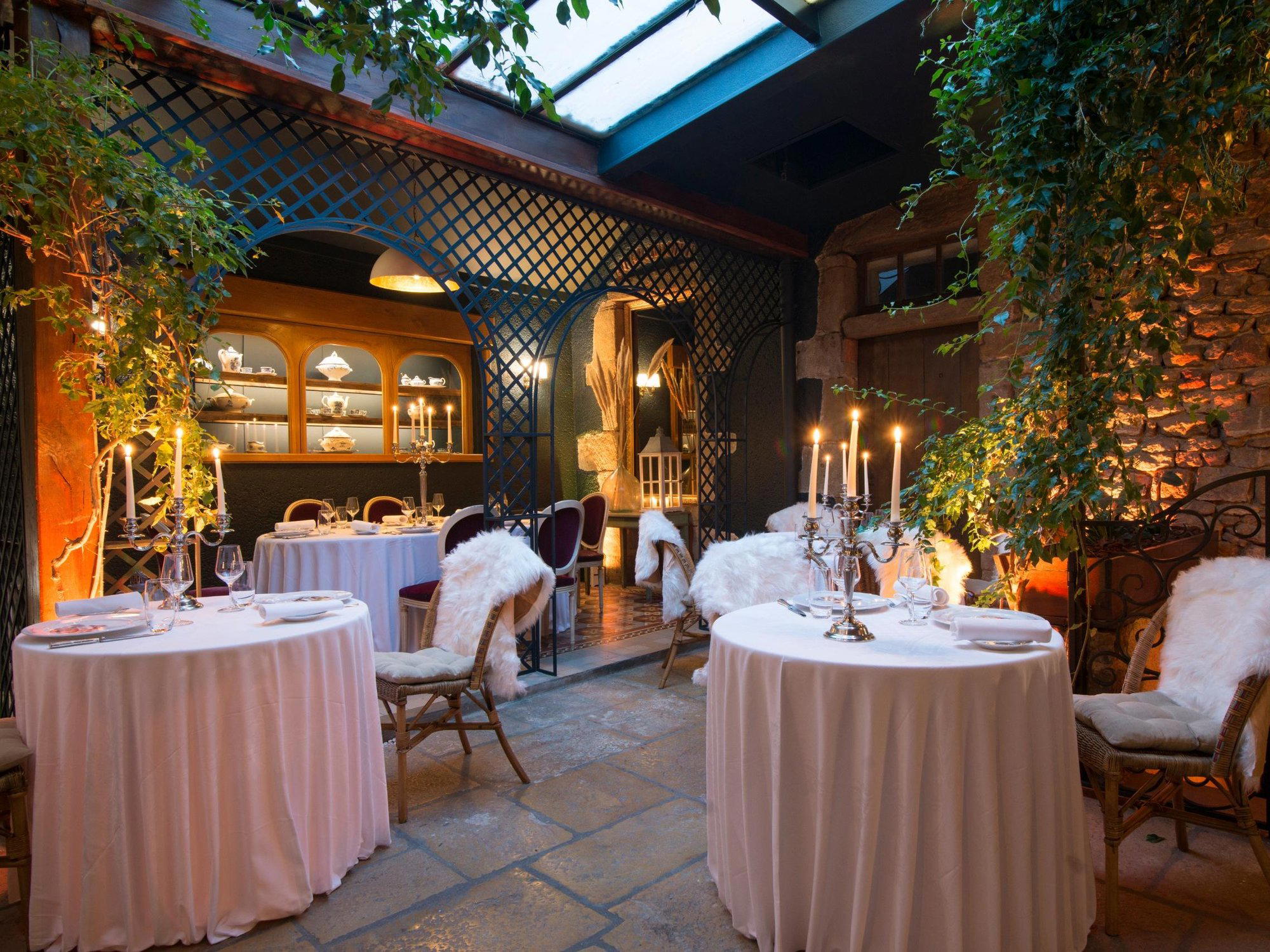
A Burgundian Table on the Old Road South
There is a particular kind of French restaurant that exists not because a chef decided to open it, but because a town needed it. Arnay-le-Duc, a small Burgundian commune in the Côte-d'Or département, sits at the point where travellers once paused on the Route Nationale 6 — the old artery connecting Paris to Lyon and the Mediterranean. That geography shaped a local hospitality tradition built around the idea of a proper meal as a necessary break from the road, not an event requiring advance planning weeks ahead. Chez Camille, on the Place Édouard Herriot at the centre of town, belongs to that tradition. See our full Arnay-le-Duc restaurants guide for broader context on dining in the area.
What the Land Puts on the Plate
Burgundy is one of the few French regions where the sourcing argument essentially makes itself. The Côte-d'Or provides Charolais beef from cattle raised on open pasture, Bresse poultry operating under its own AOC designation — the only chicken in the world to carry one, and a market-garden tradition that has supplied local kitchens for centuries. Escargots de Bourgogne remain among the most geographically specific ingredients in French cooking, and the region's mustard, its Époisses cheese, and its marc-based spirits belong to a pantry that no amount of logistics can replicate elsewhere.
This sourcing specificity is what separates the classic Burgundian auberge from the broader category of French provincial restaurants. Where a kitchen in a less agriculturally distinct region might draw ingredients from multiple supply chains, the Côte-d'Or table is defined by proximity and repetition: the same producers, the same seasonal rhythms, the same expectation that a wine list will be dominated by the appellations visible from the dining room window. At Chez Camille, the address on the Place Édouard Herriot places the kitchen squarely within reach of this supply network. The town's weekly market and the surrounding farms of southern Burgundy are the context in which the menu's logic should be read.
To understand why this matters, it helps to compare the Arnay-le-Duc model with what fine-dining sourcing looks like at higher price points. Restaurants like Mirazur in Menton or Bras in Laguiole have built international reputations partly on the argument that their ingredients are inseparable from their specific geography. The same argument applies at the level of the regional auberge, even if the format and price tier are different. The Burgundian kitchen at this scale is, in effect, making the same claim with less fanfare: the food is here because the land is here.
The Room and the Approach
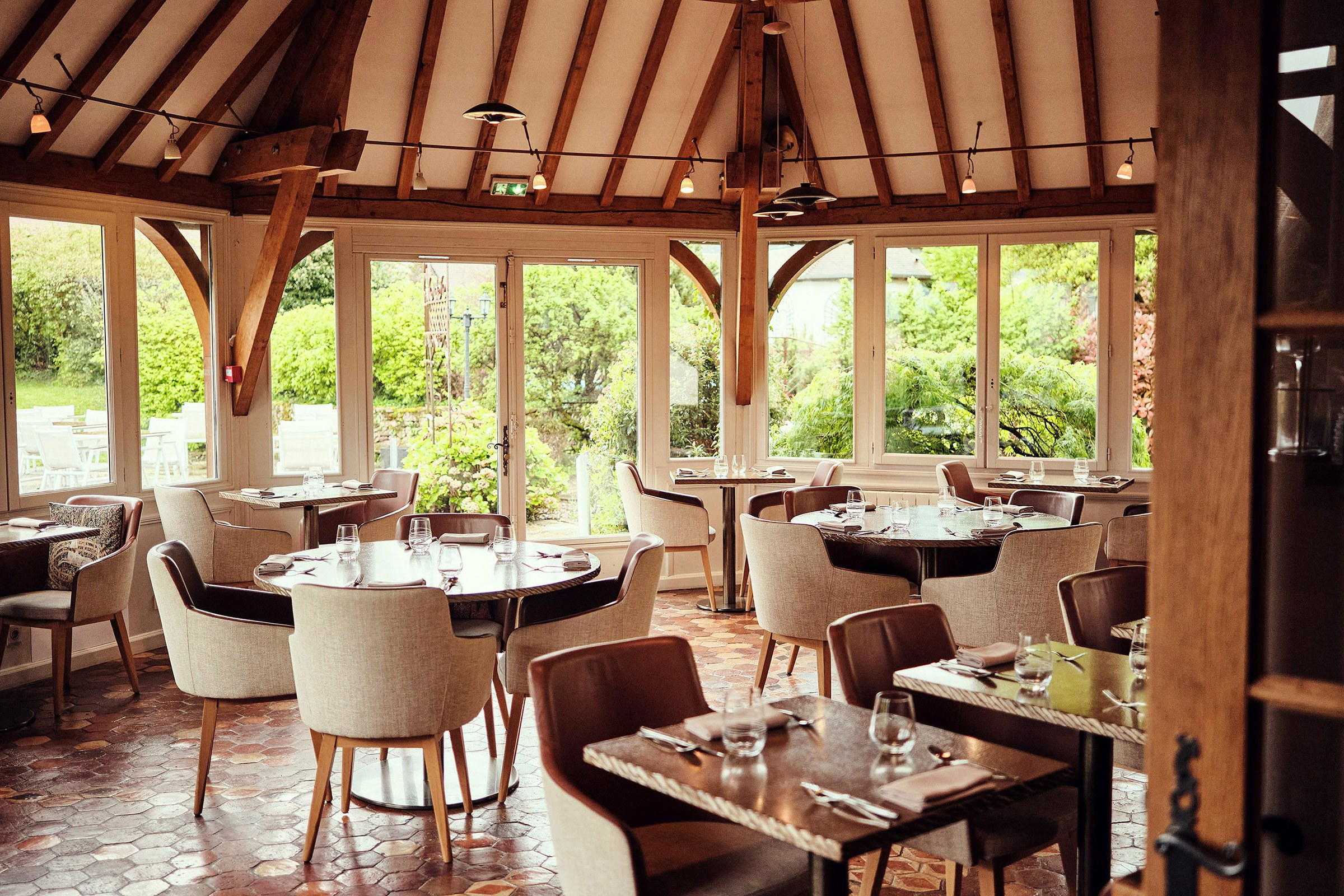
The physical setting follows the logic of the traditional Burgundian inn. Stone-built, square-facing, with the kind of interior that registers as settled rather than designed, the dining room at Chez Camille reads as a room that has been in continuous use rather than one that has been recently conceived. In a region where the auberge format has existed for centuries, that quality of accumulated time is not incidental. It is part of what positions the restaurant within the local dining tradition rather than outside it.
France's more theatrical fine-dining addresses, Alléno Paris au Pavillon Ledoyen, Assiette Champenoise in Reims, or Au Crocodile in Strasbourg, operate in a register where the room itself signals ambition. The auberge tradition operates differently. The signal here is continuity: a place that has fed the town, fed travellers, and fed the same families across generations. That is a different kind of trust signal, and it is worth recognising as one.
Burgundy's Culinary Position in France
Arnay-le-Duc does not have the gastronomic celebrity of Vonnas, where Georges Blanc has spent decades building a destination address, or of Lyon's broader influence on French cooking. But the Côte-d'Or's culinary identity is not dependent on individual destination restaurants. It rests on the density of the regional food system: the proximity of Dijon's mustard production, the wine appellations of the Côte de Nuits and Côte de Beaune, the cheese production centred on Époisses, and the livestock traditions of the Charolais and Bresse territories to the south and west. A restaurant in Arnay-le-Duc that cooks regionally is, by definition, drawing on one of the most coherent and historically deep food cultures in France.
That context explains why the auberge format persists in towns of this size in Burgundy when it has largely disappeared elsewhere. The ingredients justify the kitchen. Travellers heading south on what was once the RN6, now passing through Arnay-le-Duc via the A6 autoroute corridor, still find a reason to stop. For a sense of what French regional cooking looks like at the highest levels of ambition and execution, the comparison points include Troisgros in Ouches, Auberge de l'Ill in Illhaeusern, and Paul Bocuse in Collonges-au-Mont-d'Or. Chez Camille operates in a different tier, but the same argument about place and ingredient runs through all of them. Other strong French regional tables worth noting in this comparison include Auberge du Vieux Puits in Fontjoncouse, Christopher Coutanceau in La Rochelle, La Marine in Noirmoutier-en-l'île, L'Oustau de Baumanière in Les Baux, and AM par Alexandre Mazzia in Marseille.
Planning Your Visit
Arnay-le-Duc sits roughly midway between Beaune and Autun in the Côte-d'Or. The town is accessible by road from the A6 autoroute, making it a practical stop on a Paris-to-Lyon or Paris-to-Provence itinerary. The Place Édouard Herriot is the town's central square, and Chez Camille's address at number 1 puts it at the heart of the small commercial centre. The auberge format typically accommodates families and multi-generational groups more comfortably than destination fine-dining addresses do, given its roots in a hospitality tradition designed around the travelling party rather than the tasting-menu diner.
How Chez Camille Arnay Le Duc compares with similar nearby venues.
| Venue | Cuisine | Price |
|---|---|---|
| Restaurant Lassey - Château Sainte-Sabine | Modern Cuisine | €€€ |
| L'Auberge de Guillaume | Modern Cuisine | €€ |
| Ferme de la Ruchotte | Burgundian | Not listed |
| Le 1131 - Abbaye de la Bussière | Modern Cuisine | €€€€ |
Continue exploring
More in Arnay Le Duc
Restaurants in Arnay Le Duc
Browse all →
Bars in Arnay Le Duc
Browse all →
Hotels in Arnay Le Duc
Browse all →
At a Glance
- Classic
- Cozy
- Elegant
- Special Occasion
- Family
- Historic Building
Modern romantic atmosphere in a historic crossroads village auberge.
Know Before You Go
- Getting there
- 1 place Edouard Herriot, 21230 Arnay-le-Duc, France