Our verdict
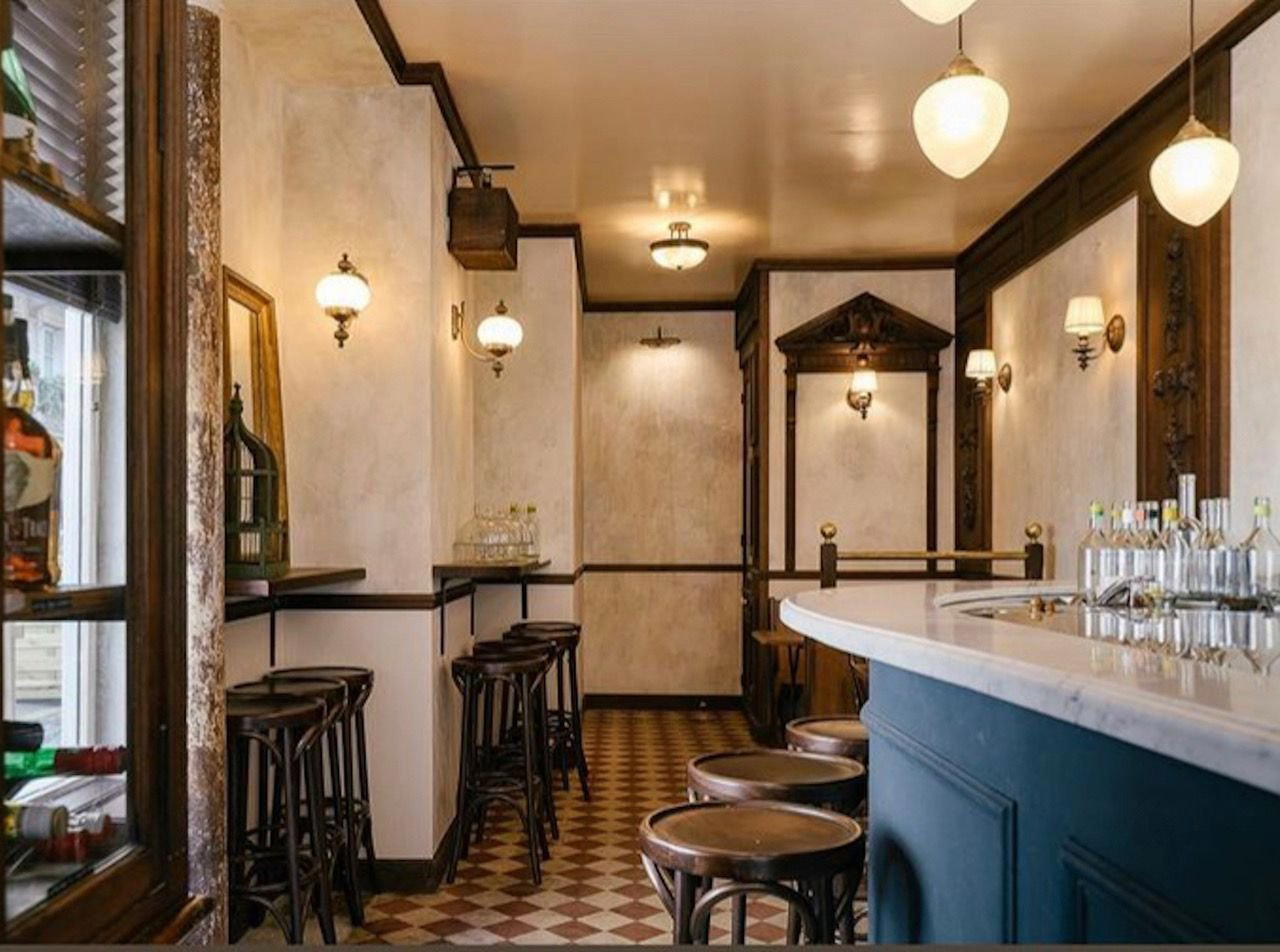
On Rue Marbeuf in the 8th arrondissement, Chez André occupies a stretch of Paris where old-money discretion and modern ambition have long coexisted. The address places it squarely among the city's more composed dining rooms, where the conversation about French technique and contemporary influence plays out course by course. A reservation here is a decision to engage with that dialogue seriously.

Pearl is the En Primeur Club membership app — saves, bookings, and concierge access live there. Same editors, same standards.
The menu
What to order
- Roast chicken with frites
- Beef tartare
- Oeufs mayonnaise
Rue Marbeuf and the 8th's Quiet Confidence
The 8th arrondissement has never needed to announce itself. Its restaurants don't cluster around a single axis of trend; they operate across a wide register, from the grand institutional rooms on Avenue George V to smaller addresses tucked between couture houses and corporate headquarters. Rue Marbeuf sits in that quieter register. The street connects the Champs-Élysées corridor to the residential calm of the Triangle d'Or without belonging entirely to either, which gives addresses along it a particular kind of breathing room. Chez André, at number 12, operates in that space.
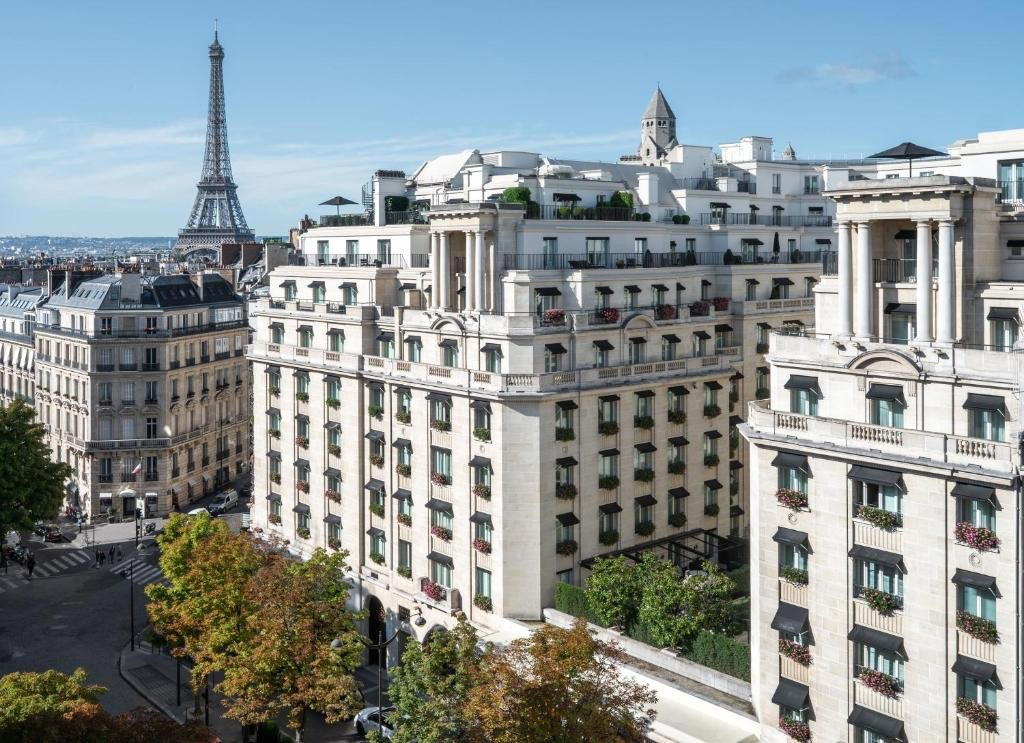
In a neighbourhood where Le Cinq at the Four Seasons Hôtel George V represents the formal apex and Alléno Paris au Pavillon Ledoyen anchors the creative end, the mid-register addresses carry their own editorial weight. They are where Paris actually eats, rather than where it performs eating.
Where French Technique Meets Contemporary Influence
The broader conversation in Parisian dining over the past two decades has been about the relationship between classical French training and outside influence. That dialogue shows up in restaurants across the city's price tiers. Kei, with its Japanese-French synthesis, represents one version of that conversation; Arpège represents another, turning classical brigade discipline toward garden-led, vegetable-forward cooking. What both share is a willingness to let outside logic reshape the French foundation rather than merely decorate it.
Chez André sits within that broader pattern. The address on Rue Marbeuf places it in proximity to restaurants that have been navigating the same tension for decades, and the 8th's dining character has always rewarded addresses that balance accessibility with seriousness. In a city where L'Ambroisie on Place des Vosges sets the standard for classical French cooking at its most uncompromising, and where the provincial traditions of France's great regional tables, places like Troisgros in Ouches, Bras in Laguiole, and Auberge de l'Ill in Illhaeusern, continue to define what French cooking means outside the capital, the Parisian room carries the pressure of that inheritance.
The Logic of Local Ingredients and Imported Method
French cuisine's authority has always rested on a particular combination: ingredients tied to specific terroir and technique refined over generations of professional training. The most interesting addresses in Paris right now are the ones that complicate that combination, using methods developed elsewhere, whether from Japan, Scandinavia, or the American farm-to-table movement, to draw something sharper from French raw material. This is the editorial angle that makes Chez André's position on Rue Marbeuf worth examining. The 8th is not a neighbourhood known for radical reinvention, but it has always made room for careful synthesis.
That synthesis has a long history in French cooking. The traditions codified at places like Les Prés d'Eugénie in Eugénie-les-Bains or Georges Blanc in Vonnas were themselves acts of synthesis, bringing new dietary logic or new sourcing discipline to classical frameworks. The difference now is that the outside influences arrive faster and from further away. Mirazur in Menton, operating at the edge of France's Mediterranean border with a chef trained across three continents, represents the outermost version of that dynamic. Chez André's address in the 8th suggests a more contained version of the same question.
Paris's 8th in Competitive Context
The 8th arrondissement's restaurant map is one of the most analysed in Europe, and for practical reasons: it concentrates luxury hotels, corporate expense accounts, and international visitors in a density that few neighbourhoods outside central London or central New York can match. That concentration creates a particular kind of competitive pressure. Restaurants here price against an informed, travelled clientele that has eaten at Le Bernardin in New York and knows what the French-trained technique looks like when it crosses the Atlantic. That context shapes what an address on Rue Marbeuf needs to deliver.
The comparison at this address isn't between Chez André and the three-star rooms on the Champs-Élysées corridor. It's between Chez André and the tier of addresses that have built loyal local followings without the institutional apparatus of a Michelin campaign or a hotel group behind them. In that tier, the criteria are different: consistency over spectacle, a wine list that reflects actual knowledge rather than trophy hunting, and a room that reads as a considered place to eat rather than a backdrop for social media.
The French provincial comparison is also instructive. Addresses like Paul Bocuse's Auberge du Pont de Collonges, Auberge du Vieux Puits in Fontjoncouse, La Table du Castellet, and Flocons de Sel in Megève all operate with the advantage of direct access to regional produce and a dining room that is itself a destination. A Paris address doesn't have that luxury. It has to earn its authority differently, through the quality of its sourcing relationships, the intelligence of its menu construction, and the reliability of its execution across a service week that runs at city pace rather than destination pace.
Planning Your Visit
Chez André is located at 12 Rue Marbeuf, 75008 Paris, in the 8th arrondissement, within walking distance of the George V and Franklin D. Roosevelt Métro stations. The 8th's restaurant density means that alternatives exist at every price point, but an address on Rue Marbeuf specifically rewards those who engage with it on its own terms rather than as a convenience option. For the full range of Paris dining across arrondissements and price tiers, the EP Club Paris restaurants guide maps the competitive set in detail. And for a contrasting take on the California-influenced format that sits at the opposite end of the French tradition, Lazy Bear in San Francisco makes for an instructive comparison.
Quick reference: 12 Rue Marbeuf, 75008 Paris. Nearest Métro: George V (Line 1) or Franklin D. Roosevelt (Lines 1, 9).
Frequently asked questions
Is Chez André formal or casual?
Chez André sits on Rue Marbeuf in the 8th arrondissement, a neighbourhood that sets its own tempo independent of trend. The address suggests a degree of polish consistent with the 8th's broader character, though the bistro format historically leans toward relaxed rather than ceremonial. Arrive presentably dressed and you will be in step with the room.
Where is Chez André located?
Chez André is located at î12 Rue Marbeuf, 75008 Paris, France, Paris.
Where exactly is Chez André located in Paris, and what is nearby?
Chez André is at 12 Rue Marbeuf in the 8th arrondissement, a short walk from both the George V and Franklin D. Roosevelt Métro stations. The address places it within the triangle formed by the Champs-Élysées, Avenue Montaigne, and Avenue George V — a corridor that concentrates luxury hotels and long-standing Paris restaurants. This makes it a practical choice for guests staying in the 8th who want a French bistro without crossing arrondissements.
What dish is Chez André famous for?
Given its address in the 8th arrondissement and the bistro tradition that defines Rue Marbeuf's dining culture, the kitchen most likely anchors its menu in French classical technique. For current menu detail, contacting the restaurant directly is the most reliable route.
Do I need a reservation for Chez André?
Chez André is located at 12 Rue Marbeuf, 75008 Paris, in one of the city's most trafficked dining districts. The 8th arrondissement draws corporate lunchers, hotel guests, and a steady local clientele, which puts pressure on tables across the neighbourhood at peak hours. Booking ahead is a practical measure rather than a formality for any visit here.
Reputation First
A small set of peers for context, based on recorded venue fields.
| Venue | Cuisine | Price | Awards | Notes |
|---|---|---|---|---|
| Chez AndréThis venue — the venue you are viewing | Traditional French Brasserie | $50–100 | Not listed | Not listed |
| Alléno Paris au Pavillon Ledoyen | Modern French Fine Dining | $150–200 | 3 Michelin Stars · World's 50 Best #79 | Creative |
| Kei | Modern French with Japanese Influences | $300–500 | 3 Michelin Stars · World's 50 Best #93 | Contemporary French, Modern Cuisine |
| L'Ambroisie | Classic French Haute Cuisine | $300–500 | 2 Michelin Stars · World's 50 Best #23 | French, Classic Cuisine |
| Le Cinq - Four Seasons Hôtel George V | Modern French Fine Dining | $300–500 | 3 Michelin Stars · World's 50 Best #24 | French, Modern Cuisine |
| Pierre Gagnaire | Avant-Garde French Fine Dining | $200–300 | 3 Michelin Stars · World's 50 Best #17 | French, Creative |