Chalet Regain
Our verdict
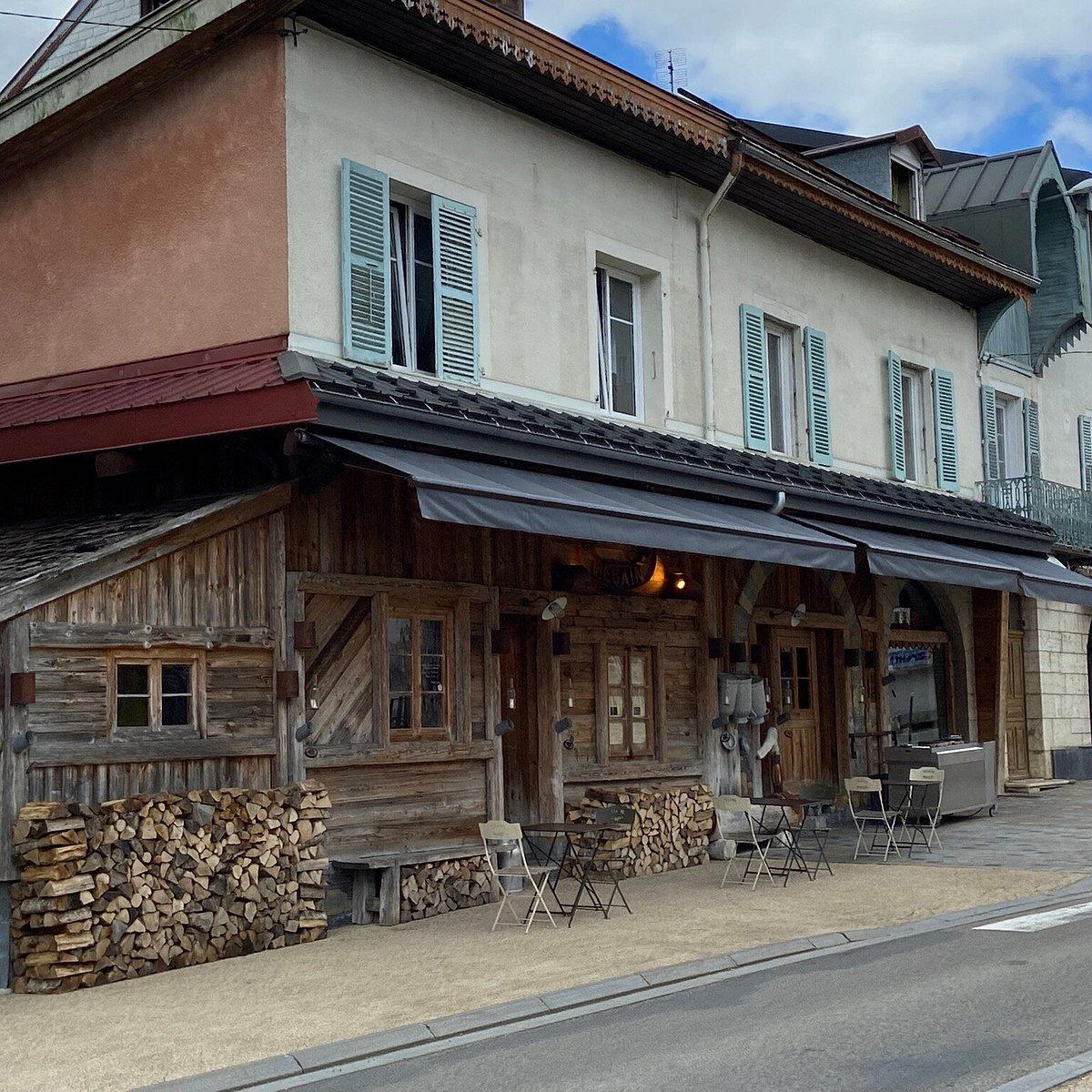
In the Jura village of Les Rousses, Chalet Régain operates within a tradition where altitude and terroir dictate the plate as much as the kitchen does. Mountain chalets in this corner of France have long anchored their menus to what the surrounding landscape produces, and Régain fits that pattern. A practical address for visitors to the Haut-Jura who want substance over spectacle on the plate.

Pearl is the En Primeur Club membership app, where members save venues, book tables and use the concierge.
The menu
What to order
- Fondue Jurassienne aux morilles
- Hambur Goût des sous-bois
Where the Jura Plateau Sets the Menu
Arrive at 262 Rue Pasteur on a clear winter afternoon and Les Rousses announces itself the way high-altitude French villages do: woodsmoke cutting through cold air, the treeline close, the pace several registers slower than Geneva, which sits less than forty kilometres to the east. The Jura plateau at around 1,100 metres is not the Alps in the cinematic sense, but it operates on its own logic, one that mountain dining here has absorbed over generations. Chalet Régain sits inside that tradition rather than outside it looking in.
The relevant context for any chalet restaurant in this corner of Franche-Comté is ingredient geography. The Haut-Jura is Comté country, one of the few AOC cheeses in France where altitude, grass type, and seasonal milk variation are encoded into the certification rules themselves. The plateau's pastures produce milk differently in summer than in winter; the resulting cheese aged in the region's cellars carries those distinctions forward. Any kitchen working honestly with local product at this elevation is, almost by definition, working with ingredients that carry documentary credibility before they reach the pass.
The Sourcing Argument in Alpine French Cooking
The broader pattern across Jura dining is worth establishing, because it explains why ingredient provenance matters more here than in most French regional contexts. Chefs across the Haut-Jura, from small village auberges up to more decorated addresses, are not reaching for premium local produce as a marketing position; they are working within a system where the regional larder is genuinely circumscribed by season and altitude. Smoked sausages, freshwater fish from Lac de Vouglans and the region's rivers, wild mushrooms from the surrounding forests, and Comté and Morbier in various stages of aging: these are not accent flavours imported for effect. They are the structural ingredients around which menus are built.
This is a different register from the sourcing conversation happening at France's most decorated restaurants. At Flocons de Sel in Megève, the three-Michelin-star framework requires that terroir argument to be technically transformed and formally presented. At Mirazur in Menton, the produce sourcing is inseparable from a high-concept creative program. In Les Rousses, the expectation is simpler and arguably more honest: ingredients that belong here, cooked in ways that don't obscure that belonging.
That comparative framing matters for readers calibrating what a chalet dinner in Les Rousses should be. The addresses on the other end of French fine dining, from Alléno Paris au Pavillon Ledoyen to Troisgros in Ouches or Paul Bocuse's Auberge du Pont de Collonges, operate with formal ambition and kitchen brigades calibrated to that ambition. Régain is not competing in that tier. It belongs to the chalet auberge tradition, where the sourcing argument is made through directness rather than technical display.
Les Rousses in the Context of Mountain Dining
Les Rousses is the largest of four villages making up the Station des Rousses, a cross-country skiing hub that draws a different visitor than the downhill resorts further south and east. The town's dining scene reflects that difference. There is less pressure toward resort-format luxury here, and more persistence of genuinely local formats: family-run auberges, fromagers who also serve plates, and chalet restaurants where the cheese board is not a formality but the point. Le Gai Pinson and NONNÀ represent other nodes in the local scene, each operating with different kitchen orientations. For a fuller map of the town's options, the EP Club Les Rousses restaurants guide covers the range.
Chalet Régain sits at Rue Pasteur, a central enough address that it functions as a practical option for visitors based anywhere in the village or arriving via the D29 from the Swiss border. The cross-country trail network radiates from the station area, and the rhythm of Nordic skiing days, long and aerobic rather than lift-serviced, tends to generate the kind of appetite that chalet cooking is structured to answer.
How Jura Chalet Restaurants Earn Their Credibility
Across France's mountain chalet dining tradition, from the Jura to the Savoie, the venues that accumulate local credibility over time tend to share a few characteristics: consistency of seasonal product sourcing, a cheese program that goes beyond the obvious, and a kitchen that doesn't overcomplicate the primary ingredients. The tradition is closer in spirit to the auberge format than to the bistrot or brasserie, which means hospitality is built into the room as much as the plate.
This framework is why the most useful regional comparisons aren't always the most glamorous. Auberge de l'Ill in Illhaeusern and Les Prés d'Eugénie in Eugénie-les-Bains demonstrate what happens when the auberge format acquires Michelin gravity over decades. Auberge du Vieux Puits in Fontjoncouse and Georges Blanc in Vonnas represent a different version of the same format, deeply rooted in a specific regional terroir. Chalet Régain operates at a local rather than destination scale, but it draws from the same foundational logic: a kitchen anchored to place, serving a room that understands what it's there for.
For readers who want a reference point from outside France, the community-driven, ingredient-led approach at Lazy Bear in San Francisco or the precision sourcing behind Le Bernardin in New York are useful markers of how seriously provenance can be taken in non-European contexts. Chalet Régain operates with none of those resources, but the underlying argument, that what grows or grazes here should drive what appears on the plate, is structurally the same.
Other decorated French addresses worth cross-referencing for the broader provincial dining conversation include Bras in Laguiole, La Table du Castellet, L'Oustau de Baumanière in Les Baux, and Le 1947 à Cheval Blanc in Courchevel, the last of which shows what happens when mountain-resort dining is given full luxury infrastructure. Régain is not that, and makes no claim to be.
Planning a Visit
Les Rousses is accessible from Geneva in under an hour by car, and from Lausanne in roughly similar time via the Col de la Faucille or the Pontarlier route depending on season. The Station des Rousses operates as a winter destination primarily, with the Nordic skiing season running from December through March depending on snowpack, but the summer hiking and cycling season brings a second wave of visitors from June onward. Chalet restaurants in the region tend to be busiest at weekend lunches during both seasons.
Frequently asked questions
Is Chalet Regain a family-friendly restaurant?
Chalet restaurants in Les Rousses traditionally draw a broad mix of guests, from ski families to weekend visitors from Geneva and Lausanne. The Station des Rousses format, centred on cross-country skiing rather than downhill, attracts a relaxed, multigenerational crowd that shapes dining expectations across the village. Chalet Regain at 262 Rue Pasteur sits within that community rhythm. check the venue's official channels to confirm current seating arrangements for families.
Is Chalet Regain better for a quiet night or a lively one?
Les Rousses draws a different visitor than the larger downhill resorts, cross-country skiers, Swiss day-trippers, and regulars from the Jura plateau who tend to favour a measured pace over resort-town energy. That context shapes the dining atmosphere throughout the village, and chalet venues here generally lean toward convivial rather than loud. For specific event nights or seasonal variations at Chalet Regain, checking directly with the address at 262 Rue Pasteur is the reliable approach.
How close is Chalet Regain to the Swiss border, and does that shape what's on the plate?
Les Rousses sits within a few kilometres of the Swiss border, and that proximity has long influenced the Jura's food culture, Comté production, shared cheesemaking traditions with the Swiss Vacherin du Haut-Doubs region, and a cross-border ingredient economy that sets this corner of France apart from the Savoie or the Alps further south. Chalet Regain at 262 Rue Pasteur, Les Rousses, operates inside that culinary geography, where provenance from the plateau is as much a structural fact as a menu choice.
What do people recommend at Chalet Regain?
Jura chalet kitchens in and around Les Rousses build their credibility through regional sourcing, Comté, Morbier, local charcuterie, and freshwater fish from the plateau lakes are reference points across the area's dining tradition. What regulars tend to return for in this setting is the grounding in local produce rather than any single dish. Specific current menu recommendations are best confirmed with Chalet Regain at 262 Rue Pasteur, Les Rousses.
What part of town is Chalet Regain in?
Chalet Regain is located at 262 Rue Pasteur, 39220 Les Rousses, France, Les Rousses.
Fast Comparison
Comparable venues nearby, for context on price, style, and recognition.
| Venue | Cuisine | Price | Notes |
|---|---|---|---|
| Chalet RegainThis venue (the venue you are viewing) | Traditional Jura French | Not listed | Not listed |
| NONNÀ | Modern French Bistro with Regional Specialties | $30–50 | Les Rousses |
| Le Gai Pinson | Traditional French Jura Regional | $20–30 | Les Rousses |
| Auberge de la Distillerie | Traditional French / Jura Regional Cuisine | $10–20 | Chapelle-des-Bois |
| Le Fangle | Traditional Savoyard Mountain Cuisine | $30–50 | Avoriaz |
| La belle vie | Traditional French Bistro | Not listed | Thoirette-Coisia |
Continue exploring
More in Les Rousses
Restaurants in Les Rousses
All restaurants in Les Rousses →
Bars in Les Rousses
Browse all →
Hotels in Les Rousses
Browse all →

Details
- Rustic
- Cozy
- Family
- Casual Hangout
- Terrace
- A La Carte
Current opening hours
- Monday
- 12–2 PM, 7–8:30 PM
- Tuesday
- 12–2 PM, 7–8:30 PM
- Wednesday
- 12–2 PM, 7–8:30 PM
- Thursday
- 12–2 PM, 7–8:30 PM
- Friday
- 12–2 PM, 7–8:30 PM
- Saturday
- 12–2 PM, 7–8:30 PM
- Sunday
- 12–2 PM, 7–8:30 PM
Hours can change for holidays and private events. Hours as of .
Charming mountain chalet interior with central fireplace, wooden rustic decor, and pleasant atmosphere.