Centro Mexican Kitchen
Our verdict
Centro Mexican Kitchen occupies a prime position on Pearl Street, Boulder's most trafficked dining corridor, bringing regional Mexican cooking into a scene better known for Italian fine dining and farm-to-table American. The kitchen leans into the rituals of a proper Mexican meal — structured courses, layered salsas, and a drinks program that treats agave spirits with the same seriousness as the food.

Pearl is the En Primeur Club membership app — saves, bookings, and concierge access live there. Same editors, same standards.
- Address
- 950 Pearl St, Boulder, CO 80302
- Phone
- (303) 442-7771
- Hours
- Mon–Thu 11 AM–9 PMFri 11 AM–10 PMSat 10 AM–10 PMSun 10 AM–9 PM
- Website
- centromexican.com
- Directions
- Get directions
- Booking
- Book on OpenTable
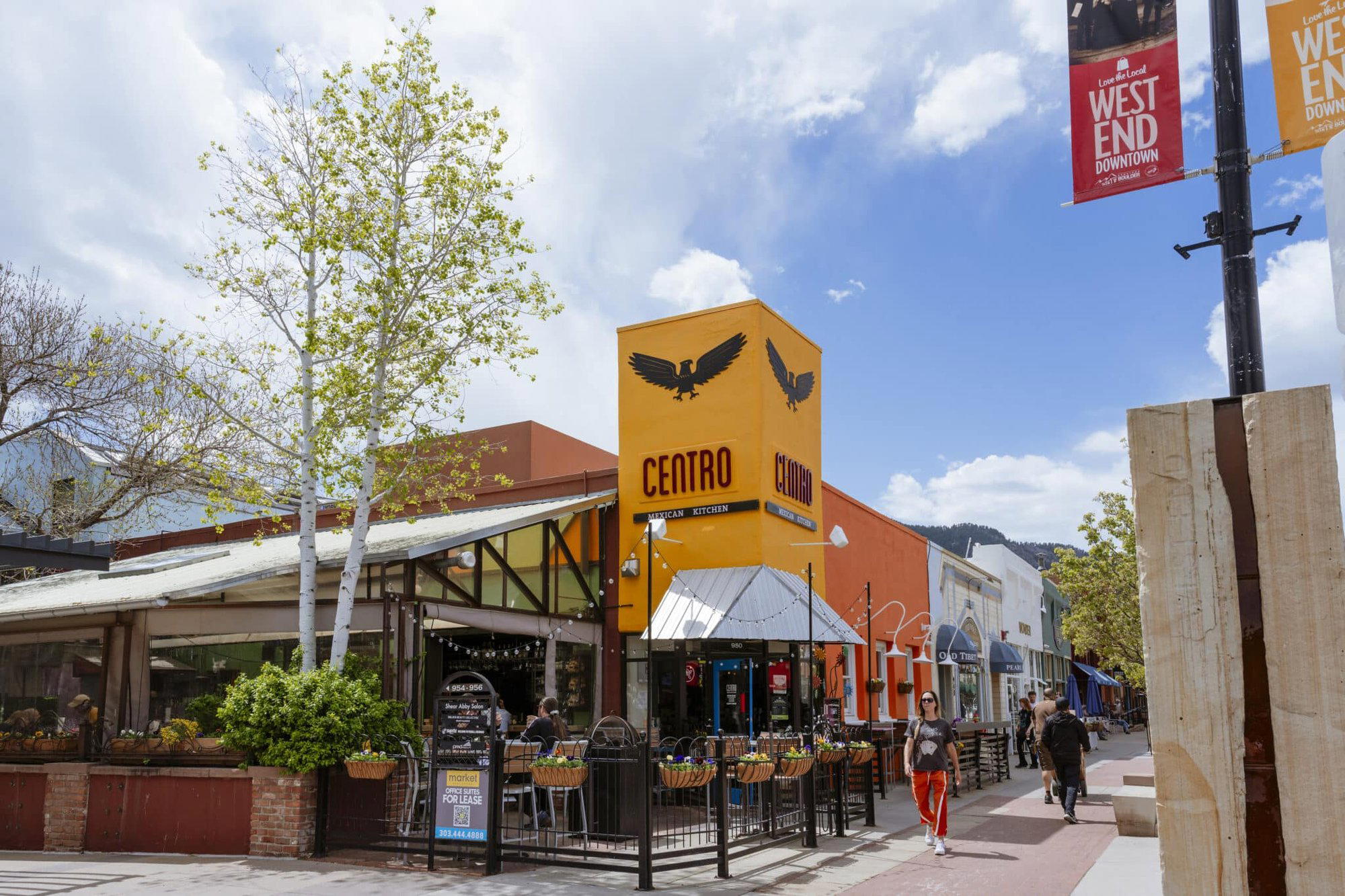
Pearl Street and the Rhythm of a Mexican Meal
Pearl Street in Boulder moves at a particular pace. The corridor runs west toward the Flatirons, lined with a mix of long-established dining rooms and newer arrivals, and on any given evening the crowd skews toward the kind of guest who has already eaten at Frasca Food & Wine and is now looking for something less formal but no less considered. Centro Mexican Kitchen sits at 950 Pearl St inside that current, drawing from a neighbourhood that has become one of Colorado's more interesting mid-tier dining addresses. The question the restaurant implicitly answers is whether Boulder can support Mexican cooking that takes its structure seriously — not Tex-Mex shortcuts, not fusion hedging, but the actual architecture of a regional Mexican meal.
That architecture matters more than any individual dish. A properly sequenced Mexican meal in the tradition that Centro references — antojitos first, then heavier protein-led plates, tortillas made to order, salsas as a running conversation rather than a condiment, is a dining ritual with its own logic. The pacing is unhurried. Agave spirits, whether mezcal or tequila, are meant to punctuate rather than accompany; the food comes in waves that build rather than peak and drop. In cities where Mexican restaurants are still expected to deliver everything at once in a single large plate, that format is an argument as much as a menu.
Where Centro Sits in Boulder's Dining Map
Boulder's dining scene clusters around a handful of persistent strengths: Italian technique at the leading end, farm-driven American cooking across a wide mid-range, and an expanding international tier that includes Vietnamese and Chinese options. Basta and Frasca anchor the European end of the serious-dining spectrum; Blackbelly Market represents the local-sourcing American model; and outliers like Boulder Dushanbe Tea House and Boulder Pho serve communities and traditions that mainstream Boulder dining has historically underrepresented. Centro occupies the Mexican slot in that map, a position that, in a city of this size and food literacy, carries weight.
The comparison set for a restaurant doing this kind of work is not the Pearl Street tourist trade. It is closer to what mid-price Mexican kitchens in Denver's LoHi neighbourhood have been doing for the past decade: sourcing masa with intention, building mezcal programs that move past the obvious bottles, and treating salsa not as a freebie but as a signature. Boulder sits about 25 miles northwest of Denver by road, and Centro connects the city to that wider Colorado Mexican dining conversation without simply replicating it. The local university population and the outdoor-recreation crowd that passes through Boulder skew younger and more price-sensitive than the clientele at, say, The French Laundry in Napa or Le Bernardin in New York City, but Pearl Street also draws a consistent professional and academic audience prepared to spend on food that has something to say.
The Logic of the Menu Format
Mexican kitchen culture divides more clearly than most into the meal's component parts, and restaurants that respect that division tend to eat differently from those that compress everything into one order. Antojitos, small, hand-held preparations built on masa, function as an opening statement. They require quick consumption; the tortilla starts to firm the moment it leaves the comal. Ordering two or three at the start and then moving to a heavier plate is not a preference but a sequence the food itself enforces.
That forward momentum, when it is working, produces a meal with a shape: light and sharp at the start, richer through the middle, cooled by fresh elements at the end. Kitchens that can maintain that shape in a mid-volume restaurant environment, where timing is harder to control than at a ten-seat counter, are doing something technically demanding. The challenge is not complexity for its own sake but the kind of steady repetition that keeps tortillas warm, salsas fresh, and proteins arriving at the right moment. Across the American restaurant spectrum, from Lazy Bear in San Francisco to Smyth in Chicago, the kitchens that sustain critical attention are the ones where format discipline is treated as equal to ingredient quality. The same principle applies one tier down.
Agave and the Drinks Conversation
Tequila and mezcal have followed a trajectory in American bars that closely mirrors what happened to whisky and natural wine over the previous two decades: a commodity product becomes a category worth studying, specialist producers emerge, and the knowledgeable drinker develops preferences that the average back bar cannot satisfy. A Mexican restaurant in 2024 that treats its agave program as a secondary concern is leaving the most interesting part of the conversation on the table.
The better agave programs in Colorado run alongside serious food programs rather than sitting above or below them. Restaurants that have done the work on mezcal, stocking expressions beyond the mass-market smoky profiles, explaining production methods, serving them in the right glass at the right temperature, create a drinks experience that supports the food rather than competing with it. This is the standard against which Centro's drinks program would be measured by a guest arriving from a broader national dining context, whether they have recently eaten at Providence in Los Angeles, Addison in San Diego, or any other city where the bar program is now considered inseparable from the kitchen's ambitions. For a broader view of where Boulder's dining fits nationally, see our full Boulder restaurants guide.
Planning Your Visit
Centro sits at 950 Pearl St, on the main pedestrian corridor that connects Boulder's downtown core to the mountain-facing western end of the street. The location puts it within easy reach of the hotels and accommodation clusters along Canyon Boulevard and the University Hill area to the south. Pearl Street dining tends to fill from around 6pm on weeknights and earlier on weekends during summer and ski-adjacent seasons, when Boulder draws visitors from Denver and further afield. Given the absence of published booking data, contacting the restaurant directly before arrival, particularly for groups or weekend evenings, is the sensible approach. The Pearl Street corridor also connects to a broader evening that can include pre-dinner drinks elsewhere on the strip, making it a natural anchor for a multi-stop Boulder night. Restaurants elsewhere in the EP Club network operating at a comparable format level, from Emeril's in New Orleans to Blue Hill at Stone Barns in Tarrytown, share the characteristic that reservations made in advance convert to a materially better experience than walk-in attempts on busy nights.
Frequently asked questions
What's Centro Mexican Kitchen's location?
Centro Mexican Kitchen is located at 950 Pearl St, Boulder, CO 80302, Boulder.
How does Centro Mexican Kitchen approach tequila and mezcal compared to typical Boulder bars?
Centro operates as a Mexican kitchen, which means the agave spirits program is built around the food rather than treated as a separate cocktail bar offering. In Boulder's dining scene, that integration is relatively uncommon — most agave-forward lists in the city sit inside general American or craft cocktail venues rather than alongside a regionally structured Mexican menu at 950 Pearl St.
What's the signature dish at Centro Mexican Kitchen?
Centro's identity is built around the structure of a Mexican meal rather than a single headline dish. The kitchen follows regional Mexican logic — masa-based preparations anchor the early courses, with proteins and sauces layered in as the meal progresses. That format discipline, at 950 Pearl St in Boulder, sets it apart from the European-influenced rooms that dominate the surrounding block.
What's the best way to book Centro Mexican Kitchen?
No reservations platform or phone number appears in current public records for Centro at 950 Pearl St. Given its position on Boulder's busiest pedestrian corridor, walk-in timing matters: arriving before the dinner rush on weeknights will give you the best shot at a table without a wait.
Cuisine and Recognition
Comparable venues nearby, for context on price, style, and recognition.
| Venue | Cuisine | Price | Awards | Notes |
|---|---|---|---|---|
| Centro Mexican KitchenThis venue — the venue you are viewing | Colorado-Inspired Mexican | $20–30 | Not listed | Not listed |
| Tasuki Sushi Bistro | Authentic Japanese Sushi Bistro | $50–100 | Not listed | Central Boulder |
| Boulder Pho | Vietnamese Pho | $10–20 | Not listed | Crossroads |
| Stella's Cucina | Pan-Regional Italian | $50–100 | Michelin Plate | Central Boulder |
| Growing Gardens | Dining | Not listed | Not listed | Boulder |
| Folsom Thai | Authentic Thai | $20–30 | Not listed | Central Boulder |
Continue exploring
More in Boulder
Restaurants in Boulder
Browse all →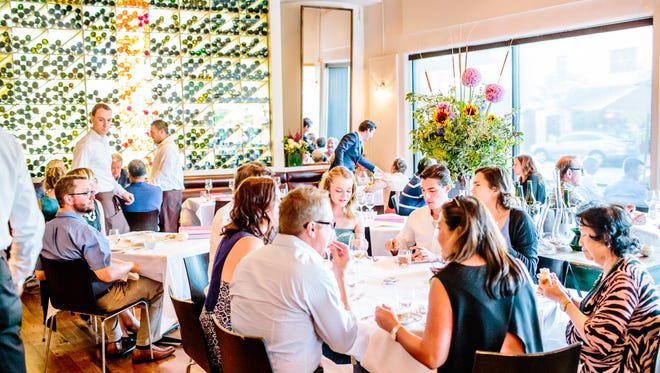
Bars in Boulder
Browse all →
Hotels in Boulder
Browse all →

Details
- Lively
- Trendy
- Rustic
- Brunch
- Casual Hangout
- Group Dining
- Open Kitchen
- Terrace
- Craft Cocktails
- Street Scene
- A La Carte
- Craft Cocktails
- Vegetarian Friendly
- Vegan Options
- Gluten Free Options
Current opening hours
- Monday
- 11 AM–9 PM
- Tuesday
- 11 AM–9 PM
- Wednesday
- 11 AM–9 PM
- Thursday
- 11 AM–9 PM
- Friday
- 11 AM–10 PM
- Saturday
- 10 AM–10 PM
- Sunday
- 10 AM–9 PM
Hours can change for holidays and private events. Last verified .
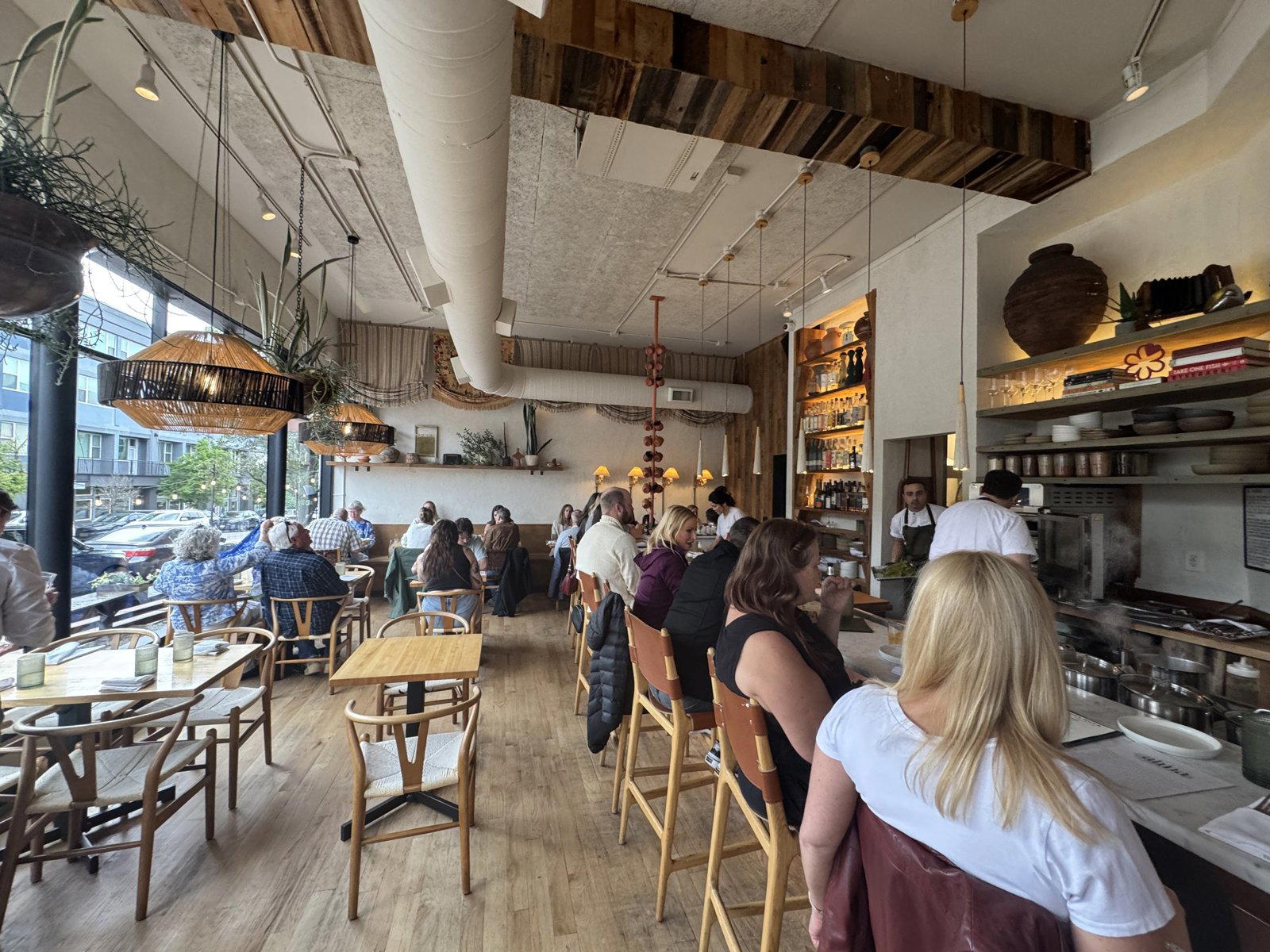
Bright, spacious dining room with cozy nooks and a laid-back year-round covered patio atmosphere.