Boulder Dushanbe Tea House

A hand-built gift from Boulder's Tajik sister city of Dushanbe, this Pearl Street-adjacent tea house earns its 2024 Michelin Plate through a menu that spans plov and samosas to apple strudel, anchored by a comprehensive tea program. The carved ceilings, painted columns, and ceramic tilework make the setting as substantive as what arrives at the table. Afternoon tea is the format that best captures the space's rhythm.
Pearl is the En Primeur Club membership app — saves, bookings, and concierge access live there. Same editors, same standards.
- Address
- 1770 13th St, Boulder, CO 80302
- Phone
- (303) 442-4993
- Website
- boulderteahouse.com
- Directions
- Get directions
 Saves & bookings on Pearl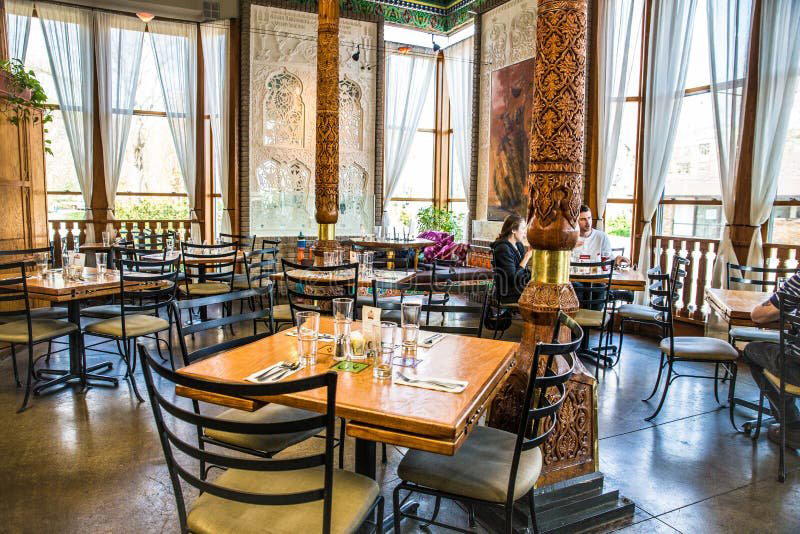
A Different Pace on 13th Street
Boulder's dining scene has a well-documented appetite for the ambitious. Frasca Food & Wine anchors one end of the spectrum with its Michelin-starred Italian precision; Basta and Blackbelly Market hold the middle ground with contemporary American seriousness. Boulder Dushanbe Tea House is a restaurant in Boulder, Colorado, with a Michelin Plate in 2024 and a price around $25 per person. It operates on an entirely different register. The building itself is the opening argument: a structure gifted by Dushanbe, the capital of Tajikistan and Boulder's sister city, hand-carved and hand-painted by Tajik artisans before being shipped piece by piece and assembled on Colorado soil. That origin is not decorative backstory. It is the reason the columns, ceiling panels, and ceramic details carry a density of craft that imported furniture cannot replicate.
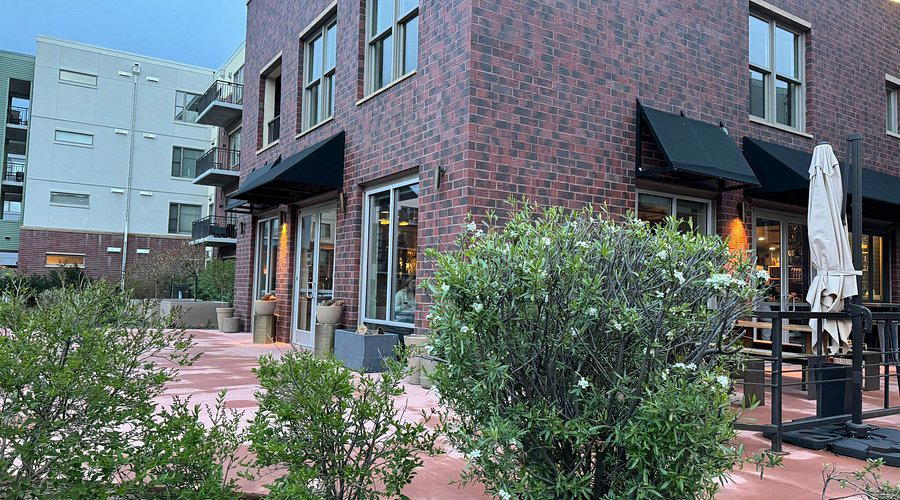
The approach from the front garden sets the tempo. Before you reach the door, the visual register has already shifted away from the exposed-brick-and-Edison-bulb vocabulary that defines much of Pearl Street. Inside, carved plasterwork and painted wood panels transport the room into the architectural tradition of Central Asian teahouses, where the physical environment is treated as an active participant in the ritual of slowing down. This is one of the few rooms in the Rocky Mountain region where the setting makes an argument about how a meal should feel, not just what it should taste like.
The Tea House as Dining Format
In the Central Asian tradition, the teahouse is not a precursor to a meal or an afterthought to one. It is the meal's organizing principle. Tea arrives first, is replenished throughout, and frames everything else on the table. Boulder Dushanbe Tea House follows that structural logic more closely than most Western tea rooms, which tend to treat tea as an accompaniment to sandwiches and scones rather than as the throughline of the entire visit.
The tea selection here is comprehensive by any measure, ranging across green, black, herbal, and regional blends that a guest could reasonably spend several visits working through. Afternoon tea is the format that most clearly aligns with the room's pacing. It calls for a longer sit, a deliberate order of arrival, and the kind of attention to the table that the carved surroundings seem designed to encourage. For visitors comparing Eastern European and Central Asian-inflected tea culture with what they might find at venues like Anelya in Chicago or Kinkally in London, the Dushanbe Tea House occupies a distinct position: it is the only venue of its kind in Colorado, and one of the few in the United States where the architectural context is itself Tajik rather than approximated.
What the Menu Is Doing
The kitchen's range is genuinely wide, and that breadth reads as a statement about the tea house's role as a crossroads rather than a single-cuisine restaurant. Plov, the buttery rice dish with chickpeas, dried fruit, and grilled beef that anchors Tajik and Uzbek home cooking, sits on the menu alongside samosas, apple strudel, and feijoada. This is not fusion in the contemporary sense: no single dish is trying to hybridize two traditions. Instead, the menu maps the historical and geographic range of trade routes and shared hospitality cultures that Central Asian teahouses historically embodied.
For context, this kind of geographic eclecticism in a single menu is common in the tea house tradition of the Silk Road corridor, where a traveler arriving from the west might expect bread, dried fruits, and lamb, while the house also knew how to receive guests arriving from further east. The Boulder iteration translates that hospitality logic into a format that makes sense for a university city with a wide range of palates. The dessert selection rewards attention: the pastry end of the menu is treated as seriously as the savory, which is not universal in tea-focused venues at this price point.
Where It Sits in Boulder's Dining Picture
At the $$$ price range, the Dushanbe Tea House occupies the same tier as Blackbelly Market and sits above the accessible end of the market represented by Cozobi Fonda Fina and Bramble & Hare. The 2024 Michelin Plate is a signal worth parsing: the Plate designation, introduced by Michelin to recognize quality cooking below the star threshold, places the Tea House in a category shared across the guide with venues as varied as Le Bernardin in New York and neighborhood tables across the country. What it confirms is that the kitchen meets a consistent standard of execution, not that it is competing in the same formal idiom as The French Laundry or Alinea.
The more useful comparison set is experiential rather than culinary. Venues like Lazy Bear in San Francisco or Single Thread in Healdsburg have demonstrated that dining formats anchored in ritual and a defined sequence of hospitality can sustain a premium price tier independently of haute cuisine ambition. The Dushanbe Tea House operates by the same principle from the opposite direction: the ritual here is older, less chef-driven, and more architecturally embedded.
Planning the Visit
The Tea House sits at 1770 13th Street, a short walk from the Pearl Street Mall. The $25 per person price positions this as a considered outing rather than a casual drop-in, and the format rewards treating it that way: a meal here benefits from time, and rushing through a plov and a pot of tea to make a next appointment misses the point of the room. Arriving without a reservation during peak weekend hours is possible but carries risk. A weekday afternoon visit, when the room is quieter and the tea service can be paced deliberately, tends to match what the space is designed for.
Visitors comparing notes with what Emeril's in New Orleans represents for its city as a dining institution with a specific cultural argument will find a different but parallel logic here: this is a place that exists because of a specific act of cultural exchange, and it uses that foundation to do something the surrounding restaurant scene cannot replicate.
Style and Standing
Comparable venues nearby, for context on price, style, and recognition.
| Venue | Cuisine | Price | Awards | Notes |
|---|---|---|---|---|
| Boulder Dushanbe Tea HouseThis venue — the venue you are viewing | Global Fusion Tea House | $$ | Michelin Plate | Not listed |
| Santo | New Mexican | $$ | Michelin Plate | Central Boulder |
| Holy Crepe | Authentic French Crêpes | $$ | Not listed | Central Boulder |
| Folsom Thai | Authentic Thai | $$ | Not listed | Central Boulder |
| Blackbelly Market | American Farm-to-Table Steakhouse | $$$ | Michelin Plate | East Boulder |
| SALT | Sustainable Farm-to-Table Bistro | $$$ | Not listed | Central Boulder |
Recognition history
Dated appearances from independent guides and award organizations, with the underlying list record or original source where available.
Michelin Plate
Michelin
Michelin Plate
Michelin
Continue exploring
More in Boulder
Restaurants in Boulder
Browse all →
Bars in Boulder
Browse all →
Hotels in Boulder
Browse all →
Wineries in Boulder
Browse all →
At a Glance
- Scenic
- Elegant
- Whimsical
- Well Known
- Brunch
- Celebration
- Family
- Group Dining
- Date Night
- Garden
- Waterfront
- Historic Building
- Design Destination
- Standalone
- Extensive Wine List
- Craft Cocktails
- Beer Program
- Local Sourcing
- Garden
- Waterfront
Current opening hours
- Monday
- 11 AM–9 PM
- Tuesday
- 11 AM–9 PM
- Wednesday
- 11 AM–9 PM
- Thursday
- 11 AM–9 PM
- Friday
- 11 AM–9 PM
- Saturday
- 8 AM–9 PM
- Sunday
- 8 AM–9 PM
Hours can change for holidays and private events. Last verified .
Beautifully ornate interior with colorful tilework, delicate hand-painted details, wooden support beams, and a central fountain with statues and plants; serene yet lively with natural light from riverside location.