Casa Bea sits in Puerto Juárez, the working harbour district north of Cancun's hotel strip, where the dining register shifts from resort programming to neighbourhood reality. Without a published menu or formal awards record, it occupies the category of local institution that sustains itself on repeat custom rather than tourist footfall. For travellers willing to move beyond the boulevard, it represents a different kind of Cancun meal.
Pearl is the En Primeur Club membership app — saves, bookings, and concierge access live there. Same editors, same standards.
- Address
- Av. José López Portillo 724, Puerto Juarez, 77524 Cancún, Q.R., Mexico
- Phone
- +529983645935
- Directions
- Get directions
 Saves & bookings on Pearl
Puerto Juárez and the Other Cancun
The stretch of Avenida José López Portillo running through Puerto Juárez tells a different story about Cancun than the hotel zone does. This is the working side of the city: ferry terminals, fishing boats, family-run markets, and restaurants whose clientele is largely Mexican. The dining here doesn't perform for visitors. It operates on the logic of daily life, which means shorter menus, fresher product cycles, and a relationship with local suppliers that resort kitchens rarely replicate. Casa Bea, at number 724 on that avenue, sits inside this ecosystem. Approaching it, you're moving away from the choreographed seafront and into a district where the smell of the Caribbean arrives without ceremony, carried on a breeze between buildings rather than framed by a panoramic deck.
For context on how this compares to Cancun's more visible dining tier, the hotel zone contains venues like The Club Grill and Le Basilic, which operate inside the resort infrastructure and price accordingly. Puerto Juárez operates on different economics and a different supply logic entirely. That gap matters for anyone trying to understand what the city's food culture actually looks like beneath its tourism surface.
A Neighbourhood Where Sourcing Is Structural, Not Aspirational
Across Mexico, the conversation about sustainable sourcing has bifurcated sharply. In destination-dining contexts, places like Animalón in Valle de Guadalupe or Olivea Farm to Table in Ensenada have built explicit farm-to-table frameworks that double as marketing positions. In urban neighbourhood settings, the same supply relationships exist but without the branding apparatus. Ingredients come from local markets because that's how the kitchen has always worked, not because a menu section calls it out. Puerto Juárez is the latter kind of place. Proximity to the water means that when a restaurant here serves fish, it is more likely to have arrived that morning by boat than by refrigerated logistics chain.
This structural proximity to source is, in practical terms, a form of sustainability that precedes the movement's vocabulary. It also tends to produce a different eating experience: less architectural plating, more attention to the ingredient itself. Mexico's most analytically rigorous kitchens, from Pujol in Mexico City to Le Chique in Puerto Morelos, have formalised this logic into tasting-menu formats with sourcing notes and producer credits. Neighbourhood restaurants like Casa Bea carry the same underlying ethic without the apparatus, which is a distinction worth making rather than collapsing.
What the Address Tells You
Puerto Juárez is not a dining district in the way that, say, Cancun's downtown or parts of Playa del Carmen function for restaurant-seekers. It is primarily a transit and residential zone, which means restaurants here earn their custom differently. There is no walk-in tourist overflow sustaining mediocre kitchens. The places that persist in Puerto Juárez do so because local regulars return. That self-selection process produces a different quality signal than awards or reviews: it is the quieter but more durable signal of community endorsement. Venues like Kiosco Verde and La Casa De Las Mayoras operate in comparable registers elsewhere in the city, serving local clientele on the basis of consistency and price integrity rather than destination appeal.
For the visiting diner, this has a practical implication worth noting: arriving at Casa Bea without prior knowledge of the area requires a deliberate decision to travel north from the hotel zone. The address at Av. José López Portillo 724 places it beyond the easy cab radius that most resort guests operate within, which is precisely why it remains off the standard Cancun circuit. That's not a drawback; it's the condition that keeps it what it is.
The Broader Yucatán Peninsula Dining Frame
Cancun sits at the northern tip of a peninsula whose food culture draws from Mayan agricultural traditions, Caribbean coastal supply, and decades of regional Mexican cooking. The leading cooking in this corridor, whether at HA' in Playa del Carmen or neighbourhood spots along the coast, tends to reflect that layering. Recado pastes, fresh chiles, achiote, and Gulf seafood are the structural vocabulary, and kitchens that respect those ingredients tend to produce food that is identifiable as from here rather than a generic tropical backdrop.
Understanding where Casa Bea sits in that frame requires acknowledging what its address and neighbourhood context imply: this is a local restaurant operating in a working district, which places it closer to the everyday cooking traditions of the peninsula than to the destination-dining circuit that has emerged along the Riviera Maya. That positioning is neither lesser nor greater than the tasting-menu tier. It represents a different access point to the same food culture, and for many travellers it will be the more instructive one.
Mexico's sustainable dining conversation has found particularly strong expression in regional kitchens. Levadura de Olla in Oaxaca, KOLI Cocina de Origen in Monterrey, and Alcalde in Guadalajara have each formalised a connection to local producers and traditional techniques into recognised culinary programs. Internationally, kitchens such as Le Bernardin in New York City and Lazy Bear in San Francisco have shown how sourcing transparency can become central to a restaurant's identity. The neighbourhood model represented by Puerto Juárez venues operates without that explicit framework but within the same underlying logic of supply proximity and seasonal availability.
Planning a Visit
The restaurant's address, Av. José López Portillo 724, Puerto Juárez, places it in the northern reaches of the urban area, a meaningful distance from both the hotel zone and Cancun's downtown. Confirm operational details before making the trip, particularly if travelling from further afield in the Yucatán. Other venues in Cancun's neighbourhood restaurant tier, including Café con Gracia, Bodega Argentina, and Asador La Vaca Argentina, offer useful comparison points for understanding the pricing and format expectations in this segment. Capri Pizza Moderna and Bombay Cancún round out a picture of a city with considerably more dining range than its resort reputation suggests. On the broader Mexican fine dining circuit, Pangea in San Pedro Garza García and Lunario in El Porvenir provide a sense of how regional kitchens outside the capital have developed their own sourcing-forward identities.
At a Glance
Comparable venues nearby, for context on price, style, and recognition.
| Venue | Cuisine | Price | Notes |
|---|---|---|---|
| Casa BeaThis venue — the venue you are viewing | Not listed | $ | Not listed |
| The Surfin Burrito | Not listed | $ | 2300500010421, Coastal Mexican Burritos & Tacos |
| Porfirio's Cancún | Cancún, Contemporary Mexican | $$$ | Not listed |
| La Grandiosa | Not listed | $$ | 2300500010120, Authentic Mexican Cantina |
| La Fonda del Zancudo | Not listed | $$ | 2300500010120, Modern Mexican Fusion with Mediterranean Influences |
| Trattoria Limoncello | Cancún, Authentic Italian Trattoria | $$ | Not listed |




At a Glance
- Cozy
- Family
- Brunch
- Casual Hangout
Current opening hours
- Monday
- 7 AM–5 PM
- Tuesday
- 7 AM–5 PM
- Wednesday
- Closed
- Thursday
- 7 AM–5 PM
- Friday
- 7 AM–5 PM
- Saturday
- 7 AM–5 PM
- Sunday
- 7 AM–5 PM
Hours can change for holidays and private events. Last verified .
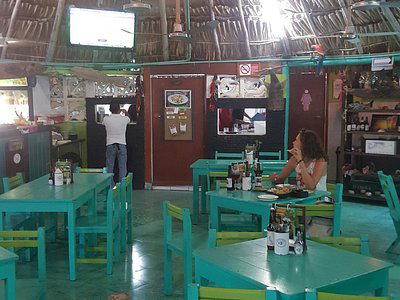
Warm, welcoming, and cozy atmosphere with friendly service in a charming market location.