Carrot Express
Carrot Express on Brickell Avenue sits in a Miami dining corridor that has grown progressively serious about fast-casual health-forward formats alongside its fine dining anchors. The address places it among the financial district's lunch-hour crowd and the broader Brickell residential base, positioning it as a quick-service counterpoint to the neighbourhood's more formal tables. Practical and direct, it serves a different moment in the day than its block neighbours.
Pearl is the En Primeur Club membership app — saves, bookings, and concierge access live there. Same editors, same standards.
- Address
- 1111 Brickell Ave, Miami, FL 33131
- Phone
- +17867622607
- Website
- carrotexpress.com
- Directions
- Get directions
 Saves & bookings on Pearl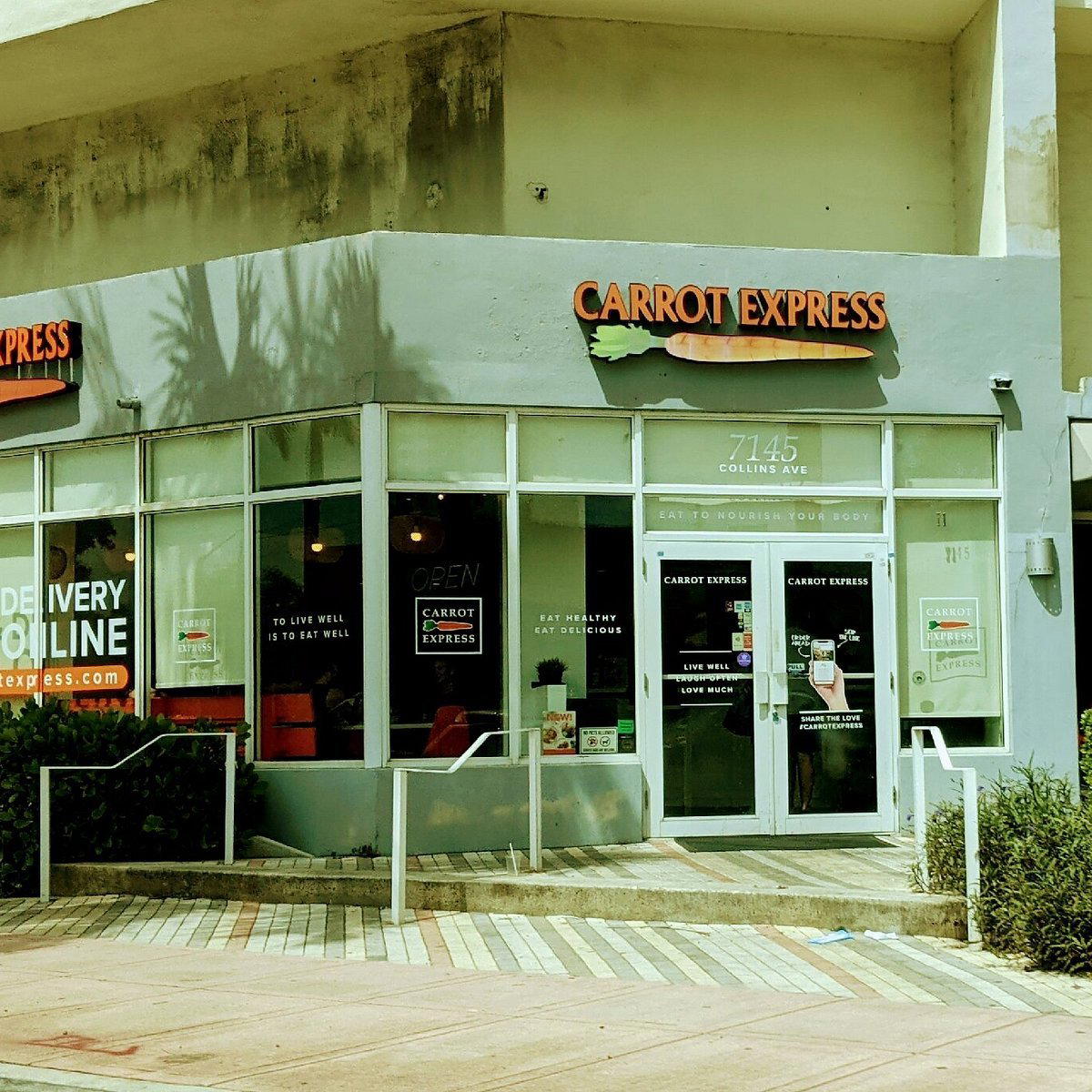
Brickell's Quick-Service Tier and Where Carrot Express Fits
Miami's Brickell corridor has spent the better part of a decade accumulating serious restaurant credentials. The same avenue that routes diners toward Korean dry-aged beef at Cote Miami and the technically demanding tasting formats at Ariete also supports a dense working population that needs fast, reliable food between meetings. That dual demand has created a two-speed dining ecosystem in the neighbourhood: destination restaurants drawing from across the city on one hand, and counter-service and fast-casual operations on the other. Carrot Express, at 1111 Brickell Ave, occupies that second tier.
Fast-casual health formats have expanded across American financial districts in proportion to the density of office workers who have moved away from sit-down lunch habits. Brickell is no exception. The concentration of banks, law firms, and tech offices along this stretch means any quick-service concept with a legible menu and short wait times has a natural audience baked into the zip code. Carrot Express reads as a product of that urban logic rather than as a destination dining proposition.
The Collaborative Layer in Counter-Service Operations
The editorial angle most often applied to counter-service restaurants treats them as single-operator enterprises: one founder, one idea, one execution. That framing misses the operational reality. Even in fast-casual formats, the front-of-house rhythm, the kitchen production tempo, and the sourcing decisions that shape a menu are collaborative outputs. The speed at which a counter moves during Brickell's compressed midday window, for instance, depends on back-of-house sequencing as much as on the concept itself. What works in a 45-seat full-service room requires a different coordination structure from what works at a takeout counter serving a block of offices.
At the fast-casual end of the Miami market, team dynamic tends to show up less in sommelier pairing notes and more in throughput reliability. A counter that runs clean during peak lunch service in a high-density financial district demonstrates the same underlying operational discipline that distinguishes a well-run floor at a fine dining room, even if the surface presentation is radically different. The question for any quick-service operation on a block this competitive is whether the product holds up under that daily pressure.
Miami's Health-Forward Fast Casual in Context
Across American cities with significant financial districts, health-oriented quick-service concepts have settled into a recognisable pattern: bowls, pressed juices, plant-forward proteins, and customisable formats that compress decision-making without sacrificing the appearance of choice. The format spread from New York and Los Angeles through Miami over roughly the same decade that saw those cities' fine dining scenes diversify most aggressively. It is worth placing the restaurant in that broader pattern rather than treating it as an isolated address.
Miami's fine dining development over the same period has been well-documented. The city now supports a range of serious restaurants that hold their own against comparably positioned peers in other American markets: Boia De on the contemporary Italian side, and the French technical tradition maintained at L'Atelier de Joël Robuchon Miami. Further afield in the national picture, the farm-to-service model has been formalised most explicitly at places like Blue Hill at Stone Barns and Single Thread Farm in Healdsburg, where sourcing provenance is front and centre in both the menu language and the pricing structure. Fast-casual health concepts occupy the same ideological territory at a lower price point and a radically different service model.
The growth of Peruvian-influenced menus in Miami, visible at ITAMAE, reflects the city's broader demographic composition and the culinary directions that composition enables. Quick-service operations tend to follow similar demographic signals, adapting flavour profiles to the surrounding population rather than leading taste. On Brickell, that means the competitive set for any fast-casual concept includes not just other counter-service operations but also the grab-and-go offerings of the neighbourhood's hotels and the delivery platforms that have further compressed the midday decision cycle.
What to Expect at 1111 Brickell
The restaurant is a casual, walk-in-friendly restaurant at 1111 Brickell Ave in Miami, serving healthy fast-casual salads, wraps, and smoothies at a price point around $15 per person. What the address does confirm is placement in one of Miami's highest-traffic commercial corridors, where foot traffic from the surrounding office and residential towers provides a consistent daytime audience.
Those looking to benchmark quick-service options against the city's more ambitious tables should note the contrast is intentional: a day in Brickell can reasonably move from a counter lunch to a serious dinner at a room like those covered elsewhere in the guide without either moment feeling out of step with the neighbourhood's range.
How Brickell Compares to Fast-Casual Contexts Elsewhere
The counter-service tier in Miami operates under different constraints than the same category in cities with longer established food cultures. In San Francisco, the proximity of serious farm networks has pushed even fast-casual concepts toward more transparent sourcing language, a tendency visible in the broader ecosystem around Lazy Bear. In New Orleans, the weight of local culinary tradition shapes even quick formats in ways that are less pronounced in a younger food city, something that still resonates around the legacy of Emeril's. Chicago's approach to fast-casual tends to reflect the same disciplined kitchen culture that runs through its serious dining rooms, including those at Smyth.
Miami is still calibrating what its quick-service tier should look like as the city's overall dining ambition has grown. The Brickell corridor is one of the clearer test environments for that calibration, given the density of potential diners and the relatively short history of the neighbourhood as a serious food destination. Concepts that stabilise here tend to be operationally efficient rather than conceptually adventurous, which is a reasonable adaptation to the market.
The Essentials
Comparable venues nearby, for context on price, style, and recognition.
| Venue | Cuisine | Price | Notes |
|---|---|---|---|
| Carrot ExpressThis venue — the venue you are viewing | Not listed | $ | Not listed |
| Crazy About You | Not listed | $$ | Miami Financial District, American Waterfront Dining |
| LoKal | Not listed | $$ | Coconut Grove, Sustainable American Burgers & Gastropub |
| Cream Parlor | Shorecrest, Homemade Ice Cream & Cafe | $$ | Not listed |
| Smokey Trails BBQ | Miami Shores, BBQ | $$ | Not listed |
| El Bagel | Not listed | $ | MiMo Biscayne Boulevard, Miami Bagel Shop |


At a Glance
- Casual
- Cozy
- Casual Hangout
- Brunch
- Standalone
Current opening hours
- Monday
- 7 AM–8:45 PM
- Tuesday
- 7 AM–8:45 PM
- Wednesday
- 7 AM–8:45 PM
- Thursday
- 7:15 AM–8:45 PM
- Friday
- 7 AM–8:45 PM
- Saturday
- 7 AM–8:45 PM
- Sunday
- 7 AM–8:45 PM
Hours can change for holidays and private events. Last verified .
Fun, comfortable, relaxed, and casual coastal atmosphere focused on wellness.