Our verdict
On Nikole Tesle, one of Zagreb's more quietly composed streets in the Upper Town fringe, Carpaccio occupies a position in the city's Italian-leaning dining tier. The name signals a kitchen oriented around raw preparations and refined European technique, placing it in a competitive set that includes both neighbourhood trattorias and the more formal modern Croatian restaurants pulling diners toward the city centre.

Pearl is the En Primeur Club membership app, where members save venues, book tables and use the concierge.

The menu
What to order
- Carpaccio
- Handmade Ravioli with Ricotta
- Saltimbocca
- Veal Milanese
- White Fish in Cartoccio
A Street That Sets the Tone Before You Sit Down
Ulica Nikole Tesle runs through a part of Zagreb that sits between the tourist-facing energy of Tkalčićeva and the more deliberate calm of the Upper Town. Restaurants here tend to draw a local professional crowd alongside visitors who have moved past the main squares. That context matters: venues on this stretch compete on consistency and atmosphere rather than foot traffic, which tends to filter out the purely opportunistic and reward kitchens with a point of view. Carpaccio, at number 14, operates inside that quieter competitive logic.
In Zagreb's dining tier structure, Italian-inflected restaurants occupy a specific middle ground. They sit above the fast-casual pizza and pasta operations clustered near Jelačić Square, but below the formal modern Croatian and contemporary European rooms that anchor the city's Michelin-adjacent conversation. Noel (Modern Cuisine) and Al Dente each occupy different positions in that spread, and Carpaccio's name alone positions it toward the lighter, more ingredient-forward end of the Italian tradition. A carpaccio, in its original form, is raw beef dressed with oil and lemon, a preparation that requires confidence in sourcing rather than technique as spectacle.
Lunch vs. Dinner: Two Different Restaurants in the Same Room
Zagreb's better-positioned restaurants tend to operate as functionally different venues depending on the hour, and this is where the editorial angle on a place like Carpaccio becomes most useful to a reader planning a visit.
At lunch, the Croatian capital runs on a rhythm inherited partly from Central European work culture and partly from the Mediterranean habit of treating midday as the serious meal. The city's business lunch has a particular character: shorter in format than its Austrian or Hungarian equivalents, but more deliberate than a quick sandwich culture. Restaurants in the Tesle area serve a daytime crowd that expects value calibrated to the format. A three-course lunch at a mid-tier Italian in this part of Zagreb typically lands below what an equivalent dinner service would cost, and the pace tends to be faster without feeling rushed. Natural light does work in a room that might feel more intimate after dark, and the kitchen is often running a tighter, more focused menu.
Evening service in the same space shifts the calculus. Zagreb's dinner culture has a longer lag than many Western European capitals: tables fill later, the pace extends, and the expectation around wine shifts from a carafe of local white to a more considered selection. For a restaurant with Italian orientation, that means the evening becomes the more appropriate frame for exploring the wine list, and the shift from raw to cooked preparations becomes more pronounced. Dubravkin Put (Mediterranean Cuisine) illustrates the dinner-centric model well: it operates in a register where the evening format defines the identity. Carpaccio's positioning, given its name and address, suggests a kitchen that can serve both registers, but where the value proposition at lunch is the more immediate argument for a first visit.
Where It Sits in the Zagreb Scene
Croatia's restaurant culture has shifted considerably over the past decade, with the coastal properties drawing the most international recognition. Agli Amici Rovinj in Rovinj, Pelegrini in Sibenik, and Restaurant 360 in Dubrovnik anchor the country's fine dining reputation in venues where Adriatic produce, terrace dining, and seasonal tourism create a particular kind of restaurant economy. Zagreb operates differently. The capital's better restaurants serve a year-round domestic clientele with less tolerance for tourist-season pricing and more expectation of consistency across all twelve months.
That year-round accountability tends to produce kitchens with more disciplined fundamentals. It also means the Italian influence in Zagreb's dining scene carries a slightly different weight than it does on the coast, where Istrian proximity makes Italian culinary reference almost geographic. In the capital, Italian-oriented cooking is a deliberate choice of register, aligning with European urban dining norms rather than regional tradition. Izakaya (Japanese Contemporary) operates at the other end of that spectrum, showing how Zagreb's mid-tier has diversified away from purely European reference points.
For context across Croatia's wider scene, Korak in Jastrebarsko, Nebo by Deni Srdoč in Rijeka, Alfred Keller in Mali Lošinj, LD Restaurant in Korčula, Boskinac in Novalja, Krug in Split, and San Rocco in Brtonigla each represent different regional dining traditions that collectively make the country's restaurant scene more varied than its international profile suggests. Measured against that range, Zagreb's Italian-inflected tier, where Carpaccio operates, is the city's most reliable everyday register rather than its most adventurous.
Planning a Visit
Ulica Nikole Tesle 14 is accessible on foot from the city's main tram network, placing it within a short walk of both Jelačić Square and the Gornji Grad funicular. For visitors structuring a day around Zagreb's Upper Town galleries and the Cathedral, Carpaccio's location makes it a logical midday stop. Given the address and the restaurant's category, booking ahead for dinner is the more prudent approach, particularly on Fridays and Saturdays when Zagreb's restaurant-going population competes for the same mid-tier rooms. Lunch walk-in is generally more workable at this level of the market. Phone and website details were not available at the time of publication, so direct reservation through a hotel concierge or an in-person visit to confirm hours is advisable. See our full Zagreb restaurants guide for broader planning context, including Amfora and other options across price tiers.
Frequently asked questions
What's the address for Carpaccio?
Carpaccio is located at ul. Nikole Tesle 14, 10000, Zagreb, Croatia, Zagreb.
Is Carpaccio in Zagreb suitable for a business lunch, and how does it compare to other mid-city options?
Carpaccio's address on Ulica Nikole Tesle 14, within a short walk of Jelačić Square and the Gornji Grad district, makes it logistically practical for a central Zagreb business lunch. Zagreb's restaurant culture has shifted over the past decade, with the more deliberate dining rooms in this corridor drawing a different clientele than the Adriatic-facing venues that attract most international press. Confirming hours and reservation availability directly with the venue is advised before scheduling.
What's the best thing to order at Carpaccio?
The venue's cuisine specifics aren't published in detail, so the clearest approach is to ask the service team on arrival what is currently running well, Zagreb restaurants at this address tier typically rotate focus by season. Given the name, raw or cured preparations are a reasonable expectation, though that should be confirmed directly when booking.
How far ahead should I plan for Carpaccio?
For Zagreb restaurants operating at this level of positioning between Tkalčićeva and the Upper Town, contacting the venue a week to ten days ahead for weekend sittings is a reasonable baseline, with more lead time advisable during peak summer and festival periods.
What's the standout thing about Carpaccio?
Location is the most documentable asset: Ulica Nikole Tesle 14 sits in a part of Zagreb that draws a local professional crowd rather than a tourist-facing one, which tends to shape both the pace of service and the composition of the room. That street-level positioning, between Tkalčićeva and Gornji Grad, is not accidental in a city where address carries cultural weight.
Is Carpaccio good for vegetarians?
The name signals a focus on raw and cured proteins, which would suggest vegetable-forward dishes are present but possibly secondary to the main format, worth clarifying ahead of time.
Cuisine and Recognition
Comparable venues nearby, for context on price, style, and recognition.
| Venue | Cuisine | Price | Notes |
|---|---|---|---|
| CarpaccioThis venue (the venue you are viewing) | Classic Italian with Seasonal Croatian Influences | $30–50 | Not listed |
| Pizzeria Park | Neapolitan Pizza | $10–20 | Design District |
| Okrugljak | Traditional Croatian | Not listed | Mlinovi |
| Arepera Maracay | Venezuelan Street Food | $10–20 | Zagreb City Center |
| Otto & Frank | Contemporary Croatian Bistro | $10–20 | Tkalčićeva Street, City Centre |
| Lanterna na Dolcu | Traditional Croatian and Mediterranean | $20–30 | Dolac Market |
Continue exploring
More in Zagreb
Restaurants in Zagreb
All restaurants in Zagreb →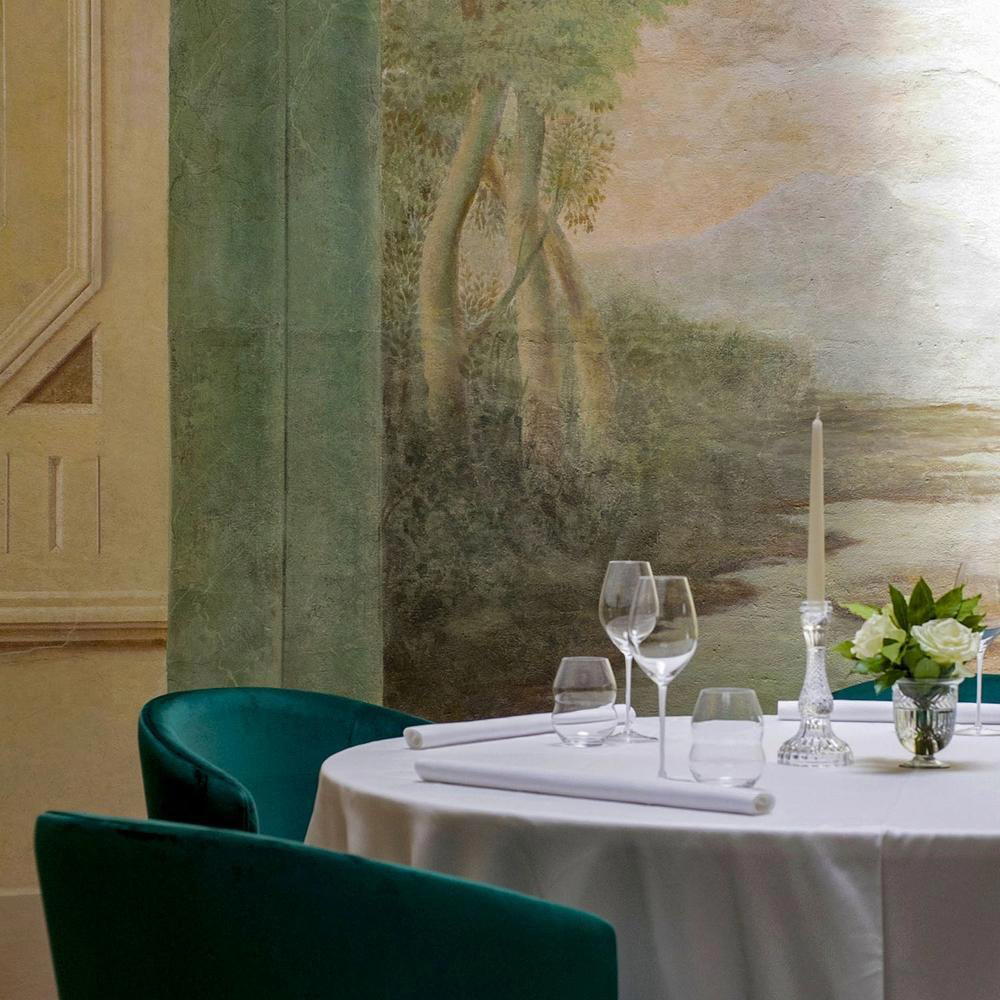

Details
- Elegant
- Classic
- Romantic
- Sophisticated
- Date Night
- Business Dinner
- Group Dining
- Special Occasion
- Standalone
- Terrace
- Extensive Wine List
- Local Sourcing
- A La Carte
- Wine
- Vegetarian Friendly
- Vegan Options
- Gluten Free Options
Current opening hours
- Monday
- 12 PM–12 AM
- Tuesday
- 12 PM–12 AM
- Wednesday
- 12 PM–12 AM
- Thursday
- 12 PM–12 AM
- Friday
- 12 PM–12 AM
- Saturday
- 12 PM–12 AM
- Sunday
- Closed
Hours can change for holidays and private events. Hours as of .
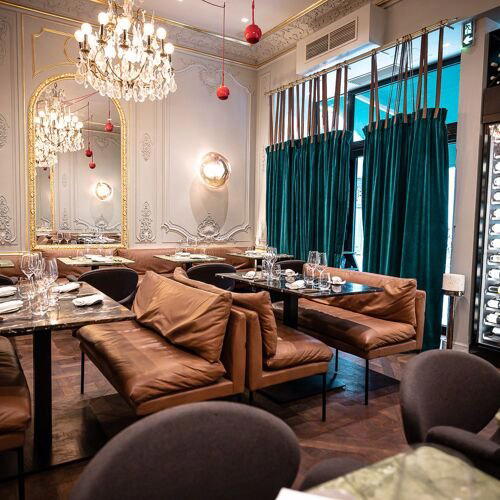
Stylish Art Nouveau interior with an elegant, refined atmosphere that appeals to Zagreb's informed diners.