Caribou Cafe
Caribou Cafe occupies a well-traveled stretch of Walnut Street in Philadelphia's Washington Square West neighborhood, operating in the French brasserie register that has anchored mid-tier dining in Center City for decades. Its position on a high-foot-traffic corridor places it between the neighborhood lunch crowd and evening diners moving through one of Philadelphia's more active dining blocks. The format rewards a leisurely midday meal as much as an evening visit.
Pearl is the En Primeur Club membership app — saves, bookings, and concierge access live there. Same editors, same standards.
- Address
- 1126 Walnut St, Philadelphia, PA 19107
- Phone
- +12679512190
- Website
- cariboucafe.com
- Directions
- Get directions
 Saves & bookings on Pearl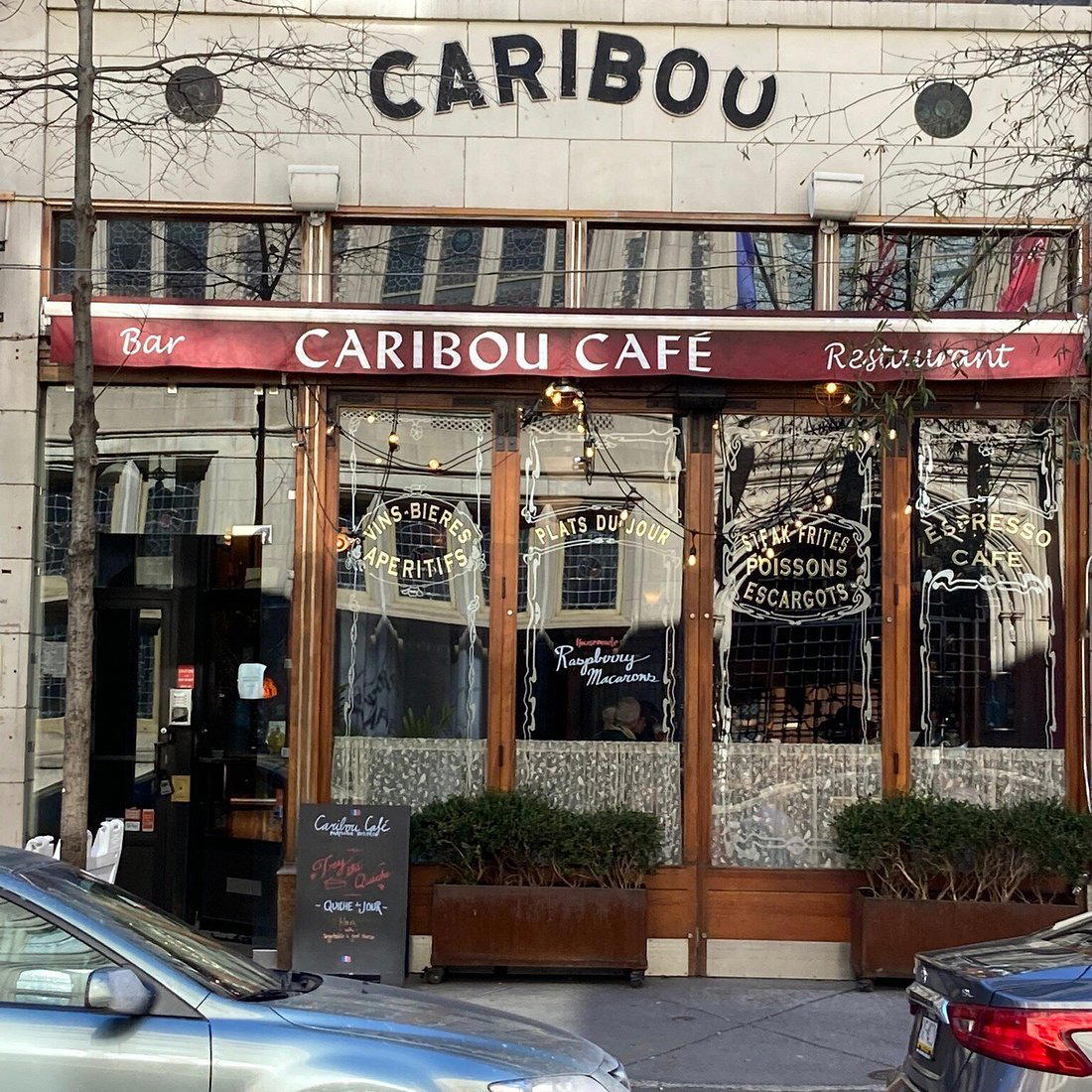
Walnut Street and the French Cafe Tradition in Philadelphia
The stretch of Walnut Street running through Washington Square West has long served as one of Philadelphia's more dependable corridors for sit-down dining that doesn't require a reservation booked weeks in advance. Caribou Cafe, at 1126 Walnut St, occupies a position in that neighborhood that reflects a broader pattern across American cities: the French brasserie-style cafe as a neighborhood anchor, offering a middle register between casual lunch spots and the formal tasting-menu tier above. In Philadelphia specifically, that middle tier has become more contested over the past decade, as operators at both ends of the price spectrum have expanded, leaving the classic European cafe format to hold its own on atmosphere and consistency rather than novelty.
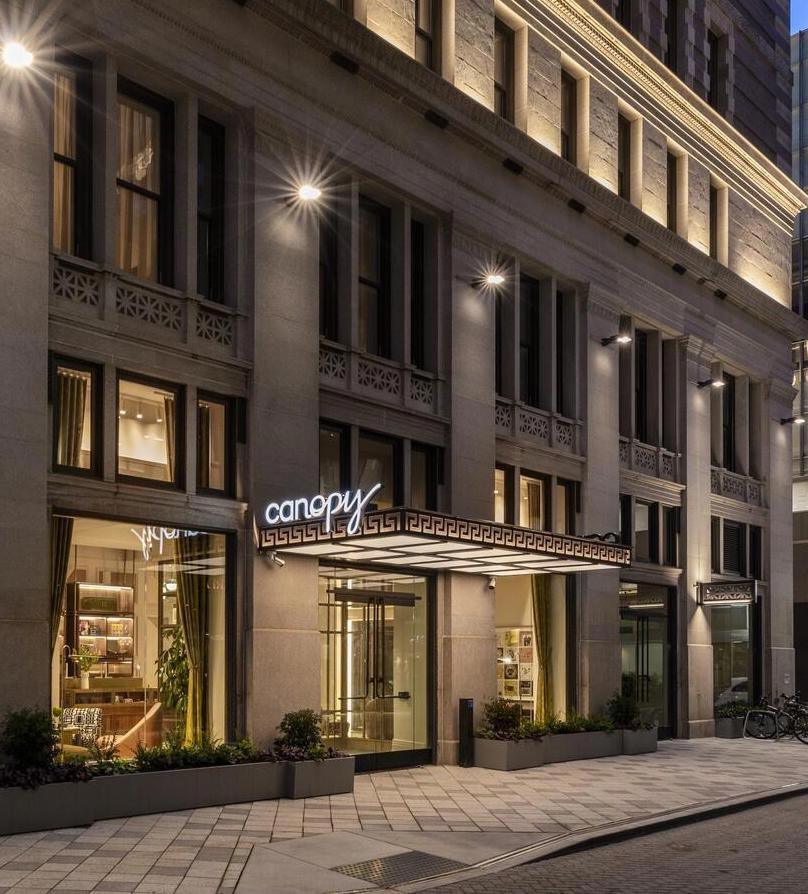
Arriving on this block, the visual cues of the French cafe format are legible from the street. The genre carries its own grammar, one that has survived transplantation to American cities more successfully than many other European dining formats, partly because it depends less on terroir-specific ingredients and more on a set of learned techniques and a particular pacing of service. Where that format succeeds in cities like Philadelphia, it tends to do so by importing method while adapting sourcing to what the mid-Atlantic region actually produces well.
Local Ingredients, Imported Method: How the Genre Works in Practice
The editorial question worth asking about any French-influenced restaurant operating in the American Northeast is how deliberately it engages with local supply. The French brasserie tradition was built around consistency and recognizable execution, which historically meant leaning on imported standards rather than regional produce. Philadelphia's food scene has, over the past fifteen years, shifted decisively toward mid-Atlantic sourcing across nearly every category, from the Pennsylvania farms supplying Fork to the hyper-local ethos running through Friday Saturday Sunday. That pressure has pushed even classically framed kitchens to at least acknowledge the regional larder.
This intersection of imported technique and indigenous product is where the more interesting American interpretations of European cafe culture now live. A kitchen fluent in classical French method but willing to source from the Chesapeake watershed or Pennsylvania Dutch country occupies a different culinary position than one replicating a Parisian menu verbatim. Nationally, this tension has produced some of the more compelling cooking in recent years: Blue Hill at Stone Barns in Tarrytown made the local-ingredients argument at the fine dining end; Single Thread Farm in Healdsburg applies Japanese technique to Northern California produce with similar rigor. The cafe tier doesn't demand that level of programmatic intensity, but the question of sourcing philosophy still shapes the diner's experience in measurable ways.
The mid-Atlantic specifically offers a strong case for local engagement: blue crab, scrapple, locally milled grains, and a produce calendar that runs from ramps and fiddleheads in spring through strong squash and root vegetable seasons in autumn. A kitchen on Walnut Street has access to that calendar if it chooses to use it.
Where Caribou Cafe Sits in Philadelphia's Dining Picture
Philadelphia's restaurant map has diversified considerably. The New American category, anchored by places like Fork and Friday Saturday Sunday, commands significant critical attention. The city's immigrant-driven kitchens, including Mawn (Cambodian and Pan-Asian) and South Philly Barbacoa, have drawn national coverage for applying specific regional techniques with documentary precision. French-inflected dining, meanwhile, has found a new register in places like My Loup, which brings a sharper editorial point of view to the format.
Caribou Cafe's address on Walnut Street places it in a high-foot-traffic zone that serves both the neighborhood lunch crowd and evening diners moving between Washington Square West and the broader Center City grid. That location functions as both an asset and a constraint: the foot traffic sustains a cafe model that relies on consistent turnover, but it also means the venue competes with a wider range of options than a destination-only address would face.
At the fine dining ceiling, kitchens like Le Bernardin in New York represent a different species entirely, where classical technique is applied with the resources of a three-Michelin-star operation. More instructive comparisons exist in the mid-tier: cities like San Francisco, Chicago, and New Orleans have all sustained European-format restaurants that succeed by finding a specific local ingredient identity rather than defaulting to generic continental menus. Emeril's in New Orleans built its identity precisely on that synthesis. Smyth in Chicago operates at a higher price tier but represents the same underlying logic applied with greater intensity.
Planning Your Visit
The restaurant is located at 1126 Walnut St in the Washington Square West neighborhood of Philadelphia, within walking distance of Center City and easily accessible from the Walnut-Locust SEPTA station. The neighborhood runs active across lunch and dinner service, with the evening crowd on Walnut Street picking up notably on weekends. Visitors coming from out of town often pair a meal here with the cluster of restaurants and bars in the surrounding blocks, making it a practical stop on a broader evening in this part of the city.
Quick Comparison: French-Influenced Dining in Philadelphia and Beyond
| Venue | City | Format | Price Tier |
|---|---|---|---|
| The restaurant | Philadelphia | French cafe/brasserie | Mid-range |
| My Loup | Philadelphia | French-inspired | Mid-upper |
| Le Bernardin | New York | French fine dining | High |
| The French Laundry | Napa | French-American tasting | High |
| The Inn at Little Washington | Washington, VA | French-American fine dining | High |
Nearby-ish Comparables
Comparable venues nearby, for context on price, style, and recognition.
| Venue | Cuisine | Price | Notes |
|---|---|---|---|
| Caribou CafeThis venue — the venue you are viewing | French Brasserie | $$ | Not listed |
| Snack Shack at Forest & Main | Polished American Snack Shack | $$ | Fishtown |
| Talula's Daily | Seasonal American Tasting Menu | $$ | Society Hill |
| Pizzeria Salvy | Modern Italian Pizzeria | $$ | Logan Square |
| Sao | Dining | Not listed | East Passyunk Crossing |
| Huda Burger | Smashed Burgers | $$ | Fishtown |
Continue exploring
More in Philadelphia
Restaurants in Philadelphia
Browse all →
Bars in Philadelphia
Browse all →
At a Glance
- Cozy
- Classic
- Intimate
- Date Night
- Brunch
- Casual Hangout
- Historic Building
- Craft Cocktails
Current opening hours
- Monday
- Closed
- Tuesday
- 11:30 AM–9 PM
- Wednesday
- 11:30 AM–9 PM
- Thursday
- 11:30 AM–9 PM
- Friday
- 11:30 AM–9 PM
- Saturday
- 11:30 AM–9 PM
- Sunday
- 11:30 AM–9 PM
Hours can change for holidays and private events. Last verified .
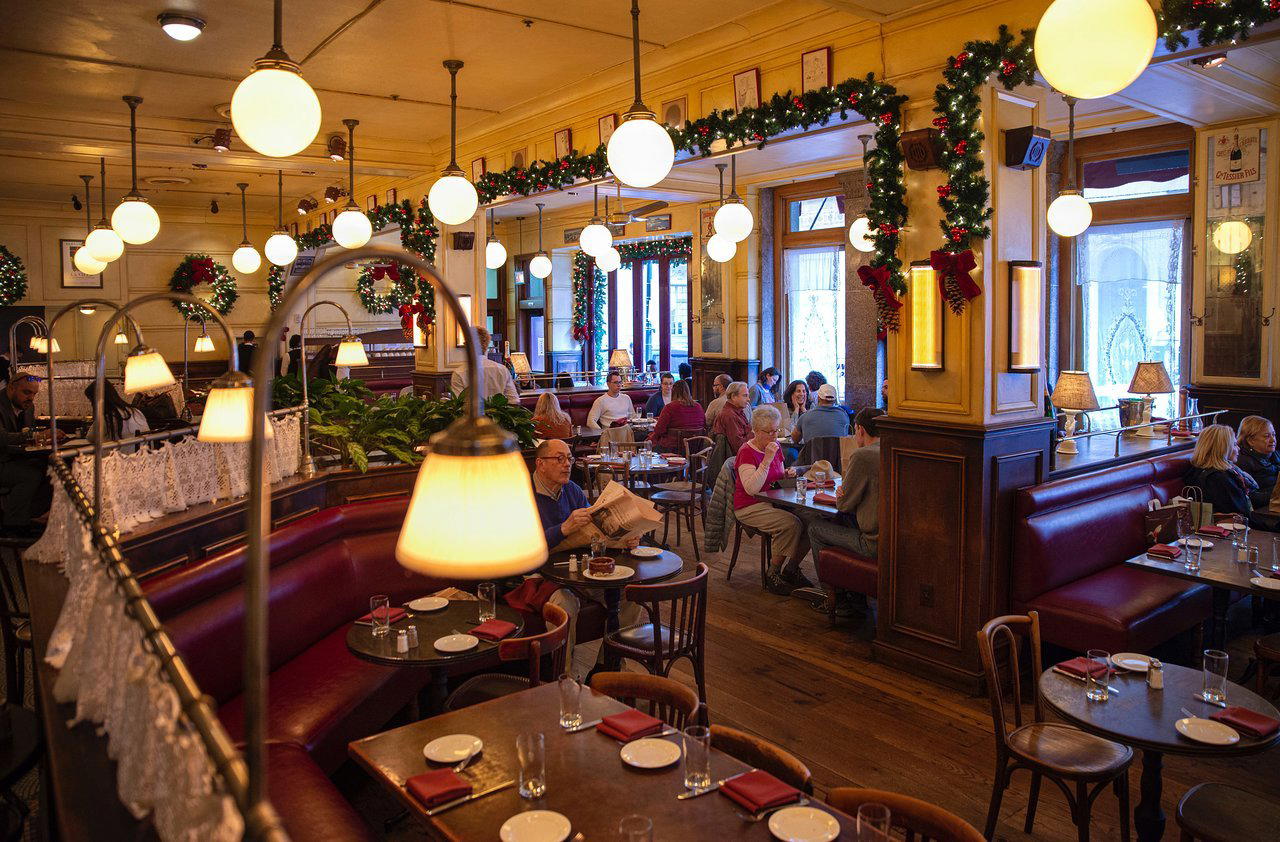
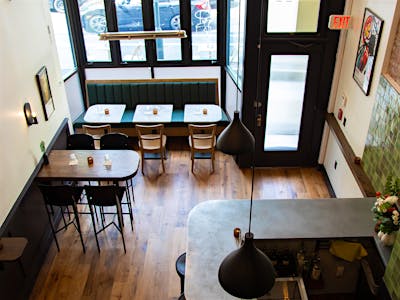
Cozy Art Deco interior with warm neighborhood bistro feel, walnut bar, tables, and booths.