
Bon Appétit Best New Restaurant
Our verdict
On East Passyunk Avenue, Philadelphia's most competitive dining corridor, Sao occupies a position that reflects the neighborhood's evolution from Italian-American staple strip to a street where Southeast Asian, European, and New American kitchens sit in close proximity. The address at 1710 Passyunk Ave places it squarely in the corridor's active stretch, where foot traffic and proximity to strong competition raise the bar for any kitchen.

Pearl is the En Primeur Club membership app — saves, bookings, and concierge access live there. Same editors, same standards.
- Address
- 1710 Passyunk Ave, Philadelphia, PA 19147
- Hours
- Mon–Tue ClosedWed–Sat 5–10 PMSun Closed
- Website
- saophilly.com
- Directions
- Get directions
- Booking
- Book on the venue's website
The menu
What to order
- Mee Caton
- Spicy scallops in crab gravy
- Oysters
- Crudo
East Passyunk and the Conditions That Shape a Restaurant
East Passyunk Avenue has spent the better part of two decades becoming one of the more seriously considered dining streets in the American Northeast. The transformation was not a single event but an accumulation: an independent restaurant culture that resisted chain formats, a neighborhood demographic willing to spend on food, and a critical mass of kitchens that push one another. The corridor now runs venues ranging from Mexican street-food traditions at South Philly Barbacoa to the kind of Italian register that draws comparisons to established city institutions. Within that range, 1710 Passyunk Ave is the address for Sao, a venue that sits inside this competitive geography without the cushion of an outer-neighborhood novelty premium.
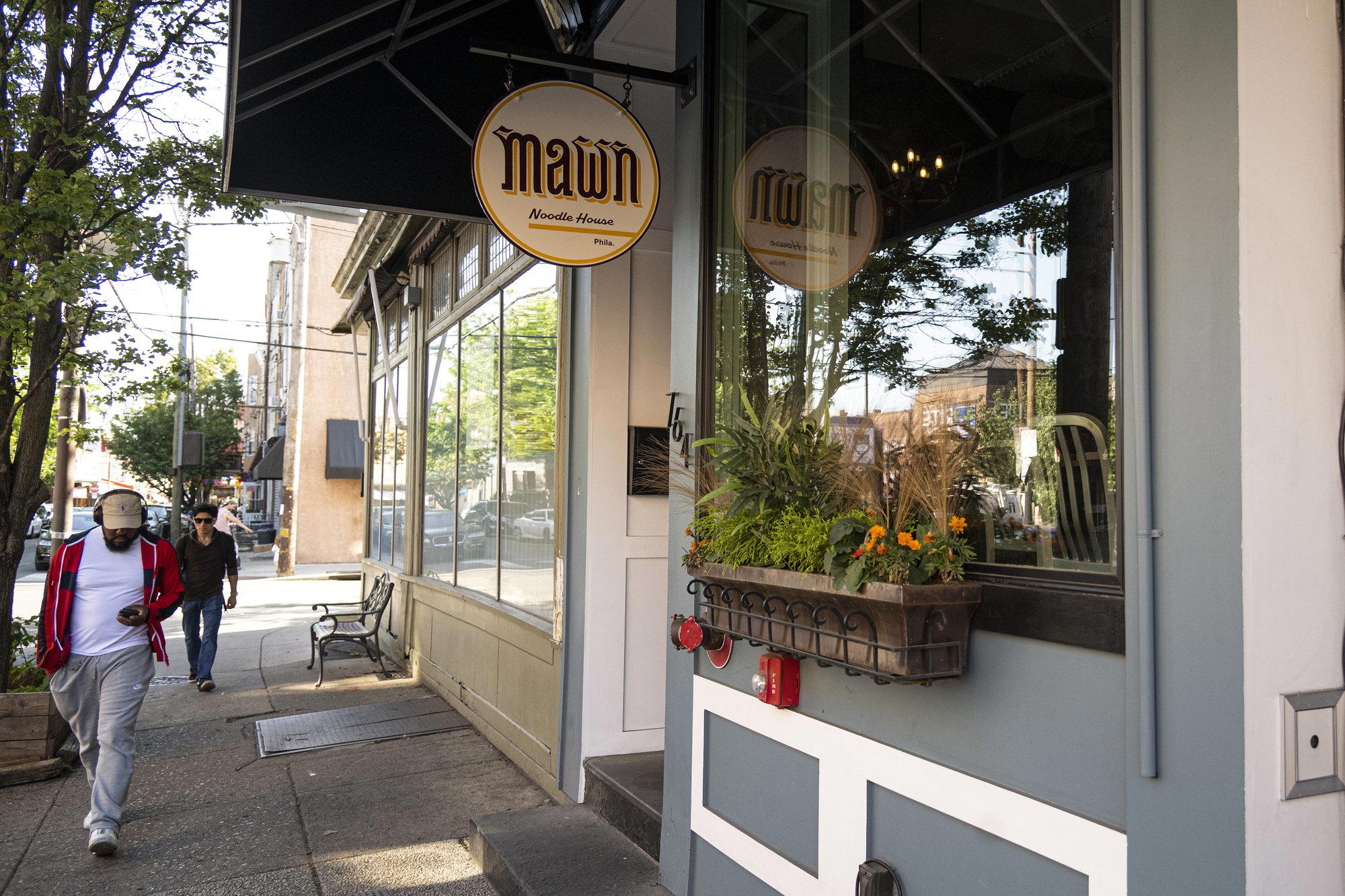
Philadelphia dining more broadly has moved through a recognizable arc over the past decade. The city's earlier identity as a cheesesteak-and-BYOB town gave way to a more stratified scene: long-standing New American anchors like Fork holding institutional position, newer formats like Friday Saturday Sunday demonstrating that the market supports serious tasting-menu ambition, and single-cuisine specialists like Mawn drawing city-wide attention for Cambodian and Pan-Asian cooking. East Passyunk functions as a ground-level test of that evolution, where the competition is proximate and the audience is food-literate.
Arriving on Passyunk
The physical approach to East Passyunk already signals the density of its dining culture. The avenue runs diagonally across Philadelphia's South Philly grid, which gives it a slightly different rhythm from the city's standard block pattern: the intersections come at irregular angles, the storefronts cluster, and the sidewalks on a busy evening carry a foot-traffic energy that most Philadelphia streets don't generate. The stretch around 1710 is active rather than quiet, which means arriving at Sao carries the ambient noise and visual texture of a corridor in use.
Atmospherically, the conditions on Passyunk lean toward an informal warmth rather than the hotel-lobby formality of high-end dining in city centers. The street context sets an expectation of neighborhood engagement, the kind of dining culture where regulars and first-timers occupy the same room without hierarchy. That register connects Passyunk to a broader pattern in American restaurant culture: the shift from destination-dining as event to destination-dining as habitual practice, where the quality of the cooking matters more than the theater of the setting.
What Sao Represents in the City's Dining Map
Positioning any venue on Passyunk requires understanding where it sits relative to the corridor's existing registers. The avenue already carries Mexican cooking with deep traditional grounding, Italian formats with long neighborhood histories, and the kind of casual-to-serious range that makes it genuinely difficult for any new kitchen to find unoccupied territory. A venue operating under the name Sao at this address enters a street with defined expectations and a customer base that makes direct comparisons.
For readers familiar with the upper tier of American restaurant culture, the peer context is useful. Kitchens like Le Bernardin in New York City, Alinea in Chicago, or The French Laundry in Napa represent the formalized apex of American fine dining: high production cost, controlled environments, years of accumulated critical validation. Philadelphia's better kitchens, including those on Passyunk, operate in a different register, one defined more by value density and neighborhood integration than by ceremony. Lazy Bear in San Francisco, Single Thread Farm in Healdsburg, and Atomix in New York City each demonstrate that high ambition can coexist with formats that feel specific to their location. The leading Passyunk kitchens aim for something similar: cooking that is serious without being ceremonial, and local without being parochial.
Further afield, Emeril's in New Orleans and 8 1/2 Otto e Mezzo Bombana in Hong Kong illustrate how a city's dining identity can be shaped by venues that commit fully to a specific culinary tradition, a model that resonates on Passyunk, where the leading venues tend to have clear culinary identities rather than hedged, all-things-to-all-people menus. A venue like My Loup, Philadelphia's French-inspired kitchen with serious critical attention, demonstrates that Philly diners will seek out specificity when the execution supports it.
The Sensory Register of the Passyunk Corridor
Dining on East Passyunk engages a specific set of sensory conditions that are worth naming plainly. The street smells like active kitchens: wood smoke from open-fire formats, garlic from Italian-leaning preparations, the char of grilled proteins from more than one direction at once. On warmer evenings, the outdoor tables that line the avenue compress the experience further, placing diners within earshot of other conversations, adjacent kitchens, and the ambient street noise of a working urban neighborhood. This is not a controlled environment in the way that a closed fine-dining room is controlled. The variables are part of the format.
Inside the tighter confines of individual venues, the sensory experience shifts. The avenue's buildings are older South Philly rowhouse conversions and storefronts, which means ceilings tend to be low, rooms tend to be narrow, and the acoustic conditions lean toward lively rather than hushed. For a venue at 1710 Passyunk, those structural conditions are a given: the architecture predates the restaurant, and the kitchen works within it rather than around it.
Planning a Visit
Know Before You Go
- Address: 1710 Passyunk Ave, Philadelphia, PA 19147
- Neighborhood: East Passyunk, South Philadelphia
- Nearby: South Philly Barbacoa, Barbuzzo, Federal Donuts, My Loup all within walking distance on or near the corridor
- Getting There: East Passyunk runs diagonally through South Philly; street parking is available but limited on busy evenings. The Broad Street Line's Ellsworth-Federal stop is a practical transit option.
- Further Philadelphia dining: See our full Philadelphia restaurants guide, our full Philadelphia bars guide, our full Philadelphia hotels guide, our full Philadelphia wineries guide, and our full Philadelphia experiences guide
Frequently asked questions
Where do I go for Sao?
Sao is located at 1710 Passyunk Ave, Philadelphia, PA 19147, Philadelphia.
Is Sao a good option for a first-time visitor to the East Passyunk dining corridor in Philadelphia?
East Passyunk is one of the more geographically compact serious dining streets in the American Northeast, and Sao at 1710 Passyunk Ave sits within walking distance of the corridor's broader range of registers. For a first visit to the avenue, anchoring the evening to one address and exploring the street before or after gives a clearer sense of what makes this stretch in South Philadelphia worth the detour. The density of options means a single meal rarely tells the whole story, but it reliably starts one.
What's the best thing to order at Sao?
What the address tells you is meaningful context: 1710 Passyunk Ave sits within a corridor where kitchens earn their reputation through consistent output rather than novelty. Arriving without a fixed agenda and following what the kitchen is running that evening is a reliable strategy on this stretch.
How hard is it to get a table at Sao?
The corridor as a whole draws both Philadelphia regulars and visitors from New York and Washington, which compresses weekend availability across most addresses. Contacting the venue directly at 1710 Passyunk Ave or arriving during off-peak hours on a weeknight is the practical starting point.
What It’s Closest To
Comparable venues nearby, for context on price, style, and recognition.
| Venue | Cuisine | Price | Awards | Notes |
|---|---|---|---|---|
| SaoThis venue — the venue you are viewing | Cambodian and Southeast Asian Seafood Raw Bar | Not listed | Bon Appétit Best New Restaurant | Not listed |
| Noir | Italian-Canadian Comfort | Not listed | Not listed | East Passyunk Crossing |
| Seorabol Center City | Authentic Korean BBQ | $20–30 | Not listed | Avenue of the Arts |
| Gnocchi | Authentic Italian Trattoria | $30–50 | Not listed | South Street |
| Down Home Diner | Classic American Diner | $10–20 | Not listed | Center City East |
| Sazon Restaurant & Cafe | Authentic Venezuelan | Not listed | Not listed | West Poplar |
Recognition history
Dated appearances from independent guides and award organizations, with the underlying list record or original source where available.
Bon Appétit Best New Restaurant
Bon Appétit
Continue exploring
More in Philadelphia
Restaurants in Philadelphia
Browse all →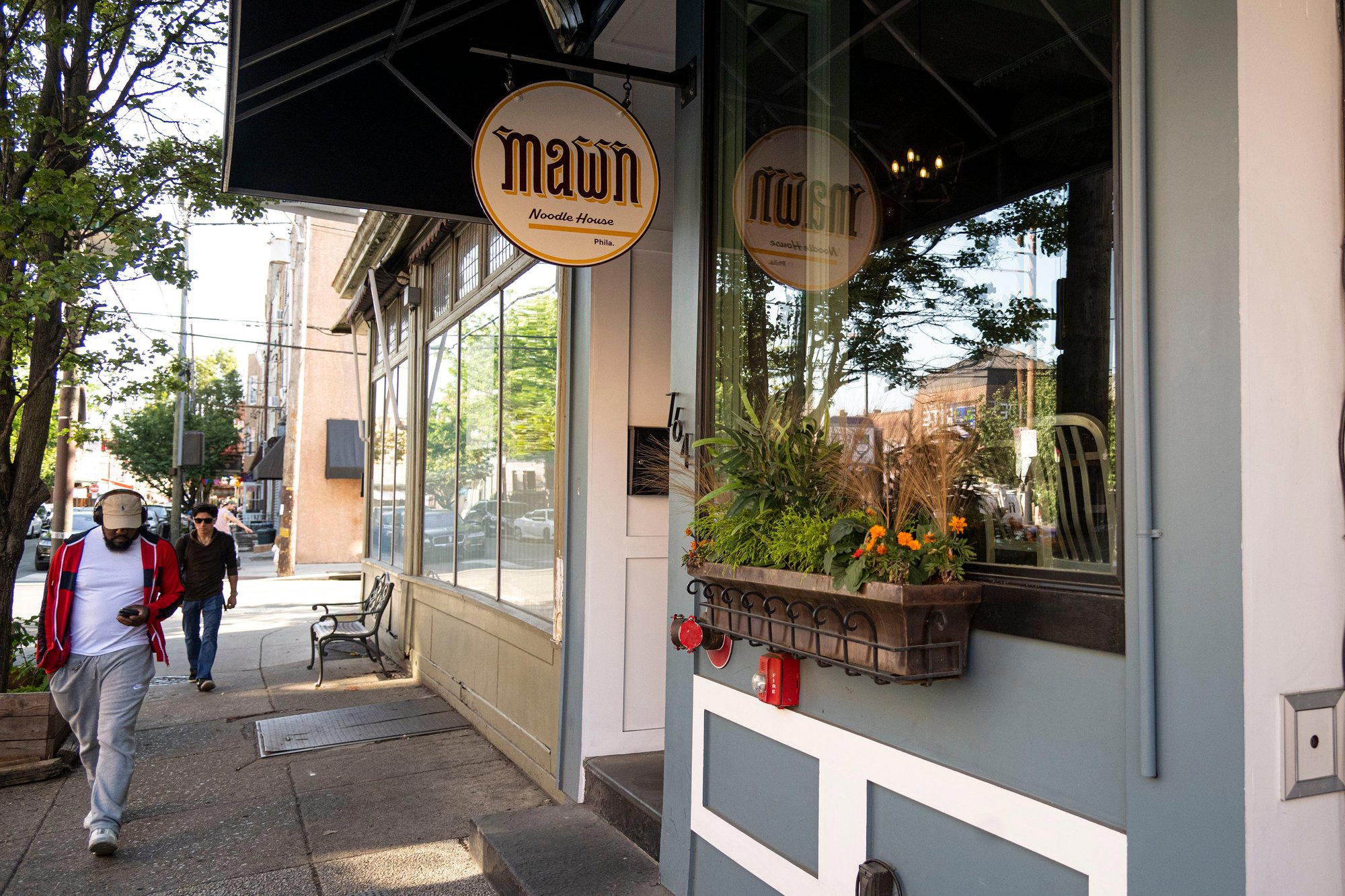
Bars in Philadelphia
Browse all →
Details
- Lively
- Trendy
- Modern
- Date Night
- Celebration
- After Work
- Standalone
- Craft Cocktails
- A La Carte
- Small Plates
- Cocktails
- Wine
- Pescatarian Friendly
Current opening hours
- Monday
- Closed
- Tuesday
- Closed
- Wednesday
- 5–10 PM
- Thursday
- 5–10 PM
- Friday
- 5–10 PM
- Saturday
- 5–10 PM
- Sunday
- Closed
Hours can change for holidays and private events. Last verified .
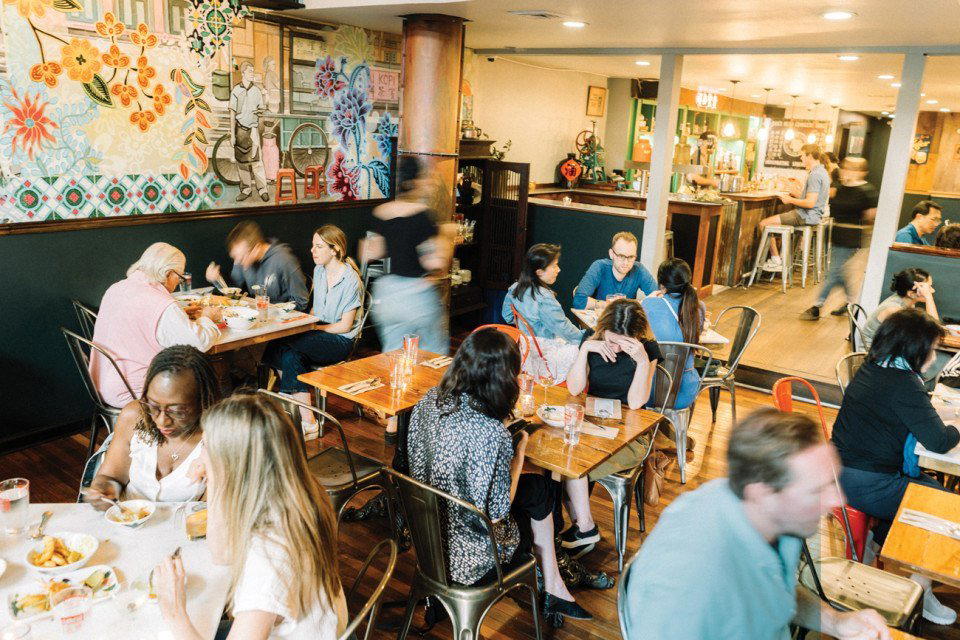
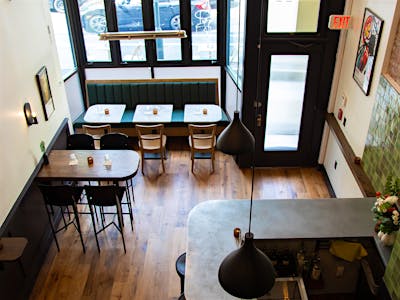
Lively and celebratory, with warm service and a seafood-focused cocktail-bar feel.