On a quiet stretch of Rua Poiais de São Bento, Caracóis de São Bento occupies a corner of Lisbon that operates outside the fine-dining circuit dominated by Michelin-starred addresses like Belcanto and CURA. The kitchen centres on caracóis, the salted, herb-braised snails that are as close to a civic ritual as Lisbon street food gets, served in an atmosphere that reads as neighbourhood institution rather than tourist destination.
Pearl is the En Primeur Club membership app — saves, bookings, and concierge access live there. Same editors, same standards.
- Address
- R. Poiais de São Bento 38, 1200-348 Lisboa, Portugal
- Phone
- +351 21 820 7273
- Directions
- Get directions
 Saves & bookings on Pearl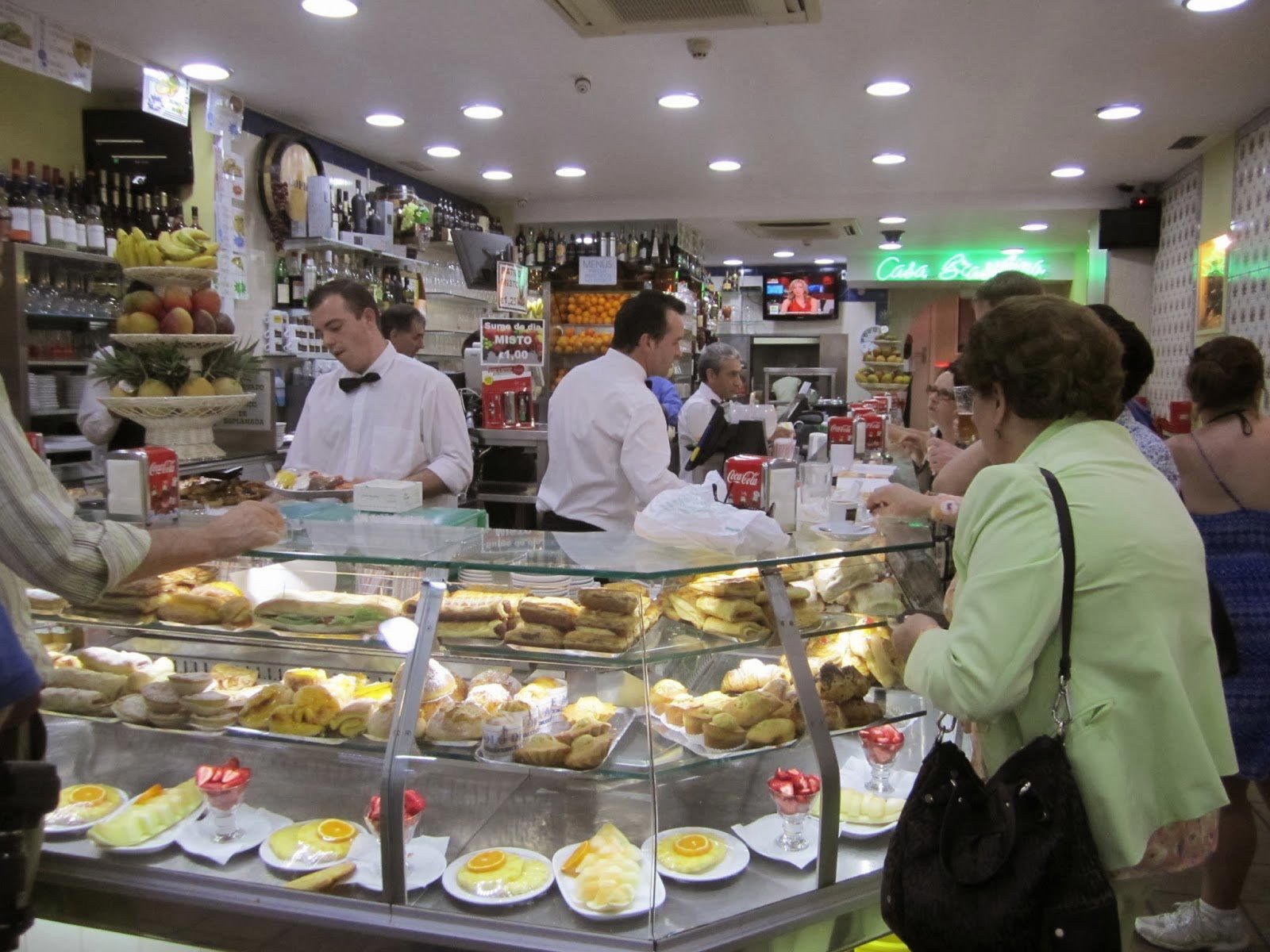
The Street That Sets the Tone
Rua Poiais de São Bento runs between the parliamentary district and the Mercado de Campo de Ourique, a corridor that has resisted the full gentrification sweep that remade Príncipe Real a block north. The buildings here are narrower, the light less curated, the foot traffic more residential. Approaching Caracóis de São Bento on a summer evening, the first signal is olfactory: garlic, coarse salt, and the faint mineral smell of shellfish cooking in broth drift onto the pavement before the signage registers. That smell is the opening argument for what the place is doing.
Inside, the room is compact and deliberately unrefined. Tiled surfaces, wooden furniture worn to a dull patina, and the ambient noise of ceramic bowls meeting zinc countertops compose an environment that operates on contrast to the polished dining rooms of Lisbon's Michelin tier. Where Belcanto and CURA serve modern Portuguese cuisine through long tasting menus and tableside ceremony, Caracóis de São Bento delivers a single product in volume, at pace, without ceremony. The contrast is instructive about the breadth of Lisbon's food culture rather than a hierarchy within it.
Caracóis as Urban Ritual
The snail, in Lisbon, is not a novelty ingredient or a nostalgic affectation. During summer months, caracóis appear across the city on paper-lined plates at tascas, market stalls, and neighbourhood restaurants from Alfama to Mouraria. They are cooked in salted water with garlic, bay leaf, oregano, and often pennyroyal, a herb called poejo that gives the broth its particular aromatic sharpness. The process is slow, the result unpretentious: a bowl of small snails in hot, herb-thick liquid, eaten with a toothpick, accompanied by cold beer or a glass of house white.
What Caracóis de São Bento offers is a more focused version of this tradition. The address has built its reputation on doing this single category with consistency and in volume, which is how neighbourhood establishments in Lisbon accrue the kind of local loyalty that resists seasonal tourism cycles. This is the opposite model to Eleven or 50 Seconds from Martin Berasategui, where the dining proposition is expansive, chef-driven, and internationally positioned. Caracóis de São Bento is narrow in scope and deep in repetition, which is its own form of expertise.
Sound, Smell, and the Mechanics of the Room
The sensory register here is worth reading carefully, because it explains why the place functions as it does. The sound is consistently high: conversations overlap, the kitchen is open enough to the room that the hiss of pots and the clatter of serving equipment enters the dining space, and the narrow floor plan concentrates rather than disperses noise. This is not a dining room designed for long, quiet meals. It is designed for a particular kind of urban sociability, the kind that treats eating as something done alongside conversation rather than as the primary event.
The smell shifts across an evening. Early, it is dominated by the cooking broth, herbal and saline. Later, as the room fills and plates accumulate, bread and olive oil and the faintly acidic note of Vinho Verde join it. The combined effect is specific to this class of Lisbon establishment, one that the city's higher-end addresses, however accomplished, cannot replicate. 2Monkeys works a creative register; the tiled, herb-scented informality of a caracóis house belongs to an entirely different tradition.
Where This Fits in Portugal's Dining Picture
Portugal's Michelin presence has grown substantially in recent years, with addresses spread from Vila Joya in Albufeira and Ocean in Porches in the Algarve to Casa de Chá da Boa Nova in Leça da Palmeira, Antiqvvm in Porto, The Yeatman in Vila Nova de Gaia, Il Gallo d'Oro in Funchal, Fortaleza do Guincho in Cascais, Gusto by Heinz Beck in Almancil, Ó Balcão in Santarém, and Al Sud in Lagos. That expansion has made Portugal more visible internationally as a fine-dining destination, but it has also created a false impression that Portuguese food culture is primarily expressed through tasting menus and modernist technique.
The restaurant sits at the other end of the spectrum, alongside the city's leading tascas and market counters, as evidence that Lisbon's food identity is not reducible to its starred restaurants. The same logic applies in cities with strong neighbourhood dining cultures globally: particularly instructive meals are often not especially expensive ones. Readers who have spent time at places like Lazy Bear in San Francisco or Le Bernardin in New York City will recognise the principle: formal excellence and informal tradition address entirely different needs, and both are worth seeking.
Planning a Visit
The restaurant operates on the São Bento stretch at number 38, which is walkable from Bairro Alto and reachable from Príncipe Real in under ten minutes on foot. Summer is the primary season for caracóis in Lisbon, and the kitchen's focus reflects that: arrive between May and September to find the full range in operation. Outside those months, supply depends on the season's harvest and the kitchen's sourcing, so confirming availability before visiting is advisable. The room is small enough that walk-ins during peak evening hours, particularly Friday and Saturday from 20:00 onward, carry real risk. Arriving before 19:30 or at lunch is the more reliable approach. No booking infrastructure is confirmed in available data, so arriving in person and assessing the queue is the operative strategy. Pricing sits well below the city's fine-dining tier; this is a category where a full table order, including drinks, lands at a fraction of what a tasting menu at comparable Lisbon prestige addresses would cost. See our full Lisbon restaurants guide for a broader map of the city's dining options across price tiers.
The Essentials
A short peer table to compare basics side-by-side.
Continue exploring
More in Lisbon
Restaurants in Lisbon
Browse all →
Bars in Lisbon
Browse all →
Hotels in Lisbon
Browse all →

At a Glance
- Rustic
- Casual
- Lively
- Group Dining
- Casual Hangout
- Late Night
- Standalone
- Beer Program
- Local Sourcing
Current opening hours
- Monday
- 8:30 AM–4 PM
- Tuesday
- 8:30 AM–4 PM
- Wednesday
- 8:30 AM–4 PM
- Thursday
- 8:30 AM–4 PM
- Friday
- 8:30 AM–4 PM
- Saturday
- 8:30 AM–4 PM
- Sunday
- 8:30 AM–4 PM
Hours can change for holidays and private events. Last verified .